Scorecard: 8.3/10 · Great
How we score- Writing(25%)
- 8.5
Gibbs delivers precise street narratives with sharp detail work and genuine introspection, moving past simple corner tales to examine consequences without preaching.
- Production(25%)
- 9.0
Madlib's dusty soul loops and off-kilter drum programming create a grimy 70s atmosphere that never sounds like cosplay, with beats that slow and breathe like human pulse.
- Delivery(15%)
- 8.0
Gibbs rides the unquantized rhythms with technical skill and vocal authority, though some guests like Danny Brown and Earl Sweatshirt outshine him on their featured turns.
- Cohesion(15%)
- 7.0
The first half flows purposefully but the middle sags under too many slow-burn soul samples, and seventeen tracks test the patience even when most individual songs work.
- Originality(10%)
- 8.0
The pairing itself was unexpected and the sound answers 2014's trap dominance with a deliberate throwback that still sounds like neither artist's previous work.
- Replay value(10%)
- 8.5
The best tracks reward repeat listens as Madlib's production details emerge and Gibbs' writing reveals layers, though the bloated midsection invites skipping.
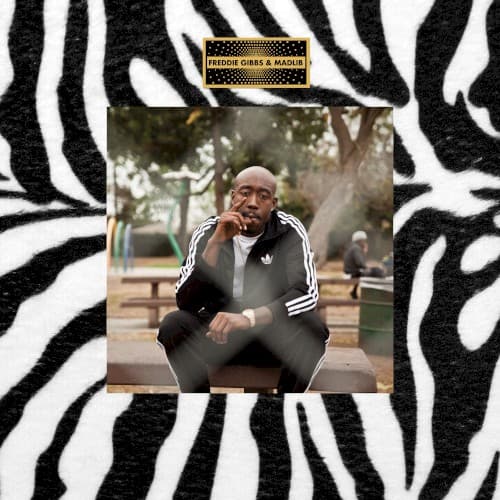
Freddie Gibbs & Madlib Piñata — The Blaxploitation Film That Earned Its Throwback
Piñata works because it refuses the easy nostalgia move. In 2014, when trap had locked down commercial rap and cloud rap was the accepted alternative, Freddie Gibbs and Madlib made an album that sounds like 1995 without sounding like a museum piece. The collaboration was unlikely: Gibbs was an unsigned Indiana street rapper grinding out mixtapes, Madlib was the California producer who had spent a decade working with abstract lyricists and jazz experimentalists. What they share is a refusal to smooth edges for palatability. Madlib handed Gibbs eight CDs of beats with no coaching, Gibbs recorded alone over three years while his life changed around him, and the result documents what happens when technical skill meets genuine stakes.
The thesis Gibbs offers in the press materials is blunt: a gangster Blaxploitation film on wax, showing flaws and fuckups without regret. That frame holds. This is not a redemption arc or a morality play. It is street reporting from someone still working through what the street cost him, set to production that refuses to quantize the chaos into radio time. The album sprawls to seventeen tracks and earns maybe fourteen of them, but the peaks justify the length. What keeps it from being a mere period exercise is that both artists are solving problems in real time: Gibbs learning to ride Madlib's unsteady tempos, Madlib scoring a narrator who can match his grimy loops with equally grimy detail.
Unquantized Chaos That Demands Precision
Madlib's production here is all dust and dysfunction. The beats are built from obscure 70s soul samples, the drums programmed with deliberate imperfection so they speed up and slow down like a warped record. Tracks like Deeper and Broken layer strings and vocal fragments until the mix feels crowded and claustrophobic, which is the point. This is not the clean minimalism that dominated 2014 production; it is deliberately messy, asking the rapper to navigate rhythms that shift under him.
Madlib described his approach as having more of a human feel, and that lack of polish is what separates this from a simple throwback. The beats do not sit still long enough to become wallpaper.
Gibbs responds with the kind of technical rapping that unsteady production demands. His flow is conversational but tightly controlled, riding the off-kilter drums without losing the pocket. He can pack a verse with internal rhymes and still sound like he is talking, not performing. The writing is specific: corner economics on Harold's, regret without self-pity on Deeper, threat assessment on Scarface.
He avoids the usual gangster rap pitfall of mistaking atmosphere for content. When he describes a world, he populates it with choices and consequences, not just guns and money. The three-year recording span is audible in the tonal shifts: some tracks sound like active participation, others like looking back from a distance.
The guest roster pulls from both coasts and multiple eras. Raekwon on Bomb and Scarface on Broken bring gravitas and direct lineage to the Blaxploitation comparison. Earl Sweatshirt and Danny Brown on Robes and High bring the younger generation's technical adventurousness, and both outrap Gibbs on their features. BJ the Chicago Kid on Shame delivers the album's only real hook.
The features mostly work because Madlib gives them beats weird enough that no one sounds like they are phoning it in. The weaknesses come not from the guests but from the length: too many mid-tempo soul loops in the middle stretch, too much of the same mood without enough dynamic range. Shitsville and Knicks blur together on first listen, and the album does not need both.
A Front-Loaded Journey That Loses Steam
The album peaks early and often in the first half. The first eight tracks establish the sound and the stakes, and the sequencing through that stretch is purposeful: an opening scene-setter, a breather in the early going, then the explicit callback that brings in an elder statesman. The pacing works because the producer varies the tempos and the rapper shifts between present-tense narratives and backward glances.
The middle sags under the weight of too many slow-burn soul samples. Five straight tracks in the same mid-tempo pocket with similar sonic textures test patience, even when the rapping holds up. The sequencing recovers slightly with the penultimate stretch, which offers melody and structure the surrounding material avoids, but by that point the bloat is noticeable. The closing stretch runs eight minutes of posse-cut cameos that feel more like victory lap than earned climax.
Seventeen tracks is too many for this particular set of ideas, and cutting three or four from the middle third would have sharpened the whole.
Where It Ranks and Who It Serves
Piñata is the best argument for this particular collaboration and proof that Gibbs can compete with the technical elite when the production challenges him. It does not rank among the all-time gangster rap albums because the writing, while sharp, does not reach the thematic depth of the records it references, and because the length works against it. In Gibbs' catalog it sets a standard for what he can do with a single producer over a sustained vision, and it raises the question of whether he can reach this level again with someone less singular than Madlib.
This is for serious rap fans who value production craft and technical rapping over hooks and accessibility. It is not for anyone who needs their gangster rap to arrive with a clear moral or their throwback soul-rap to sand off the rough edges. Casual listeners looking for an entry point to either artist should start elsewhere; this rewards the work it demands. Start with Thuggin, Deeper or Scarface to understand the sound, then decide if you want fifty more minutes of it.
If the unquantized rhythms and dusty loops grab you, the whole album will. If they sound like affectation, nothing here will change your mind. The most useful comparison is to Raekwon's debut, not because this matches that album's writing or sequencing but because both understand that grimy soul production and street detail can elevate each other when neither compromises. Fans who connected with that record or with Madlib's work on the Quasimoto albums will find the meeting point here worth the sprawl.
Track Listing
Supplier
●A forty-eight-second scene-setter that introduces the album's sonic palette: warped soul sample, off-kilter drums, no hook. Functions as an overture, not a song.
Scarface
▲Gibbs opens with threat assessment and self-mythology over a creeping string loop, establishing his technical control and thematic range in two minutes. The brevity keeps it from overreaching.
Deeper
▲The album's emotional center, built on a mournful vocal sample that Madlib loops until it becomes hypnotic. Gibbs delivers introspection without self-pity, examining the cost of the life without excusing it or dramatizing it. The writing is specific enough that the regret lands as earned rather than performed. One of the handful of tracks where the production and the rapping achieve exact equilibrium.
High
▲Danny Brown's manic energy and nasal delivery contrast sharply with Gibbs' controlled menace, and the contrast makes both rappers sharper. Brown steals the track, but Gibbs holds his own. The beat's jerky rhythm suits both styles.
Harold's
●A Chicago-specific narrative over a laid-back loop, functioning as a breather between the intensity of the surrounding tracks. The writing is precise but the song does not demand much from the listener.
Bomb
▲Raekwon's guest verse is the explicit callback to the Mafioso lineage Gibbs is claiming, and Raekwon delivers with the same grim authority he brought to his own debut. The beat is pure Madlib grime: layered samples, dusty drums, no concession to commercial appeal. Gibbs matches Raekwon's energy and does not sound outclassed, which is the real achievement.
Shitsville
●Mid-tempo soul loop with capable rapping but no memorable hook or standout moment. Solid but forgettable, the first sign that the album has more tracks than ideas.
Thuggin'
▲Released three years before the album as the first single, and it still sounds like the mission statement. The beat is minimal and menacing, the rapping is technically sharp without showing off, and the whole track communicates exactly what this collaboration offers: Gibbs navigating Madlib's unsteady rhythms with precision and authority. No wasted bars, no filler, just a street rapper proving he can ride beats this weird without losing the narrative thread.
Real
▲The production disintegrates and reassembles mid-track, turning what starts as a standard soul-rap beat into something unpredictable. Gibbs adjusts his flow to match the chaos, and the result is one of the album's most dynamic moments. The writing examines authenticity and posturing without lapsing into the usual keeping-it-real cliches.
Uno
●Competent rapping over a pleasant loop, but the track does not add much to the album's thesis. The kind of solid but unremarkable song that could have been cut to tighten the runtime.
Robes
●Earl Sweatshirt and Domo Genesis both deliver strong verses, with Earl in particular bringing the kind of dense internal rhyme schemes that make Gibbs sound straightforward by comparison. The beat is lush and slow, five minutes of layered soul that rewards attention but also marks the beginning of the album's mid-tempo sag. Strong individual performances that do not quite justify the length.
Broken
▲Scarface's guest verse is a masterclass in economy and authority, saying more in sixteen bars than most rappers manage in a full song. Gibbs holds his ground but does not match Scarface's gravitas. The beat is mournful and spacious, giving both rappers room to work. A highlight for the feature alone.
Lakers
●Ab-Soul delivers a technically impressive verse but the track suffers from the same mid-tempo sameness that weighs down this section of the album. Capable rapping over a capable beat, nothing more.
Knicks
●Another solid soul-rap track that blurs into the surrounding songs. The beat is pleasant, the rapping is competent, but by this point in the album the formula has worn thin without enough variation to keep the energy up.
Shame
▲BJ the Chicago Kid provides the album's only real sung hook, and the melodic structure makes this the most accessible track on the record. Gibbs delivers introspection that feels earned rather than obligatory. Functions as a palate cleanser after the bloated middle section.
Watts
●A brief interlude featuring Big Time Watts, adding texture but not substance. Fits the Blaxploitation film concept but does not justify its placement this late in the runtime.
Piñata
●An eight-minute posse cut featuring Domo Genesis, Casey Veggies, Meechy Darko, Mac Miller and others. The concept is celebratory but the execution drags, with too many verses that do not add enough to justify the length. Works as a victory lap for the collaboration but tests patience as an album closer. Cutting this to four minutes would have improved the impact.