The scorecard
7.6/10 · Great
- Writing25%
- 7.5
- Production25%
- 8.0
- Delivery15%
- 8.5
- Cohesion15%
- 6.5
- Originality10%
- 7.0
- Replay value10%
- 7.5
Bold, quotable sex positivity and power dynamics delivered with humor and specificity, though verses sometimes settle for inventory over narrative
LilJuMadeDaBeat's minimal bass-heavy trap and the Three 6 Mafia-derived sampling create a lean, menacing Houston foundation that never crowds the rapping
Aggressive, confident flow with charisma to spare; the voice itself becomes an instrument of control and defiance
Fourteen tracks with consistent sound and subject matter but no arc; the energy plateaus rather than building, and filler creeps in past track ten
Brings Southern women's rap swagger back to the mainstream with fresh energy, though the template and influences are clear throughout
The best tracks reward repeat plays with new details; weaker cuts fade quickly, but the mixtape's brevity helps
Megan Thee Stallion Fever — The Houston Ego That Refused to Wait Its Turn
Fever is the sound of a rapper who already knows she won. There is no tentative debut energy here, no hedging or proving. Megan Thee Stallion raps like someone who walked into the mainstream on her own terms and dared it to keep up. The mixtape's thesis is in the title: the fever is hers, the heat she generates, and the listener either catches it or gets left behind.
By the time she opens with the line about being the realest on the first track, the argument is already over. The swagger is so total that weaknesses in the sequencing and the back half barely dent it.
The stakes are specific to Southern women's rap in 2019. Fever arrived after years of the mainstream treating Houston rap like a regional novelty and women rappers like guest stars on someone else's records. Megan refuses both framings. She claims the producer LilJuMadeDaBeat's minimal bass-heavy trap as her own space, interpolates Three 6 Mafia and Juicy J not as homage but as inheritance, and centers her own pleasure and power without asking permission.
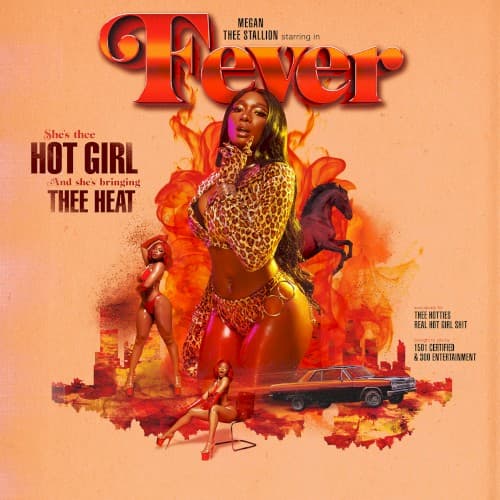
The context is all over the production: samples from Three 6 Mafia, DJ Zirk, and Billy Paul stitched into a sound that updates Memphis rap's menace for a Houston perspective. The blaxploitation film aesthetic on the cover and in the Hype Williams trailer frames the whole project as a genre exercise in control. Megan is the protagonist, the director, and the product.
The Machinery of Ego: Trap Production as Weapon
The production on Fever is designed to get out of the way. LilJuMadeDaBeat, who handles six of the fourteen tracks, builds beats that are all space and thump: 808s, minimal hand claps, the occasional water splash sound effect on Cash Shit, and almost nothing else. The simplicity is the point. On Realer and Shake That, the beats are so sparse that every syllable Megan delivers lands with full weight.
There is no melody to hide behind, no lush sample to coast over. The rapping has to carry the track, and it does. When the production does add layers, as on Simon Says with its Billy Paul sample and Juicy J guest spot, or on Pimpin with its DJ Zirk interpolation, the additions feel like deliberate nods to lineage rather than crutches. The Memphis influence is everywhere: the Three 6 Mafia sample on W.A.B., the Soulja Boy flip on Sex Talk, the UGK and Three 6 Mafia sample on Big Drank.
Megan is retrofitting a sound that predates her and claiming it as her own regional birthright.
The writing is built on quotables and power reversals. Megan raps about sex from a position of total control, flipping the usual gender dynamics in Southern rap without preaching about it. The humor is sharp: the Hood Rat Shit intro pulls audio from a viral news clip of a seven-year-old stealing his mother's car, and Megan treats the absurdity as a thematic anchor for reckless confidence. The references are eclectic and specific, name-dropping South Park and Wakanda in the same verse without straining for depth.
The best lines work because they are blunt and funny rather than clever for cleverness' sake. The weakness is that the writing sometimes runs out of things to say. Verses on the back half of the mixtape, especially on tracks like Dance and Ratchet, repeat themes without adding new angles. The inventory of wealth, sex, and dominance starts to feel like filler when it is not tied to a specific image or punchline.
The delivery is what makes the mixtape work. Megan's voice is aggressive and precise, her flow switching between staccato bursts and drawn-out taunts depending on what the beat demands. On Cash Shit, she rides the empty space with a cadence that turns the minimal production into a dare. On Simon Says, she matches Juicy J's energy without getting overshadowed.
The confidence is total and unforced. Even on weaker tracks, the performance never sags. DaBaby's guest verse on Cash Shit is solid but unremarkable; he does not change the track's energy, just adds a complementary voice. Juicy J on Simon Says feels more like a co-sign than a collaboration.
The mixtape does not need guests, and Megan knows it.
The Plateau Problem: When Every Track Bangs the Same
Fever is fourteen tracks and thirty-eight minutes, which should feel lean, but the sequencing makes it drag. The first stretch opens strong with momentum that builds through the opening run. By the middle section, the energy has plateaued. The sound is consistent, but consistency without variation becomes monotony.
The second half does not sag because of bad tracks; it sags because there is no arc. The back half is a series of solid moments that would have worked better placed earlier in the sequence. The closing run ends on a demonstrate-for-demonstrate's-sake note rather than a statement.
The pacing issue is not about length; it is about purpose. Fever is structured like a playlist of bangers rather than an album with a build and a climax. The best moments arrive early and then the mixtape coasts on the same energy for another twenty minutes. The mixtape would have been sharper at eleven or twelve tracks.
The Breakthrough That Earned Its Hype
Fever is Megan Thee Stallion's mainstream breakthrough because it refuses to dilute what made her work in the first place. The sex-positive rap, the Houston swagger, the Three 6 Mafia-derived production: all of it is here at full volume, unapologetic and fully realized. The mixtape is not perfect. The sequencing is flat, the back half has filler, and the writing occasionally runs out of new things to say.
But the strengths, the delivery and the confidence and the sheer force of personality, are strong enough to carry it. Megan sounds like she has already won, and the music backs her up.
This is the starting point for anyone new to her catalog. Listeners who want more aggression and less polish should go backward to the Tina Snow EP. Listeners who want to hear where the sound goes next should move forward to Good News, where the writing gets sharper and the production gets more varied.
Fever is not her best album, but it is the one where the mainstream caught up to what Houston already knew. The fever is real, and it spreads.
Track by track
Track Listing
Realer
StandoutThe opening statement, and it works because it wastes no time. Megan announces herself as the realest with the kind of total confidence that makes arguing pointless, and LilJuMadeDaBeat's minimal trap production gives her nothing but space to own. The beat is all 808s and silence, forcing every word to land with weight. The flow switches between staccato punches and drawn-out taunts, and the verses are packed with quotable lines about wealth, sex, and dominance. The structure is simple: verse, hook, verse, done. No wasted bars. The track sets the tone for the entire mixtape: lean, aggressive, unapologetic. The only weakness is that it does not build; it arrives at full intensity and stays there, which works as an opener but would wear thin if every track followed the same template. As an introduction to Hot Girl Meg, it is flawless.
Hood Rat Shit
StandoutThe Latarian Milton news clip sample is absurd and perfect, framing the track as an ode to reckless confidence. Megan leans into the chaos, delivering verses that brag about doing exactly what she wants with no regard for consequences. The South Park and Wakanda references are thrown in casually, treating pop culture as just another tool for flexing. The production, handled by KC Supreme and Koncept P, is bouncier than the LilJuMadeDaBeat tracks, with more melodic elements underneath the bass. The humor is the selling point here: Megan is funny without trying to be, and the whole track feels like a joke she is in on. The weakness is that the verses do not go deeper than the premise. It is a fun track that does its job and moves on.
Pimpin
SolidJuicy J's production brings the Memphis influence to the front, sampling DJ Zirk's Azz Out and building a beat that feels like a nod to mid-90s Southern rap. Megan uses the track to flip gender dynamics, rapping about pimping men instead of the other way around. The verses are blunt and effective, with lines about control and wealth that land because they are delivered with total conviction. The production is darker and more layered than the LilJuMadeDaBeat tracks, with more going on in the low end and the sample giving the track a vintage feel. The track works as a statement of power, but the writing does not add much beyond the central conceit. It is a solid album cut that benefits from the production more than the rapping.
Cash Shit
StandoutThe commercial peak and the mixtape's best track. LilJuMadeDaBeat builds the beat in five minutes, and the simplicity is what makes it work: no melody, just 808s, a hand clap, a water splash, and hi-hats panned left and right. The space forces Megan and DaBaby to carry the entire track with flow and charisma, and they do. Megan's verses are quotable and aggressive, flipping between brags about wealth and dismissals of men who do not measure up. DaBaby's guest verse is solid without being essential; he matches the energy but does not change the track's direction. The hook is minimal and repetitive in a way that works, landing like a taunt rather than filler. The track topped the US Urban radio chart and went quintuple platinum for a reason: it distills everything Fever does well into three minutes. The sequencing choice to place it at track four is smart, hitting early enough to grab attention without blowing the whole load upfront.
W.A.B.
StandoutThe Three 6 Mafia sample, pulled from Weak Azz Bitch, gives the track its Memphis-via-Houston menace. Megan uses the track to dismiss weak competition, and the verses are sharper than most of the mixtape's second half. The production, handled by Project Pat and Supah Mario, is darker and more ominous than the earlier tracks, with the sample adding a layer of history that makes the track feel earned. The flow is aggressive and precise, and the hook is blunt enough to work as a chant. The track is one of the mixtape's highlights, proof that Megan sounds best when the production gives her something specific to respond to. The weakness is that it is sandwiched between Cash Shit and Best You Ever Had, two tracks with very different energy, and the sequencing makes it feel like a detour rather than a centerpiece.
Best You Ever Had
SolidA serviceable track about sexual prowess that does not add much beyond the title's promise. DJ Chose's production is competent but forgettable, lacking the menace of the LilJuMadeDaBeat tracks or the Memphis weight of the Juicy J cuts. Megan's verses are solid but repeat themes from earlier tracks without new angles. The hook works well enough, but the whole track feels like filler in a sequencing sense, placed between two stronger cuts and not doing enough to justify its spot. It is not bad, just unnecessary.
Simon Says
StandoutJuicy J appears as both producer and guest, and his presence elevates the track into one of the mixtape's standouts. The production samples Billy Paul's Me and Mrs. Jones and DJ Paul's Looking For Tha Chewin', layering Memphis history into a beat that feels both vintage and contemporary. Megan interpolates Three 6 Mafia's No I'm Not Dat Nigga in the verses, treating the reference as inheritance rather than homage. Juicy J's verse is a co-sign, and his energy matches Megan's without overshadowing her. The chemistry works because both artists are operating from the same Southern rap lineage. The track is one of the mixtape's most layered productions, and Megan rises to meet it with some of her sharpest writing. The only issue is that it arrives at track seven, after the energy has already plateaued, and it does not shift the mixtape's momentum as much as it could have.
Shake That
SolidLilJuMadeDaBeat returns with another minimal trap beat, and the track works as a showcase for Megan's flow. The verses are tight, the hook is simple and effective, and the whole track feels like a mission statement about sexual confidence. The production is sparse enough that the rapping has to carry everything, and it does. The weakness is that the subject matter is starting to repeat by this point in the mixtape, and Shake That does not add new angles to the argument. It is a solid track that would have worked better earlier in the sequence.
Money Good
SolidDJ Chose's production is bouncier and more melodic than most of the mixtape, and Megan adjusts her flow to match. The verses are about wealth and independence, delivered with the same confidence as every other track but without the sharpness of the best cuts. The track is fine, but it blends into the second half without standing out. By track nine, the mixtape is running on fumes, and Money Good does not do enough to break the monotony.
Dance
WeakThe Juicy J production interpolates his own Bandz A Make Her Dance, and the track feels like a retread. Megan's verses are competent but do not add anything new to the source material, and the whole track feels like it exists because the sample was available rather than because there was something to say. The flow is solid, the hook is fine, but the track is filler. It would not be missed if it were cut.
Ratchet
WeakTwo minutes of filler. The LilJuMadeDaBeat production is as minimal as ever, but the verses are the weakest on the mixtape, repeating themes without new punchlines or imagery. The track feels like a leftover, included to pad the runtime rather than because it adds to the argument. It should have been cut.
Sex Talk
StandoutThe lead single, released in March before the mixtape, and it holds up. DJ WillAye's production samples Soulja Boy's Pow and builds a beat that is darker and more aggressive than most of the second half. Megan's verses are explicit and confident, and she references her breakthrough single Big Ole Freak in a way that ties the mixtape back to the EP that got her here. The track is one of the stronger cuts on the back half, proof that Megan can carry a single without needing guests or gimmicks. The sequencing is the issue: placing it at track twelve makes it feel like an afterthought rather than a highlight.
Bring Drank
StandoutLilJuMadeDaBeat samples Three 6 Mafia's Sippin' on Some Syrup, featuring Project Pat and UGK, and the track benefits from the weight of that lineage. Megan's verses are sharper here than on most of the second half, and the production is menacing enough to give the track real presence. The flow is aggressive and precise, and the whole track feels like a return to form after the sag of tracks nine through eleven. The issue is placement: Big Drank should have been earlier in the mixtape, where it could have broken up the monotony instead of arriving too late to shift the energy.
Running Up Freestyle
SolidPulled from Megan's Fire in the Booth session with Charlie Sloth, this track is a showcase piece rather than a proper closer. The LilJuMadeDaBeat production is minimal, and Megan delivers two minutes of aggressive bars that prove her technical skill. The freestyle works as a demonstration, but it does not feel like a conclusion. The mixtape ends on a flex rather than a statement, which fits the overall vibe but leaves the sequencing feeling unfinished. It is a strong performance that would have worked better as a bonus track.