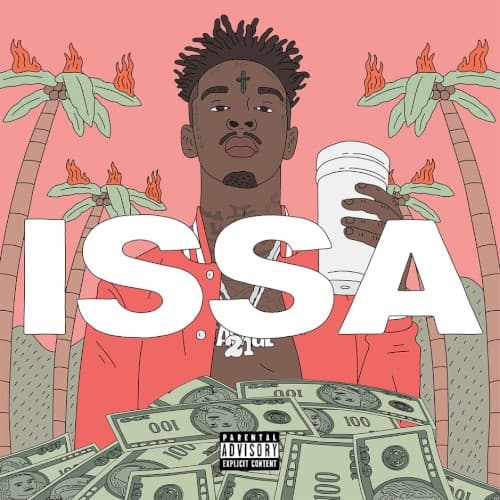
21 Savage Issa Album — The Dead Man Who Learned to Speak
No other debut announced its intentions this coldly. The first voice you hear belongs to a man recounting a near-death experience, explaining how getting shot made him realize words carry weight. Then the bass drops and 21 Savage spends the next hour proving it.
This is not a redemption story. It is not a survival anthem. It is forty-nine minutes of a Zone 6 product refusing to perform trauma for your entertainment.
Atlanta had already claimed the throne by the time Issa dropped. Migos owned radio, Future owned the clubs, Thug owned the internet. 21 Savage arrived with none of that energy and somehow carved space anyway. While his peers stacked ad-libs and fought for the catchiest hook, he rapped like someone reading depositions at a funeral.
Monotone delivery. Skeletal beats. Zero interest in making you comfortable. What happens when an artist refuses to meet the audience halfway?
The editorial angle here is simple: this album works precisely because it refuses to try. In an era when every trap debut aimed for crossover appeal and streaming playlist dominance, 21 Savage made an album that sounds like it was recorded for an audience of one. The miracle is how many people leaned in to hear it.
The Sound of Someone Who Already Died Once
Metro Boomin and Southside built these instrumentals like crime scene photos. Sparse drums, minimal melody, bass frequencies designed to rattle car doors in parking lots at 2 AM. The production philosophy strips trap music down to its skeletal foundation and asks whether you really need anything else. Most of the time, the answer is no.
When it fails, the emptiness feels less like atmosphere and more like absence.
Metro handles the majority of production duties and applies the same principle across every beat: less is threatening. Kick drums hit like car doors slamming. Hi-hats stay crisp and distant. Melodies arrive as afterthoughts, single-note piano loops or synth lines that refuse to resolve.
It is the sonic equivalent of standing in an empty warehouse at dawn, waiting for something to happen.
The space itself becomes menace.
Lyrically, 21 Savage operates in concrete details: no metaphors, no wordplay. He tells you the car he drives, the gun he carries, the block he claims. When he talks about violence it sounds like paperwork, factual and cold. When he talks about women it sounds transactional.
When he talks about money it sounds like the only thing keeping the walls from closing in. The monotone delivery that became his signature either hypnotizes or numbs depending on your tolerance for repetition.
Vocally, he never raises his voice, never speeds up, never switches flows for emphasis. Some call it deadpan mastery, others call it one-dimensional. The truth lives in the gray area where both arguments hold weight. Across fourteen tracks, the lack of vocal variation becomes the point and the problem.
It reinforces the emotional numbness the album explores, but it also makes the back half blur together in ways that hurt replay value. By the time you hit the final third, the atmosphere that felt suffocating in the opening act just feels tired. Does monotone commitment equal artistic vision or self-imposed limitation? The album never answers.
The weakness shows up in the album's length and sequencing. Fourteen tracks is at least three too many for an artist working in this narrow sonic and emotional range. The middle stretch sags under its own weight.
The Journey From Threat to Exhaustion
The first stretch hits like walking into a room where everyone stops talking. Famous sets the temperature immediately: cold, direct, unbothered. The sequencing from there creates momentum through contrast, trading the ominous opening for the closest thing 21 allows himself to a victory lap. These early tracks establish dominance not through aggression but through sheer indifference to whether you approve.
The middle section tests patience. The album's commitment to emotional flatness becomes a liability when the production starts repeating itself. Too many beats follow the same formula: minor key loop, hard drums, empty space. Too many songs explore the same thematic territory without adding new dimension.
The numbness that felt intentional earlier starts feeling like limitation. You begin to wonder whether the monotone is a choice or a ceiling.
The back half rallies briefly before fading out. The energy lifts for a few moments, then settles back into the same emotional register that defined the previous thirty minutes. By the time you reach the closing track, the atmosphere that made the opening so compelling has worn thin. The album ends not with a statement but with a slow fade, like someone walking away mid-conversation.
What saves the sequencing from total collapse is the occasional moment of self-awareness. 21 Savage knows he is repeating himself. He knows the coldness reads as posturing to some listeners and authenticity to others. He seems unbothered by the debate, which is either the most honest artistic stance on the album or the most convenient excuse for its flaws.
The Debut That Refused to Beg for Attention
In 21 Savage's discography, this sits in the middle. Not as fully realized as the Metro collaboration albums that followed, but more focused than the earlier mixtape runs. It established the blueprint without perfecting it.
The monotone delivery, the minimalist production, the refusal to perform emotion — all the signature elements appear here in rough draft form. Later projects would refine the approach. This one just announced it.
Who should listen: fans of Metro Boomin's most stripped-down work, anyone interested in the moment Atlanta trap stopped chasing radio and started dictating terms, listeners who prefer atmosphere over bars. Who should skip it: anyone allergic to repetitive song structure, fans who need vocal variety and dynamic range, people who think fourteen tracks is too long for one emotional note.
How it aged: better than expected. The minimalism that felt sparse in 2017 now sounds ahead of the curve as trap production continues stripping away excess. The monotone delivery that critics called limited became the house style for half the SoundCloud generation. Bank Account remains inescapable.
The deep cuts still sound like driving music for bad decisions.
Standout tracks to try: Bank Account for the hit, Dead People for the atmosphere, Nothin New for the storytelling. If those three tracks do not connect, the rest of the album will not change your mind. Similar albums worth exploring: Future's HNDRXX for another 2017 Atlanta statement, Metro Boomin and 21 Savage's Savage Mode for the blueprint perfected, Playboi Carti's self-titled for minimalism taken even further.
Long-term influence: this album taught a generation of rappers that you do not need to yell to sound threatening. The Zone 6 monotone became a legitimate vocal style. The Metro Boomin partnership became the gold standard for producer-rapper chemistry in Atlanta trap. Issa did not reinvent the wheel.
It just proved you could strip the wheel down to three spokes and still roll.
This is the sound of someone who survived getting shot and decided emotion was a liability. Forty-nine minutes of that philosophy is exhausting, occasionally brilliant, and never boring enough to forget.
Track Listing
Famous
▲The album announces itself with someone else's voice first — a spoken-word intro about getting shot and realizing he had something to say. Then 21 Savage arrives over a Metro Boomin beat that sounds like an empty parking deck at 3 AM. Single-note piano. Distant hi-hats. Bass that rattles teeth. He raps about the come-up with zero celebration in his voice, cataloging designer brands and dead friends in the same monotone. The hook is just him repeating "I'm famous" like he is reading it off a police report. It works because it refuses to sound triumphant. This is what winning looks like when you grew up around too much loss to trust joy.
Bank Account
▲The only song here that escaped into the real world and never came back. Southside keeps the production even sparser than Metro's work — just drums and a synth line that sounds like a dial tone. 21 Savage delivers the hook in that same affectless voice: left his girl at home because she talk too much, only thing he love is the bank account. It became a meme. It became a stadium chant. It became the song that proved monotone delivery could move units. The verses never deviate from the established formula, which is exactly why it works. In a year when every rap hit fought for your attention with maximum chaos, this one just stood still and waited for you to notice. You did.
Close My Eyes
●The first stumble. Metro Boomin tries to add melody with a chipmunk-soul vocal sample, but it clashes with 21's delivery instead of complementing it. The lyrics cover familiar ground — trust issues, dead homies, money as survival mechanism — without adding new dimension. The hook reaches for introspection but lands on repetition. This is the template the rest of the album's weaker moments follow: take the established sound, add a slightly different texture, hope the atmosphere carries it. Sometimes it does. Here it does not. Skippable.
Bad Business
▲Back on track. The beat strips away even the minimal melody from previous tracks and leaves just drums and bass. 21 Savage uses the space to catalog street economics: who gets taxed, who gets touched, who gets trusted. No storytelling. No narrative arc. Just a list of rules delivered like someone reading terms and conditions out loud. It should be boring. Instead it feels like watching someone explain how a trap works right before it snaps shut. The monotone that hurt the previous track becomes an asset again here. When the content is this direct, vocal performance would just get in the way.
Baby Girl
▼The mandatory album girlfriend track, and it sounds exactly as uncomfortable as you expect. 21 Savage attempts tenderness over a Metro Boomin beat that tries for romantic with minor-key keys and slower drums. But a man who has spent the entire album rapping like a coroner cannot suddenly become a crooner just because the tempo dropped. The lyrics aim for vulnerability — talking about trust and connection — but the delivery never shifts out of autopilot. You can hear him trying. That is the problem. When he stops trying and just raps, the album works. When he reaches for range he does not have, it collapses.
Thug Life
●Pure atmosphere. Metro Boomin loops a single synth line and lets it ride for three minutes while 21 Savage catalogs violence with the emotional range of someone reading a grocery list. Shot someone. Robbed someone. Lost someone. The stories blur together intentionally. This is not about individual incidents. This is about accumulation, about how many times you can recount trauma before it stops sounding like trauma and starts sounding like weather. The beat never builds. The flow never varies. It just exists, heavy and patient and cold. Not a standout, but it holds the album's thematic center in place.
FaceTime
▲The energy lifts briefly. The production adds a little bounce, a little melody. 21 Savage still raps in monotone but the beat gives him something to push against instead of floating over. The content stays locked in the same territory — flex, threat, distance — but the added texture makes it feel less redundant. This is what the album needed more of: moments where the production shifts just enough to create contrast without abandoning the established mood. It does not reinvent anything, but it reminds you why the formula worked in the first place before the middle stretch wore it down.
Nothin New
▲This track arrived in summer 2017 with bass heavy enough to rattle barbershop windows, its Zone 6 claims already fueling debates about 21 Savage's Atlanta credentials. The song answered the question without saying a word. Metro Boomin gives him the sparsest beat on the album — barely any melody, just drums and silence — and 21 fills the space with details only someone who lived it would know. No clever punchlines. No wordplay. Just street ethnography delivered in that dead voice. The hook is him repeating "Ain't nothin' new" like he is reminding himself more than the listener. It is the best writing on the album because it stops performing and just documents.
Numb
●The title describes the content and the problem. 21 Savage raps about emotional detachment over another minimal Metro beat, but by track nine the numbness has infected the listening experience too. Nothing here sounds bad. Nothing here sounds fresh. It just sounds like the same song you have been hearing since track five with slightly different drum patterns. The lyrics cover the same thematic ground: cannot trust women, cannot trust friends, cannot feel anything except the weight of survival. True? Probably. Interesting the ninth time in a row? Diminishing returns. This is where the album's refusal to vary its approach becomes a liability instead of a statement.
Dead People
▲The album's emotional center. Metro Boomin builds the beat around a distant vocal sample that sounds like ghosts singing, and 21 Savage finally lets a crack show in the armor. He is still rapping in monotone, but the content shifts from bravado to grief. Dead friends. Dead enemies. The way violence becomes a cycle that eats everyone. The hook — "All my friends dead" — hits harder than any threat on the previous tracks because it sounds like confession instead of performance. This is what the album could have been if it trusted its own vulnerability more often. Instead, it buries this moment in the back half where casual listeners will never reach it.
Money Convo
▼Filler dressed up as a single. The beat tries for commercial appeal with a slightly brighter melody and more pronounced bass. 21 Savage delivers the same content he has been delivering for ten tracks — money, women, violence — but the shine on the production makes the repetition more obvious instead of less. This sounds like the label said we need one more potential radio song and everyone involved shrugged and knocked it out in an afternoon. Not actively bad, just profoundly unnecessary. Skip it and you lose nothing.
Special
▼Another girlfriend track, another failure. The production aims for smooth with R&B-adjacent keys and slower drums, but 21 Savage has no idea what to do with it. He tries to sound romantic and just sounds bored. The lyrics reach for intimacy and land on transactional observations about designer bags and foreign cars. You can hear the assignment: make something for the women in the audience. You can also hear how little interest he has in completing it. The monotone that works as menace on street tracks just sounds checked out here. Two album tracks aimed at women, two total misses. The pattern is clear.
Whole Lot
▲The energy picks up one last time. Metro gives him a beat with actual momentum, drums that push instead of just pulse. 21 Savage sounds more engaged than he has since the album's first half, running through flexes and threats with something resembling urgency. It is still the same lyrical content, still the same monotone delivery, but the production creates enough contrast to make it feel less redundant. Too little too late to save the back half, but it reminds you why the approach worked when the sequencing supported it. A solid track buried in an exhausting stretch.
7 Min Freestyle
●The album ends with 21 Savage rapping over a minimal piano loop for seven straight minutes, no hook, no structure, just bars. It should feel like a victory lap. Instead it feels like proof that fourteen tracks was at least three too many. The monotone that felt hypnotic on track two feels numbing by track fourteen. He covers the same themes he has been covering for the past hour: Zone 6, violence, money, distrust. Nothing new. Nothing revelatory. Just seven more minutes of the same atmosphere that stopped being compelling three tracks ago. The commitment to the bit is admirable. The execution is exhausting. This is how you end an album when you run out of ideas but still have time to fill.