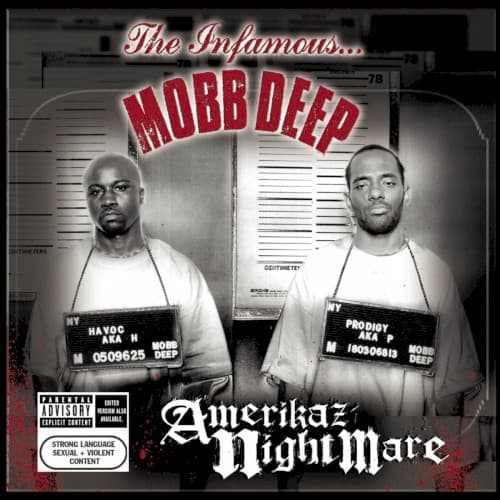
The scorecard
6.2/10 · Mixed
- Writing25%
- 6.5
- Production25%
- 7.0
- Delivery15%
- 6.0
- Cohesion15%
- 5.5
- Originality10%
- 5.0
- Replay value10%
- 6.0
Prodigy returns to sharper imagery after a sluggish period, but half the album coasts on autopilot threats with none of the specificity that made The Infamous exceptional.
Havoc handles most tracks with his signature bleak minimalism intact, the Alchemist adds three strong beats, but the Lil' Jon and Kanye West cuts feel like label concessions that break the mood.
Havoc stays consistent while Prodigy's flow alternates between the urgent pocket of his prime and a flatter cadence that drags weaker tracks further down.
Sixteen tracks with a remix tacked on and wide producer variance: the Queensbridge core holds the first half together, then commercial features and trend-chasing derail the second.
This is Mobb Deep refining their 1995 template eight years later with no new ideas and surrounded by 2004 trends they did not start and do not suit.
Win or Lose and the title track reward returns, but filler and miscalculations mean most listeners will extract five songs and leave the rest.
Mobb Deep Amerikaz Nightmare — The Hunger That Came Back Too Late
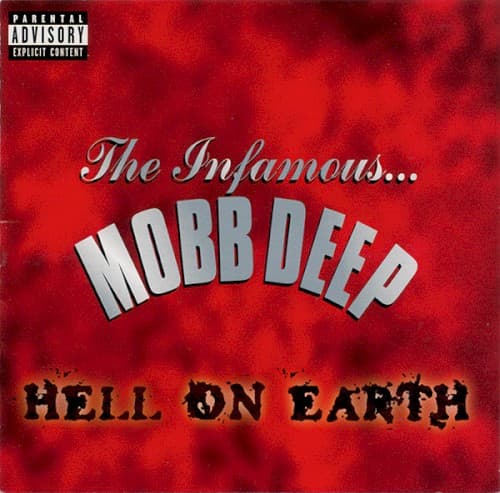
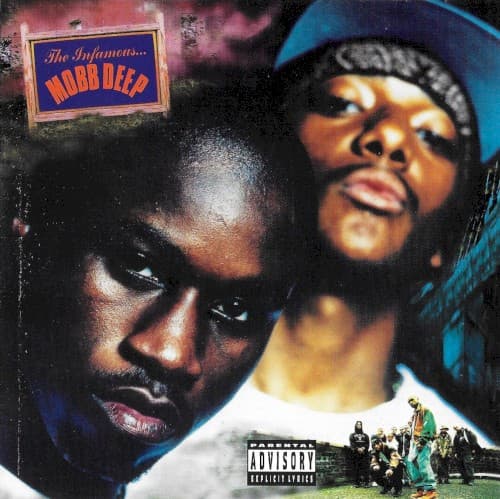
Amerikaz Nightmare argues that Mobb Deep still had the skill in 2004, just not the judgment. The duo that made bleak Queensbridge menace an art form on The Infamous and Hell on Earth spent the late nineties chasing radio play and coasting on their reputation, then arrived here claiming they were hungry again. The claim is half true. When Prodigy and Havoc stick to what they do best—spare drums, cold threats, no hooks—the album delivers moments as focused as anything since 1996.
Win or Lose over an Alchemist loop, the title track's slow dread, Flood the Block's two-minute hammer: these are Mobb Deep sounding like Mobb Deep mattered again. But hunger is not the same as direction, and Jive Records was still calling shots. Sixteen tracks is too many for a duo with one working mode. Lil' Jon and Kanye West show up as producers, not because the music needed them but because the label needed a 2004 sale.
Guest verses from Twista and Nate Dogg feel like attempts to court markets that were never going to care about Mobb Deep anyway. The result is an album that works when it ignores the era and falls apart when it chases it. The duo sounds stuck between two impulses: making the uncompromising sequel their catalog earned, or making the mainstream push their contract demanded. They tried both and succeeded at neither, leaving Amerikaz Nightmare as proof that the skill survived even as the context that made it matter had moved on.
The Sound Split in Half
Havoc produced ten of the sixteen tracks and the ones that work best are the ones where he refuses to update the formula. His drums still hit with the weight of something dropped from a height, his basslines still crawl, and his choices of what to leave out matter more than what he puts in. The title track builds dread from almost nothing: a two-note piano stab, a kick, and space for Prodigy to work. Flood the Block runs under three minutes because the beat says everything in the first thirty seconds and Havoc knows not to stretch it.
On the Run uses a slow churn that recalls Hell on Earth's best moments, patient and merciless. When the album stays in this zone it works, not because it breaks new ground but because Mobb Deep in 2004 still did this better than most of their peers. The Alchemist contributes three beats and two of them rank among the album's strongest. Win or Lose, originally intended for Jadakiss and Styles P according to the producer himself, uses a flipped soul sample with enough room for Prodigy to lock into a sharper flow than he manages elsewhere.
Got It Twisted loops Thomas Dolby into something head-nodding and strange, a sideways approach that still sounds like Mobb Deep because the rapping stays direct. The problem is what happens when the album leaves the Queensbridge sound entirely. Lil' Jon's crunk stomp on Real Gangstaz is a forced attempt at a club record that no one asked Mobb Deep to make. Kanye West's Throw Your Hands uses a Cold Crush Brothers sample for a track that wants to be uplifting and ends up hollow, the kind of song that sounds like a focus group decision.
Red Spyda's competent but forgettable production sits somewhere in between. The writing is inconsistent in a way that mirrors the production. Prodigy on the title track delivers the kind of specific threat imagery that made The Infamous exceptional: vivid, economical, unshakable. On weaker cuts he falls into generic posturing, threats with no detail and punchlines with no setup.
Havoc as an MC remains steady but limited, his voice a good counterweight to Prodigy when the latter is sharp and a reminder of the duo's narrow range when he is not. The guest verses add nothing: Nate Dogg phones in a hook on Dump, Lil' Jon yells his way through his own beat, Jadakiss delivers a solid sixteen on One of Ours Part II that the song does not need, and Twista raps fast on the remix for no clear reason. The album needed editing more than it needed features.
Where the Length Breaks the Flow
Sixteen tracks means the album peaks early and sags for the entire second half. The first stretch contains the thesis: this is Mobb Deep attempting to reclaim their place with the sound that built it. The opening run builds the best momentum on the record, proof that the duo could still deliver when they stayed focused. Then the energy shifts toward something more accessible, which works on its own terms but begins the tonal drift that kills cohesion.
By the middle section the album has lost the thread entirely, chasing trends instead of setting them. The back half is where filler takes over. Multiple cuts are competent beats with rote performances, songs that could have been left as album cuts on a tighter twelve-track version and instead become dead weight on a bloated sixteen. The sequencing makes it worse: one of the stronger tracks is buried at number eleven where most listeners will never reach it.
The closing run adds a remix and four more minutes to an album that was already too long, a transparent attempt to squeeze an extra single out of a song that worked better the first time. The pacing suggests no one in the room had the authority or the will to cut anything, so everything stayed and the album suffers for it.
Third in a Catalog of Two Classics
Amerikaz Nightmare ranks clearly below The Infamous and Hell on Earth, the gap wide enough that comparisons only highlight what is missing. Where those albums sounded inevitable, this one sounds like a negotiation between the duo's instincts and their label's demands, and no one won. It is not a bad album—Havoc's ear is still sharp, Prodigy's best verses here still carry weight, and the Alchemist beats prove the sound could be updated without being abandoned—but it is a frustrating one, an album that had six or seven excellent songs and released sixteen because that is what Jive thought would move units in 2004.
This is for completists and for listeners who want to hear what Mobb Deep sounded like when the hunger returned but the moment had passed. Casual fans should start with The Infamous and Hell on Earth and only come here if those records leave them wanting more. If you do listen, play Win or Lose, the title track, and Flood the Block, then decide whether the rest is worth the slog. Skip Real Gangstaz and the remix entirely. For next steps, go backward: Murda Muzik from 1999 shows the beginning of the decline, but it still has higher peaks than this. Amerikaz Nightmare is proof that Mobb Deep could still make Mobb Deep music in 2004, but not that anyone outside their loyal base still needed them to.
Track by track
Track Listing
Amerikaz Nightmare
StandoutThe title track makes the album's strongest case in under five minutes. Havoc's production is pure dread, a two-note piano loop and drums with nothing wasted, and Prodigy responds with some of his sharpest imagery on the record. The verses build tension through specificity rather than volume, threats that feel thought through rather than shouted. This is Mobb Deep at their most focused, proving they could still summon the sound that made them matter when they committed to it fully. The track works because it refuses to compromise or update, staking the entire album on the claim that the 1995 formula still had currency if executed with conviction.
Win or Lose
StandoutThe Alchemist flips a soul sample into something head-nodding and melancholy, and Prodigy locks into a flow that recalls his Infamous-era pocket. Originally meant for Jadakiss and Styles P according to the producer, the beat ended up with Mobb Deep and fits them perfectly, proof that their sound could absorb outside production without losing identity. Havoc's verse is solid if unremarkable, but Prodigy carries the track with the kind of economical writing that makes every line land. This is one of the album's clear highlights, a track that rewards repeated listens and belongs in any conversation about the duo's post-1996 work.
Flood the Block
StandoutUnder three minutes of Havoc doing what Havoc does: bleak drums, minimal melody, maximum impact. The beat says everything in the first thirty seconds and neither MC overstays the welcome. Prodigy and Havoc trade verses that stick to the script—threats, Queensbridge pride, no wasted motion—and the brevity makes it hit harder. This is the kind of track that reminds you why Mobb Deep mattered in the first place, efficient and uncompromising. The album needed more songs like this and fewer attempts to be anything else.
Dump
SolidHavoc's production is solid but the Nate Dogg hook adds nothing, a transparent attempt to make the song more palatable for radio that only makes it more forgettable. The verses are competent without being sharp, Prodigy and Havoc running through familiar ground with less urgency than the first three tracks. This is where the album begins to drift from its thesis, chasing accessibility in a way that weakens rather than broadens the sound. Not bad enough to skip but not strong enough to return to.
Got It Twisted
StandoutThe Alchemist loops Thomas Dolby into something strange and catchy, a sideways production choice that still leaves room for Mobb Deep to sound like themselves. The song was pushed as the lead single and it works on those terms, head-nodding enough for clubs without abandoning the duo's core sound entirely. Prodigy's flow adapts to the beat's rhythm, Havoc holds down his verse, and the whole thing feels like a successful compromise between commercial ambition and artistic identity. The remix with Twista later on the tracklist is unnecessary, but the original stands as one of the album's better moments and proof that Mobb Deep could update their approach when the collaboration made sense.
When U Hear The
SolidAnother Alchemist beat, this one leaner and more stripped-down than Got It Twisted. The production works but the rapping is rote, Prodigy and Havoc delivering threats without the specificity that makes them stick. The song functions as a solid album cut, the kind of track that does not hurt the flow but does not add much either. It sits in the middle of the pack, competent and forgettable in equal measure.
Real Niggaz
WeakRed Spyda's production is competent but generic, a mid-tempo beat that could have appeared on a dozen other 2004 rap albums without distinction. Prodigy and Havoc deliver workmanlike verses that hit the expected notes—loyalty, street credibility, threats—without offering anything memorable. The song drags past four and a half minutes when it has about two minutes of actual ideas. This is filler, plain and simple, the kind of track that exists to pad a tracklist rather than to say anything the album has not already said better.
Shorty Wop
WeakHavoc's beat has the signature minimalism but the rapping is flat, Prodigy and Havoc both sounding like they are going through motions rather than making a case. The hook is weak, the verses lack the detail that separates good Mobb Deep from mediocre Mobb Deep, and the whole song feels like an outtake that should have stayed one. By this point in the tracklist the album is losing steam and this does not help.
Real Gangstaz
WeakLil' Jon brings crunk drums and yelled adlibs to a Mobb Deep album, which is exactly as awkward as it sounds. This is a label decision disguised as a creative one, an attempt to chase the southern rap wave that dominated 2004 radio without any consideration for whether Mobb Deep belonged in that lane. Prodigy and Havoc sound out of place on the track, their delivery and writing clashing with the production rather than riding it. The song was released as the second single and it is easy to hear why it stalled: no one who wanted Lil' Jon wanted Mobb Deep, and no one who wanted Mobb Deep wanted this.
One of Ours, Part II
SolidA sequel to a soundtrack cut, with Havoc building a slow, heavy beat and Jadakiss delivering a solid guest verse that the song does not actually need. Prodigy and Havoc handle their sections capably, the writing sharper than the previous few tracks, and the production recalls the album's stronger moments. The problem is that the song is four and a half minutes of ideas that could have been communicated in three, and Jadakiss, as good as he is, feels like a feature added because the label wanted names rather than because the track demanded it. Decent but not essential.
On the Run
StandoutBuried at track eleven, this is one of the album's better songs: Havoc's production has the patient churn of Hell on Earth's best moments, and Prodigy responds with verses that carry actual weight. The writing is specific, the flow is locked in, and the whole track feels like Mobb Deep remembered what they were supposed to be doing. The sequencing is baffling—this belongs in the first half where it could have reinforced the album's thesis instead of arriving too late to save the back end. Proof that the skill was still there, just mismanaged.
Throw Your Hands (In the Air)
WeakKanye West flips a Cold Crush Brothers sample into something that wants to be uplifting and celebratory, which is not what anyone comes to Mobb Deep for. The beat is fine on its own terms but completely wrong for this album, and Prodigy and Havoc sound uncomfortable trying to match its energy. This is another label concession, an attempt to give the album a feel-good moment that breaks the mood entirely. The song is not offensively bad, just pointless, a reminder that even talented producers cannot save a collaboration that should not have happened.
Get Me
SolidHavoc's production is solid and the verses from Littles and Big Noyd are competent, but the song is over four minutes of mid-tier Mobb Deep posse cut with no standout moments. The guest features do not add anything the duo could not have handled themselves, and the writing is generic enough that the track disappears from memory before it finishes. By this point the album is deep into filler territory and this does nothing to pull it out.
We Up
WeakJust under three minutes of Havoc production and rote rapping, the kind of track that exists to fill space rather than to make a statement. The beat is passable, the verses are autopilot, and the whole thing feels like an album cut that was not good enough to cut but not bad enough to leave off. Forgettable.
Neva Change
SolidHavoc flips a sample into something with a bit more melody than usual, and Prodigy delivers verses that are sharper than the previous few tracks but still a step below the album's peaks. The song works as a late-album statement of consistency and resilience, Mobb Deep asserting that they are still who they were even as the industry moves on. It is a decent closer thematically, though the execution is merely solid rather than strong. The problem is that it is not the closer: a remix still looms.
Got It Twisted (remix)
WeakThe Alchemist's beat returns with Twista added for a verse of rapid-fire delivery that adds nothing to the original. The remix is purely a commercial move, an attempt to squeeze another single out of a song that worked fine the first time. Twista is technically skilled but his presence here is pointless, and the extra four minutes make an already too-long album even longer. Skip this and play the original again if you want to hear Got It Twisted.