The scorecard
6.4/10 · Mixed
- Writing25%
- 7.0
- Production25%
- 6.5
- Delivery15%
- 7.5
- Cohesion15%
- 5.5
- Originality10%
- 5.0
- Replay value10%
- 6.0
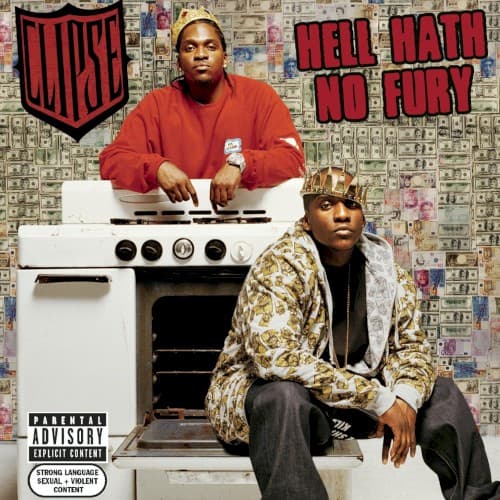
Coke metaphors remain sharp on "Popular Demand" and "Door Man," but the reach for radio hooks and redemptive themes dilutes the focused menace that made Hell Hath No Fury untouchable.
The Neptunes deliver solid work on "I'm Good" and "Champion," but spreading the load to DJ Khalil and Sean C & LV yields uneven results—"Kinda Like a Big Deal" feels pieced together rather than built.
Pusha and Malice still trade verses with surgical precision on "Showing Out" and "There Was a Murder," their cadences locked in even when the material underneath them sags.
The album lurches from street records to pop bids to introspective closers without a clear through-line; "All Eyes on Me" and "Counseling" feel like label compromises wedged into a different project.
Following Hell Hath No Fury with a safer, more conventional major-label album is a retreat, not an advance—Clipse chasing trends rather than setting them.
"Popular Demand" and "Champion" hold up, but the pop singles and filler tracks make full playthroughs a chore; Pusha's public disavowal of the album years later confirms the instinct.
Clipse Til the Casket Drops — The Price of the Major Label Pivot
The case against Til the Casket Drops is that Clipse arrived at Columbia Records having made one of the coldest, most uncompromising rap albums of the 2000s and then chose to water it down for radio. The case for it is weaker: that after Hell Hath No Fury moved only 107,000 copies in its first year, a duo this talented had earned the right to try something broader. Both arguments have merit, but the music settles it. This is an album made by two of the best technical rappers in the game who no longer trusted the approach that got them there.
The reach for crossover success is audible from the first pop hook. Where Hell Hath No Fury was thirteen tracks of paranoid minimalism and coke-talk precision, Til the Casket Drops stretches to find radio singles, redemptive themes, and guest verses that might crack the mainstream. The Neptunes still handle most of the production, but for the first time Clipse brought in outside producers—DJ Khalil, Chin Injeti, Sean C and LV—and the resulting sound is more conventional, more obvious, less the brothers against the world. Pusha T disowned the album in a 2021 interview, and Pharrell called one of the singles the worst song he ever made. They are right to distance themselves. This is the sound of two artists who perfected a style and then abandoned it for something safer, and the album that resulted is half-strong and half-compromised, a commercial failure that also failed as art.
When the Minimalism Gave Way to Overreach
The writing is still sharper than most of their 2009 peers, but the focus has softened. On Hell Hath No Fury every bar felt like it had been carved with a scalpel; here the verses have more air in them, more room for the kind of generalized hustler talk that could fit on anyone's album.
An Album That Never Finds Its Pace
The sequencing makes the problem worse. Til the Casket Drops does not build or flow; it jumps from tone to tone, chasing too many ideas at once. The first three tracks set up three different albums: inspirational street anthem, vintage Clipse over Neptunes grit, and a pop-rap bid with Kanye West. None of these modes wins out, and the result is an album that feels like a compilation of stray singles rather than a unified statement.
The back half sags under its own length—by the time the clumsy Laura Branigan interpolation arrives, the album has already lost the plot. Brief reminders of what a focused Clipse album might have sounded like appear in the middle stretch, but they are surrounded by too much air and too many concessions. The peaks are real but isolated.
Only two tracks could sit on Hell Hath No Fury without feeling out of place. The rest of the album is either chasing trends or trying to pivot into a new chapter that the music never commits to. At forty-nine minutes the runtime is reasonable, but the lack of focus makes it feel longer.
The Album That Ended Clipse as a Going Concern
Til the Casket Drops is the weakest album in the Clipse catalog, and it is not close. Hell Hath No Fury is a 9.1, an all-timer that trusted its own vision and executed it without compromise. This is a 6.4, a commercially motivated retreat that pleased no one—not the label, not the fans, not the artists themselves. It sold 31,000 copies in its first week, worse than Hell Hath No Fury, and Clipse split the following year.
Pusha T has spent his solo career reclaiming the uncompromising street rap that made his name; Malice converted to Christianity and left the drug talk behind. Both paths make more sense than the one they tried here. This album is for Clipse completists and for anyone curious about what happens when great artists lose faith in their own sound.
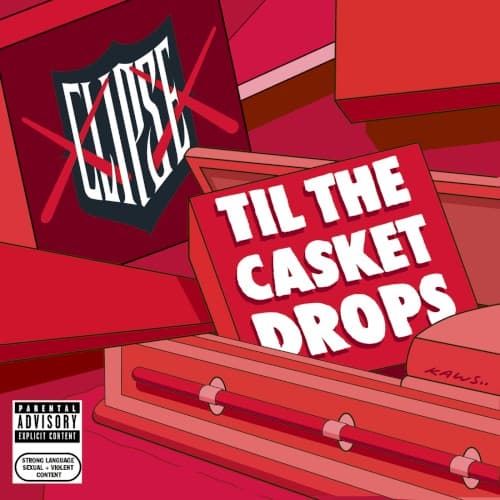
Start with the opening stretch if you want the two tracks that remember what made the duo dangerous. Skip the pop bids, which are exactly as bad as their creators say they are. If you are new to Clipse, go straight to Hell Hath No Fury and stay there. If you are working through their catalog in order, hear this one to understand why they could not keep going—it is the sound of a partnership that had run its course and a creative vision that buckled under industry pressure. The Kaws cover art is excellent. The music inside it is not.
Track by track
Track Listing
Freedom
WeakA muddy opener that aims for inspirational street anthem and lands on vague uplift. The Sean C and LV beat never finds a groove, just a plodding shuffle with no dynamics, and the verses spin hustler generalities without the specificity that made Clipse dangerous. This is the first sign that the album will not commit to a direction.
Popular Demand (Popeyes)
StandoutThe best track on the album and the only one that sounds like it belongs on Hell Hath No Fury. The Neptunes build a gritty, skeletal beat that lets the rapping breathe, and all three MCs show up with energy. Cam'ron's verse is a reminder of why he mattered, trading punchlines about fashion and firearms with the same deadpan delivery that made Diplomatic Immunity essential. Pusha and Malice thread double entendres through every bar, turning a Popeyes franchise into a front for moving weight, and Pharrell's ad-libs on the hook add just enough melody without softening the song. This is the standard the rest of the album fails to meet.
Kinda Like a Big Deal
WeakA plodding, overstuffed beat from DJ Khalil and Chin Injeti that sounds like three ideas competing for space, none of them good. Kanye delivers a distracted guest verse that does not match the Clipse energy, and the whole thing feels pieced together rather than built. The hook is weightless and the sequencing—dropping this right after "Popular Demand"—kills any momentum the album might have had.
Showing Out
SolidSolid Neptunes production with a rubbery bass bounce, but Yo Gotti's guest verse is filler and the song does not build to anything. Pusha and Malice handle their sections with the usual precision, but the writing is more generic hustler talk than the surgical specificity of their best work. A competent album track that earns its place but does not demand repeat listens.
I'm Good
WeakThe lead single and a transparent reach for radio play. Pharrell sings the hook with the kind of smooth, catchy melody that worked on "Mr. Me Too," but here it drains the menace out of the track rather than balancing it. The Neptunes beat is slick and polished, built for crossover success, and the verses are fine but toothless—this is Clipse with the edges sanded off. It charted nowhere and convinced no one.
There Was a Murder
WeakDJ Khalil and Chin Injeti aim for cinematic drama with stabs of piano and big empty spaces in the mix, but the result is hollow bombast. The verses are competent but the production is too busy trying to sound important, and the whole thing collapses under its own self-seriousness. Skippable.
Door Man
StandoutThe second-best track on the album, built on a single looped bass note that The Neptunes ride for five minutes without variation. The minimalism is a return to the Hell Hath No Fury blueprint, and Pusha and Malice use the space to lock into their most focused performances on the record. The verses are dense with wordplay about coke, money and access, the kind of writing where every line does double work. The length is earned—this is one of the few tracks that remembers what made Clipse essential and executes it without compromise.
Never Will It Stop
WeakSean C and LV build another unremarkable beat, this time with a sluggish tempo that drags the rapping down with it. Ab-Liva's guest verse adds nothing, and the hook is weightless. Pusha and Malice deliver technically solid verses but the song has no reason to exist. Filler.
All Eyes on Me
WeakThe single that Pharrell later called the worst song he ever worked on, and he was not exaggerating. This is a focus-grouped pop-rap track with Keri Hilson singing a hook so generic it could have been written by algorithm. The Neptunes production is slick to the point of sterility, all shine and no grit, and the verses from Pusha and Malice sound like they were recorded under duress. The whole thing reeks of label compromise—this is what happens when a duo that made Hell Hath No Fury gets told to chase a crossover hit. It failed commercially and it failed artistically. Skip it.
Counseling
WeakA clumsy attempt at introspection built on an interpolation of Laura Branigan's "Self Control" that does not fit the tone or the album. The Neptunes production is fine but the concept is half-baked—Malice raps about the psychological toll of the life, but the writing is too vague to land with any weight. Nicole Hurst sings the hook competently but the song goes nowhere. An ambitious misfire.
Champion
StandoutThe Neptunes build a menacing piano loop and Pusha and Malice finally get a beat worthy of their skills in the album's back half. The verses are sharp and focused, threading the hustler talk with the kind of specificity that has been missing since "Door Man," and the hook is simple enough to let the rapping do the work. This is one of the few tracks that sounds like Clipse remembered who they were and stopped trying to be something else. A late-album highlight that proves the talent was still there even when the direction was not.
Footsteps
StandoutDJ Khalil delivers his best beat on the album, a moody, minor-key track with enough space for Pusha and Malice to work. The verses are introspective without tipping into the forced redemption arc that drags down "Life Change," and the brothers sound engaged in a way they do not on most of the pop bids. A solid penultimate track that sets up the closer without overstaying its welcome.
Life Change
SolidMalice signals the Christianity that will define his post-Clipse career, rapping about leaving the drug game and finding faith, but the pivot feels grafted on rather than earned by the album before it. The Neptunes production is understated, giving the verses room to breathe, but the writing is more declaration than exploration—Malice tells us he has changed without showing us the process. Pusha's verse does not engage with the theme, and the result is a closer that splits the difference between two visions of what Clipse might become. Neither vision is compelling enough to hold the song together.