The scorecard
5.6/10 · Mixed
- Writing25%
- 6.5
- Production25%
- 5.0
- Delivery15%
- 7.0
- Cohesion15%
- 4.5
- Originality10%
- 5.5
- Replay value10%
- 5.0
The political rage on tracks like "Dollar Day" and "Thug Is a Drug" is sharp and specific, but too many songs trail off into half-thoughts and vague pronouncements without enough imagery to carry them.
Preservation's beats on "There Is a Way" and "Fake Bonanza" work, but most of the album sounds cheap and rushed, with Minnesota's tracks especially feeling like sketches that needed another pass.
The flow is still nimble and conversational, moving easily between urgent raps on "Undeniable" and quiet spoken-word stretches on "Sun, Moon, Stars," even when the songs around it collapse.
Fourteen tracks with no connective tissue, wildly inconsistent production quality, and an ending that just stops rather than resolves—this is plainly a contractual dump with no album-level thinking.
The rawness is a choice that sets it apart from the polished indie-rap of the mid-2000s, but it mostly sounds like a retreat from the ambition of Black on Both Sides rather than a new direction.
"Dollar Day," "Fake Bonanza," and "Undeniable" still hit, but most of the record is too thin and dispiriting to revisit, and knowing the circumstances makes it harder, not easier, to return to.
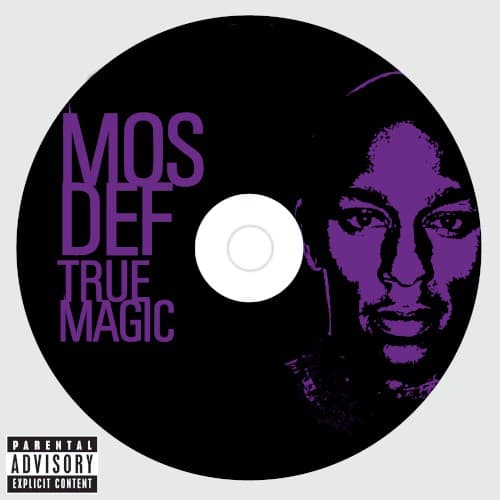
Mos Def TRUE MAGIC — The Album He Made to Get Out
TRUE MAGIC is what a contractual obligation sounds like when the artist has stopped pretending. After Geffen absorbed Rawkus Records, Mos Def owed the label an album; he delivered this one in December 2006, leaked it online shortly before release, and let Geffen ship it in a clear plastic case with no cover art, no booklet, no credits. The music inside sounds exactly as considered as the packaging. There are fourteen tracks, most of them under four minutes, and only three or four feel like finished songs rather than ideas recorded and abandoned. The rapping is often sharp, the anger is real, but the album-level work—sequencing, editing, mixing—was not done because the project had no reason to exist beyond ending a contract.
The thesis here is not that TRUE MAGIC is secretly good or unfairly maligned. It is that it is the rare album where the backstory actually matters, because the music itself is about refusal. Mos Def spent Black on Both Sides building intricate songs with live instrumentation and conceptual ambition; here he raps over cheap loops and tinny drums, leaves verses unfinished, and sequences the record like a tape he burned to get out of town. Some of that refusal produces worthwhile music—"Dollar Day" is a furious protest song, "Fake Bonanza" has the best bars on the album—but most of it just sounds tired. The question is not whether this is his worst album; it is. The question is whether the handful of good tracks justify sitting through the rest, and whether the rawness is a statement or just what happens when no one cares enough to finish.
Cheap Beats and Half-Finished Thoughts
The production on TRUE MAGIC sounds like it was done in a week with whatever was available. Minnesota handles four tracks, all of them built on minimal loops that never develop: one track has a guitar line that repeats for four minutes without variation, another layers a tinny drum pattern over a vocal sample that does nothing, and a third is two and a half minutes of the same bass note. None of these beats are bad enough to be offensively wrong, but none of them are mixed or arranged well enough to hold attention. They sound like demos that were supposed to get another pass and never did.
Preservation fares better on five tracks, mostly because he builds actual chord changes and lets the beats breathe. The soul-inflected productions have piano loops that move, shuffling drum breaks that give the rapping room to work, and mournful string arrangements that fit the reflective tone. These are the only beats on the album that sound like someone spent time on them. DJ Khalil's contribution raps over the "Nolia Clap" beat—Mos Def did not commission a new instrumental, he just rapped over an existing one—but the fit is good enough that it works as the album's most focused moment. The Neptunes show up and turn in a thin, clattering beat that does not sound like them at their best. Rich Harrison's track is the only one with real low-end presence and a hook structure, which is why it was the single.
The writing is uneven in a way that suggests speed more than carelessness. Mos Def is still a good technical rapper—his flow moves through pockets smoothly, his voice carries conviction—but the songs rarely finish their ideas. The opening verse about economic collapse and government neglect names specifics: Katrina, Baghdad, the price of living in a country that does not value your life. It is the angriest and most direct writing on the album, and it works because the thesis is clear and the details are concrete.
Other tracks argue that the glorification of street life is a trap, but the verses meander and never land the metaphor with enough force to make it stick. One song samples classic Wu-Tang and raps about systemic violence, recalling the sharp conceptual focus of GZA's 'Liquid Swords', but the bars are allusive rather than specific, and the track fades out before it builds to anything. Too many songs here feel like first takes: the idea is present, the flow is there, but the verse was never rewritten to sharpen the images or finish the argument.
Fourteen Tracks with No Arc
TRUE MAGIC is sequenced like a playlist, not an album. It opens with the title track, a short drum-and-voice piece that sets no tone and leads nowhere, then moves into the only song with commercial polish, then immediately drops into the cheapest-sounding stretch of the record. There is no build, no pacing, no sense that the order of these songs was decided for any reason other than filling slots. The album peaks early at track seven—the most complete and urgent song here—then coasts through five more tracks of varying quality before ending with a nearly six-minute closer that drifts rather than resolves.
The length is a problem mostly because so many of these tracks do not justify their inclusion. The first half includes a love song with a weak hook and a loop that goes nowhere, a two-and-a-half-minute fragment, and a two-minute piece of rapping over a bare drum pattern with no melodic content at all—it sounds like an interlude that was labeled as a full track by mistake. A tighter album would have cut five or six songs and sequenced the rest with some attention to dynamics. TRUE MAGIC was not made with that kind of care. It plays like fourteen songs recorded separately and thrown onto a disc in whatever order got it done fastest. The result is an album that feels longer than forty-eight minutes because there is no momentum pulling you through it.
Where It Ranks and Who Should Bother
TRUE MAGIC is Mos Def's weakest album by a wide margin, and the circumstances explain most of why. Black on Both Sides is an 8.3 here because the writing, production, and sequencing all work at a high level and the album has a coherent artistic vision; TRUE MAGIC is a 5.6 because it has none of those things except in flashes. This is not a reclamation project or a hidden gem—it is exactly what it was sold as, a contractual obligation fulfilled with minimal effort, and the handful of good songs do not change that.
Who this is for: Mos Def completists who already know Black on Both Sides and want to hear the rest, or listeners interested in what a major-label breakup sounds like when the artist refuses to cooperate. Who should skip it: Anyone looking for an entry point to Mos Def's catalog, or anyone expecting an album that functions as an album rather than a collection of loosely related tracks. Start with "Dollar Day" and "Fake Bonanza" if you are curious; both tracks hold up as strong standalone songs. "Hard to argue with" was the single and it is fine, though it sounds more like a Rich Harrison track than a Mos Def track. If those three songs work for you, "There Is a Way" is the other one worth keeping.
For context, go back to Black on Both Sides to hear what this artist is capable of when the project has a reason to exist, or forward to The Ecstatic to hear him recover. TRUE MAGIC is the record in between, made to end a contract and nothing else, and it sounds like it. It is not interesting enough to be a fascinating failure and not cohesive enough to work as a raw, unpolished statement. It is just an album that did not need to be made, released by people who did not want to release it, and the music reflects that at every level.
Track by track
Track Listing
True Magic
SolidA minute-long intro with drums and a vocal loop, no verses, no structure. It sets no tone and establishes no thesis for the album. This is the kind of track that gets cut when someone is paying attention to sequencing.
Undeniable
StandoutThe only song here that sounds like it was made for commercial release: Rich Harrison builds a beat with actual low end and a clear structure, and Mos Def delivers a verse about resilience and self-determination that sticks to its theme. The hook is functional, the mix is clean, and the rapping moves through the beat with confidence. This was the single and it earned the Grammy nomination, even if it does not rank among his best singles. It is competent and fully realized in a way that most of this album is not.
U R the One
SolidA love song over a minimal guitar loop that repeats without variation for the entire track. The verse is conversational and sweet, but the beat is so thin and static that the song never develops momentum. Minnesota produced this and three other tracks here, all of them undercooked in the same way.
Thug Is a Drug
SolidThe metaphor is clear—street mythology is an addiction that destroys communities—but the verse meanders instead of sharpening the argument. The beat is bare and repetitive, just a vocal sample and a drum pattern with no progression, and the track fades out before it lands anywhere. The idea is worth developing, but this version sounds like a first take that needed rewriting.
Crime & Medicine
SolidMos Def produced this himself and sampled GZA's "Liquid Swords," rapping about systemic violence and the machinery of oppression over the same eerie loop. The bars are allusive rather than specific—lots of images of blades and blood, not enough concrete detail to ground them—and the track ends abruptly instead of building to a conclusion. It gestures at something powerful without finishing the thought.
A Ha
WeakTwo and a half minutes of the same bass note looping under a verse that trails off into nothing. This is filler, plainly.
Dollar Day
StandoutThe best song on the album and the only one that sounds urgent and complete. DJ Khalil produced this, though "produced" here means Mos Def rapped over the "Nolia Clap" beat—he did not commission a new instrumental, he just used an existing one. But the fit is excellent, and the verse is the sharpest writing on the record: specific details about economic collapse, Katrina, war spending, and the lived reality of being poor in a country that spends billions everywhere except on its own people. The anger is focused, the imagery is concrete, and the flow rides the beat without fighting it. This is the track to start with if you are testing whether the album is worth your time, and it is the only one here that belongs on a best-of playlist.
Napoleon Dynamite
WeakTwo minutes of rapping over a bare drum pattern with no melody, no bass, no chord progression. It sounds like an interlude or a freestyle warm-up that was accidentally labeled as a full track.
There Is a Way
StandoutPreservation builds a soulful piano loop that actually moves and breathes, and Mos Def raps about perseverance and faith with enough conviction to carry the song. The verse is conversational and reflective, the beat has dynamics, and the track sounds like it was finished. Not a standout, but a solid song that does what it sets out to do.
Sun, Moon, Stars
SolidA quiet, reflective track with a mournful string arrangement and a subdued vocal delivery. Mos Def raps and half-speaks about cycles, history, and endurance, and the tone is meditative rather than urgent. The production works and the performance fits the mood, but the song drifts rather than builds, and it is hard to remember once it ends.
Murder of a Teenage Life
SolidThe Neptunes produced this, but it does not sound like their best work: the beat is thin and clattering, the drums sit oddly in the mix, and the melodic elements are barely there. Mos Def raps about the violence that steals young lives, but the verse is vague and abstract, naming no specifics and offering no images sharp enough to land. The track feels unfinished on both ends.
Fake Bonanza
StandoutThe second-best song here, with Preservation building a shuffling drum break that gives the rapping room to move. Mos Def delivers a verse about fake prosperity and the illusions that keep people chasing nothing, and the wordplay is tighter and more playful than anywhere else on the album. The flow is nimble, the images are concrete, and the track sounds like it was written and rewritten rather than freestyled and left alone. Still not a classic, but a reminder of what this artist can do when the song gets the attention it needs.
Perfect Timing
WeakSelf-produced and undercooked. The beat loops without developing, the verse rambles, and the track fades out before it resolves. Filler.
Lifetime
SolidThe closer is nearly six minutes long and it drifts for most of that time. Preservation's beat is spacious and mournful, and Mos Def raps about legacy, mortality, and the weight of trying to live with integrity in a broken world. The tone is reflective and resigned, which fits the mood of the album, but the song does not build to anything and the length is not earned. It just ends, quietly, without offering resolution or catharsis. A proper closer would have tied the album's themes together or sent the listener out with a final thought worth remembering; this one just stops.