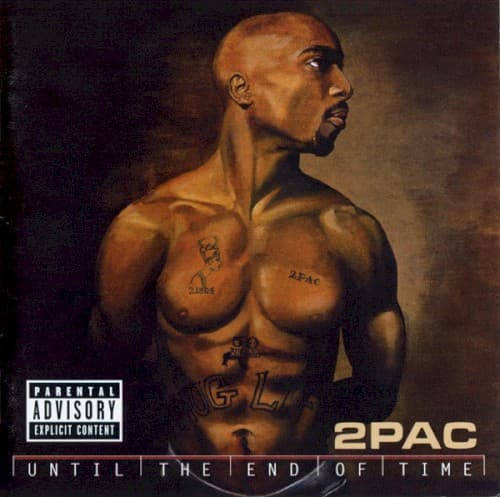
The scorecard
5.4/10 · Weak
- Writing25%
- 6.0
- Production25%
- 5.5
- Delivery15%
- 7.0
- Cohesion15%
- 3.5
- Originality10%
- 4.0
- Replay value10%
- 5.0
Moments of genuine reflection like "Letter 2 My Unborn" are diluted by twenty-eight tracks of uneven vault material, some sharp, most familiar.
Johnny J's core work is solid but the remixes flatten the original takes, and the double-disc length exposes how many beats recycle the same moody minor-key formulas.
Pac's voice carries authority even on weaker material, though the performance quality varies wildly across sessions recorded years apart.
Twenty-eight tracks with multiple remix versions and an interlude is bloated by design; no sequencing choice can make this feel like one album.
Released five years after his death, this offers no new ideas, only vault recordings remixed into the sound of 2001 radio rap.
The title track and a handful of reflective cuts have staying power, but the length and filler make full listens a chore.
2Pac Until the End of Time — The Vault They Should Have Left Closed
The problem with Until the End of Time is not that it exists but that it sprawls across twenty-eight tracks when ten would have made the case. This third posthumous release scrapes the bottom of the Death Row vault for material recorded during and after the All Eyez on Me sessions, then stretches it to double-disc length with remixes, an interlude, and filler that no living artist would have approved. The result debuted at number one and went quadruple platinum, proof that demand existed, but the music reveals what his estate and Death Row prioritized: product over curation, volume over quality, the appearance of an event over the discipline required to make one.
The thesis is straightforward. Until the End of Time is a bloated cash-in that buries a handful of worthy posthumous tracks under an avalanche of redundancy and mediocrity. The title track, built by Johnny J with a Richard Page interpolation, ranks among the better Pac vault releases: visual, mournful, genuinely moving. Reflective tracks show the mode Tupac Shakur was developing before he died.
But these moments are surrounded by throwaway posse cuts, two versions of the same song, and guest verses from Outlawz members filling time. Where Me Against the World earned its forty-five minutes and All Eyez on Me justified its length with ambition and variety, this album is fifteen tracks too long and says nothing new. It is the sound of a catalog being mined, not an artist being honored.
Johnny J and the Limits of Posthumous Production
The production here is a reminder that Johnny J understood the template: minor-key piano, live bass, sparse drums, space for Pac's voice to carry the weight. He produced eleven of the twenty-eight tracks, and his work does what it needs to do. The title track's Mr. Mister interpolation is obvious but effective; the strings and keys create the kind of sweeping melancholy that justified a posthumous single. These are professional beats that serve the vocals, which is the job.
But the remixes expose the limits. The original appears alongside a remix with K-Ci and JoJo that drowns the song in overproduced harmonies belonging to a different era. The RP remix of the title track with Richard Page himself adds nothing. The original L.T. Hutton production was fine; the remix is clutter.
Across two discs, the same minor-key mood repeats until it flattens: QDIII, Cold 187um, Mike Mosley and DJ Quik on isolated tracks. None of it is bad. None of it adds up.
The writing is where the double-disc format does the most damage. Pac recorded these verses between 1995 and 1996, and the quality control he would have applied is missing. On some tracks he wrestles with fatherhood and mortality in specific, vulnerable terms. On others he recycles the same Death Row slogans and empty threats he had already improved on elsewhere.
The Outlawz appear on seven tracks, and their verses are functional at best, momentum killers at worst. When the album works it is because Pac's voice alone is enough to carry a beat; when it sags it is because even his charisma cannot justify another posse cut about loyalty and enemies. The vault had good material. This album chose to bury it under everything else.
A Double Album With One Disc Worth Keeping
The sequencing makes no effort to shape the twenty-eight tracks into a journey because no journey was possible. The first stretch front-loads the stronger material, opening with dramatic strings and Pac in full martyr mode, setting a tone the rest cannot sustain. Then the momentum collapses under forgettable posse cuts and pleasant but inessential material. By the time the first disc ends it has cycled through three or four different moods without committing to any of them.
The second disc is worse. The interlude exists to pad the runtime. The middle section offers solid moments separated by filler and followed by more filler. The decision to include both original and remix versions of the same songs is indefensible; it turns the back half into a greatest-hits-style redundancy exercise.
The album does not build, does not ebb and flow, does not earn its length. It simply piles tracks until it stops. A disciplined single disc would have been a respectable posthumous release. This is twice as long and half as focused.
The Weakest Entry in a Catalog That Deserved Better
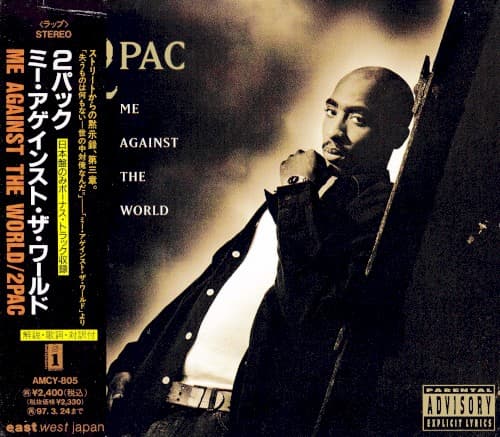
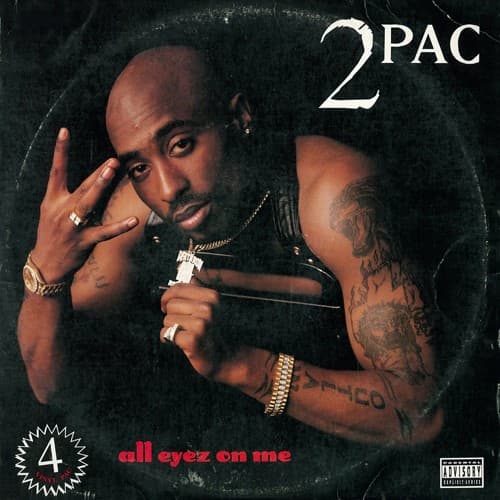
Until the End of Time ranks below Me Against the World and All Eyez on Me, and it is not close. Those albums were deliberate artistic statements; this is a vault clearing dressed up as an event. It sold because Pac's name still moved units in 2001, and because the title track was strong enough to carry a single. But as an album it is a failure of curation, proof that posthumous releases without the artist's input are almost always compromises at best and cash grabs at worst. Where Me Against the World focused Pac's introspection into a tight forty-five minutes and All Eyez on Me justified its length with ambition and variety, this sprawls into bloat without the vision to make the length mean anything.
This is for completists and fans who need to hear every vault track regardless of quality. Casual listeners and anyone coming to Pac for the first time should skip it entirely. Start with the title track and a handful of reflective moments, then move on to the albums Pac finished himself. If those few tracks justify the double-disc purchase for you, the rest is there, but expect filler.
For context on what the reflective Pac sounded like when he had final say, go back to Me Against the World. For the Death Row sound done right, All Eyez on Me is the correct answer. This album is a footnote in a catalog that includes two of the West Coast's essential records, and it plays like one.
Track by track
Track Listing
Ballad of a Dead Soulja
SolidCold 187um and Johnny J build a dramatic opener with strings and keys that frame Pac as the martyr he imagined himself to be. The performance is strong, the mood is set, but the track is more effective as a statement of intent than as a song that rewards repeat listens. It establishes the album's melancholy tone without quite earning it.
Fuck Friendz
SolidQDIII's beat is smooth and laid-back, and Pac delivers a casual, explicit take on no-strings situations. Tiffany Villarreal's background vocals add texture. The writing is blunt and functional, nothing more. It is fine as a vault cut but does not justify its place this early in the tracklist.
Lil’ Homies
StandoutOne of the album's clear highlights. Johnny J's production is spare and moody, and Pac delivers a cautionary verse about young riders getting caught up in the violence he knows firsthand. The writing is specific, the delivery is measured, and the sentiment is earned. This is the kind of reflective street narrative he did better than almost anyone, and it belongs on a tighter version of this album.
Let ’Em Have It
SolidL.T. Hutton's beat is aggressive, and Pac is in full combative mode. The hook is serviceable, the verse is solid, but the song is forgettable. It sounds like a dozen other Death Row posse cuts from the same era, and the decision to include a remix later makes this version feel redundant before the album is even halfway through.
Good Life
SolidMike Mosley's production is pleasant, and the song aims for optimism and aspiration. Pac, Big Syke, and E.D.I. sketch a vision of success and peace, but the writing is generic and the energy is low. It is not bad, but it does not add anything to the catalog. Pleasant filler.
Letter 2 My Unborn
StandoutThe album's emotional centerpiece. Johnny J, Tone, and Frank Nitty provide a quiet, piano-driven beat, and Pac addresses a child he will never meet with vulnerability and specificity. The writing is personal and direct, the performance is restrained, and the song earns its place as one of the better posthumous vault releases. This is what the album should have been built around.
Breathin’
SolidJohnny J's beat is solid, and Pac is joined by the Outlawz for a mid-tempo reflection on survival and paranoia. The verses are competent, but the song does not distinguish itself. It is one of several tracks that would have been cut if Pac had been alive to sequence the album himself.
Happy Home
SolidThe beat is warm, and Pac reflects on the absence of a stable family life. The sentiment is genuine, but the execution is too vague to land with the force of his best introspective work. It is a vault track that sounds like a vault track.
All Out
WeakBig Simon Says provides a driving beat, and Pac and the Outlawz deliver a posse cut about loyalty and enemies. The energy is there, but the writing is familiar and the guest verses drag. It is five and a half minutes of Death Row boilerplate.
Fuckin’ Wit’ the Wrong Nigga
WeakTyrone Wrice's beat is minimal, and Pac delivers a threat-heavy verse. The song is short and direct, but it is also one-dimensional and forgettable. Filler.
Thug N U Thug N Me (remix)
WeakThe remix with K-Ci and JoJo drowns the original in overproduced harmonies. The interpolation is heavy-handed, and the song loses the edge it might have had. Including both this and the original version later is a transparent attempt to pad the tracklist.
Everything They Owe
SolidJohnny J's beat is sparse, and Pac is in revenge mode. The verse is solid, but the song is short and incomplete. It feels like an unfinished idea that should have stayed in the vault.
Until the End of Time
StandoutThe album's standout and the track that justified its release. Johnny J, Tone, and Frank Nitty build a sweeping, cinematic beat around the Mr. Mister interpolation, and Pac delivers one of his most vulnerable performances. The writing is reflective and specific, the hook is memorable, and the production elevates the material. This is what a worthy posthumous single sounds like, and it carries the album's reputation almost by itself.
M.O.B.
SolidA posse cut with Thug Life and the Outlawz, produced by Kurt Couthon, Ant Banks, and Sonny B. The beat is solid, the energy is there, but the song is too long and the guest verses are uneven. It is a relic of the Death Row era that does not age well.
World Wide Mob Figgaz
WeakJohnny J's beat is serviceable, and Pac and the Outlawz deliver another posse cut about loyalty. The writing is generic, the energy is low, and the song does not justify its place as the disc-one closer. Filler.
Big Syke Interlude
WeakAn interlude exists to pad the runtime. It adds nothing.
My Closest Roaddogz
SolidJohnny J's production is moody, and Pac delivers a solid verse about loyalty and loss. The song is competent, but it does not distinguish itself from the half-dozen other loyalty-themed tracks on the album. It is fine, but it is also redundant.
Niggaz Nature (remix)
SolidQDIII's remix with Lil' Mo adds a sung hook to a track that was originally sharper. The beat is smooth, the performance is solid, but the remix feels like an attempt to chase radio play rather than serve the song.
When Thugz Cry
StandoutOne of the album's stronger tracks. Johnny J's production is restrained, and Pac reflects on pain, loss, and vulnerability with specificity and weight. The writing is sharp, the delivery is measured, and the song earns its place among the best posthumous vault releases.
U Don’t Have 2 Worry
SolidQDIII's beat is smooth, and Pac and the Outlawz aim for reassurance and solidarity. The sentiment is fine, but the execution is too generic to make an impact. It is pleasant filler.
This Ain’t Livin’
SolidJohnny J's production is sparse, and Pac delivers a verse about street life and survival. The writing is competent, but the song does not add anything new to the catalog. Filler.
Why U Turn on Me
StandoutProduced by Pac himself with Jim Gettums, Dareen Vegas, and Crooked I. The beat is minimal, the verse is sharp and paranoid, and the song feels more immediate than most of the album. It is one of the few tracks where the production choices suggest Pac had input.
Lastonesleft
WeakJohnny J's beat is moody, and Pac and the Outlawz deliver another posse cut. The writing is familiar, the energy is low, and the song is forgettable. Filler.
Thug N U Thug N Me
SolidThe original version is preferable to the remix, but the song is still mid-tier vault material. The beat is solid, the performance is fine, but including both versions on the same album is indefensible padding.
Words 2 My First Born
StandoutDJ Quik's production is warm and soulful, and Pac addresses his child with the same vulnerability he brought to "Letter 2 My Unborn." The writing is personal and direct, and Above the Law's guest verse is competent. This is one of the few tracks where the feature adds value rather than dragging the song down.
Let ’Em Have It (remix)
WeakThe remix with Left Eye adds nothing that the original version did not already deliver. It is a transparent attempt to pad the tracklist and chase a different audience. Redundant and unnecessary.
Runnin’ on E
WeakProduced by Pac himself, the track is a posse cut with the Outlawz that runs over five and a half minutes. The beat is minimal, the writing is uneven, and the length is not justified. It feels like an unfinished jam session that should have stayed in the vault.
When I Get Free
SolidJohnny J and Cold 187um provide a beat, and Pac reflects on incarceration and freedom. The sentiment is genuine, but the execution is too generic to land with force. J. Valentine's background vocals add texture, but the song is still filler.
Until the End of Time (RP remix)
WeakThe RP remix with Richard Page himself adds nothing to the original. It is a redundant closer that exists only to justify the double-disc format. Skip it and go back to the original.