The scorecard
6.2/10 · Mixed
- Writing25%
- 6.0
- Production25%
- 6.5
- Delivery15%
- 8.0
- Cohesion15%
- 5.0
- Originality10%
- 5.5
- Replay value10%
- 6.0
The turn from old trauma toward the strain of fame gives the best songs a real subject, but too many verses on the back half restate the same heartbreak in the same general terms.
The piano-and-guitar beds are clean and give his voice room, and the borrowed pop melodies on Alone and By Your Side are smartly chosen, yet the palette barely changes across twenty-four tracks.
His singing is the strongest it has been, with a raspy upper register and a controlled crack that sell even thin material.
Twenty-four songs and a skit in just over an hour and eight minutes, with tempo and mood flat for long stretches, leave the middle of the record blurring together.
It refines his own template and improves the hooks, but it adds little beyond the sound he already owned on SoulFly.
As a playlist source it holds up well, though a straight front-to-back listen is the weakest way to hear it, and that is a projection based on how little the second half varies.
Rod Wave Beautiful Mind: A Great Singer Buried in a 24-Song Playlist
Rod Wave's fourth album asks the listener to sit through twenty-four songs in which a man admits, again and again, that fame has not fixed him. The singing is the best of his career. The sequencing is a streaming-era reflex rather than a decision. Beautiful Mind is a very good Rod Wave EP buried inside a very long Rod Wave playlist, and the distance between the two is the whole story of the record.
That distinction matters because of how the album was built to be consumed. It arrived with four singles already out, a delayed release date that irritated fans, and a first week of 115,000 units in which only 2,000 were pure sales. Twelve of its tracks landed on the Hot 100 in the opening week. A project engineered for that kind of count rewards length, since every extra three-minute song is another chance at a chart placement. Beautiful Mind plays as if it was assembled with that arithmetic in mind, and the second half pays for it.
None of this makes it a failure. Wave's voice has more control and more color here than on SoulFly, the hooks are better lit, and his habit of building a song around a borrowed pop melody finally pays off in a few places where he flips the mood of the source into something darker. When the writing turns from old trauma toward the odd loneliness of success, the album finds a subject his earlier work only gestured at. Those moments are the reason to care.
The problem is repetition at scale. Tempo, key, instrumentation and emotional temperature barely move across the running time, so songs that would hit hard on their own dissolve into each other in sequence. Even the critics who liked the record said so, and the ones who liked it less said the same thing in different words. This is an album to pull from, not to play through. For the wider run of his career, the Rod Wave page lays out the discography, and SoulFly is the record to set beside this one, because it solves the length problem better.
Clean Pianos, Borrowed Melodies, and a Voice Doing the Heavy Lifting
The core of Beautiful Mind is simple: a voice with real grain in it, placed over beats that stay out of its way. Producers such as Will-A-Fool, Bsquared and TnTXD supply most of the record's frame, and they favor piano loops, acoustic guitar figures and soft drums with a lot of air around them. The mix is clear enough that every crack in Wave's upper register is audible, and that is the right call. His instrument is the draw, and the production knows it.
What separates this album from his earlier work is the pop borrowing. Several songs lean on a recognizable melody from outside rap, whether a sample or an interpolation, and the best of them recast the source. A tender, familiar tune gets turned toward distrust or dread, and the mismatch between the sweetness of the tune and the bitterness of the singing is where the record gets its sharpest feeling. It is a smart way to make a hook land instantly in an era when the first fifteen seconds of a song decide whether it survives a playlist.
The delivery is more varied than the beats. Wave moves between a clipped, almost spoken verse cadence and long, aching held notes, and he rarely oversings a line the way imitators do. The weakness is that he has one emotional register, and he asks it to carry two dozen songs. Hurt is the default, defiance is the occasional variation, and joy barely shows up. A rap album can survive that if the writing keeps finding new angles on the same pain.
Here the writing is the softest part. Wave is honest, and the honesty is why people believe him, but the stories lack the concrete detail that makes confessional music feel lived in. A verse tells you he is hurt, tells you who hurt him, and tells you the money has not helped, without giving you the street, the room, the phone call. The best lines on the album are the ones that finally move into the exhaustion of being famous and still being lonely, because they have friction and specifics the old-trauma songs lack. The weaker ones stay general, and general heartbreak is easy to forget.
The production's consistency is a second weakness that sits next to the first. Piano-and-guitar beds are pleasant, but after the first dozen tracks they stop being a choice and start being a default. Few songs change the rhythmic feel, push the drums harder, or let a different instrument lead. When a track like Rockstar Heart or Married Next Year tries to lift the energy, the lift feels small against how much sameness surrounds it. One or two curveballs would have made the sad songs sadder by contrast.
The guest list is nearly irrelevant, which is itself a statement: this is a solo record built around a singular voice, and the few features add color without altering the direction. Taken track by track, almost nothing is bad. Taken as an hour of music, it is a lot of the same good thing.
Front-Loaded Hits, a Long Middle, and a Closer That Earns Its Place
The first third is the strongest stretch of the album, and it is no accident. The singles that were already known are positioned early, the hooks are at their sharpest, and the record establishes its mood with confidence. If you stopped after the opening run, you would walk away thinking this was one of the stronger melodic rap albums of its year.
Then the middle arrives and the sequence stops building. Songs of two to three minutes follow one another at similar speeds, in similar keys, with similar piano or guitar loops, and the shifts in subject (a breakup, a loyalty test, a worry about the money) are not matched by shifts in sound. It is easy to see why several reviewers described the record as bleeding together. In a playlist, each song gets heard in isolation and that does not matter. In an album sequence, it matters a great deal. The Druski Phone Skit sits near the center as a break, but it is a pause rather than a pivot, and it breaks the spell without refreshing it.
The back stretch recovers a little. A handful of short interludes and a couple of sharper hooks pull the energy back up, and the final run is more tightly organized than the stretch before it. The closer, Cold December, was the lead material from earlier in the rollout, and it works as a final exhale because it is one of the few songs that sounds like it belongs at the end of a record, sad but settled.
The length is not earned. A tight twelve to fourteen songs drawn from these twenty-four would be a stronger and more coherent album, and the best material would hit harder with less around it. The deluxe-era habit of padding a record to maximize streams is visible in the running order, and the concentration of excellent songs in the first part shows how much the back half is filler of the pleasant, competent kind. It is not offensive, just redundant. Fans who are happy to let a Rod Wave mood play for an hour will not mind. Anyone listening for development will feel the plateau.
A Better Singer, a Longer Record, a Slightly Lower Ceiling
Beautiful Mind earns a good-not-great grade because the parts are better than the whole. Wave sings more precisely, the hooks are stronger, and the best songs deal with the fame he finally has rather than the pain he came up in. But the record is too long for the range it covers, and its writing leans on general feeling where specific detail would do more work.
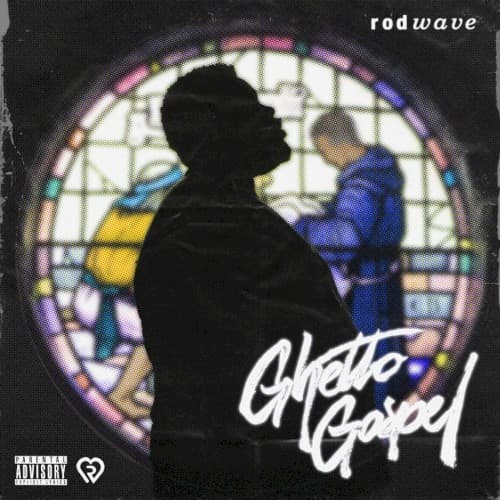
In the catalog, it ties Ghetto Gospel, which is also rated 6.2 here, even though the vocals, the hooks and the mix are all a clear step up. It lands just beneath SoulFly, which is shorter, has no skit to interrupt it, and holds its mood together more tightly over its run. Beautiful Mind has the higher peaks in a few places, but SoulFly is the more complete album, and completeness is what separates them.
This is for listeners who already like Wave's voice and want the most polished version of it, and for anyone building a melodic-rap playlist who needs a deep pool to pull from. Skip it if you want lyrical density, variety of production or a record that rewards a front-to-back sit. The album will age as a source of individual songs rather than as a unit; the singles are likely to outlast the sequence.
Start with Alone, whose borrowed melody and wounded hook are the clearest case for what he does well. Then play Cold December for the settled, end-of-night version of the same feeling, and Me vs. The World for the track that most sharply connects his sadness to the circumstances around it. If that lands, move to SoulFly for a tighter take on the same formula, and then to Ghetto Gospel to hear the rougher, less polished starting point. The final impression is of a talented singer who has outgrown the shape of his own albums.
Track by track
Track Listing
Alone
StandoutThe clearest argument for the album. A borrowed Ed Sheeran melody, courtesy of the Will-A-Fool and Bsquared production, is turned from affection into isolation, and Wave sings it with a rasp that makes the sweetness sound like a wound. The hook is instantly memorable and the verse stays short enough not to waste it. It makes sense that this was the highest-charting single from the album, because it combines the pop familiarity of a streaming-era hit with a performance that has real weight. It sets expectations the rest of the record cannot always meet.
Yungen
SolidJack Harlow's guest spot is the main curiosity here, a smooth, light counterweight to Wave's heavier tone. The two voices contrast well, but the song never builds past a pleasant mid-tempo groove.
Never Get Over Me
SolidA short, moody opener to the album's romantic wing. The hook is memorable and the production keeps things sparse, though the writing stays in generalities about a lost relationship and does not add new detail.
Stone Rolling
StandoutOne of the more urgent songs on the record, and a single for good reason. The drums push harder than on most of the surrounding material, and Wave rides them with a tighter, more rhythmic cadence that sounds closer to rapping than singing. It runs a lean three minutes and gives the front half of the album a needed jolt of momentum. The lyrical content is familiar, but the tension in the delivery makes it feel less rehearsed than the ballads, and it shows how much more textured the album could have been if more songs had followed its lead.
I Know It
SolidA competent reflection that does not add much. The piano loop and the vocal melody are both pleasant, but the song leaves little impression after it ends.
Forever
StandoutA slow, aching love song with a long, unhurried hook. Wave stretches vowels in the chorus and the guitar bed gives him room, which makes it one of the stronger straight-ballad moments on the record.
No Deal
StandoutBuilt on a sample from Conan Gray, this is another example of the pop-flip approach. The original's soft melody is bent toward suspicion, and the vocal delivery sells the distrust. The song is short and stays on one idea, which helps, though it does not develop further than the first verse suggests it will.
Quiet Storm
SolidDecember Joy adds a female voice to the album, and the duet gives the record a slightly warmer texture than the solo material around it. It is a solid change of tone, though the writing stays within the same emotional vocabulary.
Sweet Little Lies
SolidA slick, melodic song about deceit that rides a smooth loop. Wave's voice is the whole performance; it is pleasant but hard to distinguish from its neighbors.
Rockstar Heart
SolidOne of the shortest songs on the record, and it uses that time well. The chorus tries a brighter, more rhythmic energy than the ballads around it, and the effort to vary the mood is welcome even if the song itself is slight.
Fading
SolidA quiet, downcast piece where the singing is better than the writing. It is one of the places where the record begins to feel like a loop.
Time Kills (Love Birds)
SolidA gentle love song with a soft hook and a more relaxed vocal than the surrounding tracks. Pleasant, but forgettable in this running order.
Druski Phone Skit
WeakA comedy skit that interrupts the mood without adding any music. Filler, and a reminder that this artist's skits are a recurring habit that critics have found more distracting than useful.
Keep Going
SolidA resilience song that tries to turn the album toward forward motion. The intent is clear and the hook is serviceable, but the production is again piano-led and does not mark a real shift.
Never Find Us
StandoutA guitar-driven song that interpolates The Lumineers, which gives it a campfire-folk quality unusual for rap. Wave sings it as an escape fantasy, and the ache in his voice fits the borrowed melody well. Short, focused and effective, it is a good example of the album's best instinct: take something familiar and aim it at something darker. It runs just over two minutes and is over before it can wear out its welcome, which is a quality more of the back half could have used. It is one of the more distinctive moments in the second half of the album.
Mafia
SolidA hardened, tougher-sounding track that lets Wave drop the soft pose for a verse. The aggression is a useful contrast, though it is more of a pose than a discovery.
Me vs. The World
StandoutA Tupac interpolation sits at the center of this one, and it is the most direct link the album makes between Wave's pain and the circumstances behind it. The beat is restrained, the vocal is raw and the song carries a sense of siege that the more romantic tracks lack. The borrowed melody could have made it a tribute exercise, but Wave keeps his own voice at the front and the song feels earned rather than referential. It is among the strongest cuts on the record and the best use of the interpolation approach after Alone, because the borrowed material actually deepens the song's theme.
Pieces
StandoutA sample-driven ballad about breaking apart, built from an Eylie vocal. Wave's performance is wounded and sincere. The song is among the better ballads, but it is another slow track in a run of slow tracks.
Pt. II
SolidA brief interlude built on a K-Ci & JoJo sample. At barely over a minute, it is a mood piece rather than a full song, and it works as a breather.
Everything
SolidA short, direct love song with a clean hook. It does its job without surprising anyone.
Married Next Year
StandoutA hopeful track that pushes the tempo and the mood a little higher than most. The optimism is a rare note on this album, and the hook is catchy, even if the writing remains general.
Better
SolidA reflective song about improving that fits the album's late-record turn toward recovery. Sincere and pleasant, but sonically it is one more soft-piano entry.
By Your Side
StandoutThe oldest single on the album, built on an interpolation of a Plain White T's folk-pop hit, and still among its sturdiest songs. The simple guitar figure carries a fragile, almost lullaby-like hook, and Wave sings it with a tenderness that suits the borrowed melody. It shows the record's pop instincts at their cleanest: no tricks, a strong melody and a vocal that sells it. The song also helps explain how his audience has grown, since it speaks plainly and warmly to people who do not usually listen to rap. It has aged well since its release.
Cold December
StandoutA Hank Williams Jr. sample gives this closer a worn, country-tinged weight, and it is the most fitting last track the album could have had. Wave's voice is tired in a way that feels earned, and the production lets the sample breathe instead of burying it. It is the song that best matches the record's title, mixing dark feeling with something beautiful. Even though it was released well before the album, it works as a final exhale, and it is one of the three or four songs from this record that should outlast the sequence.