The scorecard
6.7/10 · Good
- Writing25%
- 6.5
- Production25%
- 6.5
- Delivery15%
- 8.0
- Cohesion15%
- 6.0
- Originality10%
- 6.5
- Replay value10%
- 6.5
The pain is specific enough on "I Remember" and "Dark Clouds" to land, but verse after verse restates the same grief and loyalty themes without adding new scenes or images.
The guitar-and-piano beds on "Thief in the Night" and "Dark Clouds" give his voice room and a consistent mood, but most beats are interchangeable and few leave their own mark.
His cracked, over-driven singing and layered vocal takes on "The Greatest" and "Ribbon in the Sky" are the strongest instrument on the record and the reason it connects.
The tempo and tone barely change from "Thief in the Night" through "Girl of My Dreams", though the short songs keep filler low and the mood mostly controlled.
The blend of pure singing and street-rap subject matter is distinctive for 2020, but it extends the sound of Ghetto Gospel more than it reinvents it.
The short songs and ready-made hooks suit repeat listening and the six or seven best tracks should hold up, though the mood can feel samey in one sitting.
Rod Wave Pray 4 Love: The Streaming Era's Most Honest Voice Crack
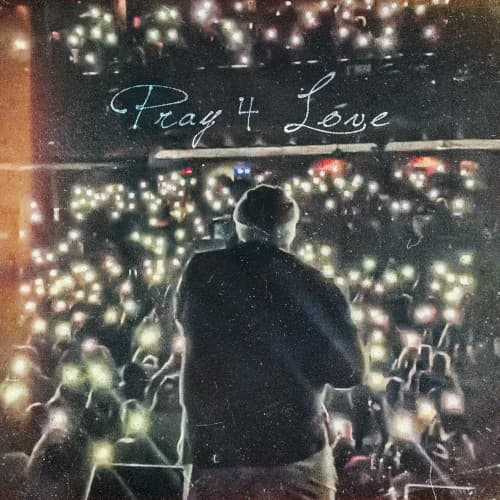
The most useful thing to know about Pray 4 Love is how short it is. The longest song on the record is under three and a half minutes, and most are closer to two and a half. That is not an accident of a lazy tracklist, it is how music is built to live on a playlist: get in, deliver the hook, repeat. Rod Wave turns that constraint into an advantage. Every song is a single idea, sung until the voice cracks, and then it is over before the idea can wear out.
My argument is that the album is the most convincing proof that the streaming-era sing-rap formula can produce real emotional weight, and also the clearest sign of its limits. The strengths are plain. Wave has one of the most affecting voices in modern rap, and he knows it, layering takes on top of each other until a verse sounds like he is comforting himself in real time. The weakness is also plain. Almost every song sits in the same key of grief, with the same loyalty-and-loss vocabulary, over the same kind of slow, melodic beat. The album has a mood, not a range.
The numbers explain why it worked. It debuted at number two on the Billboard 200 with 72,000 equivalent units, only 2,000 of them pure sales, and seven of the fourteen songs entered the Hot 100. That is a record built by streams, one song at a time, and it was driven by singles that had been rolling out since late 2019. Critics split between those who heard a genuine blues singer in rap's clothing and those who heard melodrama. I land closer to the first group but not all the way: this is a very good, very narrow record, and a clear step up from the debut Ghetto Gospel, mostly because the feeling is sharper and the songs are tighter.
A Blues Singer in Trap Clothing, Working in One Key
The central fact of Pray 4 Love is the voice. Wave does not rap with a singer's melody laid over it; he sings, with the strained, bent notes of a gospel or blues vocalist, and he uses rap's narrative structure as a frame. On "Thief in the Night" and "Dark Clouds" the delivery rises and falls inside the same line, and a second vocal is stacked on top so that the verse sounds like a conversation between two moods. That layering is the album's signature technique, and it is why a fairly small collection of themes feels urgent. When it works, it works the way a good soul record works: the grain of the voice carries the meaning, not the vocabulary.
The production serves that voice without competing with it. The credits are crowded, with TnTXD, Trillo Beatz, DrellOnTheTrack, Tre Gilliam and a long list of others, but the sound is remarkably unified: acoustic-sounding guitar and piano loops, soft low end, drums that stay out of the way. The decision to leave space is the right one, and the mix keeps the vocal at the front. The cost is that few beats are memorable on their own. Nothing here has the identity of a producer-driven record; the beats are frames, and several would swap with each other without anyone noticing.
The writing is the part that divides listeners, and I think the division is fair. At its best it is plain and direct, about hunger, family, mistrust and the weight of getting out, with an honesty that slick street rap rarely allows. At its worst it repeats itself. The same confessions return from song to song, and the "thug" vocabulary sits awkwardly beside the tenderness, as if the album is unsure whether it wants to be a love record or a survival record. A Pitchfork review quoted in the fact sheet called some of it melodramatic, and that is an accurate description of the weaker moments, where the emotion is stated rather than shown.
There is also very little guest presence. Only one feature, ATR Son Son, appears on the standard edition, and the choice fits an album built on personal, solitary recording; Wave has said the whole record was made in about a month, with just himself and an engineer. That focus is a strength, because nothing breaks the mood. It is also a limit, since a second voice or a harder verse might have given the album a contrast it lacks. What remains is consistency, and consistency, in a streaming-first record, is both the product and the problem: it is easy to put on, and easy to stop noticing.
Thirty-Seven Minutes Without a Break in the Weather
The sequencing is simple and mostly effective. The record opens by establishing the voice and the subject, then moves through a run of songs that alternate between bruised street talk and open-hearted singing without ever leaving the same emotional climate. Because the songs are so short, the album never has time to sag in the traditional sense. A weaker track ends quickly and the next one begins, which is exactly how a good streaming album should behave and a quiet argument for the format.
The weak point is the stretch in the middle, where the mood hardens into sameness. Several songs share a tempo, a vocal approach and a theme, and a listener can drift through three or four of them and not remember which was which. This is not a case of filler in the old sense, since each song has a hook and a point, but the effect of repetition is the same: the individual songs matter less than the overall color. The album is better heard as a mood than as a progression.
It recovers near the end, helped by the fact that the best-known singles are spread across the running order rather than stacked at the front. The closing song, "Dark Clouds", has the right kind of weight, a quieter, more weary finish than the opening, and it gives the album a sense of arrival that the middle lacked. Length is the album's most underrated virtue: at roughly thirty-seven minutes it asks for little and gives back a consistent atmosphere. A longer version would have exposed the narrow range, and the deluxe edition's additional eleven songs, by the same logic, tend to dilute what the original edition had in focus. This is a record that should be heard in one sitting and then replayed, not extended.
The Better of Two Very Similar Records
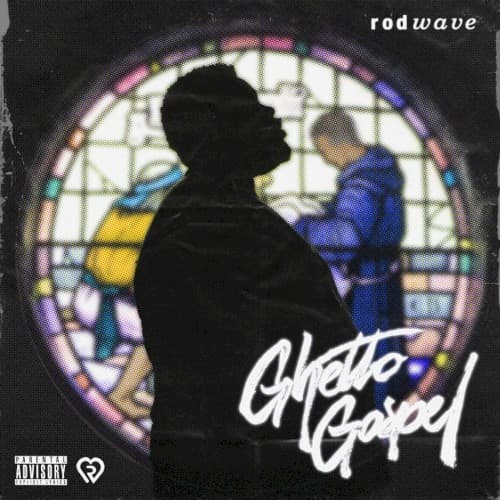
Pray 4 Love is the stronger of Rod Wave's first two albums, and it earns a higher score than Ghetto Gospel (6.0) for specific reasons: the hooks are better, the songs are tighter, the voice is more controlled, and the pain feels less like a pose. It is not a different kind of album, and that is the honest limit of the improvement. The scores reflect a record that does one thing very well and is not trying to do much else.
It is for listeners who want rap that sounds like soul or blues, who value a vocal performance over wordplay, and who are happy to live inside a single mood for half an hour. It is also a good entry point for anyone who wants to understand why melodic, confessional street music became so dominant on streaming in 2020. Skip it if you come to rap for dense lyrics, striking production, or variety. Listeners who want a rapper to surprise them will find it predictable by the fifth song, and anyone allergic to melodrama will find the heavy emotion hard to take.
For a first listen, start with "Dark Clouds" for the cleanest statement of the album's sound, "Thief in the Night" for the strongest vocal writing, and "The Greatest" for the sound of a hit built on a very simple idea. If you want to see where the sound began, go back to Ghetto Gospel, which is rougher and less sure of its hooks; for more from the artist, the Rod Wave artist page is the place to follow where the formula went next.
As for aging, the record sounds better with distance. The crowd of imitators that followed has made the original sound more distinctive, not less, and the voice has held up. That is what a good streaming-era album does: it makes a feeling instantly recognizable, and then the feeling stays.
Track by track
Track Listing
Pray 4 Love
StandoutThe title track sets up the whole album in under three minutes: a bruised, slow-burning vocal, a plain beat and a simple, devotional frame. It was a single, and it works as an introduction to the voice rather than as a showpiece.
F*** the World
SolidA shorter, harder moment, with TnTXD, Tahj Money and MalikOTB building a rougher bed. Wave sounds angry in a very controlled way, and the song gives the opening stretch some bite, though the writing is more mood than story.
Thief in the Night
StandoutOne of the album's best vocal performances. DrellOnTheTrack and Trillo Beatz keep the beat sparse and let the stacked, aching vocal carry the song, and the hook is the sort that lodges in your head after one pass. Wave sings about betrayal and unease with a plain directness that avoids cliché, and the second voice layered under the first adds a feeling of being haunted. It was a single, and it deserves to be the song people use to explain why his approach works. At barely over two minutes it also shows the album's discipline: the idea is complete and then it leaves.
Thug Life
SolidRelly Made supplies a clean, slow beat and Wave leans into the street-hardened side of the album. The tone is sincere, but the vocabulary is familiar and the song blends into its neighbors.
I Remember
StandoutTnTXD and LC give Wave a longer, more reflective canvas, and he uses the extra time to write about memory and what he has lost with more concrete detail than usual. It is one of the few songs that feels like a scene rather than a feeling, and the slower pace helps. A quiet standout and one of the best-written songs here.
Rags2Riches
SolidThe only standard-edition feature, from ATR Son Son, over a Zypitano and DaySix beat that is brighter and more bounce-driven than the rest. The change of pace is welcome and the rap-forward approach shows another side of the artist, though it is a lighter, more conventional song than the ones around it.
No Weakness
SolidA defiant, guarded song over a Trillo Beatz and DMAC production. The theme is toughness as armor, and it fits the album, but the writing sticks to stock claims and the melody is less distinctive than the best songs.
Roaming
Solid80Apes and Yung Tago keep this one loose and drifting, and Wave sings about restlessness with a casual, appealing looseness. It is a modest song that works as connective tissue rather than a peak.
The Greatest
StandoutA single, built by Yung Tago, Lil KDubb and hagan around a very simple, repeating hook. The song is a good example of the streaming-era method: one idea, sung with total commitment, and a beat that exists to hold the melody. Wave pushes his voice to the edge of cracking, and the second vocal layer adds a sense of self-encouragement that is the album's most useful trick. It is slighter than the best songs on the record, but its directness makes it one of the most replayable, and it rewards a loud speaker.
Ribbon in the Sky
StandoutA tender, melodic piece with a soft Drum dummie beat and a gentle hook. Wave sounds more hopeful than elsewhere, and the contrast helps. Pretty, short and effective.
5% Tints
SolidFour producers on a song that is just over two and a half minutes, and it feels like a mood sketch. The laid-back swagger is a change of pace, but there is little here beyond atmosphere.
Girl of My Dreams
SolidA single and the album's most obvious bid for romance. Ace Lex gives it a warm, simple bed, and Wave's voice does the work. The sentiment is sweet and unspecific, and the song feels like an extension of the sound rather than a development of it.
Thug Motivation
StandoutAKel and Tre Gilliam build a driving beat for a song about pushing through, and Wave's delivery is more forceful than on the quieter tracks. It was an early single and plays as one: a clear hook and a clear message. Solid and energetic, though the writing is generic.
Dark Clouds
StandoutThe lead single and the album's emotional core, produced by Mook on the Beat and Trillo Beatz. The beat is minimal, the vocal is raw, and Wave gives the song a weary kind of dignity that avoids both self-pity and bravado. The stacked takes are at their most effective here, and the hook lands through repetition rather than force. It is the song that best explains his appeal and the clearest case that the formula can carry real feeling. As a closer it brings the weather back down to earth. If you hear only one song from the record, hear this one.
Frequently Asked Questions
Is Rod Wave's Pray 4 Love better than Ghetto Gospel?
What are the best songs on Pray 4 Love?
How did Pray 4 Love perform on the charts?
Styles