The scorecard
8.2/10 · Great
- Writing25%
- 8.0
- Production25%
- 8.5
- Delivery15%
- 8.5
- Cohesion15%
- 7.5
- Originality10%
- 8.5
- Replay value10%
- 8.5
Street narratives like Feds in Town and Protect & Serve are told with plain, lived-in detail, but the sex-and-pimping material on the back half repeats itself.
Pimp C builds slow, live-instrument grooves around Leo Nocentelli's guitar, organ and bass that give the record a warmth few 1994 rap albums had.
Pimp C's drawl and Bun B's tighter, more clipped bars trade off cleanly, and both sit in the pocket of unhurried tempos without rushing them.
The mood holds for eleven tracks, but several songs run past five minutes on a single groove and the late stretch sags.
Live-band Southern soul under a Texas duo's rap was a distinct template in 1994, set apart from both West Coast G-funk and East Coast sample collage.
The grooves reward headphones and car speakers alike, though the album works better in selected tracks than front to back.
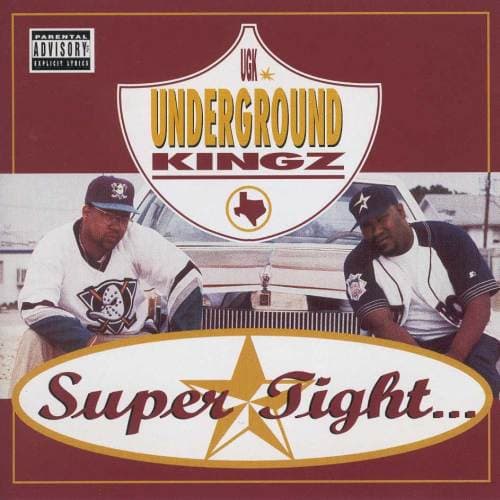
UGK Super Tight... — A Texas Duo Finds Its Sound in a Live Band
The best moment on Super Tight... is not a verse. It is the sound of a guitar, an organ and a bass line settling into a slow groove and refusing to hurry, with two rappers from Port Arthur riding on top as if they had all night. That groove is the argument of the album. UGK's second record is where the duo stopped sounding like a Southern group chasing the rap sound of the moment and started sounding like themselves, and the evidence is in how little the music cares about being fast, loud or flashy.
The case for Super Tight... is that it is the first UGK album with a fully formed identity. Pimp C is credited with programming and recording engineering and with production on every track, and DJ DMD joins him on three of them, so one ear shaped the whole record. Leo Nocentelli of The Meters plays guitar, which the fact sheet marks as a first for the group, and David Tornkanowsky on piano and organ and Chris Severin on bass fill out a band feel. The result is a rap record that sounds played rather than assembled, closer to soul and blues than to the dusty-loop approach of its East Coast peers. The case against it is more modest: it runs on one mood, and a few songs stretch that mood past the point where the writing can justify the length.
Selling 375,000 copies by 2011 tells you this was never a pop-chart event, and the album does not play like one. It plays like a regional statement made by people who knew exactly what their city sounded like. For a reader weighing whether to start here or with a later UGK record, the short answer is that this is the foundation, a strong album with a real center of gravity, and one that is more rewarding when you accept its pace than when you expect variety.
Slow Hands, Live Strings, Two Voices in a Pocket
Everything on Super Tight... is built around tempo. The drums are unhurried, the bass sits low and round, and the guitar and organ do the work that a sample would do on a different record. Pimp C's production credit on all eleven tracks gives the album a consistency that more crowded credit lists rarely manage, and the live-instrument approach makes it feel warm where much of the era's rap felt cold. The mix, credited to several engineers, keeps the low end full without burying the voices, which matters because the voices are the point.
Those voices are a study in contrast. Pimp C raps in a loose, bluesy drawl that sounds half-sung, bending lines around the beat and leaving space. Bun B is the tighter technician, stacking syllables and landing them with more force, and the pairing works because neither tries to do the other's job. On the better songs, such as Underground and Protect & Serve, the handoffs feel conversational, as if each verse answers the last. The delivery is the most consistent strength of the record, and it carries songs whose lyrics are only decent.
The writing is more uneven than the performance. At its best it is blunt, situational street reporting about the drug trade, police pressure and paranoia, told in plain language with enough specifics to feel lived-in rather than staged. Feds in Town is the clearest example of a song where the subject and the slow, nervous groove match. But the album also leans on sex and bravado, and on a stretch of the back half the material repeats itself without adding new angles. The pimp-and-party songs are well performed but they are the least distinctive writing here, and a listener who finishes the record remembers the mood more than the lines.
The second weakness is length against variety. Several tracks pass the five-minute mark, and the longest, Stoned Junkee, passes six and a half. A long song only works when something develops over its running time, and on a few of these the groove is a single idea stretched across two or three verses with minimal change in the arrangement. The guests, Smoke D and 3-2, add fresh voices but not fresh shapes, and their presence does not alter the tempo or tone around them. This is a record that rewards patience rather than surprise, and anyone expecting dynamic shifts will find the pacing flat.
What the album gets right is coherence of sound. A listener in 1994 could set it next to the dominant West Coast and East Coast styles and hear a third option, one built on session musicians, Southern soul and a regional accent. That alternative is why the record still matters even where individual verses do not carry it. For Southern rap, it sketched a template of live-band warmth that later UGK work would sharpen, and the groundwork shows here in the arrangements more than in the lyrics.
Eleven Songs, One Tempo, and the Sag After the Midpoint
As a sequence, Super Tight... starts well. A short opener at just over two minutes works as a statement of intent rather than a full song, putting the band sound in front before the first long groove arrives. The next few tracks keep that energy, alternating hard street material with looser, more melodic pieces, and the early run is the tightest stretch of the record. The album does a good job of establishing its rules in the first fifteen minutes: slow tempo, warm instruments, two voices trading.
The middle holds the album's highest points. Feds in Town sits at the center of the running order at over five minutes and earns its length because the atmosphere builds with the verses. Here the length is justified, and the sequencing puts a serious song at the heart of the album. After that, the tracklist leans toward sex, bravado and guest features, and the pacing begins to slacken. With several songs of five minutes or more in a row, the groove stops feeling like a choice and starts to feel like a habit.
The final stretch is where the running time costs the album the most. Stoned Junkee at 6:47 is the longest track, and it arrives late, when a listener has already absorbed the sound. The closer brings DJ DMD back to production alongside Pimp C and ends the record on a steadier note, but by then the album has spent more time in the same register than its ideas can support. Trimming one or two of the longer songs would have left a stronger forty-five minutes.
Still, the sequencing has a logic. It moves from short statement to full groove, through the street narratives, into the party and bravado material, and out on a measured closer, so it never feels random. The problem is not disorder but sameness. A listener who treats the record as an atmosphere, not a set of singles, will find the length less of a problem. At roughly fifty minutes it is not overlong in absolute terms, but it is longer than its variety allows, and that is the main reason cohesion is the weakest score on the card.
The Foundation Stone of Texas Rap: Strong Sound, Shaky Stamina
Super Tight... is a good-to-great album with an excellent sound and an uneven middle. Because no other UGK albums are rated on the site yet, its ranking has to be argued from the record itself: this is the album where the group's production identity became clear, and where the live-band approach that defines the best of their catalog first appears at scale. It is not the sharpest writing the duo would produce, and it is not the most varied. Its rating comes from the production and performance far more than the lyrics.
It is for listeners who love groove-first rap, anyone interested in how Southern hip-hop developed outside Atlanta and Houston, and fans of Pimp C as a producer. It is also a good entry for people who find sample-driven boom bap too dense, because the live instruments open up the sound. Skip it if you need variety, sharp punchlines or quick songs; the album rarely changes gears, and the pacing can feel flat on a front-to-back listen.
It has aged well in the way that mattered most. The live-instrument approach has not dated, because it was never tied to a production trend, and the vocal chemistry between Pimp C and Bun B still sounds natural. What has aged less well is the filler in the back half, where the material repeats itself.
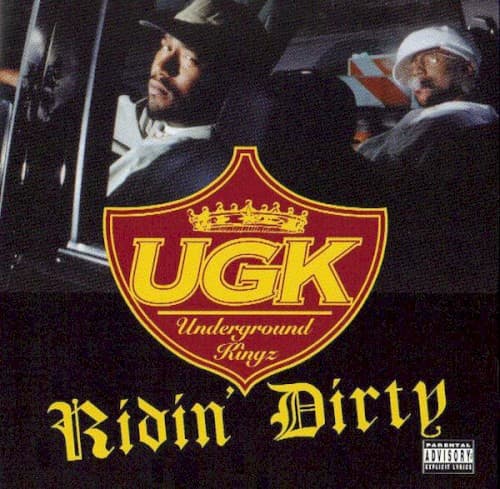
If you want three tracks to start with, play Feds in Town for the clearest fusion of subject and groove, Protect & Serve for the pairing of the two voices, and Underground for the album's early momentum. To hear where the sound went next, move to UGK's later Ridin' Dirty, which sharpens the live-band approach this record introduced. Then go back to the UGK catalog with that in mind and listen for how much of Super Tight... is already in the DNA of Southern rap, even where the songs run too long to prove it.
Track by track
Track Listing
Return
StandoutA short opener at roughly two minutes that sets the live-band tone before the first full song. It works as a statement of intent rather than a track, and it earns its place.
Underground
StandoutOne of the early peaks, with the two rappers handing verses back and forth over a groove that sits low and patient. Bun B's tighter delivery contrasts with Pimp C's drawl, and the track sets the pattern the rest of the album follows. A strong start for new listeners and one of the best uses of the duo's chemistry on the record.
It’s Supposed to Bubble
SolidProduced by Pimp C and DJ DMD, and one of the longer cuts at over four and a half minutes. The groove is warm and easy, but the track stays in one lane and leans on atmosphere more than on writing. Solid, though not a standout.
I Left It Wet for You
SolidA bedroom-minded slow jam that shows off the record's smoother side, with the live bass doing most of the work. It is well performed but covers territory the album revisits later, and it adds mood more than ideas.
Feds in Town
StandoutThe centerpiece. At over five minutes, it uses its length to build tension, matching a nervous, slow groove to street-level paranoia about police pressure. The verses feel specific rather than staged, and the arrangement lets the guitar and keys breathe between lines. This is the song where subject, sound and delivery align most completely, and it is the clearest argument for the album's approach. If you hear only one track to judge the record, make it this one.
Pocket Full of Stones, Pt. 2
SolidThe title marks it as a follow-up, and it plays like a confident return to the drug-trade subject matter. The groove is steady and the performances are assured, though at five minutes it does not develop much beyond its opening idea. Good, not essential.
Front, Back & Side to Side
SolidA guest feature from Smoke D adds a third voice over a familiar tempo. The song is loose and enjoyable in the moment, but it is built on bravado and the groove is similar to its neighbors, so it blurs into the middle of the album.
Protect & Serve
StandoutA strong back-half cut that returns to the album's serious side, with the two rappers answering each other's verses over a firm, unhurried groove. It addresses authority and street pressure with plain detail, and the vocal interplay is among the best on the record. Where the middle of the album sags, this track pulls it back up.
Stoned Junkee
WeakAt 6:47 it is the longest track here, with 3-2 as a guest. The groove is hazy and fitting for the subject, but the running time outlasts the ideas, and the arrangement barely shifts across it. A mood piece that would work better at four minutes.
Pussy Got Me Dizzy
WeakAnother 3-2 feature, and one of the weaker writing moments on the album, built on a theme the record has already covered. The performance is fine and the groove is pleasant, but this is filler by the standards of the best material here.
Three Sixteens
StandoutA steady closer produced by Pimp C and DJ DMD. It returns to the verse-trading format that works best for the duo and ends the record without a big flourish. Not a showstopper, but a fitting and controlled finish.
Frequently Asked Questions
Is UGK Super Tight... a good album?
Who produced UGK Super Tight...?
What are the best songs on Super Tight...?
Styles