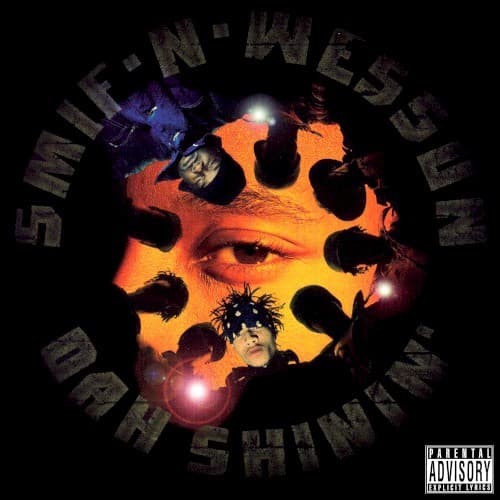
Smif-n-Wessun Dah Shinin' — The Album That Made Bucktown Sound Like a War Zone
No other debut has captured neighborhood paranoia with this much bass weight. The kicks hit like car doors slamming in empty parking lots. The samples loop until they feel like surveillance footage. Every verse sounds like it was recorded with one eye on the window.
This is what Bucktown sounded like when the crack era was ending but the bodies were still warm.
Smif-n-Wessun arrived in 1995 when East Coast rap was fracturing into boom bap purists and crossover gamblers. Black Moon had already proven the Boot Camp Clik formula worked — street reportage over drugged-out loops, no hooks, no apologies. Tek and Steele took that template and made it meaner. Where Buckshot sounded hungry, these two sounded hunted.
Could this album exist without Evil Dee and Mr. Walt behind the boards? The question answers itself every time that piano creeps into another track. The production duo understood something fundamental about Brooklyn in the mid-nineties: the borough did not need uplifting. It needed documentation.
They sampled jazz like they were building crime scene dioramas. They layered drums like they were fortifying bunkers. When the beat drops on the opening track, you are not entering an album. You are entering contested territory.
Dah Shinin' belongs to that brief window when New York rap was more interested in scaring you than entertaining you. This was pre-Puffy, pre-Roc-A-Fella, pre-everything that made the city's sound palatable for suburban consumption. This was two MCs from Brownsville explaining what survival looked like when nobody was watching. The album sold well enough to justify a sequel but never crossed over.
The Sound of Concrete Cracking Under Pressure
Evil Dee and Mr. Walt built these beats like they were constructing obstacle courses. Piano loops that never resolve. Basslines that rumble but never drop. Drums that hit on the two and four like someone knocking on a door you do not want to answer.
The production philosophy here is suffocation — every track feels like it is happening in a space with no ventilation. That claustrophobia is intentional. This is not music for open highways. This is music for project stairwells and basement parties that end when the cops show up.
The samples come from jazz and soul records that most producers were already strip-mining by 1995, but the flips here sound different. Where Pete Rock made soul sound warm, the Boot Camp producers made it sound cold. They sped up loops until they sounded frantic. They EQed the high end out until everything felt muffled.
When horns appear, they sound like they are being played through a wall. The effect is disorienting in the best way — you are always aware that something is slightly wrong with the sound, but you cannot stop listening.
Tek and Steele trade verses like sparring partners who have been hitting each other for years and know exactly where the bruises are. Tek is the blunt instrument — his flow bulldozes through bars with zero interest in melody or cadence variation. Steele is sharper, more technical, more willing to let his voice rise and fall with the beat. Neither man is trying to be likeable.
Their subject matter is narrow by design: street corner philosophy, crew loyalty, armed conflict, distrust of outsiders. They are not storytellers in the Slick Rick sense. They are reporters embedded in a war zone filing dispatches.
The album has one glaring weakness: it is relentlessly one-note. By the back half, the beats blur together. The verses start to sound interchangeable. There is no sonic variety, no guest appearances to break up the monotony, no attempt to modulate the energy.
That single-mindedness is either the album's greatest strength or its fatal flaw depending on your tolerance for repetition.
For ninety-five, when rap albums were still trying to be events and Wu-Tang Clan had set the bar for raw New York sound, this level of aesthetic commitment felt radical. Today it might feel exhausting.
Where does this rank in the Boot Camp Clik canon? Below Enta da Stage, above Nocturnal. Black Moon's debut had better songs and a clearer identity.
But Dah Shinin' has a consistency of vision that few rap albums from that era can match. From the first snare hit to the final fade-out, you are living inside Tek and Steele's worldview. That worldview is dark, paranoid, and unapologetically regional. You either submit to it or you bail.
A Fifty-Minute March Through Enemy Territory
The opening stretch establishes the rules immediately. The first three tracks function as a single statement of intent — no introductions, no scene-setting, just two voices and a wall of sound. By the time the fourth track arrives, you are either committed or you have already moved on. The pacing never shifts.
There is no ballad, no posse cut, no moment where the album takes a breath and tries to be something other than what it is.
The middle section is where the production starts to reveal subtle variations. Tempos slow down just enough to let the loops breathe. The drums get heavier. The basslines drop lower.
This is not an album that builds toward a climax. It is an album that digs deeper into the same trench for fifty minutes straight. The sequencing feels less like a narrative arc and more like a series of entries in the same diary.
The back half does not let up. If anything, the energy gets more oppressive. The beats get murkier. The verses get more insular.
By the time the final track fades, you have been submerged in this sound for so long that re-entering the real world feels disorienting. That is the album's greatest trick — it creates a hermetically sealed environment that becomes its own reality. You are not listening to a record. You are occupying a headspace.
Whether you want to stay there for repeated listens is a different question entirely.
The Blueprint for Every Dark, Dusty New York Rap Album That Followed
This is Smif-n-Wessun's best album and they have never come close to replicating it. Everything they recorded afterward felt like an attempt to recapture this exact lightning. The problem is that Dah Shinin' worked because it was uncompromising in a moment when compromise was becoming mandatory. By the time they released their second album, the industry had moved on.
The sound here influenced everyone from Mobb Deep's later work to every underground New York act that traded in grimy boom bap for the next two decades.
Who should listen to this? Anyone who thinks East Coast rap peaked between ninety-three and ninety-six. Anyone who wants to understand what Brooklyn sounded like before Biggie made it safe for radio. Anyone who has ever wondered what would happen if an entire album sounded like the darkest track on a Mobb Deep record.
Who should skip it? Anyone looking for variety, melody, or optimism. This album offers none of those things. It does not want to.
How has it aged? Better than most of its peers. The production sounds dated in the way that all mid-nineties New York rap sounds dated, but the aesthetic commitment still hits. This is not an album trying to be timeless.
It is an album trying to document a specific moment in a specific place, and it succeeds completely. Twenty-nine years later, it still sounds like the most accurate sonic representation of Bucktown that rap ever produced.
Bucktown remains the most well-known cut, and for good reason. Wontime and Sound Bwoy Bureill display the production style at its most oppressive.
Stand Strong is the closest the album comes to accessible. For similar albums, check Black Moon's Enta da Stage for the blueprint, Mobb Deep's The Infamous for the paranoia taken to its logical extreme, and Heltah Skeltah's Nocturnal for the Boot Camp sound refined. Long-term influence: every New York underground act that recorded in a basement and refused to compromise owes this album a debt.
Press play and you are back in Bucktown, ninety-five, when the only thing that mattered was whether you could make it to the corner store and back without incident.
Track Listing
Timz n Hood Chek
▲The opening salvo arrives with zero preamble. A piano loop that sounds like it was recorded underwater, drums that hit like someone kicking a dumpster, and two voices announcing their presence like they are reading warrants. Tek and Steele do not introduce themselves, do not explain where they are from, do not waste a single bar on pleasantries. The hook is barely a hook — just a repeated phrase that functions more like a threat than a chorus. This is scene-setting through pure aggression. The production is already fully formed, already committed to the murky aesthetic that will dominate the next fifty minutes. By the time the track ends, you know exactly what kind of album this is going to be.
Wrektime
▲The tempo drops and the menace thickens. This is the track where Evil Dee and Mr. Walt prove they can manipulate mood through pure sound design. The sample flips are minimal — just a horn stab and a bassline that refuses to move. Tek's verse here is pure blunt force, every bar delivered with the same intensity, no dynamic range, no interest in varying the flow. Steele provides the technical contrast, riding the pocket with more precision. The chemistry is already obvious — these two do not need to finish each other's sentences because they are both saying the same thing from different angles. The beat switch never comes. The energy never shifts. That refusal to give the listener an exit is what makes the track work.
Wontime
▲Here is where the album reaches its first peak. The production is suffocating in the best possible way — a piano loop that repeats until it becomes hypnotic, drums that sound like they were recorded in a parking garage, and a bassline that vibrates somewhere below the threshold of human hearing. Tek and Steele are locked in, trading bars like they are trying to out-menace each other. The verses are packed with threats, warnings, and very specific descriptions of violence that would never make it onto a radio edit. This is the sound of two MCs who understand that accessibility is not the goal. The goal is documentation. The goal is making sure anyone who presses play understands what Bucktown feels like when the sun goes down.
Wrekonize
●The fourth track in a row with no guest appearances, no sonic variety, and no interest in breaking the tension. By now the formula is clear: loop, drums, two voices, out. The production here is slightly more uptempo than the previous tracks, but only slightly. The effect is less about creating momentum and more about maintaining the same level of intensity for as long as possible. Steele's verse is the standout — his flow here is sharper, more technical, more willing to play with internal rhyme schemes. Tek bulldozes through his bars with the same energy he brought to the first three tracks. The lack of variety is starting to feel intentional, like the album is daring you to keep listening.
Sound Bwoy Bureill
▲The reggae influence creeps into the title and the cadence, but this is not a dancehall fusion experiment. This is still grimey Brooklyn rap with a slight nod to Caribbean sound system culture. The production is some of the darkest on the album — the sample is buried so deep in the mix that it is almost inaudible, and the drums hit harder than anything that came before. Tek and Steele adjust their flows to match the vibe, leaning into a more staccato delivery that emphasizes every syllable. The hook is minimal, almost non-existent. This is the track where the album's aesthetic commitment becomes most obvious. There is no attempt to make this palatable, no concession to listeners who might want something more accessible. This is the sound of two MCs fully committed to a specific vision, consequences be damned.
K.I.M.
▲Buckshot finally appears, and the energy shifts immediately. His voice is higher, sharper, more animated than Tek and Steele's. The production stays in the same lane — murky, bass-heavy, relentlessly dark — but the addition of a third voice breaks up the monotony that was starting to creep in. The three MCs trade bars with the ease of people who have been recording together for years. This is the closest the album comes to a posse cut, and it works because nobody is trying to outshine anyone else. Everyone is serving the same aesthetic. The beat is one of the album's most distinctive — a piano loop that sounds like it is being played in a haunted house, drums that hit on every downbeat with military precision. This is Boot Camp Clik at full strength.
Bucktown
▲The album's most well-known track, and the one that comes closest to being a single. The production is still dark, still bass-heavy, still committed to the same aesthetic, but there is a bounce here that the previous tracks lacked. The hook is the most memorable on the album — simple, repetitive, effective. Tek and Steele sound more energized here, more willing to let their personalities come through. The verses are still packed with threats and warnings, but there is a sense of pride mixed in with the menace. This is not just documentation of street life. This is celebration of a specific place, a specific neighborhood, a specific identity. The track has aged better than almost anything else from the mid-nineties New York underground, and it remains the entry point for anyone trying to understand what Smif-n-Wessun was about.
Stand Strong
▲The closest thing to an anthem on an album that has no interest in anthems. The production is slightly more uptempo, slightly less oppressive, and the hook actually functions as a hook rather than a repeated threat. Tek and Steele deliver some of their most focused verses here, leaning into themes of loyalty and perseverance without falling into inspirational-rap clichés. This is still street corner philosophy, but it is street corner philosophy with a point. The beat has more room to breathe than most tracks on the album — the sample is higher in the mix, the drums are less punishing, the bassline actually moves. This is the track you play for someone who thinks the album is too one-note. It proves that Smif-n-Wessun could modulate their sound when they wanted to. They just did not want to very often.
Shinin… Next Shit
●A short interlude that functions more as a palate cleanser than a fully realized track. The production is stripped down to almost nothing — just drums and a single looped phrase. Tek and Steele drop brief verses that feel more like warm-ups than finished thoughts. This is the album taking a breath before diving back into the deep end. It works because it does not overstay its welcome. Forty seconds in, forty seconds out.
Cession at da Doghillee
●The title references the Boot Camp recording spot, and the track feels like a cypher recording. Multiple voices, overlapping bars, a loose structure that suggests this was captured live with minimal editing. The production is raw even by this album's standards — the sample sounds unfinished, the drums are barely mixed, the whole thing has the energy of a basement session that someone happened to record. This is not a standout track, but it serves a purpose. It reminds you that this album was made by a crew, not a corporation. The lack of polish is the point.
Hellucination
▲Back to the core duo, back to the oppressive production aesthetic. The beat here is one of the album's most unsettling — a horror movie piano loop, drums that hit like footsteps in an empty hallway, and a bassline that feels like it is trying to push you out of the room. Tek and Steele match the energy with some of their darkest verses. This is paranoia rap at its most refined. Every bar sounds like it was written by someone looking over their shoulder. The hook is minimal, almost whispered. By now the formula is so established that the track does not need to do anything new. It just needs to maintain the same level of intensity, and it does.
Home Sweet Home
▲A rare moment of introspection on an album that mostly avoids sentimentality. The production is still dark, still bass-heavy, but there is a melancholy in the sample that was not present on earlier tracks. Tek and Steele reflect on their neighborhood with a mixture of pride and resignation. This is not a love letter to Bucktown. This is a clear-eyed assessment of what it costs to survive there. The verses are more personal than anything that came before, with specific details about family, friends, and the weight of constantly having to watch your back. The hook is understated, almost somber. This is the album at its most human, and it works because it does not feel like a concession. It feels like two MCs letting their guard down for three minutes before putting it back up.
Wipe Ya Mouf
●Shorter track, more aggressive energy. This is a threat disguised as a song. The production is punishing — drums that sound like they are trying to cave your chest in, a sample so distorted it is almost unrecognizable, and a bassline that hits on every beat with zero subtlety. Tek and Steele deliver rapid-fire verses with no room for breath. This is the sound of two MCs trying to see how much aggression they can pack into two minutes. The answer is a lot. Not a standout, but effective in the context of the album's relentless pacing.
Let's Git It On
▲The penultimate track, and one of the most fully realized songs on the album. The production is classic Boot Camp — a soul sample flipped into something sinister, drums that hit harder than they need to, and a bassline that never lets up. Tek and Steele are locked in, trading verses with the chemistry of people who have been doing this together for years. The hook is simple but effective. This is the album reminding you why it worked in the first place — two voices, one aesthetic, zero compromise. The energy never flags, the intensity never dips. This is what it sounds like when two MCs are completely committed to a vision and refuse to deviate no matter what.
P.N.C. Intro
●A brief setup for the final track. Sparse drums, no sample, just voices overlapping in conversation. This is the sound of a cipher about to start, a session about to begin. It lasts less than thirty seconds and serves as a palate cleanser before the closer. Nothing remarkable, but it does not need to be.
P.N.C.
▲The album closes with its longest and most ambitious track. The production expands slightly — more layers, more instruments, more room for the sample to breathe. Tek and Steele are joined by the rest of the Boot Camp roster, and the energy shifts from oppressive to celebratory. This is not a victory lap, but it is the closest the album comes to one. Everyone sounds energized, everyone is trying to land the final blow. The verses pile up, each MC trying to outdo the previous one. The production holds steady, never collapsing under the weight of all those voices. By the time the track fades, you have spent fifty-three minutes inside the Boot Camp worldview. Whether you want to go back in immediately or need a break depends entirely on your tolerance for unrelenting griminess. Either way, you will remember this album.