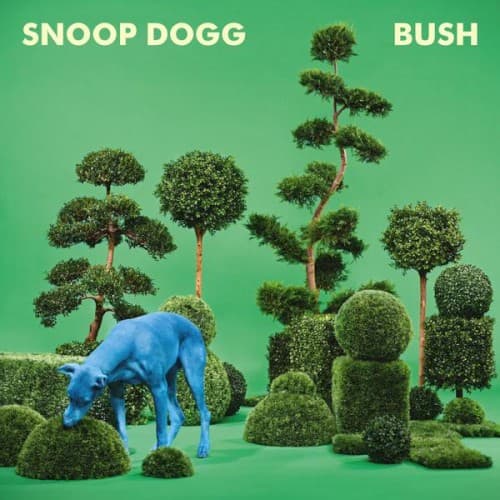
The scorecard
6.5/10 · Good
- Writing25%
- 5.5
- Production25%
- 7.5
- Delivery15%
- 6.0
- Cohesion15%
- 7.0
- Originality10%
- 6.0
- Replay value10%
- 6.5
The lyrics stay inside party, seduction and good-vibes territory with very little detail, and Snoop sings or murmurs through stretches where earlier records would have given him a verse worth rewinding.
Pharrell Williams and Chad Hugo build a clean, bright disco-funk bed, and the bass and keyboard parts on the lead singles are genuinely well made, though they sit closer to Virginia than to Long Beach.
Snoop's relaxed voice is still unmistakable, but he spends much of the record low in the mix or singing, and the guests, Kendrick Lamar especially, often sound more engaged than the host.
Ten songs in under forty-five minutes with one consistent palette make this an easy listen, but the sameness of tempo and tone means the record rarely builds.
It repackages the Neptunes-and-Snoop formula of a decade earlier with funk and disco trim, and the fresh element is Snoop's willingness to sit back rather than anything new in the writing.
The best songs are strong and the sound is warm, but the lack of tension makes it a record to put on rather than one to return to for detail.
Snoop Dogg BUSH: A Funk Record Borrowed From Virginia
BUSH is a pleasant Snoop Dogg record that behaves like a guest appearance on someone else's album. Pharrell Williams and Chad Hugo produce all ten songs, bring in Stevie Wonder, Charlie Wilson, Gwen Stefani, T.I., Kendrick Lamar and Rick Ross, and then leave Snoop to lounge in the middle of it, singing low in the mix and rapping only when the arrangement allows. That is the thesis of this review: the sound is lovely, the funk is real, and the West Coast pedigree is mostly implied rather than earned.
The distinction matters because the record is selling a lineage. West Coast rap built its most lasting sound in the early 1990s by taking Parliament-Funkadelic bass lines and slowing them into G-funk, and Snoop Dogg was the voice that sound was made for. When BUSH samples "One Nation Under a Groove" on its lead single, it is touching the source directly. But the architecture around it is the Neptunes' bright, clipped, Virginia-bred funk, which Pharrell and Chad Hugo had already used with Snoop on three earlier albums, and it moves differently from the dense, rolling Los Angeles synth bass of the early records.
The context makes the record easier to forgive. It followed two years of Snoop wearing other hats, a reggae project as Snoop Lion and a full funk collaboration as Snoopzilla, and BUSH was the first record in a while that was hip-hop in name and posture. Critics responded warmly, and the album debuted at number 14 on the Billboard 200 and number one on the Top R&B/Hip-Hop Albums chart. The reception is fair, because a lot of the music is simply nice to hear.
But nice to hear is a lower bar than the one Snoop set for himself. The stakes of BUSH are whether a veteran can still make a record that sounds like a new idea, and the answer here is only partly. It is an album about mood, not about rapping, and it is worth hearing for the mood.
Neptunes Disco-Funk With Snoop in the Back Seat
The production deserves its reputation. Pharrell Williams and Chad Hugo are credited on every song, with Williams alone on one of them, and they work from a palette that is almost entirely live-sounding: rubbery bass, bright keyboard chords, clipped guitar, claps that lean toward disco rather than boom-bap. Compared with the lean, menacing minimalism of their early-2000s work with Snoop, this is richer and sweeter, and the stacked backing vocals from Charlie Wilson, Pharrell and Rhea Dummett give most of the songs a warm, almost choral finish. As arrangement, it is excellent, and it is the main reason the album survives its own lack of friction.
The issue is what the arrangement does to the rapper. Snoop spends much of the album singing in a low, relaxed register that blends into the mix, and the result is that the voice that defined the West Coast sound is treated as one texture among many. NME called this an odd decision that works, and for several songs it does, because the low-key delivery matches the smooth setting. Over ten tracks, though, the strategy runs down. A rapper whose gift is phrasing and timing loses those advantages when he is not given a verse with a beginning and an end.
The writing is the second weak point. The subject matter is limited to dancing, flirting, smoke and self-regard, and the lines rarely carry the specific, funny detail that made earlier Snoop songs stick. Reviewers who called it a pleasant stroll down memory lane were being kind and accurate in equal parts. The nostalgia is the point, but nostalgia is not an idea in itself, and the album does not give listeners anything to argue with.
Where the West Coast tradition does show up, it shows up as taste. Snoop moves comfortably through a funk and R&B palette that connects back to the music G-funk was built from, and a few guests, especially Kendrick Lamar, bring the kind of lyrical density that the host only occasionally supplies. That tension, between a sound that honors the tradition and writing that does not carry it forward, runs through the entire record.
Still, the sound is distinctive in the Snoop discography. It is not a G-funk revival, a gangsta-rap throwback or a trap-era update. It is a polished, mid-tempo party record with a precise ear for groove, and for a thirteenth studio album from a veteran, that precision is worth noting, even if precision alone does not make a record necessary.
Ten Songs, One Tempo, and a Closer That Wakes Everyone Up
The running order is built for comfort. The album opens with its most direct West Coast gesture, a bass line that echoes the Neptunes sound Snoop helped make famous, and then settles into a groove that rarely changes. The songs run between roughly three and five minutes, and the whole album clocks in under forty-five minutes, which is the right length for a record whose main appeal is atmosphere. Nothing is padded, and nothing overstays.
The cost of that evenness is dynamics. Most of the songs sit at the same mid-tempo, with the same backing vocals and the same warm, clean kick, so the middle of the record blurs. Billboard's complaint that the songs are laid-back, perhaps too much, is accurate: the album does not build tension, so it has nowhere to release it. A listener can put it on, enjoy it, and struggle afterward to separate the third song from the seventh.
The guests do the sequencing work that the pacing does not. The Stevie Wonder cameo near the start gives the opening a lift, and the closer brings in Kendrick Lamar and Rick Ross for the first real change of weight. "California Roll" sets a confident tone, and "I’m Ya Dogg" arrives like a late burst of energy after a long, smooth middle. That final song is the only point at which the album's structure actually pays off, since the guests turn it into a proper rap record for a few minutes.
In a stronger version of this album, the shifts would come more often. A single hard-hitting rap song around the middle, or a cut that dropped the tempo a notch more, would have made the sequence feel like an arc instead of a mood. As it stands, the album is a good half-hour to pass in a car with the windows down, and a less convincing record to sit with and examine.
Warm, Skilled and Slightly Weightless
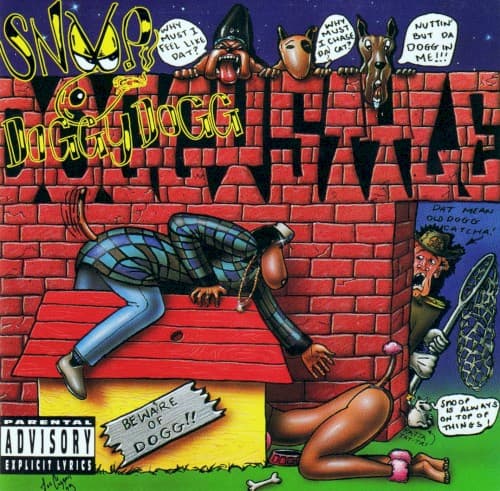
BUSH ranks well below Doggystyle and well above BODR in the catalog. Against Doggystyle, it is not close: that record fused a new sound, a new voice and a set of vivid narratives into the template for West Coast rap, while BUSH borrows its funk from the same family tree and gives the voice less to do. Against BODR, which scores 5.3 here, BUSH is clearly the stronger record, and Pharrell and Chad Hugo's craft is the reason. The scores reflect that placement, with production highest and originality lowest.
The album is for listeners who like Snoop at his calmest and want a smooth, groove-first record from him. It suits fans of the Neptunes' work, people who enjoy the funk and disco lineage of Parliament and Stevie Wonder, and anyone who wants a short, easy hour of music for summer. It is less suited to listeners who come to Snoop for sharp verses, narrative storytelling or the menace of his early records. Those listeners should skip it and go to the early catalog.
It has aged as a pleasant, unambitious record, and that is neither an insult nor a rescue. The sound has not dated, because the Neptunes' bright funk is not tied to a trend, but the material does not grow with time either. Pitchfork wondered what the same group might have made a decade earlier, and that thought keeps returning: the record is good, and it could have been better when everyone involved had more to prove.
Start with "California Roll" for the cleanest statement of the sound, "Peaches n Cream" for the funk lineage and the Charlie Wilson chemistry, and "I’m Ya Dogg" for the guest verses. If this sets the right mood, go back to Doggystyle to hear the sound that BUSH is quoting, and treat BODR as optional. The honest verdict is that BUSH is a well-made party record that borrows more than it adds, and its best minutes are the ones where the guests carry the weight.
Track by track
Track Listing
California Roll
StandoutStevie Wonder is featured on the lead-in to the album, and the bass line immediately recalls the Neptunes-and-Snoop sound of the early 2000s. It is the most self-assured song on the record: unhurried, bright and built around a hook that sells the whole idea. The weakness is that Snoop sits back so far that the song works almost entirely through its arrangement. Even so, it is an effective opener and one of the two or three songs worth keeping on a playlist. Stevie Wonder's presence gives the opening a sense of occasion, and Pharrell Williams adds backing vocals that reinforce the sunny tone.
This City
SolidA mid-tempo tribute with backing vocals from Charlie Wilson and Kelly Sheehan, it gives the album a local, West Coast gloss without much detail behind it. The arrangement is smooth and the chords are warm, but the song asks Snoop to describe a place without rendering it, which is a missed chance for the kind of neighborhood portraiture the region's records are known for. Pleasant, well-made and a little generic.
R U A Freak
SolidThe tempo stays relaxed and the mood turns toward flirtation. The production is polished and the groove is solid, with a bass part that does most of the talking, but the song rests on one idea and does not develop it. It reads as a competent album cut that fills time between the singles and does not argue for itself.
Awake
SolidCharlie Wilson and Pharrell Williams supply backing vocals, and the song leans into a late-night, floating mood. It is well put together and sounds good in the headphones, with layered voices that feel cushioned rather than punchy. It also blends into the songs around it, which is the album's recurring problem.
So Many Pros
StandoutA single with a history: the song was originally recorded as a Timbaland track featuring Pharrell Williams and Justin Timberlake before Pharrell reworked it for this album, and the finished version has the bounce of a song built for a larger audience. The backing vocals pile on from Chad Hugo, Charlie Wilson, Pharrell and Rhea Dummett, and the hook is easy to remember. It earned an MTV Video Music Award for its video's art direction. It is a good example of the record's strengths and limits, since the groove is excellent and the verses are not what stays with you.
Peaches n Cream
StandoutCharlie Wilson sings the hook, and Williams produces alone. The credits list samples of "It Takes Two", "One Nation Under a Groove" and "I Need Your Lovin'", and the Parliament-Funkadelic reference makes it the clearest line back to the funk sources of G-funk. The chemistry between Snoop and Wilson is the reason it works: two long-time collaborators trading phrases over a loose, bouncing groove, with extra backing vocals from Nelly and Rhea Dummett. It is the closest thing the album has to a signature song, even if the lyrics do little more than set the scene.
Edibles
SolidT.I. is the guest, with Charlie Wilson on backing vocals, and he gives the song a firmer rap footing than most of the surrounding material. The subject is predictable, but the beat is rubbery enough that the song is good company. Solid rather than special, and a useful change of voice in the middle of a very even stretch.
I Knew That
SolidA breezy, nostalgic cut with a full stack of backing voices from Charlie Wilson, Pharrell Williams and Rhea Dummett. It is easy to like and difficult to remember, a good example of the album's pleasant sameness, and the hook leaves less impression than the arrangement around it.
Run Away
SolidGwen Stefani is featured, and at more than five minutes it is the longest song on the album. The pop-leaning duet shifts the mood toward a wistful, disco-tinged ballad, which is a welcome change of color, but the song stretches its idea past what it can carry. It is the most obvious place where the sequence drags.
I’m Ya Dogg
StandoutKendrick Lamar and Rick Ross join Snoop on the closer, and it is the only point at which the album plays as a full-blooded rap record. Lamar in particular brings a density and a sense of occasion that most of the host's own verses lack, which says something about both the song and the record. Charlie Wilson and Rhea Dummett supply backing vocals, but the weight comes from the rapping. It is the best reason to reach the end of the album.
Frequently Asked Questions
Is Snoop Dogg's BUSH a good album?
Who produced Snoop Dogg's BUSH?
Who is featured on BUSH?
How did BUSH perform on the charts?
Styles