The scorecard
5.6/10 · Mixed
- Writing25%
- 5.5
- Production25%
- 6.5
- Delivery15%
- 6.5
- Cohesion15%
- 4.5
- Originality10%
- 4.5
- Replay value10%
- 5.0
The boasts are fluent and the humor is easy, but across 22 songs the subjects repeat, and there is little that rewards close reading beyond the voice.
The DJ Battlecat, Mustard and Fredwreck tracks keep a real West Coast sound at the center, while the contributions from a dozen other producers range from smooth to anonymous.
Snoop's cadence is as relaxed and unforced as ever and he still sounds at home on a G-funk bounce, but he rarely pushes beyond a comfortable register.
At about 75 minutes and 22 tracks, with a guest list that pulls the sound toward R&B, Latin pop and radio rap, the sequence has no argument and a long stretch of interchangeable songs.
The record is built from the formulas Snoop has used for decades, and its most interesting moments are the guest-driven detours rather than any new idea of his own.
Projected: the album's size and scattered direction make it hard to return to as a whole, though a handful of strong cuts will survive a playlist.
Snoop Dogg I Wanna Thank Me: 22 Songs, Three Good Albums' Worth of Ideas
I Wanna Thank Me is a Snoop Dogg album with one good record's worth of ideas stretched across 22 tracks. When it commits to the Los Angeles sound he helped define, with a Battlecat bass line rolling under a slow, unbothered verse, it is as comfortable as anything in his late catalog. When it chases radio, Latin pop and R&B guests, it dilutes the character it is celebrating. The case made here is that the album is pure Snoop in the narrowest sense, familiar and likable, but too long and too scattered to be good as a whole.
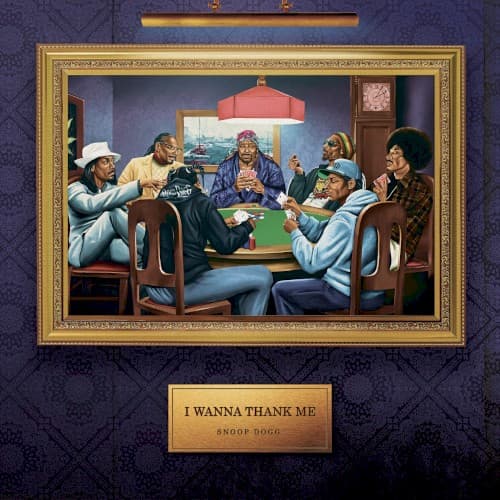
The title and cover set the tone. The artwork riffs on the old Dogs Playing Poker painting, a joke that tells you what kind of record to expect: a veteran leaning back, grinning and handing out cards. The title itself is an act of self-congratulation, and the best songs earn it with ease. A line from AllMusic, that there is not much here to call a return to form but plenty of familiar comfort, is the fairest short description, and it points to the central problem. Comfort is not the same as a reason to exist.
That problem matters more because of what the West Coast tradition asks of its senior figures. The sound Snoop came up in rewarded patience and craft, and the producers here, including DJ Battlecat, Fredwreck, Soopafly and Mustard, are plugged into several generations of that tradition. But the album has no thesis about what that tradition is for. The 2019 market also showed the cost: the record debuted at number 76 on the Billboard 200 with 9,000 units, among the weakest chart showings of his career.
So the stakes are modest. Nobody expected Snoop, this deep into his career, to reinvent his sound, and he does not try. The question is whether a long, generous record can still deliver a strong core of songs, and the answer is yes, but you have to dig for them.
A Dozen Producers, One Voice, and Not Enough Edit
The production credits read like a regional history. DJ Battlecat is credited on several songs, including the title track, and he supplies the closest thing the album has to a spine: slow synth lines, deep bass and a patient tempo that suit Snoop's voice. Fredwreck and Soopafly extend that sound in a funk direction, Mustard brings the bright, clipped bounce of the modern Los Angeles scene, and Rick Rock contributes his own polished take. When those threads connect, the record sounds like the West Coast across three decades in one room.
But the credits also tell you why the sound fractures. The list continues with Swizz Beatz, Jermaine Dupri, Jazze Pha, DJ Green Lantern, Russ, TropKillaz, Vangogh, Dunlap Exclusive and others, and each brings a different idea of what a Snoop Dogg song should be. The result is a playlist rather than a record. A New York-style beat sits beside a Latin-pop crossover, which sits beside a Los Angeles party track, and the voice is the only constant. That would be fine on a compilation, but this is billed as a studio album.
Snoop's delivery remains the best asset. His phrasing is light and rhythmic, and he never sounds stressed even when the beat is crowded. On the tracks built for him, he lands the kind of low-key punch line that made his name, and his timing still makes ordinary material sound better than it reads. The limitation is that he uses the same register almost throughout, so the guests often supply the energy while he provides the atmosphere.
The writing is the weaker half. The subjects are familiar: confidence, women, smoke, money, staying power. The lines are fluent, and some are funny, but few are sharper than what he has delivered before, and there is little sense of an older artist reflecting on where he stands. Several songs might have been improved by a second verse that said something different from the first.
The guest list adds variety and also noise. Chris Brown, Wiz Khalifa, YG, Ozuna, Anitta, Trey Songz and Slick Rick give each song a different feel, and the posthumous Nate Dogg appearance gives the album its most emotional moment. But the sheer number of features means that Snoop is often a host rather than the lead. The album would be stronger at fifteen tracks, with the Battlecat-driven core intact and the radio detours removed, because the best songs here do not need company to make their case. Edited that way, the album would sit comfortably alongside the better late-period Snoop releases.
Seventy-Five Minutes, and the Good Stuff Is Spread Thin
The sequence is the album's biggest problem. Twenty-two songs and about 75 minutes is a lot of music for any artist, and here the length works against the material. The first few songs set a promising tone: a Battlecat groove, a veteran guest, a laid-back statement of purpose. "So Misinformed" is a strong start in that vein, with a classic New York voice in the guest slot and a bounce that feels like an opening move. After that, the record keeps changing direction, and the early momentum drains away.
The middle stretch is where the album sags most. Songs built for the radio, with R&B hooks, Latin rhythms and pop-adjacent features, follow one after another, and they do not share a mood or a tempo with the West Coast core. A listener moves from a slow funk groove to a bright pop crossover to a trap-flavored cut without an obvious reason. The tracks are competent in isolation, but together they erase the sense of an album with a point of view.
The back half has better stretches, particularly when the Los Angeles producers return. "Wintertime in June" is the clearest example of what the sequence could have been: a warm, mournful use of Nate Dogg's voice that gives the album its only real emotional weight. It works because it is the one place where the length feels justified, and it makes the filler around it more noticeable.
The final songs bring the album back to its funk roots and close with a title track that restates the premise. That is a satisfying landing, but too many songs sit between the opening and the finish for it to land hard. A shorter sequence would turn the same set of songs into a more convincing record. As it stands, the album is easiest to enjoy by skipping around, which is not the way a studio album asks to be heard.
Comfortable Snoop, Recommended in Playlist Form
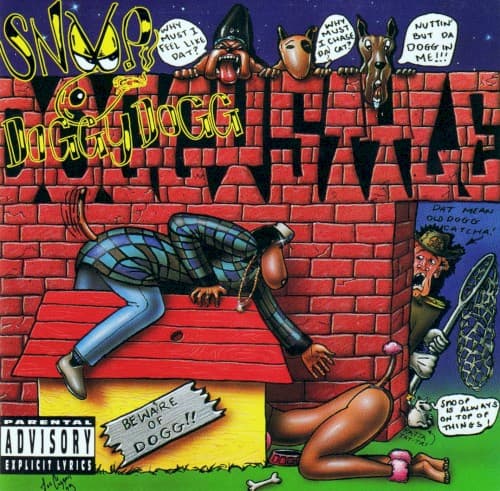
I Wanna Thank Me sits in the middle of the three Snoop records rated here. It is far below Doggystyle at 8.7, which remains the blueprint for the West Coast sound this album keeps referencing, and clearly above BODR at 5.3, because the best songs here still have shape and conviction. The scores line up with that placement: delivery and production hold up, while cohesion and originality are the lowest marks, since the album's length and scattered features make it feel like a catalog entry rather than a statement.
The album is for committed Snoop fans, for listeners who want a long, easy set of West Coast-flavored songs, and for anyone who enjoys the Battlecat and Mustard bounce. It is not for newcomers, who will hear a pleasant artist without hearing why he mattered, and it is not for listeners who want sharp writing or a coherent album arc. Those readers should start with the early catalog instead.
It will age as a track-by-track playlist and not as a whole. A few songs will survive in the Snoop discography because they sound good and carry the right sense of place. The rest will be remembered as the cost of a veteran with a loyal audience and a catalog large enough to keep releasing at volume. The modest commercial result, 9,000 units in its first week, suggests the market already sorted it that way.
Start with "So Misinformed" for the classic bounce, "Blue Face Hunnids" for the modern Los Angeles link, and "Wintertime in June" for the best use of the guest list. After that, go back to Doggystyle to hear the sound this album is quoting, and skip BODR unless you want to see how much weaker a Snoop record can sound. The album's best argument is that Snoop can still sound unhurried without sounding tired, and its best song is the one where the voice of someone no longer here does the lifting.
Track by track
Track Listing
What U Talkin’ Bout
SolidDunlap Exclusive produces a short opener that sets the laid-back tone quickly. It is a modest greeting rather than a statement, and it keeps the first minute of the album light.
So Misinformed
StandoutDJ Battlecat produces, and Slick Rick joins Snoop for a song that pairs two voices from different coasts over a slow, rolling bounce. This is the first time the record sounds like it knows what it wants to be. The beat gives both rappers space, and the trading of phrases is easy and confident. It is one of the better arguments for the album's West Coast core and a sensible place to begin.
Let Bygones Be Bygones
SolidAnother DJ Battlecat production with a settled, unhurried groove. It is smooth and well made, though it does not add much beyond the song before it.
One Blood, One Cuzz
SolidBattlecat produces again and appears as a guest, and the song leans into the old Los Angeles rivalry-and-unity theme that Snoop knows well. The beat is dependable, the message is sincere, and the writing stays general rather than specific. A decent cut that benefits from its subject.
Countdown
WeakSwizz Beatz produces and appears, and at 2:19 it is among the shortest full songs. The beat is loud and busy, closer to New York energy than to Los Angeles, and Snoop sounds a little exposed over it. Brief and forgettable.
I C Your Bullshit
SolidVangogh produces a dismissive, midtempo cut. The mood is cool and the hook is simple, but the song settles for attitude without details.
Turn Me On
SolidChris Brown is the guest and Jazze Pha produces, which tilts the song toward smooth R&B. It is competent and radio-friendly, and also the sort of song that could appear on any artist's album from this period.
Blue Face Hunnids
StandoutMustard produces and YG joins, and the song is the clearest link between Snoop and the modern Los Angeles sound. The bounce is sharp and minimal, the hook is catchy, and Snoop sounds energized by the company. It is one of the few moments where the album looks forward as well as back, and it is easily among the best songs here.
New Booty
SolidAnother DJ Battlecat beat, with a bouncy funk bass and a basic theme. Pleasant and short, and it returns the album to its home sound after a few detours.
Take Me Away
SolidRuss produces and appears, and Wiz Khalifa joins for a melodic, laid-back cut. It is airy and easy to like, though it feels more like a playlist song than a Snoop song.
Do It When I’m in It
WeakJermaine Dupri produces, with Ozuna and Slim Jxmmi as guests. The Latin-pop and radio-rap blend is slick but takes the album farthest from its roots, and Snoop sounds like a guest at his own party.
First Place
SolidDJ Green Lantern produces a confident, midtempo track with a guest credit for Tdot Illdude. Solid, a little generic.
Focused
SolidVangogh returns for a compact cut under three minutes. It is brisk and light on content, and it passes without leaving much behind.
Rise to the Top
SolidSwizz Beatz produces and appears again, with Trey Songz on the hook. It is built for radio and sounds polished, but it is another detour away from the album's strongest ground.
Wintertime in June
StandoutFredwreck produces, and Nate Dogg appears posthumously alongside Lacci. This is the emotional high point of the album: a warm, unhurried groove that uses Nate Dogg's voice the way the best West Coast records always have, as the melodic anchor that lifts the rapper beside him. Snoop sounds relaxed and sincere, and the song has the weight the rest of the record often lacks. The sequence should have been built around moments like this.
Doo Wop Thank Me
StandoutA 59-second interlude from The HamilTones, who also get the production credit. A charming vocal break that gives the long album a moment to breathe.
Main Phone
SolidRick Rock produces, with Stressmatic as a guest, in a polished track that sits comfortably in the Los Angeles tradition. Good company, but not memorable.
Do You Like I Do
StandoutSoopafly produces the funk-leaning cut, with comic relief from Lil Duval. The groove is loose and humorous and fits Snoop's persona well. A pleasant late lift.
I’ve Been Looking for You
SolidDJ Green Lantern produces and Eric Jaye sings. A smooth, romantic track that is nice to hear but offers little new.
Little Square UBitchU
SolidTropKillaz produces, with Anitta as the guest, in a Latin-pop-flavored cut that is the shortest full song on the back half. Colorful but an outlier, and a sign of how far the album strays from its center.
Ventalation
SolidSteelz produces, with Azjah, RJ and $tupid Young as guests. The younger voices give the song some energy, but it largely passes as filler.
I Wanna Thank Me
StandoutDJ Battlecat produces the closer, with Marknoxx as a guest. It is the album's thesis in sound: a slow, rolling beat, a satisfied tone, and a voice that does not need to rush. It restates what the best songs do and lands better than most of the songs preceding it, though the long road to reach it dilutes the effect.
Frequently Asked Questions
Is Snoop Dogg's I Wanna Thank Me a good album?
How many songs are on I Wanna Thank Me?
Who produced I Wanna Thank Me?
How did I Wanna Thank Me do on the charts?
Styles