The scorecard
6.0/10 · Mixed
- Writing25%
- 5.5
- Production25%
- 6.5
- Delivery15%
- 6.5
- Cohesion15%
- 6.0
- Originality10%
- 5.5
- Replay value10%
- 5.5
Verses stick to boasts, cannabis talk and survival, and the hooks on songs like Trash Bags and Go On are generic enough to belong to any 2017 rap album.
DJ Battlecat and Rick Rock keep a consistent, warm G-funk and soul-sample bed across the record, and the Kaytranada remix of Lavender adds a genuine change of texture.
Snoop's behind-the-beat drawl is intact and he trades verses cleanly with Redman, Method Man, B-Real and KRS-One, though he rarely pushes himself past comfort.
Sixteen songs run about an hour, and the mid-album stretch of similar mid-tempo cuts with interchangeable guests and the near-seven-minute Vapors remix make the second half sag.
The album is a deliberate retreat into the sound of his own past, with two remixes, a KRS-One interpolation and a Tribe sample doing part of the conceptual work.
Mount Kushmore and Promise You This hold up on repeat, but much of the middle lacks anything to pull a listener back.
Snoop Dogg Neva Left: A West Coast Reunion That Sounds Better Than It Reads
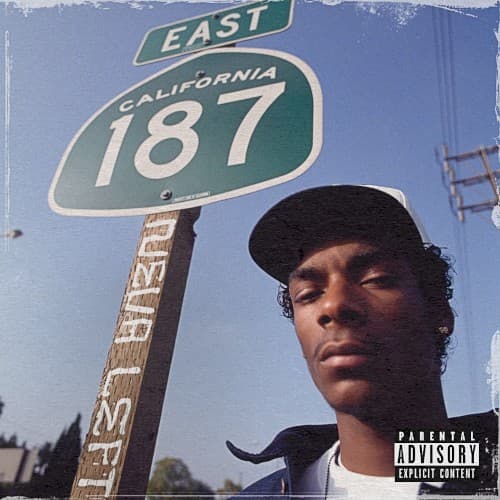
Snoop Dogg builds Neva Left around one promise, that the Long Beach sound he helped define is still his to command, and the record keeps that promise more often in its tempos than in its verses. The cover sets the terms: a 1992 photograph of the young rapper beside a California Route 187 sign, a nod to the penal code that doubles as a reminder of where he started. What follows is a fifteenth studio album that spends nearly all of its length in warm, bass-heavy West Coast rooms and very little of it saying anything he has not said before.
That is the claim worth defending here: this is a better-sounding record than a written one. The beats, many of them from DJ Battlecat and Rick Rock, sit on a slow, rolling G-funk pulse that suits his voice, and his cadence is as unforced as it was decades earlier. The writing is where the album gives ground. Verses are assembled from familiar materials, the lifestyle boasts, the cannabis talk, the reminders of longevity, and few lines carry the physical detail that made his early records stick in the head.
The stakes are modest but real. By 2017 Snoop's catalog had split between albums that chased the current radio sound and albums that played to his legacy, and this one clearly picks legacy. The debut at number 54 on the Billboard 200, on a little over 11,000 units, says who was listening: the loyal audience, not the casual one. Measured against the West Coast tradition, the album behaves less like a statement than like a well-run reunion cookout. The guest list, with Redman, Method Man, B-Real, KRS-One and Charlie Wilson, is a roll call of his peers, and the open question is whether it earns more than nostalgia. For about half the running time it does, and the other half is pleasant background.
Warm Low End, Worn Subjects: Where the Craft Is and Isn't
The production is the album's strongest argument, and it is a conservative one. DJ Battlecat, who handles several of the later tracks, works in the unhurried, low-end-first manner that defines Los Angeles and Long Beach records of the early 1990s: sustained keyboard chords, live-sounding bass, drums that leave room for a rapper to slur his way through the pocket. Rick Rock contributes tighter, brighter cuts, and the League of Starz and Musik MajorX tracks add a more modern bounce without breaking the spine of the sound. The sampling leans on soul, from The Charmels on the opener to The Notations and Brenda Lee Eager later, which keeps the warmth consistent even when the producers change. That consistency is unusual for a record with so many hands on it.
Snoop's delivery is the second asset. He has always rapped slightly behind the beat, and at this stage the drawl has settled into something close to a second instrument. He is rarely rushed, and he hands off to guests cleanly. The guest verses are where the album's best rapping happens: the Redman and Method Man pairing on the posse cut moves with more urgency than most of what the host writes, and KRS-One brings a clipped, teacherly cadence that contrasts well with Snoop's looseness. A West Coast record that borrows East Coast voices this readily is making a point about common ground, though it also exposes how little pressure the host puts on himself.
The writing is the weak point, and it is a consistent one. The lyrics lean on stock subjects: smoking, partying, loyalty, the pleasure of still being here. None of that is a problem in principle, since Snoop's catalog is built on exactly that tone, but the early work made ordinary subjects vivid through small, strange details and sharp comic timing. Here the hooks are often generic, and several verses could be swapped between songs without anyone noticing. The mid-album run of Trash Bags, Swivel and Go On shows the problem in miniature: capable grooves, adequate guests, and almost nothing memorable to carry out of the room.
A second weakness is the reliance on borrowed material. Two songs are remixes of other artists' recordings, one interpolates a famous KRS-One record, and one reworks a Biz Markie composition. Each is well executed, and each sounds good in the sequence, but together they dilute the sense that this is a fresh set of ideas. The album is strongest when it commits to the sound and weakest when it leans on the reputations of others to make the point for it.
A Strong Open, a Soft Middle and a Late Recovery
Neva Left is sixteen songs and roughly an hour, and the length is only partly earned. The first third is the best-paced stretch. It opens on a long, soul-sampled title track that takes its time, then moves through shorter, tighter cuts so that the record picks up momentum by the third song. The singles sit early, which front-loads the appeal and gives the opening the feel of a coherent statement about Los Angeles rap as a lifestyle rather than a genre.
The middle is where the sequence sags. After the early run, the album settles into a stretch of mid-tempo songs with similar drum patterns, similar hooks and guests who arrive without changing the temperature. Nothing is bad, but nothing separates one track from the next, and a listener who skips a few will lose very little. Trimming three or four of these would have made a sharper forty-minute album.
The recovery comes late and arrives in a block. The cluster of posse cuts and legacy-minded songs near the two-thirds mark restores some energy: the guest list gets more distinguished, the beats get more purposeful, and Snoop sounds more engaged when a rival rapper is standing next to him. The cannabis-themed songs are a fixture of any Snoop record, and here they act as breathing room rather than centerpieces, which is the right role for them.
The closing stretch is stronger than the middle but runs a little long. The longest song on the record, a nearly seven-minute remix, is a smooth, soulful closer in spirit but it overstays the point it makes in the first three minutes. The final two songs return to a quieter, reflective tone that suits the album's theme of survival, and the sequence ends on a reassuring note rather than a climactic one. That is consistent with the record's whole attitude: it is not trying to win the argument, only to remind you he is still in the room.
Between Doggystyle and BODR: A Competent Comfort Record
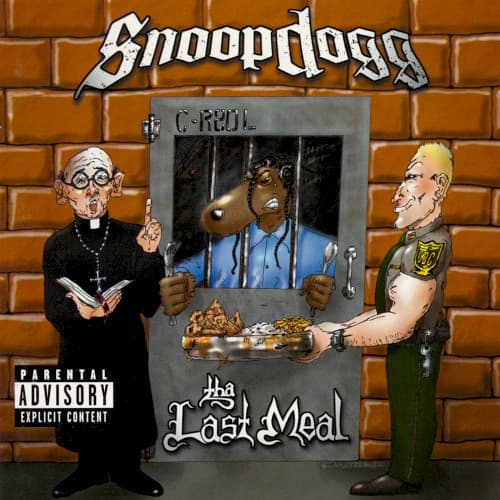
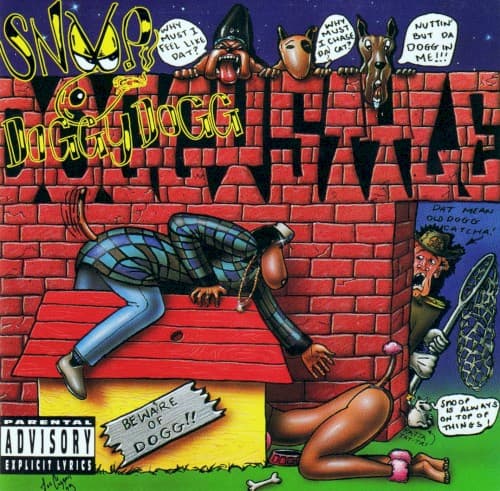
Neva Left ranks well below Doggystyle and above BODR, which is the right place for a record that has craft and no urgency. The debut set a standard of detail, menace and comic timing that nothing in the later catalog approaches, and this album does not try to match it. BODR, by comparison, sounds adrift; Neva Left at least knows what it is, a West Coast record made by someone who understands the form, and that coherence is why it lands in the middle rather than at the bottom. The scores reflect that: strong marks for production and delivery, ordinary ones for writing and originality.
The album is for listeners who already love the sound. If you come to Snoop Dogg for the unhurried G-funk groove, the rolling bass, the soul samples and the sense of a rapper at ease, this is a reliable hour. It is also useful for anyone curious about how the Los Angeles sound was carried forward by its own producers, rather than outsiders, in the 2010s. Listeners who want sharp storytelling, quotable verses or a mission statement should skip it and go to the older records.
It has aged well enough as background and less well as a statement. The best tracks hold up because the production is not tied to a trend, which is the advantage of working from a tradition. The weaker tracks will not improve with age, because their problem is lack of ideas rather than lack of fashion.
Start with Mount Kushmore for the posse-cut energy, Promise You This for the cleanest example of the modern-meets-classic polish, and the title track for the soul-sample mood. For a next step, go back to Doggystyle to hear the writing this album is missing, or try a Redman or Method Man album if the guest verses were what caught your ear. The record's best moment is the one where the beat, the guests and the host all point the same direction, and that happens in about four songs out of sixteen.
Track by track
Track Listing
Neva Left
StandoutThe title track opens the album at over five minutes, built on a soul sample from The Charmels and produced by Mike & Keys. It sets the record's temperature at once: slow, warm and self-assured, with Snoop sounding comfortable rather than hungry. The length is a gamble and it mostly pays off, because the groove has enough shape to hold attention and the verse structure avoids repetition. It is a statement of longevity more than of ideas, and the writing is competent rather than sharp, but as an opening it frames the album's strengths clearly. The soul chop gives the beat an emotional edge that the lyrics only partially match, which is the album's central imbalance in a single song.
Moment I Feared
SolidA short, tight cut at under two and a half minutes, produced by Rick Rock, and one of the few songs where brevity helps. It moves quickly, avoids padding and gets out before the idea thins. Not a standout, but a solid second track that keeps the pace after the long opener.
Bacc in da Dayz
StandoutFeatures Big Tray Deee and uses a sample from the A Tribe Called Quest song Check the Rhime, an unusual East Coast reference point on a record about Los Angeles. The title promises nostalgia and the track delivers a loose, relaxed version of it, with the production by J-Massive keeping the bounce light. Big Tray Deee's presence ties the song to a Long Beach lineage and gives the track more local texture than most of the album. It is solid rather than exceptional, and the hook is more functional than memorable, but the cross-coast sample choice gives it a reason to exist.
Promise You This
StandoutThe first single, produced by Dupri of League of Starz, and the cleanest marriage of modern polish and old-school pace on the record. At under three minutes it is compact and uncluttered, with a bassline that does most of the persuading. Snoop's delivery is relaxed and confident, and the song works because it does not try to be more than a good mid-tempo West Coast single. It is not deep, but it is one of the album's most replayable songs and the best starting point for a casual listener.
Trash Bags
SolidFeatures K Camp and is produced by Musik MajorX. It reaches for a younger sound and a more contemporary hook, and the guest fits the mood. The result is competent but slight, a song that could appear on almost any 2017 radio-minded rap record without being missed.
Swivel
SolidRick Rock returns for this four-minute cut with Stresmatic. The groove is capable and the guest is serviceable, but the song stretches a thin idea past its welcome. It is a representative mid-album track: pleasant, easy to forget.
Go On
SolidA smoother, more R&B-leaning song with October London on the hook, produced by Brody Brown. The vocal feature gives it a softer feel than the surrounding tracks, which is a welcome change of texture, but the rap verses add little. Fine as a breather, filler as a song.
Big Mouth
StandoutA DJ Battlecat production that leans on the heavier, low-end-first side of his style. Snoop's delivery here is looser and more rhythmic than on the lighter songs, and the beat gives him a stronger frame. It is a solid cut without a guest, which helps, because the song relies on his voice rather than on a name.
Toss It
StandoutBrings Too $hort and Nef the Pharaoh together, a pairing that links the Bay Area's elder statesman to a younger voice. The production from DNYC3 of League of Starz is bouncy and club-ready, and Too $hort's dry delivery contrasts well with Snoop's smoother approach. It is a useful illustration of the West Coast's generational span, even if the song itself is more fun than weighty.
420 (Blaze Up)
SolidThe obligatory cannabis song, with Devin the Dude and Wiz Khalifa, produced by DJ Battlecat and Mars. Devin the Dude is a natural fit, and his conversational, slightly sleepy style is the best thing on the track. It is entertaining and on-brand, though it adds little to a subject the host has covered at length, and the Wiz Khalifa verse is routine.
Lavender (Nightfall remix)
StandoutA remix of a BADBADNOTGOOD song with Kaytranada, released as the second single. It is the most adventurous production on the record: a jazzy, electronic-tinged groove that steps outside the standard G-funk template and gives Snoop a different bed to rap over. He adapts well, keeping his drawl but tightening the phrasing to fit the rhythm. The song is also a reminder that his best recent work often comes when he lets younger producers set the terms rather than imitating his own past. It is a highlight, even if it is a remix rather than an original composition, and it points toward a more interesting version of this album.
Let Us Begin
StandoutFeatures KRS-One and interpolates his song My Philosophy, with additional vocals from Janice Freeman and production by DJ Battlecat. It is a conscious-rap meeting point: KRS-One's forceful, declarative style against Snoop's laid-back flow. The mix of East Coast preaching and West Coast ease is the song's selling point, and the chorus gives it more shape than many of the album's hooks. The interpolation is a tribute, and it works as one, though it leans on the original for much of its power.
Mount Kushmore
StandoutThe album's best song, built as a posse cut for Snoop, Method Man, Redman and B-Real, produced by Dr. Evo, with talk-box vocals from Steven J. Collins. The beat has a loose, funky bounce, and the talk box adds a G-funk texture that recalls Zapp-style production without copying it. Redman and Method Man bring the sharpest rapping on the record, B-Real adds a nasal contrast, and Snoop's slow, rolling verse holds the center. The chemistry is the point: four veterans trading verses with the confidence of people who have done it for decades. It was released as a single and deserves the placement. If you play one song from the album, play this one.
Vapors (DJ Battlecat remix)
SolidA nearly seven-minute remix of a Biz Markie composition, with Charlie Wilson and Teena Marie credited as features. Battlecat gives the song a slow, soulful bed, and Wilson's voice adds warmth. It is pleasing and well made, but at this length it overstays its idea, and the closing stretch repeats what the first half already established. A good listen, an indulgent track.
I’m Still Here
StandoutA DJ Battlecat production built on a sample of The Notations' song of the same title. It has a reflective, survival-minded tone that fits the album's theme, and the soul sample gives it emotional weight. The verses are straightforward, and the song earns its place through mood rather than through writing.
Love Around the World
SolidA closing song produced by Big Bub, featuring Big Bub, built around a sample of Brenda Lee Eager. It is a gentle, optimistic ending, and the soul sample gives it a warm finish. Pleasant and a little generic, it closes the record on a note of goodwill rather than conviction.
Frequently Asked Questions
Is Snoop Dogg's Neva Left worth listening to?
How does Neva Left compare to Snoop Dogg's other albums?
What are the best songs on Neva Left?
When was Neva Left released and how did it chart?
Styles