Brooklyn's Lyrical Conscience: Talib Kweli's Place in Hip-Hop
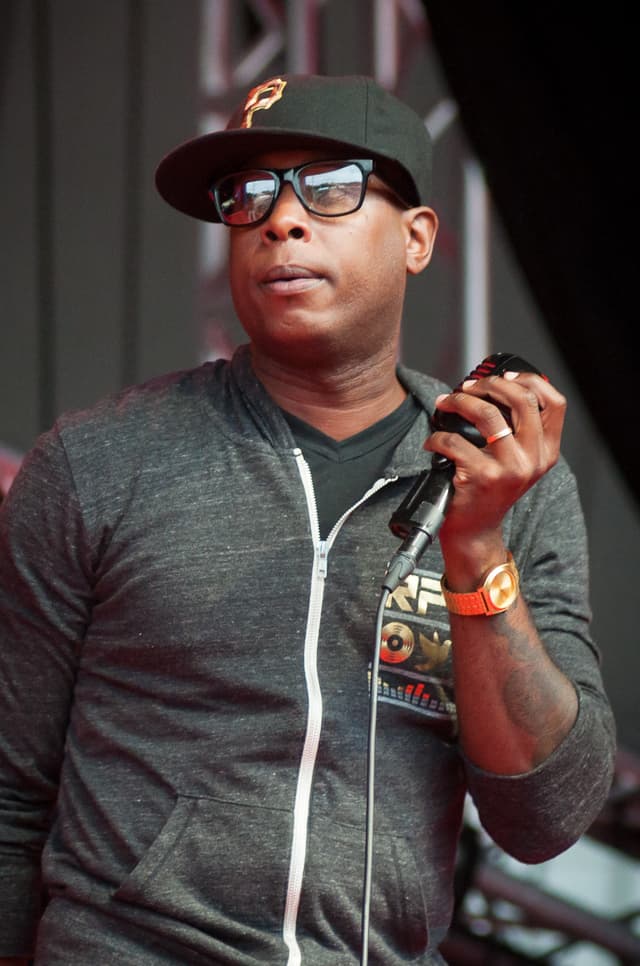
Talib Kweli emerged from Brooklyn in the late 1990s as one of conscious hip-hop's most articulate voices, carrying forward a tradition established by predecessors while carving out his own distinct lane. Born in 1975 and raised in a household steeped in academia and activism, Kweli brought an intellectual rigor to his rhymes that never sacrificed street credibility or musical appeal. His name—taken from Arabic, meaning "the seeker"—proved prophetic for an MC who would spend decades pursuing truth through verse.
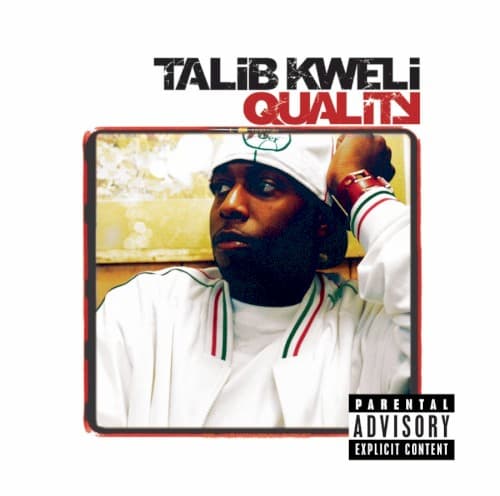
Kweli's breakthrough came through his partnership with Mos Def in Black Star, a collaboration that redefined what underground hip-hop could achieve commercially and artistically at the turn of the millennium. Their 1998 self-titled album became a touchstone for a generation seeking substance in an era increasingly dominated by commercial shine. But Kweli's ambitions extended beyond any single collaboration. His solo career, launched in earnest with 2002's Quality, established him as a formidable presence independent of any collective identity.
What distinguishes Kweli from many peers is his refusal to treat consciousness as a marketing category. His catalog navigates political commentary, personal reflection, and pure lyrical exhibition with equal commitment. He's collaborated across the underground-to-mainstream spectrum—from Hi-Tek's soulful boom-bap to Madlib's avant-garde constructions—while maintaining a core identity rooted in technical excellence and thematic depth. Nearly three decades into his career, Kweli remains a measuring stick for lyricism in hip-hop.
Verbal Architecture: Talib Kweli's Lyrical Technique and Production Choices
Kweli's technical approach centers on intricate internal rhyme schemes and dense multisyllabic patterns that reward close listening. His flow operates in the tradition of Rakim and Big Daddy Kane—precision over flash, architecture over decoration. He layers rhymes within rhymes, building conceptual throughlines that span entire verses rather than settling for quotable one-liners. His vocal delivery sits in a comfortable middle register, conversational yet commanding, never straining for effect. The clarity of his diction ensures every syllable lands, a necessity given the information density of his verses.
Production-wise, Kweli has consistently gravitated toward soul-based frameworks that provide warmth without overwhelming the lyrics. His long-standing partnership with Hi-Tek defined much of his early sound—chopped soul samples, crisp drums, and basslines that anchored without dominating. Quality showcased this aesthetic perfectly, with beats that felt both timeless and contemporary. Unlike some conscious rappers who treat production as mere backdrop, Kweli understands the symbiotic relationship between beat and rhyme, selecting instrumentals that enhance rather than compete with his verbal content.
As his career progressed, Kweli demonstrated range in his production choices. He's worked with DJ Quik's West Coast funk, 9th Wonder's chopped soul, Madlib's experimental loops, and Kanye West's maximalist compositions. This versatility speaks to an artist confident enough in his voice to adapt across sonic landscapes. Yet regardless of the producer, certain elements remain consistent—the beats leave space for wordplay, the samples carry emotional weight, and the drums provide rhythmic complexity without sacrificing groove. Kweli's music sounds like New York hip-hop at its essence, even when the production team hails from elsewhere.
From Underground Icon to Independent Veteran: Talib Kweli's Evolution
Kweli's recorded output begins in earnest with Black Star's 1998 debut, though he'd been active in Brooklyn's underground circuit for years prior. That album, built largely on Hi-Tek's production, introduced Kweli's voice to a wider audience hungry for alternatives to the shiny-suit era's excesses. Tracks like "Definition" became anthems for a particular strain of late-90s hip-hop—intelligent without being preachy, accessible without pandering. The album's success created expectations and assumptions that would both help and complicate Kweli's subsequent career.
His 2000 collaboration with Hi-Tek as Reflection Eternal, Train of Thought, deepened the partnership showcased on Black Star. The album demonstrated Kweli's ability to carry a full-length project as the sole MC, his wordplay maturing and his conceptual ambitions expanding. Songs addressed everything from police brutality to romantic complications, all wrapped in Hi-Tek's soulful frameworks. The album solidified Kweli's reputation but also typecast him in some circles as exclusively "conscious," a label he's spent years complicating.
Quality arrived in 2002 as Kweli's proper solo debut, and it remains his most celebrated individual statement. The album expanded his production palette significantly—Kanye West, DJ Quik, Ayatollah, and Hi-Tek all contributed, creating sonic diversity while maintaining cohesion. Standout tracks like "Get By" achieved radio play without compromising Kweli's artistic vision, proving conscious content could coexist with commercial appeal. The album earned critical acclaim and respectable sales, validating Kweli's decision to pursue a solo path alongside his collaborative projects. Quality showcased an artist hitting his creative stride, balancing technical prowess with emotional accessibility.
The Beautiful Struggle (2004) attempted to build on Quality's momentum but faced mixed reception. A more polished, radio-friendly production approach satisfied some listeners while alienating others who preferred Kweli's rawer earlier work. The album's commercial performance disappointed label expectations, foreshadowing tensions that would eventually push Kweli toward independence. Subsequent releases like Eardrum (2007) and Liberation (2007, a free release with Madlib) showed an artist experimenting with different distribution models and sonic approaches, refusing to repeat formulas even when doing so might have been commercially prudent.
Kweli's later career has been marked by prolific output and fierce independence. He's released numerous albums through his own Javotti Media imprint, controlling his destiny in an industry that had proven frustrating when navigating major-label politics. Projects like Prisoner of Conscious (2013), Gravitas (2013), and his ongoing collaborative work demonstrate an artist still deeply engaged with his craft. While none have matched Quality's impact, they've maintained a baseline standard rare among artists three decades deep. Kweli has also remained active as a cultural commentator and activist, sometimes courting controversy but never fading into irrelevance.
The Seeker's Influence: Talib Kweli's Lasting Impact on Hip-Hop
Kweli's influence operates on multiple levels. Most obviously, he represents a bridge between hip-hop's golden age lyricists and subsequent generations seeking substance. Artists like J. Cole, Rapsody, and Common cite Kweli as inspiration, pointing specifically to his proof that technical excellence and social awareness could coexist with career longevity. His willingness to address political issues directly opened doors for others to do the same without being dismissed as "backpack rap."
The Black Star collaboration specifically cast a long shadow over underground and alternative hip-hop. That album's aesthetic—jazzy, intellectual, Brooklyn-rooted—became a template imitated widely in the 2000s. The partnership demonstrated how two strong individual voices could create something greater than the sum of parts, influencing countless duo formations that followed. Even as Kweli and Mos Def pursued separate paths, their joint work remained a reference point for what conscious hip-hop could achieve at its peak.
Beyond music, Kweli's activism and willingness to engage controversy has shaped perceptions of the politically engaged rapper. He's used social media platforms aggressively to advocate for causes and challenge opponents, sometimes to his detriment but always authentically. This approach—treating hip-hop as inseparable from social justice—influenced how younger artists view their platforms and responsibilities. Whether one agrees with every position Kweli takes, his refusal to separate artistry from advocacy represents an important thread in hip-hop's ongoing evolution. In an era where many rappers avoid political stances, Kweli's commitment to engagement stands as both inspiration and cautionary tale, depending on perspective.