UGK: The Port Arthur Duo That Turned Slang and Twang Into Country Rap
Port Arthur, Texas is a town of about 60,000 people that was not known for its rap scene. It produced Janis Joplin, the painter Robert Rauschenberg, and then, in the late 1980s, two kids who decided to rap in an accent so thick they figured outsiders couldn't follow it. They called themselves Underground Kingz. The rest of the country eventually learned them as UGK.
The duo was Chad "Pimp C" Butler and Bernard "Bun B" Freeman. UGK began in 1987 as a pairing of Pimp C and Mitchell "Big Mitch" Queen, but Mitch left to chase a football career and Bun B took his place; Mitch stayed around as a frequent collaborator. By 1992 they were signed to Jive Records on a five-album deal, and for the next fifteen years they were the group other Southern rappers pointed to when asked who had it right first.
This UGK artist profile follows that arc, from the uncompromising early records to the Jay-Z and Three 6 Mafia guest spots that finally put them in front of a national audience, and to the double album that gave them their only number one. It ends where the story has to end: with the loss of Pimp C in December 2007, which closed the group for good.
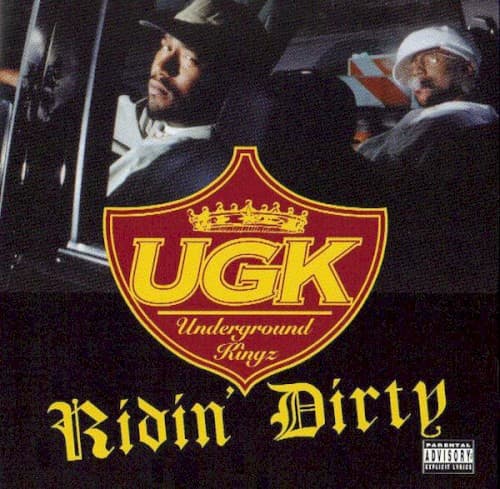
If you only know them from "Big Pimpin'," you've met the duo in a guest-verse setting. The records themselves are where the real picture is, and Ridin' Dirty is the one most listeners should start with.
Bluesy Organs, 808 Drums and a Rapid-Fire Counterpart: How UGK Sounds
The easiest way to describe UGK is as two voices that should not fit together and do. Pimp C's voice is high, unstable and charismatic, a provocateur who could as easily sing a love song as slap you with a verse. Bun B comes in with what one writer called a speeding-train delivery, steady and dense where Pimp C is erratic. Put them on the same record and each makes the other sound more like himself.
The music underneath leans on texture. Critics have described UGK's palette as deep bluesy textures, triumphant church organs, thick funk and meaty soul, and that is a fair summary of how their records feel: warm, slow-rolling, a little menacing. A lot of that came from Pimp C, who grew up in a musical household (his father played trumpet), could pick out piano, trumpet, drums and flugelhorn by ear, and sang spirituals and Italian sonnets as a kid. He started out inspired by Run-DMC, then moved past their kick-and-snare formula by building beats around the Roland TR-808, with hi-hats carrying much of the rhythmic detail.
That combination explains why UGK sounds so different from the boom-bap that Pimp C deliberately moved away from. It is Southern in a specific, Texas Gulf Coast way: unhurried pacing, church-and-blues color in the keys, and an accent the duo never sanded down. They described their own country rap as so full of slang and twang that they assumed it was inaccessible to outsiders, and then built a career on refusing to translate.
Bun B has named the Geto Boys, Eric B. & Rakim, N.W.A and A Tribe Called Quest among the records he came up on, which helps explain his tight, lyrical approach, the part of UGK that kept them credible with listeners who cared about bars as much as grooves.
From Too Hard to Swallow to Underground Kingz: UGK's Long Road to a Number One
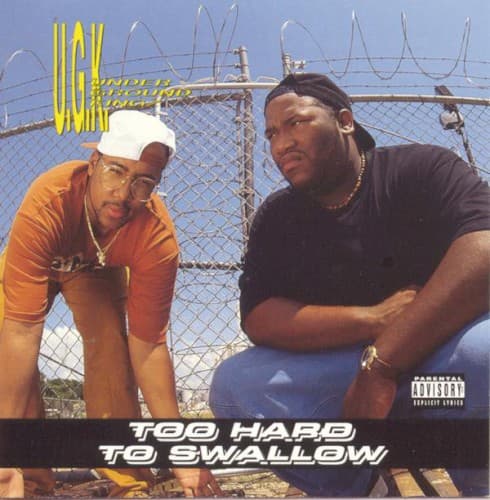
UGK's first major-label album, Too Hard to Swallow, arrived on Jive in 1992 as the first release under that five-album contract. It carried several songs lifted from their earlier The Southern Way, and some material was cut at the last minute for being too explicit; five of those tracks surfaced two months earlier on a Bigtyme Recordz EP titled Banned. "Pocket Full of Stones" from the record later turned up on the soundtrack to Menace II Society in 1993.
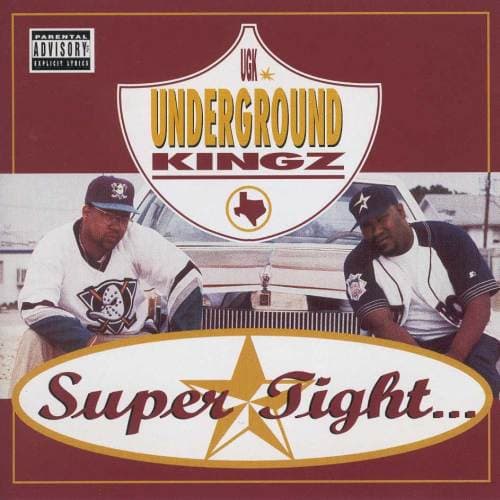
Super Tight followed in 1994 and became their first release to break the Billboard 200, peaking at number 95. Then came Ridin' Dirty in 1996, which reached number 15 and is the record most fans and critics treat as the peak. Our own review of Ridin' Dirty goes into why it holds up; the short version is that the writing, the production and the chemistry between the two voices all arrive at once. It was also the last UGK album for years, because the group went on hiatus soon after.
Their name grew anyway. In 2000 they appeared on Jay-Z's "Big Pimpin'" and on Three 6 Mafia's "Sippin' on Some Syrup," two high-profile hits, and the anticipation for new UGK music was real. Jive didn't capitalize. Dirty Money in 2001 came and went with little fanfare, which is a plain fact of the group's catalog: for a few years, their guest features were doing more for their profile than their own albums.
Pimp C was incarcerated from 2002 on an aggravated gun assault charge, and for the next few years the duo's momentum came from Bun B, who kept the name alive through guest appearances and "Free Pimp C" calls on other people's records. Jive issued a Best of UGK and a chopped-and-screwed remix album in the meantime. Both members went solo out of necessity: Pimp C's Sweet James Jones Stories came out on Rap-A-Lot in March 2005, and Bun B's Trill followed that October, opening at number six on the Billboard 200 and number one on the Top R&B/Hip-Hop Albums chart. Pimp C was released on December 30, 2005, and put out Pimpalation in July 2006.
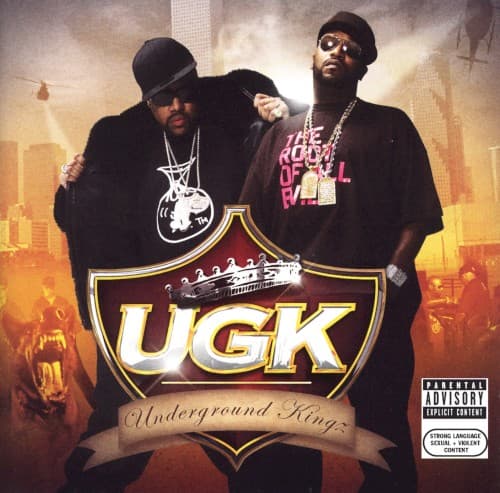
The reunion came in August 2007 with the self-titled Underground Kingz, a 26-track double album that debuted at number one on the Billboard 200. Guests ranged from Talib Kweli, Too Short, Rick Ross, Z-Ro, Slim Thug and Three 6 Mafia to OutKast, Kool G Rap and Big Daddy Kane (on a Marley Marl-produced cut called "Next Up"). Production came from DJ Paul and Juicy J, Jazze Pha, Swizz Beatz, The Runners, Lil Jon, Scarface and Pimp C himself. Its single "International Players Anthem (I Choose You)," with OutKast, peaked at number 70 on the Hot 100 and remains the only UGK single to chart there, a figure that says as much about their career as the number-one album does.
Pimp C died on December 4, 2007, in West Hollywood, ending the group. UGK 4 Life, assembled from recordings the duo had already made, came out in 2009.
Why Southern Rappers Still Credit UGK as the Blueprint
UGK never had the sales of the acts they influenced, and that is part of their story. Their chart history is modest next to Jay-Z or OutKast, and Jive's handling of Dirty Money left an obvious gap in their catalog. What they built instead was authority. When "International Players Anthem" won Video of the Year at the 2008 BET Awards, UGK also took Best Group, honors that landed just after Pimp C's death. Earlier they had received a Legend Award at the 2006 Ozone Awards, and "Big Pimpin'" earned a Grammy nomination for the duo in 2001.
The influence shows up in the artists who cite them. Big Boi of OutKast, Boosie Badazz and Paul Wall are among the rappers shaped by the group, and Pimp C in particular is held up for the way he combined production, singing and swagger into a single persona. Hear "International Players Anthem" next to "Sippin' on Some Syrup" and you can hear how much of Southern hip-hop's melodic, groove-first habit goes through Port Arthur. It is also why a rapper like Scarface, a fellow Texas veteran who produced on their last album, shows up so naturally beside them.
For a listener coming in now, the best route is probably Ridin' Dirty first, then the 2007 double album for the late-career picture, then back to Super Tight to hear where it started. Expect a catalog that's uneven where the label got in the way. But the best UGK songs have a lived-in warmth that few acts of the era match, and that is a large part of why people are still talking about two guys from Port Arthur.