The scorecard
5.6/10 · Mixed
- Writing25%
- 5.5
- Production25%
- 6.5
- Delivery15%
- 6.0
- Cohesion15%
- 4.5
- Originality10%
- 5.0
- Replay value10%
- 5.0
Tracks like 'Mockingbird' and 'Yellow Brick Road' show sharp introspection, but the middle stretch collapses into scatological jokes that say nothing.
The rushed tracks sound thin and unfinished compared to The Eminem Show, though Dr. Dre's spartan loops on 'Like Toy Soldiers' and 'Mosh' work.
The silly voices and forced punchlines on 'Rain Man' and 'Big Weenie' feel lazy, offsetting the sharper work on serious cuts like 'Mockingbird.'
The first six songs build momentum, then 'Puke' through 'Big Weenie' derail it completely, though the album splits into two irreconcilable halves rather than collapsing entirely.
Most of the album repeats ideas from The Marshall Mathers LP without the focus, though the Martika interpolation on 'Like Toy Soldiers' is inventive.
Three or four tracks hold up; the rest are actively skippable, making this the album in Eminem's catalog that rewards cherry-picking over full listens.
Eminem Encore — The Album That Leaked Into Ruin
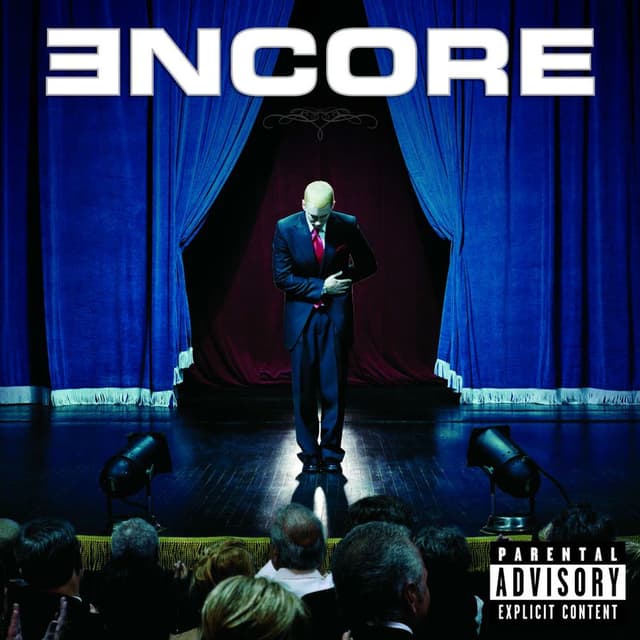
Encore was supposed to be a victory lap, maybe a final bow. Instead it became the first album where Eminem sounded like he was losing the plot. The title and the suicide-note artwork telegraphed finality, but the album itself never commits to the idea. It opens with purpose: 'Evil Deeds' sets a confessional tone, 'Yellow Brick Road' apologizes for old mistakes, 'Like Toy Soldiers' calls a truce in feuds that had turned dangerous.
Then the record pivots. Starting with 'Puke,' the middle stretch abandons every bit of that goodwill for toilet humor, weak Michael Jackson parodies and songs that sound like they were written in twenty minutes, because they were. The fact sheet makes it plain: seven songs intended for Encore leaked in December 2003, forcing Eminem and Dr. Dre to scramble in Los Angeles and record replacements on deadline. Eminem later admitted he was deep into Vicodin and Valium at the time, sometimes so out of it that 50 Cent had to answer interview questions for him.
The result is an album split down the middle, where the serious songs justify the hype and the filler songs wreck it.
Encore sold eleven million copies worldwide by mid-2005 and debuted at number one in nine countries, but even Eminem calls it one of his worst. He is right. The question is not whether it is weaker than The Marshall Mathers LP or The Eminem Show; it is whether the handful of excellent tracks can redeem a record that spends half its runtime on jokes that were not funny the first time.
When the Hits Are Finished and the Filler Is All That's Left
The production splits cleanly into the songs Dr. Dre had time to shape and the songs Eminem rushed to replace the leaks. Dre produced eight of the twenty tracks, and most of his work holds up: the Martika-sampling keys frame Eminem's truce offer with melancholy restraint, and the military drums give the anti-Bush screed real weight. The opening track builds on a simple soul loop and lets the verses breathe. The 50 Cent feature has a dark, minimal thump that fits the aggression.
The problem is that Dre also produced several joke tracks where the beats sound unfinished and the concepts do not support four-minute runtimes. The production on those songs is thin compared to the dense, layered work on The Eminem Show: fewer melodic hooks, less dynamic range, more empty space around the drums. Luis Resto co-produced nine tracks, mostly the Eminem-only songs that anchor the serious material. Two emotional centerpieces have plain piano progressions that let the writing lead, and one posse cut samples a looped guitar figure that supports multiple verses without crowding them.
The quieter production choices work when the lyrics earn them.
They do not work on the vomit-themed track, where the beat is spare and the sound effects fill the gaps. The writing splits even more sharply. Eminem is capable of writing with specificity and emotional clarity, and he does it here on one song where he recounts racist mixtape verses from his youth and apologizes for them by name. Another addresses his daughter Hailie directly, acknowledging the chaos his fame brought into her childhood.
The truce anthem names the feuds with Ja Rule and Benzino, explains why he is walking away, and interpolates a pop chorus without irony. Those three tracks prove he still had the ability to write with weight. Then there is everything else. One song is built around a premise — rejecting radio-friendly music by making a deliberately unplayable song — that collapses as soon as the scatological sound effects start.
Another declares Eminem's new name is Rain Man, compares himself to a superhero, and fills five minutes with punchlines that do not connect. A diss track tries to hypnotize Benzino and calls him jealous for four and a half minutes. One parody impersonates Triumph the Insult Comic Dog for no clear reason.
These are not songs with ideas; they are songs that exist because the tracklist had empty slots and the deadline was imminent. Eminem himself said he wrote some of these in twenty-five or thirty minutes, and it shows. The comedic tone is not the problem; The Marshall Mathers LP had sharp humor that worked. The problem is that the comedy here is not sharp or surprising.
It is lazy.
The delivery shifts depending on the material. On two emotional tracks, Eminem raps in a conversational register that sounds like he is speaking directly to his daughter or the listener. On the political anthem, he rides the militant beat with urgency. On the joke songs, he leans into silly voices and exaggerated accents that were already tired by The Eminem Show.
The 50 Cent and Nate Dogg appearances add variety, but neither track stands out. The D12 feature offers little beyond what the album already has. The album ends with a strong Dre beat and a defiant hook, followed by a skit where Eminem shoots the audience and himself. The gunshot ending was bold on paper, but the album never builds to it.
An Album That Shoots Itself in the Foot Before the Finale
The sequencing is the album's biggest failure. The first stretch builds a coherent arc: a short intro, two tone-setting openers, and then two of Eminem's strongest songs that deliver apologies and a truce. The political fury that closes the opening run maintains that focus.
If the album had maintained that momentum, it would rank alongside The Eminem Show.
Instead, the middle section begins a long stretch where the album loses all forward motion. Seven weak tracks are sequenced back-to-back, with only brief skits to break them up. By the time the first introspective moment arrives in the second half, the album has been bleeding goodwill for twenty-five minutes. The pacing never recovers.
Two emotional songs show up too late to repair the damage, and a D12 posse cut adds nothing. The album is seventy-six minutes, counting skits, and at least twenty of those minutes are dead weight. Eminem has always struggled with editing, but The Marshall Mathers LP and The Eminem Show had enough peaks to justify the length.
Encore does not.
The back half tries to salvage the runtime with introspection, but the whiplash between tones is disorienting. One song mocks Michael Jackson over a bouncy beat, then two tracks later comes a heartfelt letter to Hailie. There is no thematic thread connecting them, no progression that explains the shift. The album feels like two separate projects — one serious and focused, one rushed and unserious — stitched together at the last minute, which is exactly what happened.
A Catalog Low Point With Three Songs Worth Saving
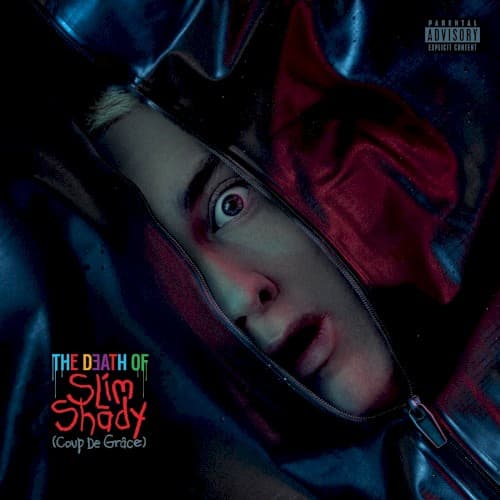
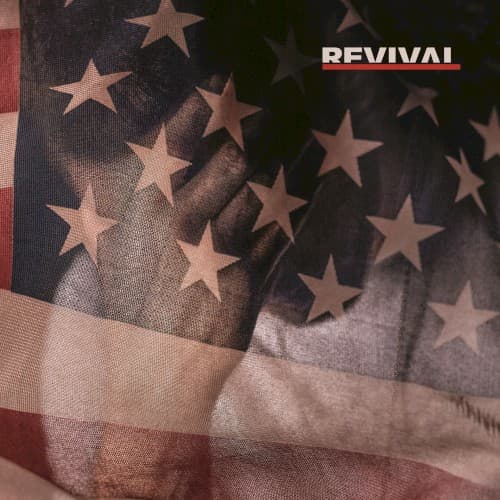
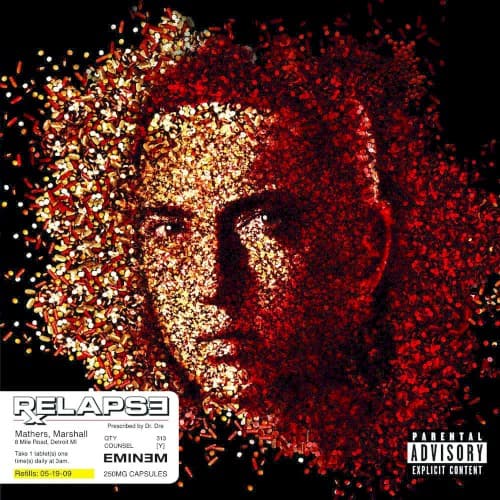
Encore ranks at the bottom of Eminem's 1999-2004 run and only narrowly escapes being his worst album overall because Revival exists. It is worse than The Slim Shady LP, The Marshall Mathers LP, and The Eminem Show by wide margins, and it is weaker than Relapse, which at least had a consistent aesthetic vision. The leaked songs and the drug addiction are explanations, not excuses. The result is an album where a quarter of the tracklist is genuinely strong and the rest ranges from forgettable to embarrassing.
If you are looking for the best of Eminem's mid-2000s work, skip Encore and go back to The Eminem Show. If you are already familiar with the catalog and want to understand where it went wrong, this is the album that marks the turn. The leak derailed what might have been a strong follow-up, but the bigger problem is that Eminem and Dre did not have the time or the focus to salvage it.
Start with the truce anthem, the daughter letter, and the apology track. Those three tracks are among the best songs Eminem has written, and they hold up against anything in his discography. The political fury song is worth hearing, even if the beat is more blunt than inventive.
Everything else is optional, and most of it is skippable. If you want to hear what Encore might have been, the leaked tracks from Straight from the Lab circulate online and several of them are stronger than what made the final cut. For context on where Eminem went next, Relapse followed five years later and leaned into horror-themed work that divided critics but at least had a vision. Encore has no vision.
Track by track
Track Listing
Curtains Up
SolidA twenty-second intro of crowd noise and Eminem's voice announcing the show. It sets up the concert framing device that the album never fully commits to.
Evil Deeds
StandoutThe real opening track, where Eminem apologizes to his mother and recounts his rejection as a youth. The soul loop gives it room to breathe, and the writing is specific: the line about being his mother's evil seed frames the album's confessional angle. Dre's production is restrained here, letting the verses lead. The hook is repetitive but the verses earn it. A solid start that the album does not build on.
Never Enough
SolidA posse cut with 50 Cent and Nate Dogg over a minimal Dre beat. The hook is unmemorable and the verses feel like outtakes from Get Rich or Die Tryin'. Neither Eminem nor 50 Cent sounds invested. It is fine as a deep cut but adds little.
Yellow Brick Road
StandoutOne of the album's three essential tracks. Eminem recounts his early years in Detroit, names the racist girl he dissed on an old mixtape, and apologizes for it without hedging. The production is plain piano and drums, and the writing is detailed enough to feel true: the verse about moving schools and feeling rejected in a mostly Black neighborhood explains the context without excusing the slur. The outro, where Eminem addresses The Source directly, is angrier but no less focused. This is the kind of introspection that Encore needed more of.
Like Toy Soldiers
StandoutThe best song on the album and one of Eminem's best, period. The Martika interpolation is used without irony, the beat is melancholy and spare, and the writing is direct: Eminem names the feuds with Ja Rule and Benzino, explains why they have gone too far, and offers a truce. The line about not wanting to see his friends in caskets after watching hip-hop beefs turn fatal is one of the most mature moments in his catalog. Dre and Resto's production does not try to compete with the vocals. The song works because Eminem commits to the seriousness of the subject.
Mosh
StandoutAn anti-Bush protest song with military drums and a hook urging listeners to vote him out of office in 2004. The political anger is genuine and the beat has weight, but the lyrics are more blunt than insightful. It works as a time capsule of mid-2000s anti-war sentiment, but it does not hold up as well as the introspective tracks. Still, it is one of the stronger moments in the first half.
Puke
WeakThe moment the album collapses. Eminem targets his ex-wife Kim with vomit sound effects and verses that recycle old complaints. The production is spare in a way that highlights how weak the writing is. The joke wears out in thirty seconds and the song runs for four minutes. This is where the leaked-song replacements start, and it shows.
My 1st Single
WeakA song built around rejecting radio-friendliness by making a deliberately unplayable track, complete with scatological sound effects. The premise is thin and the execution is worse. The beat is unfinished and the punchlines do not connect. Eminem said this was written in a hurry, and it sounds like it. One of the worst tracks on the album.
Paul (skit)
SolidA brief phone call with Paul Rosenberg. The skits on Encore do not add much; they are just breaks between songs.
Rain Man
WeakFive minutes of Eminem declaring his new name is Rain Man, comparing himself to a superhero, and delivering punchlines that do not land. The beat is thin and repetitive. Dre produced this, but it sounds like a demo. The song has no structure and no payoff. It is filler that could have been cut entirely.
Big Weenie
WeakAnother weak joke song, this time aimed at Benzino. Eminem tries to hypnotize the listener and calls Benzino jealous for four and a half minutes. The production is basic and the writing is lazy. By this point the album has been stuck in a rut for twenty minutes and there is no end in sight.
Em Calls Paul (skit)
SolidAnother skit with Paul Rosenberg. These add nothing and break up the tracklist without improving the flow.
Just Lose It
WeakThe lead single, a Michael Jackson parody with Pee-wee Herman impressions. The beat is bouncy but forgettable, and the jokes are more juvenile than clever. Jackson threatened to sue over the video, which generated headlines but did not make the song better. It is a step above 'Rain Man' and 'Big Weenie' but still weak.
Ass Like That
WeakA Triumph the Insult Comic Dog impression over a Dre beat that goes nowhere. The joke concept does not support the runtime and the production is as thin as the writing. Another replacement track that should have been left off.
Spend Some Time
SolidA posse cut with Obie Trice, Stat Quo and 50 Cent about failed relationships. The production is understated and the verses are competent without standing out. It is a relief after the preceding stretch of filler, but it is not strong enough to salvage the album's momentum. Solid but not memorable.
Mockingbird
StandoutThe second essential track. Eminem addresses his daughter Hailie directly, apologizing for the chaos his fame brought into her childhood and promising to protect her. The piano loop is simple and the delivery is conversational, which makes the writing hit harder. The specificity — the line about buying her a mockingbird if the diamond ring does not shine — gives the song emotional weight without melodrama. This is the kind of personal writing Eminem does better than almost anyone, and it is one of the reasons the album's filler tracks are so frustrating. He was still capable of this.
Crazy in Love
SolidA mid-tempo track that samples Heart's 'Crazy on You' and explores obsessive love. The production is clean but the writing is not as sharp as 'Mockingbird' or 'Yellow Brick Road.' It feels like a late-album deep cut that exists to pad the runtime. Not bad, but not necessary.
One Shot 2 Shot
SolidA D12 posse cut with a story about a club shooting. The production is spare and the verses blend together without much personality. It is fine as a D12 track but adds nothing to Encore as an Eminem album. Filler.
Final Thought (skit)
SolidA brief outro skit. Like the other skits, it is forgettable.
Encore / (Curtains)
StandoutThe title track and the album's conceptual closer. The beat is strong and the hook is defiant, with Eminem rapping about taking his final bow. The 'Curtains Down' outro features gunshots and a robotic voice saying 'See you in hell, fuckers,' which ties back to the suicide-note artwork. The idea is bold, but the album never builds to this moment. By the time it arrives, too much filler has undercut the stakes. Still, the production is solid and the track works on its own.
Frequently Asked Questions
Is Eminem Encore a good album?
What are the best songs on Eminem Encore?
Why is Encore considered Eminem's worst album?
How does Encore compare to The Eminem Show?
Genres