The scorecard
6.5/10 · Good
- Writing25%
- 6.5
- Production25%
- 7.0
- Delivery15%
- 6.5
- Cohesion15%
- 6.5
- Originality10%
- 5.5
- Replay value10%
- 6.0
Wale's wordplay and eye for detail are still sharper than most of the Maybach roster, but the hooks and the album's repeated legacy talk lean on abstractions, and "Illest Bitch" and "White Linen (Coolin')" fall back on stock romance.
DJ Toomp's work on "Legendary" and "No Days Off", T-Minus on "Ambition" and Jerrin Howard's soft pulse on "Lotus Flower Bomb" give the record a warm, expensive and consistent sound.
His cadence is nimble and conversational on "Legendary" and "Slight Work", but on the radio-minded songs he settles into a smooth mid-tempo flow that sits too comfortably over the beat.
The sound holds together from start to finish, but the middle runs on the same tempo and the same gloss, so "Chain Music", "White Linen (Coolin')" and "Illest Bitch" blur.
It repeats the Maybach template with a few changes and gives up the D.C. specificity and awkward humor that set his early work apart.
"Legendary", "Lotus Flower Bomb" and "Ambition" hold up well, but about half the running time works as pleasant background rather than something to return to.
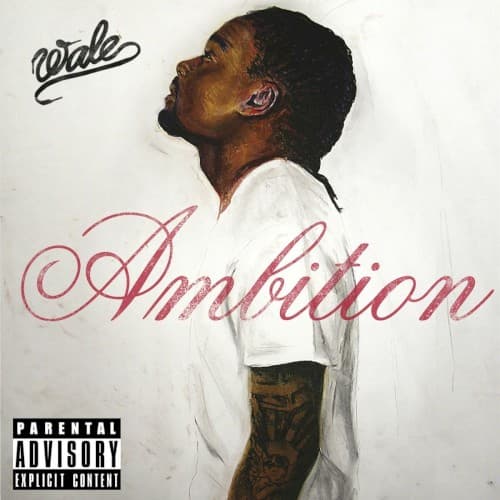
Wale Ambition: The Cost of Becoming Maybach's Smoothest Voice
Wale spent the weeks before his second album telling interviewers it would be the defining moment of his career, and the record's strongest argument for that claim comes from a song where he barely makes the case at all. "Legendary" is five minutes of DJ Toomp's warm, Southern-soul production, and Wale simply raps well over it, connecting his ambition to something he can actually be heard doing. The rest of the album spends most of its time insisting on a greatness that only a few songs demonstrate.
My argument is that Ambition is the sound of a gifted, idiosyncratic rapper solving the wrong problem. Wale arrived at Maybach Music Group after a debut that had critics and fans talking, and the label's job was to make him bigger. The answer here is to smooth him out: fewer tangents, fewer awkward jokes, fewer of the D.C. specifics that made him interesting, and more glossy mid-tempo records with an R&B hook attached. It worked on the commercial side. The album debuted at number two on the Billboard 200 with 164,000 first-week copies, his first top-ten debut. As a piece of music, it is polished, consistent, and cautious to the point of anonymity.
That caution matters because of what the album is competing with. In 2011 the lanes were already clear: Rick Ross owned the lavish, boss-talk lane that Wale was now joining, Drake owned the sensitive-and-successful lane that Wale keeps flirting with, and Wale's own best material had come from being neither. Ambition borrows from both without matching either. A few songs rise above that, and they are good enough to explain why people kept faith in him. But as a statement of purpose, a title and a promotional campaign built on the idea that this is the album where he proves everything, it proves a narrower point: he can make a comfortable, radio-ready album, and he can make it sound expensive.
This review argues that the album is better than its harshest critics claimed and weaker than its own marketing, and it tries to show where the line falls.
A Rapper Who Can Write, Sanded Down for the Radio
The first thing to understand about how Ambition works is that the production is the main event. The credits are wide: DJ Toomp on "Legendary" and "No Days Off", T-Minus on the title track, Lex Luger on "That Way", Diplo on "Slight Work", Tha Bizness on "Illest Bitch", Tone P. on several others. Yet the finished record sounds like one room. That is a real achievement and the album's clearest strength. Horns, live-sounding drums and soul samples are mixed so that every song feels padded and expensive, and Wale's voice sits on top of it without strain. "Legendary" leans on a Barbara Blake & The Uniques sample, and "That Way" builds from Curtis Mayfield and a Mary J. Blige interpolation, which is why the sound has the weight of older records even when the writing does not.
The weakness is that the sound is designed to flatter, and it flatters everyone equally. Almost every beat arrives at the same medium pace, with a hook that asks for a singer, and Wale adapts to it rather than pushing against it. Compare that with the hungrier, wordier Wale who rapped over harder drums on earlier projects, and the loss is obvious: where he once jumped between ideas, here he settles into a groove and stays there. The Slant review in the fact sheet complained that his legacy talk stops being fun, and the complaint is fair. Too many verses restate the album's premise (I work harder than you, I will be remembered, the women love it) without adding a new image or an actual scene.
Where the writing works, it works because of detail. Wale's best lines are conversational, observational and slightly bruised, and when he lets that voice speak, as he does when the album slows down for its title song or sits with Miguel's hook, the album gets human. The same writer is responsible for the dated, defensive handling of women on songs like "Illest Bitch", where a gesture meant as praise is built from clumsy phrasing and borrowed bravado. The record wants to court female listeners and to flex like Maybach at once, and the two goals pull at each other.
Delivery is the quiet reason the album stays listenable. Wale has a pleasantly gravelly tone, a flexible pocket, and a habit of landing a punchline late that keeps even the weaker verses moving. The guests are used sensibly: Rick Ross as a presence in the background and on two songs, Meek Mill as the shot of adrenaline on the title track, Miguel and Ne-Yo and Jeremih as melodic cover. None of them outshines the host, which is a flattering sign for Wale and a mild one for the ensemble. The album is cohesive in sound and a little too even in effect, and that evenness, more than any single bad song, is what holds it back from the greatness it keeps asking for.
Thirteen Songs, One Temperature
As a sequence, the album is built like a night at a nice restaurant: a loud, confident arrival, a long comfortable middle, and an emotional finish. The opening run does the most work. Wale announces the project with brass-heavy statements and a pair of tightly written verses, and the first quarter moves quickly because the songs are short and the beats keep changing texture. By the time the record reaches "Legendary", the album has built enough momentum that a five-minute song feels earned rather than indulgent.
The sag comes in the middle, and it is a sag of sameness, not of quality. Several songs sit at nearly the same tempo, with a similar mixture of piano, drums and melodic hook, and a listener can drift through them without registering a change. The record is only thirteen songs long, so this is not a case of obvious bloat, yet it plays longer than it is. Sequencing might have helped, since the strongest hooks are spread out rather than grouped, but the real issue is that the album has only one emotional setting. It is confident, mildly romantic and mildly anxious, and the sequence rarely lets any of those moods break through into something sharper or messier.
The back third recovers some energy. The title song brings in guests, the push of a larger production and the album's sharpest argument about what his career means, and the closing songs return to the warmer, more intimate register that suits Wale best. The finish is respectable rather than climactic. What the sequence never does is take a risk: no skit that surprises, no abrupt change of pace, no moment where the producers are allowed to break the template. That is why the album feels more like a very good playlist than a story, with a clear start and a gracefully fading end, and why its length, though modest on paper, still outstays the amount of ideas it has to share.
Good Taste, Short on Nerve
Ambition is a good album that stops short of a great one, and it deserves a place near the middle of the Maybach era rather than at the top. Because no other Wale album is rated on the site yet, the honest comparison is against what he was before and what he could have been. Measured against the sharper, stranger rapper of his earlier work, this is a step toward safety. Measured against the rest of the genre in 2011, it is an above-average major-label rap record with a handful of songs that earn their place. The mixed critical reception, a Metacritic average of 69, is about right: some reviewers found a polished sophomore album, others found a dull one, and both were describing the same record.
Who is it for? Anyone who likes a warm, soul-leaning Southern sound, and anyone curious about how Maybach Music Group packaged a lyricist who did not naturally belong to its world. Fans of Rick Ross's lush production will be comfortable here; so will listeners who want rap with R&B hooks and without much confrontation. Who should skip it? Anyone coming for the rawest, funniest and most idiosyncratic Wale, and anyone who wants a record that surprises. There is very little here that a listener could not guess after two songs.
Start with "Legendary" for the best argument the album makes, then "Lotus Flower Bomb" for the clearest example of how well the pop-minded formula can work, and "Ambition" for the sound of the whole project in one song. If you like what you hear, explore the wider catalog on Wale's artist page, and then try Rick Ross to hear the label sound at its source, or Meek Mill for the hungrier energy this album only briefly borrows.
Over time the record has aged as a snapshot of a particular moment, when major labels believed a lyrical rapper could be turned into a crossover act by surrounding him with soft hooks and brass. The best songs still work. The rest sound like a very good sketch for a better album.
Track by track
Track Listing
Don't Hold Your Applause
StandoutTone P. and Chris Barz give Wale a loud, brass-driven opener that sets a confident tone, and he plays the part of a rapper demanding attention without needing it. It is a short, effective curtain-raiser rather than a statement, and it hints at the record's fixation with respect.
Double M Genius
SolidA compact, bass-heavy Mark Henry beat for a verse-heavy boast. Wale's wordplay is crisp, but the song mostly exists to establish Maybach membership, and it is more of a handshake than a highlight.
Miami Nights
SolidMark Henry returns for the album's first soft turn, a glossy, late-night track pitched toward women and the radio. Wale sounds relaxed and charming, but nothing in the writing sticks, and it is the first sign of the record's sameness.
Legendary
StandoutThe album's best song, built by DJ Toomp around a soul sample from Barbara Blake & The Uniques. The beat swells and breathes, and Wale uses the room to rap with real shape: he moves between ambition, doubt and craft without turning any of them into a slogan. It is the one place where the album's big theme (that he wants a long career, not a quick one) is stated through performance instead of promise, and it is easy to hear why he picked it as the song he would want a listener to hear first. At five minutes it is also the only long song that completely earns its length, with an arrangement that develops rather than repeats. If someone asks whether Ambition has anything at the level of its own hype, point them here.
Lotus Flower Bomb
StandoutMiguel's hook is the draw, and Jerrin Howard's slow, sensual beat gives him space to float. Wale takes the supporting role well, rapping in a gentle, grown-up register about desire and dependence, and the writing gets closer to character than it does anywhere else on the album's romance tracks. It is the clearest case for the album's R&B-leaning strategy: the pairing sounds natural, nothing is forced, and the result is a hit that does not feel like one. The song deserves its place as a single and remains one of the more durable moments in Wale's catalog.
Chain Music
SolidTone P. builds a menacing, stuttering beat and Wale answers with a straight bragging verse. The song pushes toward a harder sound, with Rick Ross's voice lurking in the background, but it is still more attitude than writing. Solid, loud, and forgettable once it ends.
White Linen (Coolin')
SolidNe-Yo gives this one a smooth hook and Deputy's beat is bright and breezy, so it plays as a pleasant interlude of summer rap. The lyrics are generic, and the song is a good example of a track that is easy to enjoy and hard to remember.
Slight Work
StandoutDiplo's bouncing, clipped beat and Big Sean's guest verse turn this into a fun, playful track that breaks up the album's mid-tempo run. Wale sounds looser here than almost anywhere else, with quick punchlines and a bigger smile in his voice. It is not deep, but it is one of the few moments where the record sounds like it is having a good time, and that counts for a lot after the long stretch of soft romance around it.
Ambition
StandoutThe title track is the album's thesis in rap form: T-Minus supplies a big, rolling beat, Meek Mill brings urgency, and Rick Ross delivers a verse that Wale himself described as showing a different side of Ross. Wale frames ambition as the price of a long career and the thing that separates him from people who want quick money. The writing is more direct than subtle, and the hook is the sort that gets stuck in your head for the right reasons. It is the best argument for the album as a unified project, and the part that critics singled out for praise even when they were harsh about everything around it. A strong second peak after "Legendary".
Illest Bitch
WeakTha Bizness gives this a slick, sensual beat, but the song is the album's clearest writing problem. The attempt at praise leans on a word that makes the whole thing awkward, and the verse sticks to familiar tributes with little detail. A weak track on an otherwise solid run.
No Days Off
StandoutDJ Toomp returns for a harder, drum-led piece of work ethic rap. Wale sounds hungry here, and the beat gives his flow a firm backbone. It is the album's most straightforward statement of its own title and a quiet highlight in the back half.
DC or Nothing
StandoutTone P. gives Wale room for the hometown pride that the rest of the record largely leaves out. The beat is moody, the delivery is warmer and more personal, and it is the closest the album comes to the specific, local voice that made the earlier mixtapes work. It could have been the best song here with a bigger hook, but it is a welcome change of scale.
That Way
StandoutLex Luger's beat is unexpectedly elegant, built on a Curtis Mayfield sample and a Mary J. Blige interpolation, with Jeremih and Rick Ross adding two different textures to the hook and verse. Wale's verse is relaxed and charming, and the song captures the album's commercial ambition without sounding cynical. It is a smooth, confident closer that leaves a better aftertaste than the weaker middle run, even if it is not the emotional climax the album seems to want.
Frequently Asked Questions
Is Wale's Ambition a good album?
What are the best songs on Wale's Ambition?
How did Wale's Ambition perform commercially?
Styles