The scorecard
7.0/10 · Good
- Writing25%
- 7.5
- Production25%
- 7.0
- Delivery15%
- 7.0
- Cohesion15%
- 6.5
- Originality10%
- 6.5
- Replay value10%
- 6.5
The confessional verses on tracks like The Pessimist and The God Smile trade slogans for self-doubt, though the album's pop-minded stretches fall back on generic romance lines.
The warm, soulful beds from DJ Dahi, Pro Reese and Jake One suit the introspection, but the late run of radio-ready tracks sounds more interchangeable than the opening.
Wale sounds relaxed and conversational throughout, and the guest turns from J. Cole, SZA, Usher and Jeremih fit their songs, yet few verses push him out of that comfortable register.
The Seinfeld interludes and a confessional first half give the record a spine, but the long second half drifts toward singles-driven filler.
Using a sitcom comedian as a dry narrator for a rap confessional is a distinctive framing, even if the songs underneath lean on familiar R&B-rap templates.
The strongest half rewards repeat listens, while the weaker singles-leaning songs invite skipping once the novelty of the concept fades.
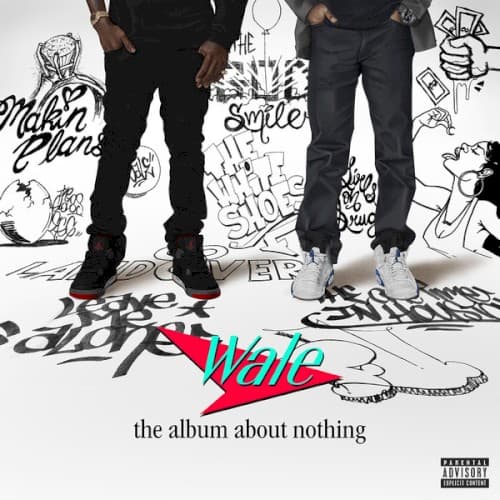
Wale The Album About Nothing: A Confession With a Sitcom Narrator
The Album About Nothing works best when Wale stops arguing with the industry and starts arguing with himself, and the Jerry Seinfeld clips that run through it are the clearest sign of how that shift is meant to work. Wale has called the record a journal, and the comedian acts as a dry narrator in the margins, a conscience who comments while the rapper confesses. On paper that sounds like a gimmick, a sitcom reference stapled to a rap record. On the record it becomes a structural device that gives a famously defensive writer a reason to be candid.
The thesis here is simple: this is Wale's most coherent statement because it commits to one voice, anxious, funny and self-lacerating, and lets the songs be about his insecurity instead of about winning an argument. It is not a flawless album. Its second half turns toward radio-minded duets and guest-driven songs that dilute the confessional focus the opening builds so carefully. But the best material here is more exposed than a listener of his earlier work would have expected, and the pairing of his heavy-hearted verses with Seinfeld's deadpan is a texture rap rarely tries.
The stakes are about identity as much as craft. Rap keeps a narrow script for male confidence, and rappers who admit depression, jealousy or the fear of being overlooked tend to do it in a single sad song before returning to bravado. Wale spends a whole album in that uncomfortable place, speaking to listeners who recognize themselves in the over-thinker rather than the boss, and mostly refusing to flatter himself. That commitment is why the album rewards close listening, and why its weaker moments, the ones that retreat into the standard script, stand out so sharply. A critic can quarrel with the sequencing and with a handful of interchangeable songs, but it is hard to argue that the record lacks a point of view, and that is more than most major-label rap albums of its moment can claim.
Soul Samples, Dry Humor and the Limits of Candor
The sound of the record is warm and unhurried, built from soulful, melodic beds that leave room for Wale to talk rather than perform. The production is spread across a long list of names, including Frank Dukes, DJ Dahi, Sonny Digital, Pro Reese, Jake One and DJ Khalil, and the surprise is how consistent the palette feels anyway. Live-sounding chords, patient drums and the occasional choir or backing vocal keep the mood closer to a late-night conversation than a club night. That choice matters because it frames his rapping as speech. The beats seldom compete with him, and when a track like The White Shoes lets a guest vocalist drift in behind him, it reads as a second mood rather than a hook for the sake of a hook.
Wale's writing is at its sharpest when it is specific about discomfort. He is fluent in the language of self-sabotage, the way a person can read every compliment as a setup, and he renders it with humor instead of self-pity. The Seinfeld interludes help here, because the comedian's dry observations puncture any verse that risks sounding too sorry for itself. The result is a rare balance in which a rapper is both the subject and the butt of the joke. His wordplay is still present, but it is used with more restraint than on his earlier work, and the album is better for it. Where earlier records seemed eager to prove he was the cleverest person in the room, this one is content to let a plain sentence land.
The weaknesses are real, and they cluster in the same place. When the album pivots to romance and radio, the writing loses its edge. The lines about desire and commitment are competent but generic, the kind that could belong to any R&B-leaning rap single of the period, and the voice that was so particular on the confessional songs gets smoothed into a more familiar charm. The Matrimony and The Body are professionally built and pleasant, yet they ask the listener to switch from a record about a man scrutinizing himself to a record about a man performing seduction. Wale also leans on a narrow vocal range. His conversational cadence is a strength over an hour of introspection, but across fourteen songs it starts to flatten, and few verses break out of that register to surprise the ear.
The guests are used with more discipline than the usual major-label formula. J. Cole, SZA, Usher and Jeremih each get a clear job, and none of them hijacks the song they appear on. That discipline is the quiet achievement of the record: it behaves like a solo statement even while chasing hits.
A Strong Opening and a Slackening Back Half
As a sequence, the album is front-loaded in the best sense. The opening stretch establishes the premise quickly: a long, welcoming introduction, then a run of songs that alternate between bruised confession and wry observation, with Seinfeld arriving often enough to feel like a character rather than a cameo. The pacing in this section is confident. Songs end when their ideas run out, the moods shift without lurching, and the album gives the impression of a man who knows exactly what he wants to say and is only worried about whether he can bear to say it.
The middle of the record is where the focus is most secure. Here the introspection deepens, the beats stay warm and slightly weary, and the guest features arrive as conversations instead of commercial insertions. The best runs on the album are the ones in which two or three consecutive songs follow a single emotional thread, and this stretch produces several of them. It is also where the humor does its best work, because the jokes arrive as relief at exactly the moments the material gets heavy.
The back half is where the sequence sags. The album shifts toward its two singles, and the long final songs, each running well past five minutes, ask for more patience than their ideas can repay. The final stretch in particular feels built for streaming playlists rather than for the arc the first half promised.
It is not that the music is bad; it is that the listener has been trained by the opening to expect a certain kind of exposure, and the later songs withdraw it. At fourteen songs and well over an hour, the length is only partly earned. A tighter record, with a couple of the more generic songs removed, would have kept the thesis intact and left the closing run feeling like a payoff instead of a coda. The album ends on its biggest radio-minded moment, which undercuts the quiet, self-questioning mood that makes the best of it distinctive.
Wale's Most Honest Record, Not His Most Consistent One
Among the albums by Wale rated on this site, this is the only one so far, so its place in the catalog is a matter of argument rather than ranking. The case for it as his most complete statement is persuasive: it gives his anxious, observational voice a frame, trims much of the competitive posturing, and finds a collaborator in Jerry Seinfeld whose tone actually suits the material. Critics were generally positive when it arrived, and the Metacritic average of 67 reflects the split reaction fairly. The first half supports the stronger claims made on its behalf, and the second half supports the more cautious ones. The scores here land in the good-to-great range for the same reason: the high points are clearly above average for rap albums of the period, and the low points are merely competent.
This is for listeners who want rap that sounds like a person thinking out loud, and for anyone curious whether a rapper can write about depression and ambition without turning either into a slogan. It is also a good entry point for a listener who has only heard Wale on guest verses or radio singles and wants to know what he sounds like when given room. Skip it if you want hard drums, rapid-fire technique or a high-energy club record; the album is deliberately conversational and often downbeat, and the Seinfeld interludes will annoy anyone who wants every second to be music.
Start with The Pessimist for the clearest picture of the album's tension between doubt and swagger, then The God Smile for its patient, reflective pacing, and The Need to Know if you want the most economical song on the record. Play The Body last, as a pop-rap coda rather than a representative sample.
It has aged better as a document of vulnerability in a macho genre than as a collection of singles, and that is the right way to hear it. For a next step, Wale's earlier Seinfeld-themed mixtapes are the obvious companions, since the fact sheet says this record continues that series. The cleanest summary is that the best ten minutes of The Album About Nothing sound like nobody else in rap, and the worst ten sound like everybody else.
Track by track
Track Listing
The Intro About Nothing
StandoutA long, welcoming opener that sets the premise and the mood: warm chords, layered vocals and a conversational Wale clearing his throat before the confession starts. It works as a mission statement more than a song, and it introduces the Seinfeld device without overselling it.
The Helium Balloon
SolidA lighter, bouncier early cut that keeps the mood buoyant before the heavier material arrives. The production leans on several hands and still sounds unified, and Wale's flow stays easygoing, though the hook is slightly less memorable than the groove around it.
The White Shoes
StandoutA soul-leaning highlight where the guest vocal drifts in behind the rapping instead of interrupting it. Wale writes about status and self-image with a light touch, and the beat gives him room to be wry without losing the thread. It is one of the clearest examples of the album's conversational method working as intended.
The Pessimist
StandoutThe album's thesis in song form. Wale sets his habit of expecting the worst against J. Cole's guest verse, and the pairing works because both rappers sound like they are reasoning with themselves rather than posing. The beat is restrained, the verses are specific about doubt, and the hook sticks without sounding built for radio. It is a key track and a good first listen for anyone sampling the record.
The Middle Finger
SolidA sharper, more defiant moment that lets the album's aggression show. The drums hit harder than elsewhere and Wale's delivery tightens, though the song relies more on attitude than on a distinct idea, which keeps it a solid mid-album change of pace rather than a standout.
The One Time in Houston
SolidA long, relaxed storytelling track that stretches past five minutes and uses its length to build atmosphere. The production is smooth and unhurried, and Wale paints a scene instead of making a point. It is pleasant and well made, but it sits close to the stretch where the album's momentum starts to thin.
The Girls on Drugs
SolidA moody, observational cut about the people around him, delivered in the same detached, watchful tone as the best songs on the record. The writing is more descriptive than confessional, which makes it a useful change of angle, though it is not one of the songs that lingers afterward.
The God Smile
StandoutOne of the album's most reflective songs, built on a patient beat that lets Wale think out loud for more than five minutes. The writing leans into faith, ambition and self-judgment without turning any of them into a sermon. This is the kind of track that justifies the album's journal framing, and it is where the pacing feels most deliberate. The length is earned here, because the song keeps finding new angles on the same worry.
The Need to Know
StandoutA tight, economical song with SZA, short enough to avoid overstaying its welcome. Her presence gives the hook a lift, and Wale's verse stays focused on a single emotional beat. It is the cleanest example of the album's guest features serving the song rather than the marketing.
The Success
SolidThe shortest song on the album, and it plays like a quick, confident flex between the heavier tracks. It does its job as a palate cleanser, though the writing is more declarative than revealing.
The Glass Egg
SolidA slower, more tender track with a soulful guest vocal that deepens its mood. The song handles fragility as a theme without overplaying it, and the production is warm without being syrupy. It is solid rather than essential, but it keeps the confessional thread alive just as the album starts leaning toward its singles.
The Bloom (AG3)
SolidA long, atmospheric stretch that is more mood than argument. The arrangement is lush and the vocal textures are pleasant, but at over five minutes it lacks a strong hook or a verse that justifies the duration. It reads as one of the songs where the album's pacing begins to slacken.
The Matrimony
SolidThe album's biggest swing at a pop crossover, with Usher handling the hook over a lush, polished beat. The song is expertly assembled and easy to enjoy, and Wale writes about commitment with real warmth. It also marks the point where the record trades its distinctive voice for a more familiar R&B-rap template, and at more than six minutes it runs longer than its ideas. A well-made single that is less revealing than the songs before it.
The Body
SolidA smooth, radio-friendly closer with Jeremih that is catchy and easy to like, and also the least representative song on the album. It shows Wale can handle a seductive pop-rap groove, but its sleek, impersonal tone sits awkwardly after an album built on self-questioning. Enjoyable, but it ends the record on its most generic note.
Frequently Asked Questions
Is Wale's The Album About Nothing good?
What is The Album About Nothing about?
Which tracks should I hear first on The Album About Nothing?
How did The Album About Nothing perform commercially?
Styles