From Military Bases to Underground Icon: JPEGMAFIA's Confrontational Vision
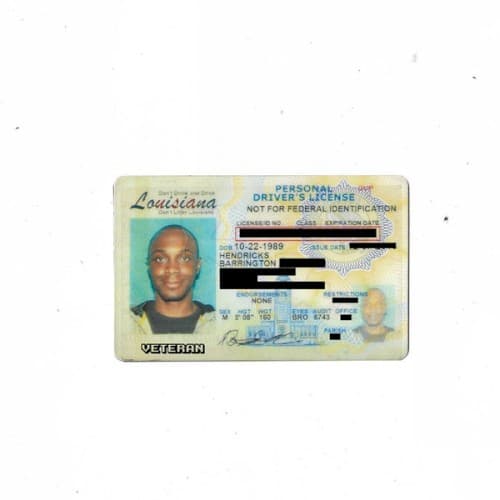
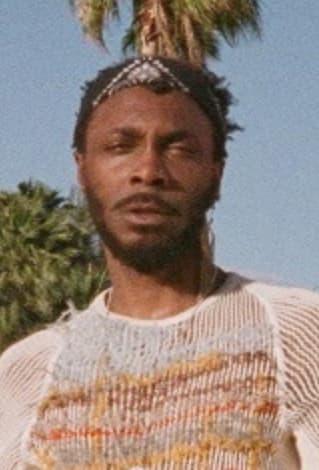
Barrington DeVaughn Hendricks, the Baltimore-based iconoclast operating as JPEGMAFIA, constructs hip-hop that sounds like it's actively fighting against the genre's conventions. Born in 1989 and raised across military bases in Alabama, Germany, Louisiana, and Japan before settling in Baltimore, Peggy emerged in the mid-2010s with a sonic approach that treats distortion as texture and chaos as structure. His music doesn't just sample — it detonates, reassembles, and weaponizes everything from emo guitar riffs to anime dialogue into densely layered productions that reward repeated listens while repelling casual listeners.
What separates JPEGMAFIA from the broader experimental hip-hop landscape isn't just his abrasive sonics but his willingness to occupy contradictory spaces simultaneously. He's a military veteran who makes aggressively leftist political music. He's a deeply online artist who critiques internet culture relentlessly. He's a producer who crafts intricate, maximalist beats while rapping with punk rock urgency over them. This refusal to be easily categorized has made him both a critical darling and a divisive figure, someone whose work demands engagement rather than passive consumption.
Since his breakout with Veteran in 2018, JPEGMAFIA has become the reference point for a new generation of artists pushing hip-hop into noisier, more confrontational territory. His influence extends beyond sound into attitude — a DIY ethos combined with major label ambitions, internet-native humor mixed with serious political commentary, accessibility through intentional inaccessibility. For listeners exhausted by algorithmic smoothness, Peggy represents hip-hop as an active listening experience, something that challenges rather than comforts.
Sonic Warfare: JPEGMAFIA's Maximalist Production Philosophy
JPEGMAFIA's production aesthetic operates on the principle that more is more, then even more than that. His beats layer distorted 808s over glitchy vocal chops, industrial clangs over chopped soul samples, emo guitar squeals over trap hi-hats, creating compositions that feel like they're perpetually on the verge of collapse but never quite fall apart. The density is intentional — every track contains enough sonic information for three separate songs, forcing listeners to choose what to focus on with each playthrough. This maximalism isn't chaos for chaos's sake; it's a deliberate aesthetic choice that mirrors the information overload of contemporary digital life.
His vocal approach matches his production's abrasiveness. Peggy raps with a confrontational delivery that shifts between shouted proclamations, deadpan punchlines, and melodic sung passages, often within the same verse. He doesn't ride beats in the traditional sense — he attacks them, finding pockets in the noise that shouldn't theoretically exist. The lyrical content oscillates between extremely online references, sharp political critique, personal vulnerability, and provocative humor, delivered with enough irony that sincerity becomes its own form of subversion. Lines that initially scan as jokes reveal deeper meanings on reflection.
The sample palette tells its own story about Peggy's influences and intentions. He pulls from hardcore punk, noise music, vintage R&B, anime soundtracks, video game scores, and obscure internet ephemera with equal enthusiasm. A JPEGMAFIA beat might contain a pitched-up Carly Rae Jepsen sample, a drill from a hardware store, and a chopped vocal from a YouTube comment section argument. This democratic approach to source material — where Sufjan Stevens and Call of Duty carry equal weight — reflects his belief that all culture is fair game for reconfiguration. The resulting sound is immediately identifiable as his, a specific strain of beautiful ugliness that has spawned countless imitators but few successful replicators.
Breaking Through Breaking Things: JPEGMAFIA's Career Trajectory
JPEGMAFIA's early work under various aliases in the late 2000s and early 2010s laid groundwork that most fans discovered retroactively. His Communist Slow Jams and The 2nd Amendment projects showcased the political directness and sonic experimentation that would define his later work, though they reached limited audiences. The Baltimore DIY scene provided crucial development space — performing in basements and art spaces where experimentation was expected rather than tolerated. These years taught him to produce entirely on his laptop using often-pirated software, a limitation that became a signature constraint driving his creative approach.
Everything accelerated with Veteran in January 2018. The album arrived without traditional industry machinery, distributed primarily through Bandcamp and word-of-mouth, but its impact was immediate and disproportionate. Tracks like "Baby I'm Bleeding" and "1539 N. Calvert" became touchstones for listeners craving hip-hop that sounded genuinely dangerous again. The album earned a 7.7 rating in our review and positioned Peggy as the most exciting new voice in experimental rap. What made Veteran resonate wasn't just its sonic innovation but its perfect capture of a specific political moment — anger weaponized into art, frustration given form. The album's success came from its refusal to compromise; this was hip-hop that demanded you meet it on its terms.
All My Heroes Are Cornballs in 2019 surprised listeners who expected Veteran Part Two. Instead, Peggy delivered his most melodic and vulnerable work, incorporating emo and indie rock influences more explicitly while maintaining his production maximalism. Tracks like "Jesus Forgive Me, I Am A Thot" showed he could craft hooks without sacrificing his edge. The album proved he wasn't a one-trick abrasive pony but an artist with genuine range. Critics who dismissed him as merely provocative had to reckon with songs that functioned as both deconstructions and celebrations of sentimentality.
Signing with Republic Records and EQT Recordings in 2020 marked a significant shift. LP! in 2021 was his major label debut, featuring collaborations with established artists while maintaining his uncompromising vision. The album's relative accessibility — relative being the key word — suggested Peggy understood how to navigate industry expectations without being flattened by them. He followed this with 2023's SCARING THE HOES, a collaboration with Danny Brown that doubled down on experimental impulses, and 2024's I LAY DOWN MY LIFE FOR YOU, which found him processing grief and maturation through his established sonic palette. Each project has expanded his methodology without abandoning core principles.
His live performances have become legendary for their intensity and unpredictability. Peggy doesn't just perform his music; he conducts it, triggering samples live, adjusting elements in real-time, and engaging crowds with a confrontational energy that turns concerts into participatory experiences. He's performed at experimental music festivals, traditional hip-hop venues, punk spaces, and art galleries with equal conviction. This versatility has built a diverse fanbase united by appetite for challenging music rather than adherence to any single genre community.
The JPEGMAFIA Effect: Redefining Experimental Hip-Hop's Possibilities
JPEGMAFIA's influence on contemporary hip-hop manifests most clearly in the explosion of artists embracing abrasive production as a valid artistic choice. Before Veteran, experimental hip-hop often meant abstract lyricism or unconventional song structures; Peggy normalized sonic aggression itself as the experimental element. Artists like Rico Nasty and emerging SoundCloud rappers cite his work as permission to push production into noisier territories. His success proved that audiences existed for hip-hop that deliberately challenges rather than soothes, opening commercial pathways for artists who previously would have remained purely underground phenomena.
Beyond sonics, his approach to internet culture has been equally influential. JPEGMAFIA exists simultaneously as an extremely online figure and a critic of online culture's toxicity. He uses social media to build direct relationships with fans while maintaining artistic mystique. His music references memes, forum culture, and digital discourse without becoming dated because he captures the feeling of being online rather than specific references. This balance has become a model for younger artists navigating how to be authentic in digital spaces without becoming consumed by them.
His legacy ultimately lies in expanding hip-hop's definition of what constitutes valid artistic expression. JPEGMAFIA demonstrated that you can make confrontational, abrasive, politically charged music that still functions as hip-hop rather than some separate experimental genre. He didn't abandon rap fundamentals — bars, beats, presence — but reconfigured them for listeners who found traditional approaches insufficient for expressing contemporary experience. Whether his specific sound remains influential or becomes a period marker, the space he carved for genuinely challenging hip-hop to exist within the broader cultural conversation will endure. He made uncomfortable hip-hop commercially viable, and that achievement resonates beyond any individual album.