Los Angeles Misfits Who Redefined West Coast Hip-Hop's Possibilities
When The Pharcyde emerged from South Central Los Angeles in the early 1990s, they arrived as walking contradictions to everything the region's hip-hop was supposed to represent. While Death Row Records was building an empire on gangsta rap's menacing sonics and street narratives, four former dancers turned rappers offered something radically different: playful wordplay over jazz-inflected production, introspective musings on romantic failures, and a willingness to look foolish in pursuit of originality. The group—Imani, Slimkid3, Bootie Brown, and Fatlip—didn't emerge from the hardened streets so much as the creative margins, their background in dance informing both their rhythmic approach and their comfort with performance as spectacle.
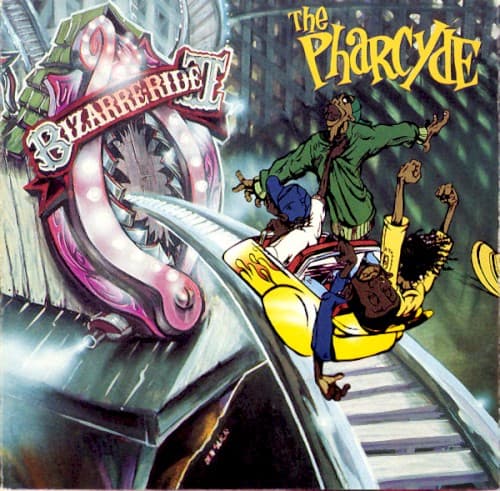
Their 1992 debut Bizarre Ride II the Pharcyde became an unlikely classic, a record that proved west coast hip-hop could embrace whimsy without sacrificing credibility. The album's influence extended far beyond its commercial performance, establishing a blueprint for artists who wanted to operate outside gangsta rap's dominant narrative. They represented an alternative Los Angeles, one where creative weirdness and technical skill could coexist, where vulnerability wasn't weakness but source material. The Pharcyde's career trajectory would prove messier than their initial promise suggested, marked by lineup changes and inconsistent output, but their initial impact on hip-hop's creative possibilities remains undeniable.
Jazz-Soaked Production and Conversational Flow Dynamics
The Pharcyde's sonic identity was built on loose, organic production that prioritized groove over aggression. Their early work, largely shaped by producer J-Swift, drew heavily from jazz fusion, soul samples, and P-Funk aesthetics—creating soundscapes that felt lived-in rather than constructed. Tracks rolled and bobbed with unhurried confidence, basslines providing melodic foundation while horn stabs and piano flourishes added texture. This wasn't boom-bap in its purest form, but something more fluid, production that breathed and shifted like a conversation rather than a statement.
Vocally, the group operated as a collective of distinct personalities rather than a unified front. Fatlip's nasal delivery and self-deprecating humor contrasted with Slimkid3's smoother cadence and philosophical bent, while Bootie Brown brought gravel and urgency, and Imani added precise wordplay. They rarely worked in traditional verse-chorus structures, instead creating sonic collages where members would trade bars mid-thought, finish each other's lines, or layer vocals in ways that felt spontaneous. The effect was conversational intimacy—listening to The Pharcyde often felt like eavesdropping on friends riffing in a basement rather than witnessing a calculated performance.
Lyrically, they occupied territory between the conscious and the comedic, willing to address serious themes—racism, poverty, self-doubt—but never with the heavy-handed earnestness of message rap. They could detail romantic failures with unflinching honesty on "Passin' Me By," then flip immediately into absurdist humor. This tonal flexibility became their signature, an approach that influenced everyone from OutKast's willingness to experiment to the lo-fi intimacy of modern alternative rap. The Pharcyde proved that technical proficiency and playfulness weren't mutually exclusive, that you could be skilled without being self-serious.
From Bizarre Ride's Creative Peak Through Internal Fractures and Reinvention
The Pharcyde's origin story begins not in recording studios but on the Los Angeles dance scene, where the four members performed as part of a group called Two For Two. This background in movement and choreography would inform their approach to rhythm and group dynamics, creating a sensibility distinct from most hip-hop collectives. Their transition to rapping came organically, fueled by shared musical tastes and the creative ferment of early '90s Los Angeles. By 1991, they'd caught the attention of Delicious Vinyl, the label that had helped launch Tone Lōc and Young MC, but was searching for artists with more creative depth.
Bizarre Ride II the Pharcyde arrived in November 1992, a record that felt immediately out of step with its moment in the best possible way. While West Coast hip-hop was dominated by Dr. Dre's G-funk and the rise of gangsta rap, The Pharcyde offered something gentler and stranger. "Passin' Me By" became their signature track—a rueful meditation on unrequited crushes built on a flipped Quincy Jones sample, showcasing their ability to find humor in rejection without losing emotional resonance. The album moved through moods fluidly: the playful boasts of "Ya Mama," the paranoid unease of "Officer," the stoned reverie of "Oh Shit." J-Swift's production gave each track room to breathe, never overwhelming the vocals but always adding layers of texture. The record didn't achieve massive commercial success immediately, but it found its audience—college campuses, alternative hip-hop heads, listeners hungry for west coast rap that didn't require adopting a gangsta posture.
Their follow-up, 1995's Labcabincalifornia, marked a significant shift in both sound and circumstance. J-Swift's departure due to personal issues led the group to work with an emerging producer from Chicago named J Dilla, whose abstract, sample-heavy approach pushed them into darker, more experimental territory. The album retained their lyrical personality but shed much of the first record's playfulness, replacing it with noir-tinged atmospherics and more complex production. "Runnin'," with its backwards-flowing video directed by Spike Jonze, became an artistic statement about creative evolution—moving forward by literally moving in reverse. The record earned critical respect but confused casual fans expecting Bizarre Ride part two. Commercially, it underperformed, and internal tensions that had been simmering began to boil over.
By the late 1990s, The Pharcyde was fracturing. Fatlip departed acrimoniously in 1997, leaving the remaining trio to continue with diminished creative chemistry. Their 2000 album Plain Rap showcased moments of their original spark but lacked the cohesion that made their early work special. The group limped through the 2000s with various lineup configurations, releasing Humboldt Beginnings in 2004 to little fanfare. What should have been a unified legacy became fragmented by legal disputes over the group's name, competing tours featuring different lineups, and members pursuing solo careers with varying degrees of success. Fatlip's 2005 solo album The Loneliest Punk earned cult appreciation for its unflinching examination of depression and addiction, while Slimkid3 released well-regarded but commercially invisible projects.
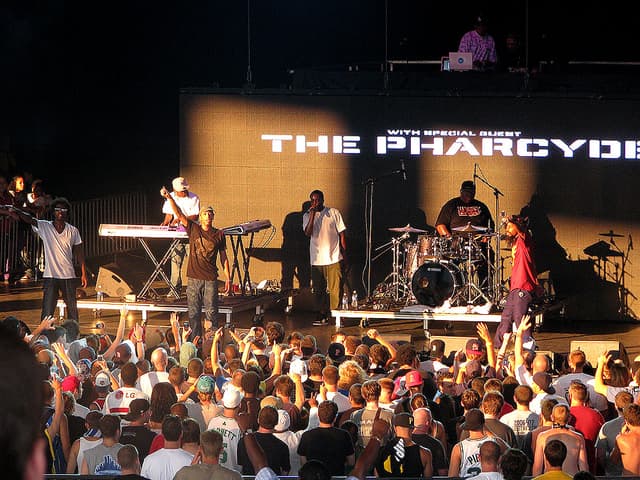
Despite the messy dissolution, The Pharcyde's touring presence never entirely disappeared. Various configurations of the group have performed throughout the 2010s and beyond, mostly capitalizing on '90s nostalgia rather than creating new material. Their live shows became both celebration and reminder—evidence of what they'd contributed to hip-hop's creative vocabulary, but also testimony to how difficult it is to maintain artistic partnerships across decades. The group that once represented creative possibility became a cautionary tale about ego, business acumen, and the challenge of sustaining collaborative chemistry.
Alternative Hip-Hop's Blueprint Builders and Underground Influence Network
The Pharcyde's influence operates less through direct sonic imitation and more through permission granted—they proved that west coast rap could embrace vulnerability, absurdity, and jazz aesthetics without sacrificing credibility. When OutKast began experimenting with genre boundaries and emotional honesty, they were walking through doors The Pharcyde had opened. When alternative hip-hop became a recognized subgenre rather than an oxymoron, it was partly because groups like The Pharcyde had demonstrated commercial viability for artists operating outside gangsta rap's formula. Their impact is audible in the lo-fi intimacy of artists like Mac Miller, the conversational flows of Chance the Rapper, and the jazz-inflected production choices that run through modern conscious rap.
Their collaboration with J Dilla on Labcabincalifornia proved particularly significant for hip-hop's production evolution. Dilla's work on that album—loose, off-kilter, prioritizing feel over mathematical precision—helped establish the aesthetic that would dominate underground hip-hop for the next decade. The Pharcyde became part of Dilla's creative network, connecting west coast alternative rap to the broader experimental scene that included artists like Common, Mos Def, and Talib Kweli. That cross-pollination helped break down regional barriers, proving that creative ambition could transcend geography.
What The Pharcyde couldn't achieve was institutional longevity. Unlike A Tribe Called Quest, who managed to sustain their reputation through careful reunion tours and eventual late-career creative resurgence, The Pharcyde's legacy remains largely tied to their first two albums. They're beloved by hip-hop heads and referenced by younger artists exploring alternative approaches, but they never received the mainstream retrospective recognition that some of their peers eventually earned. Yet their absence from canonical narratives doesn't diminish their actual impact—they helped make hip-hop weirder, more emotionally honest, and more musically adventurous. For artists trying to carve space outside commercial expectations, The Pharcyde's career remains both inspiration and warning: creative originality matters, but so does the ability to navigate the business and interpersonal challenges that inevitably follow.