From Fugees Member to Solo Revolutionary: The Rise of Ms. Lauryn Hill
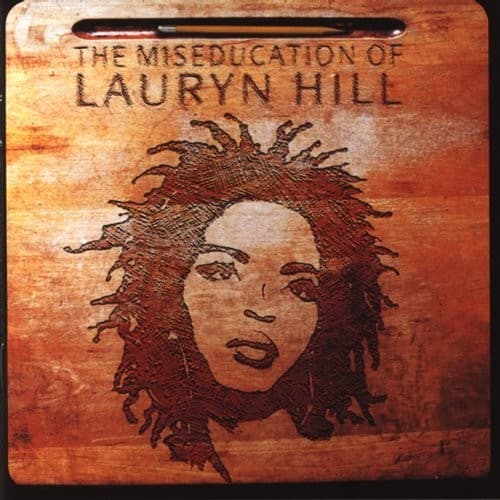
Ms. Lauryn Hill emerged from East Orange, New Jersey, as one of hip-hop's most formidable talents, first as the soul-voiced anchor of the Fugees, then as a solo artist who fundamentally altered what a rap album could be. Her 1998 debut The Miseducation of Lauryn Hill arrived not as a cautious first step but as a fully realized artistic statement that swept the Grammys, moved millions of units, and proved that conscious lyricism and commercial dominance weren't mutually exclusive. She rapped with technical precision, sang with church-trained power, and wrote with the kind of emotional honesty that made her work feel like overheard confessions.
What separated Hill from her peers wasn't just versatility—it was the depth of her integration. She didn't toggle between rapper and singer; she occupied both spaces simultaneously, creating a hybrid form that influenced everyone from Erykah Badu's genre experiments to contemporary artists like Rapsody and Noname who balance bars with melody. Her production approach, rooted in live instrumentation and classic soul samples, helped define neo-soul's sonic palette while keeping one foot firmly planted in hip-hop's lyrical tradition.
Yet Hill's legacy is as complicated as it is monumental. Following Miseducation's triumph, she retreated from the industry, releasing only sporadic live recordings and appearing infrequently in public. Her relationship with fame, institutional demands, and creative control became part of hip-hop folklore—a cautionary tale about artistic autonomy and the toll of genius. But even in semi-retirement, her influence remained undeniable, a standard against which every conscious female MC and neo-soul vocalist would be measured.
Conscious Lyricism Meets Gospel-Rooted Soul: Hill's Musical Architecture
Hill's sonic identity emerged from the intersection of several traditions: the lyrical dexterity of golden-age hip-hop, the harmonic richness of classic soul, and the spiritual urgency of gospel music. Her flow possessed technical sharpness—multisyllabic patterns, internal rhymes, conversational shifts—but she deployed these tools in service of emotional truth rather than pure technical display. When she rapped, it felt like testimony. When she sang, it felt like deliverance. The two modes informed each other, creating a unified voice that transcended genre boundaries.
Production-wise, Hill favored warm, organic soundscapes built around live drums, basslines, and guitar work that recalled Curtis Mayfield and Marvin Gaye more than contemporary sample-heavy boom-bap. On Miseducation, she wove together Motown flourishes, reggae riddims, doo-wop harmonies, and hip-hop breaks into a cohesive whole that sounded both timeless and revolutionary. Her willingness to layer her own vocals—harmonizing with herself, creating choir-like textures—gave her records a dense, immersive quality that rewarded repeated listens.
Her lyrical content centered on themes that were rarely explored with such nuance in mainstream rap: romantic love's complexities, spiritual searching, motherhood, the music industry's corrupting influence, Black womanhood's particular burdens. She wrote with specificity—naming feelings that listeners recognized but couldn't articulate themselves. This combination of technical skill, emotional intelligence, and sonic innovation created a template that remains influential decades later, even if Hill herself never returned to replicate it.
The Miseducation Era and Its Aftermath: Triumph, Retreat, and Enduring Mystery
Hill's path to solo stardom began with the Fugees, the New Jersey trio that broke through in 1996 with The Score, a multi-platinum blockbuster that made stars of Hill, Wyclef Jean, and Pras Michel. On that album, Hill handled hooks, verses, and the group's emotional center—her rendition of "Killing Me Softly" became one of the decade's defining moments. But creative tensions simmered beneath the surface, and by 1997, all three members were pursuing solo ventures.
When The Miseducation of Lauryn Hill dropped in August 1998, it rewrote the rules. The album debuted at number one, selling over 420,000 copies in its first week and eventually moving over 10 million units domestically. Critics hailed it as a masterpiece. The Grammys awarded her five statuettes in one night, including Album of the Year—a historic sweep for a hip-hop artist, particularly a woman. Singles like "Doo Wop (That Thing)" dominated radio, offering relationship wisdom over a retro-soul groove. "Ex-Factor" showcased her vocal range and songwriting depth. "Everything Is Everything" philosophized over a jazz-inflected beat. The album felt complete, cohesive, essential.
Yet even at the peak of this success, complications emerged. Producers and musicians who contributed to Miseducation filed lawsuits claiming inadequate credit and compensation. Hill, who had positioned herself as the album's primary creative force, faced questions about collaboration versus control. The legal disputes cast shadows over the triumph, and Hill's relationship with the music industry—already fraught—deteriorated further. She began speaking publicly about exploitation, artistic freedom, and the spiritual costs of fame.
Following Miseducation, Hill largely withdrew from conventional industry participation. She released MTV Unplugged No. 2.0 in 2002, a raw, acoustic performance that revealed an artist in spiritual crisis, reworking old material and presenting new songs that felt unfinished, confrontational. The album polarized listeners and critics. Some heard profound honesty; others heard an artist unraveling. It marked the last official studio release of new material for over a decade.
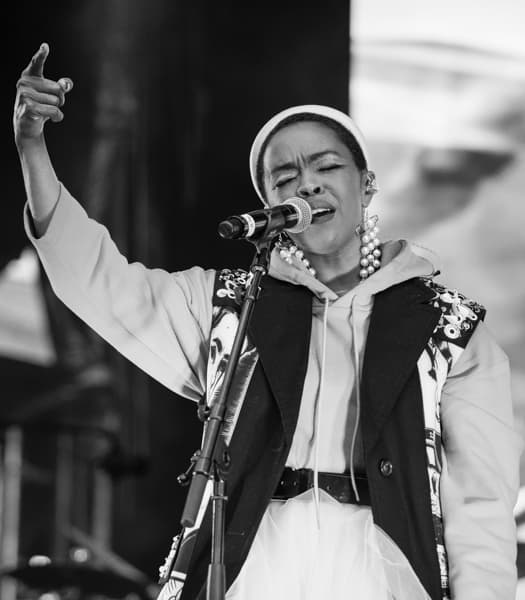
Hill's live performances became legendary for different reasons: brilliant when she appeared, but frequently plagued by lateness, cancellations, and unconventional rearrangements of classic songs. Fans who waited hours for her arrival would be rewarded with electrifying sets that reminded everyone why she mattered, or left frustrated by versions of beloved songs they barely recognized. This unpredictability became part of her mythology—the genius who couldn't or wouldn't play by industry rules.
Legal and financial troubles punctuated the years that followed. A 2013 tax evasion conviction resulted in a three-month prison sentence. Subsequent tours aimed to settle debts. Through it all, Hill maintained her artistic principles, refusing to release music that didn't meet her standards or compromise her vision for commercial gain. The question of whether she would ever release another studio album became one of hip-hop's great unanswered mysteries, with occasional hints and snippets keeping hope alive among devoted fans.
The Miseducation Blueprint: How Lauryn Hill Redefined Hip-Hop's Possibilities
Hill's impact on hip-hop and R&B can't be overstated, even with only one proper solo album. The Miseducation of Lauryn Hill proved that a rap album could be vulnerable, spiritual, melodic, and commercially dominant simultaneously. It opened doors for artists who refused to choose between consciousness and accessibility, between singing and rapping, between mainstream success and artistic integrity. You hear her influence in the genre-fluid approaches of artists like Missy Elliott, the introspective lyricism of J. Cole, the vocal layering techniques of Tyler, the Creator, and the conscious feminism of contemporary MCs.
For female artists especially, Hill's legacy looms large. She demonstrated that women in hip-hop could control their narratives, handle production, write their own material, and dominate commercially without compromising their perspectives. Artists like Rapsody, Little Simz, and Noname cite her as foundational—proof that there was space for women who wanted to be lyricists first, who refused to conform to industry expectations about image or content. Her success created permission for others to exist fully as themselves.
Yet Hill's legacy also includes a cautionary dimension. Her retreat from the industry, the legal battles, the strained relationship with fame—all became part of hip-hop's ongoing conversation about mental health, creative ownership, and the costs of genius. Her story raises uncomfortable questions about how the industry treats artists, particularly Black women, who demand control over their work. The fact that she never released a proper follow-up to Miseducation has fueled endless speculation, but it also speaks to an artist who would rather stay silent than compromise.
The Miseducation itself remains a touchstone, regularly appearing on greatest-albums lists and continuing to find new audiences. Its themes—love, growth, disillusionment, faith—remain universal. Its sound—organic, soulful, intricate—still feels fresh. Twenty-five years after its release, it stands as one of hip-hop's most complete artistic statements, a reminder of what's possible when vision, skill, and courage align. Whether or not Hill ever returns to recording, that singular achievement ensures her place in the pantheon.