Brooklyn's Queen Bee: How Lil' Kim Redefined Female Power in Hip-Hop
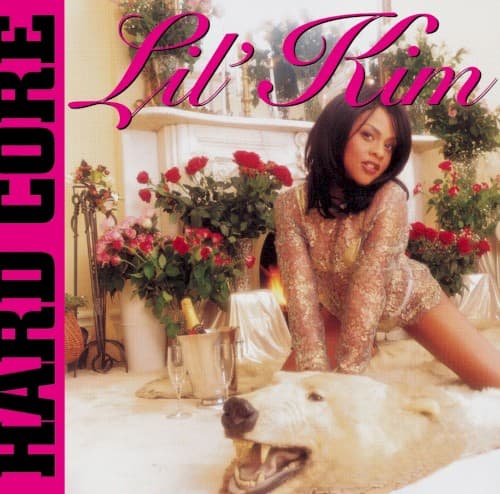
When Lil' Kim emerged from Brooklyn in 1996, she didn't ask permission to exist in hip-hop's male-dominated space—she seized it with both hands and forced the culture to reckon with her presence. Born Kimberly Denise Jones, she arrived as the sole female voice in The Notorious B.I.G.'s Junior M.A.F.I.A. collective, but her solo debut Hard Core announced something far beyond protégée status. This was an artist who understood that sexual agency, lyrical aggression, and uncompromising confidence could coexist in a single package, delivered with the kind of technical precision that demanded respect from even the most skeptical heads.
Her connection to Biggie provided the initial platform, but Kim's impact extended far beyond her association with Ready To Die's architect. She represented a paradigm shift in how female rappers could operate—not as novelty acts or token additions, but as central figures wielding the same explicit language, street credibility, and sonic aggression as their male counterparts. Growing up in Bedford-Stuyvesant during hip-hop's golden era, she absorbed the neighborhood's gritty reality and transformed it into bars that hit with the force of her Brooklyn upbringing, while simultaneously crafting a visual aesthetic that would influence fashion and pop culture for decades.
What separated Kim from previous generations of female MCs wasn't just her willingness to be explicit—it was her refusal to perform sexuality through a male gaze lens. She controlled her narrative, her image, and her business in ways that redefined what power looked like for women in hip-hop. Her career became a blueprint, whether she was collaborating with Puff Daddy on radio singles or trading verses with Jay-Z on street anthems, proving that commercial success and underground credibility weren't mutually exclusive.
Lyrical Aggression Meets High Fashion: Lil' Kim's Sonic and Visual Identity
Lil' Kim's delivery carries the sharp edge of Brooklyn street rap filtered through a distinctly feminine perspective that never softens its impact. Her flow rides beats with a staccato precision, punching syllables with the kind of rhythmic violence that characterized East Coast hardcore in the mid-90s. Producers like Puff Daddy, The Notorious B.I.G., and Jermaine Dupri built soundscapes for her that alternated between menacing minimalism and glossy sample-driven productions, creating a sonic palette that could accommodate both raw street narratives and crossover appeal. Her voice itself became an instrument—high-pitched yet commanding, capable of switching from sing-song melody to rapid-fire aggression within a single verse.
The production choices on her albums reflected hip-hop's 90s tension between underground credibility and mainstream ambition. Hard Core paired grimy street production with luxurious samples and R&B interpolations, creating a sound that felt simultaneously dangerous and accessible. She navigated this balance better than most, landing features on pop-leaning records without sacrificing the edge that made her relevant to purists. Her ability to match energy with harder-edged rappers like Capone-N-Noreaga while also holding down radio singles demonstrated versatility that went beyond simple crossover calculation.
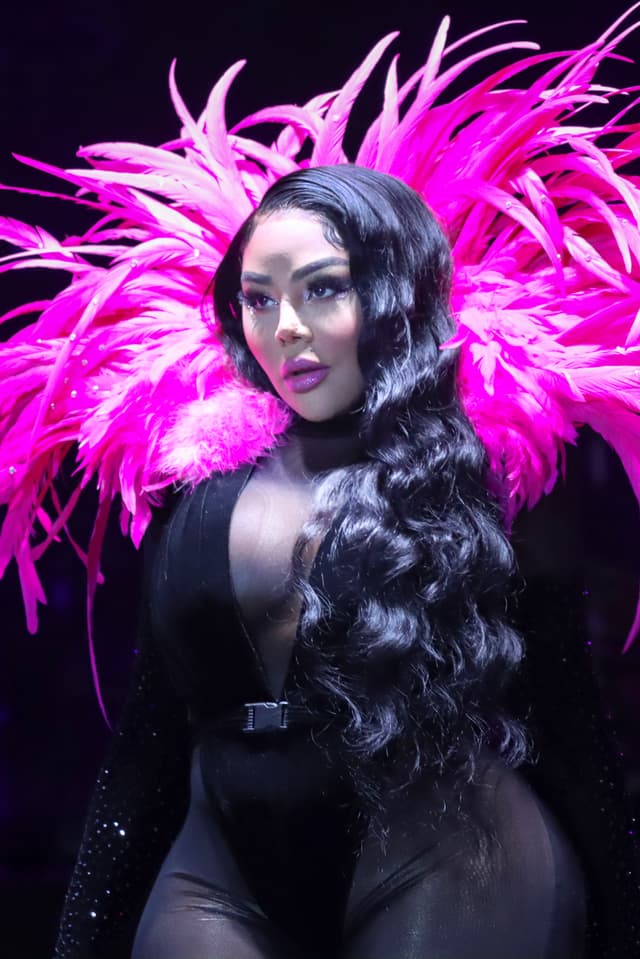
Beyond the music itself, Kim's visual presentation became inseparable from her sonic identity. The provocative fashion choices—designer labels mixed with streetwear, custom wigs in impossible colors, outfits that pushed boundaries of what female rappers were expected to wear—weren't just image crafting. They were artistic statements that expanded hip-hop's aesthetic vocabulary. She understood that in hip-hop, image and sound work together to create cultural impact, and she mastered both elements with equal attention to detail.
From Junior M.A.F.I.A. to Solo Stardom: Lil' Kim's Evolution Across Three Decades
Kim's entry into hip-hop came through her romantic and professional relationship with The Notorious B.I.G., who recognized her potential and positioned her as the centerpiece of Junior M.A.F.I.A.'s 1995 debut Conspiracy. Her verse on "Player's Anthem" announced a talent that couldn't be contained within a crew format. By November 1996, Hard Core arrived as one of the most explosive solo debuts in hip-hop history. The album didn't ease listeners into its explicit content or apologize for its sexual frankness—tracks like "Queen Bitch" and "Crush on You" established Kim as an artist who could command attention through pure lyrical skill and unapologetic persona. The album eventually went double platinum, validating her commercial viability while maintaining street credibility through features from Notorious B.I.G., Puff Daddy, and production that balanced hardcore aesthetics with radio-friendly elements.
The loss of Biggie in March 1997 could have derailed her trajectory, but Kim navigated the tragedy while cementing her position as an independent force. Her 2000 sophomore album The Notorious K.I.M. arrived amid hip-hop's shiny suit era, featuring collaborations with Sisqó, Phil Collins samples, and a more polished pop-rap approach that divided purists but expanded her commercial reach. "No Matter What They Say" became a defiant anthem of survival and success, while her feature work throughout the late 90s and early 2000s—including a scene-stealing verse on "Lady Marmalade" alongside Christina Aguilera, Mya, and Pink—demonstrated her ability to dominate outside traditional hip-hop contexts. That record earned her a Grammy and MTV Video Music Awards, proof that her influence transcended genre boundaries.
Her 2003 album La Bella Mafia represented a return to harder-edged production while incorporating Southern influences that reflected hip-hop's geographic shift. The Kanye West-produced "Came Back for You" and Timbaland's work on "The Jump Off" showed Kim adapting to new sonic landscapes without abandoning her core identity. Legal troubles in the mid-2000s, stemming from a perjury conviction related to a shooting outside Hot 97, interrupted her momentum and resulted in a year-long prison sentence. The incarceration became another chapter in her street credibility narrative, though it also marked a shift in hip-hop's landscape toward younger voices and different regional sounds.
Post-incarceration, Kim's output became more sporadic as hip-hop evolved around her. Mixtapes like Ms. G.O.A.T. and albums such as The Naked Truth (2005) and 9 (2019, after numerous delays) arrived to mixed reception, struggling to recapture the cultural dominance of her 90s peak. Yet her influence remained undeniable—visible in every female rapper who embraced sexual frankness, every artist who treated fashion as part of their artistic statement, every woman who demanded space in hip-hop without seeking male approval. Her continued presence at fashion weeks, her social media engagement, and her touring circuit appearances kept her relevant even as her album releases slowed, demonstrating that cultural impact can outlast chart performance.
Cultural Blueprint: Lil' Kim's Lasting Influence on Hip-Hop and Beyond
Measuring Lil' Kim's legacy requires looking beyond album sales and chart positions to the fundamental ways she altered hip-hop's possibilities for female artists. Before Kim, female rappers often had to choose between respectability and authenticity, between commercial appeal and street credibility. She demolished those binary choices, proving that a woman could be explicitly sexual and lyrically skilled, commercially successful and culturally credible, fashion-forward and street-certified. Every female rapper who followed—from Foxy Brown to Nicki Minaj to Cardi B to Megan Thee Stallion—operates in a landscape Kim helped create, whether they acknowledge the debt or not.
Her influence on fashion extends beyond hip-hop into broader pop culture. The 1999 MTV Video Music Awards appearance in the purple pastie outfit designed by Mirage became an iconic moment that still generates references decades later, while her constant collaboration with designers like Marc Jacobs legitimized hip-hop artists as fashion industry players. She understood that visual presentation was part of the art form, not separate from it. That understanding helped reshape how hip-hop artists approach branding, image-making, and cross-industry collaboration. The colored wigs, the designer obsession, the willingness to take aesthetic risks—these became standard practice partly because Kim normalized them.
Critically, Kim's catalog hasn't always received the retrospective appreciation it deserves. Hard Core stands as a landmark album that captured a specific moment in East Coast hip-hop while pushing boundaries for what female rappers could say and how they could say it. Its influence on the generations that followed is measurable in the DNA of every sexually explicit female rap record released since 1996. She proved that women didn't need to rap like men or temper their perspectives to gain acceptance—they could create their own lane, define their own terms, and force the culture to meet them there. That's not just a musical legacy; it's a fundamental shift in hip-hop's power dynamics that continues reverberating through the culture today.