Scorecard: 7.8/10 · Great
How we score- Writing(25%)
- 8.5
Kim's explicit, first-person sexual narratives were unprecedented in their directness and unapologetic confidence, shifting power dynamics that male rappers had controlled for over a decade.
- Production(25%)
- 7.5
The producers deliver classic mid-90s East Coast boom-bap with sharp sample flips from Lyn Collins and Vicki Anderson, though a few tracks lean heavily on looped funk without much development.
- Delivery(15%)
- 8.0
Kim's nasal, confrontational flow matches the aggression of her male peers while her vocal presence commands every beat, from breathy seduction to outright threat.
- Cohesion(15%)
- 6.5
The album peaks early with its strongest material, then scatters across short skits and uneven deeper cuts before rallying for the closer, with filler evident in the middle stretch.
- Originality(10%)
- 9.0
No female rapper had claimed sexual agency this explicitly or framed desire as dominance rather than vulnerability, making Hard Core a blueprint that redefined what women could say in rap.
- Replay value(10%)
- 7.5
The lead singles and Biggie-assisted tracks have remained in rotation for nearly three decades, though some mid-album cuts feel like period pieces tied to 1996 sample aesthetics.
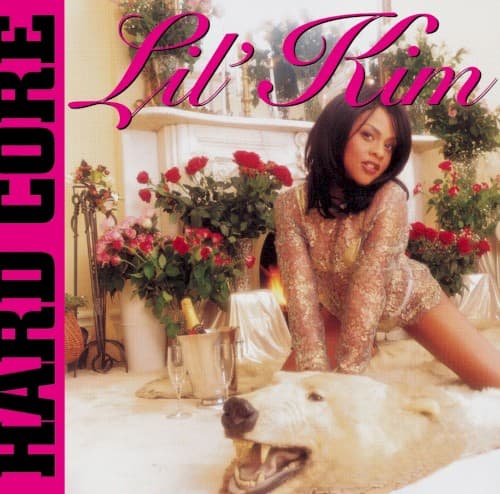
Lil' Kim Hard Core — The Album That Made Male Rappers Nervous
Hard Core arrived in November 1996 with a thesis no female rapper had dared state so plainly: sexual desire is power, and the woman speaking it owns the room. Lil' Kim did not ask permission or soften the language. She described acts in clinical detail, made demands, set terms, and walked away when the terms were not met. Male rappers had spent a decade bragging about conquest; Kim flipped the script and made herself the one doing the choosing, the rejecting, the grading.
The explicitness was the point. It was not shock value or performance; it was a claim of territory.
The album works because Kim had the technical skill to back the content. Her flow matches the density and pocket control of her male peers in Junior M.A.F.I.A., and her voice—nasal, sharp, unapologetic—cuts through every beat without needing to raise volume. With the Notorious B.I.G. as executive producer and contributor on four tracks, the album had the credibility and the muscle of the Bad Boy and Junior M.A.F.I.A. machine behind it.
But the vision was Kim's. She took the braggadocio and materialism of mafioso rap, applied it to her own body and desire, and created something the genre had not seen: a woman rapping like she had nothing to prove and no one to apologize to. Hard Core does not ask to be taken seriously. It demands it.
Funk Loops and Biggie's Pen, Kim's Voice
The production on Hard Core is pure mid-90s East Coast: boom-bap drums, funk and soul loops chopped short, and basslines that rumble without overwhelming the vocal. Stretch Armstrong flips a Sylvester sample for Big Momma Thang, giving the track a strutting, unbothered groove that matches Kim's opening statement. Sean Combs and Stevie J build No Time around a Vicki Anderson break that punches hard in the low end, keeping the tempo relentless while Puff Daddy adds ad-libs that frame Kim as the star. Jermaine Dupri's work on Not Tonight uses a George Benson flip that softens the edges just enough to make the track radio-friendly without diluting Kim's message.
The samples are recognizable—Lyn Collins on Dreams, Roberta Flack on Queen Bitch—but the producers treat them as foundations rather than gimmicks, letting the loops sit under the verses without crowding them.
Where the production falters is in its reliance on formula. Several mid-album tracks loop their samples without much variation or tension, leaving the beats to carry weight that the arrangements do not support. Drugs and M.A.F.I.A. Land feel like album filler, functional but forgettable, with hooks that do not justify their four-minute runtimes. The short skits—Take It!, Scheamin, Player Haters—add almost nothing and break the album's momentum when it should be building.
Kim's writing is where Hard Core earns its reputation. She does not hint or metaphor her way around sex; she describes it in specific, first-person terms that leave no ambiguity about who is in control. On Not Tonight, she lists exactly what she does and does not want, framing refusal as power rather than prudishness.
On Dreams, she names R&B singers by category and dismisses them with the same casualness male rappers used to rank women. The explicitness is not juvenile; it is strategic. By speaking this plainly, Kim claimed authority over a narrative that men had monopolized. Her wordplay is sharp—she can pack internal rhymes and flips into a bar without losing the conversational tone—and her storytelling stays grounded in material specifics: furs, cars, cash, and the men who provide them or fail to.
Biggie's presence is felt throughout, both as a collaborator on Crush on You, Drugs, Queen Bitch and Fuck You, and as the architect of Kim's approach. His influence shows in her punchline construction and her willingness to let a verse breathe rather than cramming every bar. Jay-Z's guest spot on Big Momma Thang feels like a co-sign from the top tier, and his verse holds its own without overshadowing Kim. But the album belongs to Kim. She carries every track, even the weaker ones, because her voice and her perspective are singular.
Front-Loaded Power, Then a Sag
Hard Core opens with its best material and never quite recovers from spending that capital early. The opening stretch establishes Kim's persona, sound, and thesis with no wasted motion. The sequencing is confident: the intro is short, the first single hits immediately, and the album does not ask the listener to wait for a payoff.
That early peak is also the album's structural problem. After the first third, the tracklist scatters. The middle section holds attention in spots, but the stretch following it feels obligatory, with verses that do not justify their length and hooks that do not stick.
The skits do no favors. At under a minute each, they are not long enough to build atmosphere or tell a story, and they chop the album into pieces when it needs flow. The back half arrives late and feels like a reset rather than a climax, relying on guest energy rather than Kim's own momentum. At 15 tracks and 52 minutes, the album is long enough that the filler becomes obvious. A tighter 11-track version, cutting the skits and two or three mid-album tracks, would have made the argument more forcefully.
The Debut That Redrew the Map for Women in Rap
Hard Core is essential not because it is flawless but because it is first. Before this album, no woman in rap had spoken this explicitly about sex as power, and no female MC had delivered that content with the technical confidence and star presence to make it plain. Kim opened a door that Foxy Brown, Trina, Nicki Minaj, Megan Thee Stallion and Cardi B would walk through, and the blueprint is still audible in every female rapper who centers her own desire and refuses to soften it for radio or respectability. The production shows its age in places—some of the sample loops feel thin by today's standards—but the writing and delivery have not weakened. Kim sounds as unbothered and in control now as she did in 1996.
This album is for listeners who want to understand where the current generation of women in rap came from, and for anyone who needs proof that explicitness and skill are not opposites. It is also a strong starting point for fans of mid-90s East Coast rap who have somehow missed Kim's catalog. The weaker middle stretch and the reliance on skits keep it from perfection, but the peaks are high enough to justify the reputation. Start with Big Momma Thang, No Time, and Queen Bitch; if those three tracks work, the rest of the album will make sense. For a fuller picture of Kim's range and growth, her work on Junior M.A.F.I.A.'s Conspiracy shows the early version of her voice before the solo debut, and Notorious B.I.G.'s Ready to Die provides the mafioso context that Kim adapted for her own purposes. Hard Core stands as the debut that proved women could be just as explicit, just as technically skilled, and just as commercially successful as the men who had dominated rap for over a decade.
Track Listing
Intro in A-Minor
●A two-minute scene-setter with no rapping, just mood and voices. It establishes the album's atmosphere but adds little that the first verse could not have done faster.
Big Momma Thang
▲The thesis statement. Kim opens by describing her look, her crew, and her standards, then shifts into a verse about control and dismissal that sets the tone for the entire album. The Sylvester sample gives the track a gliding, confident strut, and Jay-Z's guest verse does not steal focus—he supports rather than overshadows. Stretch Armstrong's production keeps the beat simple and heavy, letting Kim's voice command the center. This is the track that announced a new standard for women in rap: no euphemisms, no apologies, and the same swagger male rappers had been using for years. It works because Kim sounds like she has already won.
No Time
▲The commercial breakthrough. Combs and Stevie J build a hard-hitting beat around a Vicki Anderson break, and Kim delivers verses that alternate between threat and seduction without losing the pocket. Puff Daddy's ad-libs frame Kim as the centerpiece, and the hook is blunt enough to work on radio while keeping the album's edge. The song topped the Rap Songs chart and proved Kim could move units without softening her content. The production is cleaner and more radio-ready than Big Momma Thang, but it does not sacrifice the aggression. This is the track that made Kim unavoidable in late 1996.
Spend a Little Doe
●A materialist anthem that equates money spent with respect earned. Kim lists what she expects and dismisses men who cannot provide it, framing transactions as tests of seriousness. Ski's production uses a Frank Chacksfield flip that feels lighter than the album's best beats, and the hook, performed by Fela, does not land as hard as it should. The writing is sharp, but the track does not justify its five-and-a-half-minute runtime. It works as an album cut but not as a standout.
Take It!
●A 46-second skit that interrupts the album's flow. It sets up a scenario but does not develop it, and the runtime is too short to build atmosphere.
Crush on You
●Lil' Cease takes the lead here, with Kim appearing only in the background. The Jeff Lorber sample is smooth, and Andraeo Heard's production keeps the vibe lighter than the album's harder tracks, but the song feels like a showcase for the Junior M.A.F.I.A. crew rather than a Kim statement. It is pleasant but forgettable, and it would have worked better as a B-side. Biggie's additional vocals add texture but do not salvage a track that does not belong in the album's best half.
Drugs
●A slow, menacing track that uses addiction as a metaphor for attraction. Hamilton's production flips a Bumpy's Lament sample into something dark and hypnotic, and Kim's verses describe obsession without romanticizing it. Biggie's presence on the chorus deepens the mood, but the track feels underwritten—Kim's verses do not build to a climax, and the repetition wears thin by the third minute. It is an interesting idea that needed sharper execution.
Scheamin'
▼Another short skit, under a minute, that adds nothing to the album's narrative. It breaks momentum without earning the interruption.
Queen Bitch
▲One of the album's sharpest tracks. Kim reclaims the word and uses it as a title of power, not insult, delivering verses about dominance and dismissal over a Roberta Flack flip that sounds elegant and menacing at once. The production by Broady and Myrick keeps the beat spare, letting Kim's voice carry the track without competition. Her flow here is faster and more intricate than on the earlier songs, and the writing is specific enough to avoid sounding like a generic boast. Biggie's additional vocals add weight to the chorus, and the track holds up as one of the album's clearest statements of intent. This is the song that proved Kim could match the technical skill of her male peers.
Dreams
▲The most audacious track on the album. Kim names R&B singers by category—rappers, crooners, producers—and describes exactly what she wants from each of them, flipping the male-gaze trope into a female-desire anthem. The Lyn Collins Think break is a classic sample, and Prestige uses it well, keeping the production energetic without cluttering the verses. The writing is bold enough to feel risky even now, and Adilah's hook frames the track as fantasy without undermining Kim's control. This is the song that made male artists uncomfortable, and that discomfort is the point. It works because Kim sounds like she is grading, not begging.
M.A.F.I.A. Land
●A crew anthem that spreads the spotlight across Junior M.A.F.I.A. members. Brent Toussaint's production is solid but unremarkable, and the track feels like an obligation to the collective rather than a necessary part of Kim's solo statement. It drags at over four and a half minutes, and the verses do not build to anything memorable.
We Don't Need It
●A dismissal of fake loyalty and hangers-on, with Junior M.A.F.I.A. on the hook. Minnesota's production uses a Shirley Murdock sample that adds warmth to the beat, but the track lacks the bite of the album's best material. Kim's verses are competent but not urgent, and the song feels like it is filling space rather than making a point.
Not Tonight
▲The closer that became a radio hit. Kim flips the script on male advances by listing exactly what she does not want, framing refusal as power rather than rejection. Jermaine Dupri's production smooths out the edges with a George Benson flip, making the track accessible without losing the album's core message. The writing is some of the album's sharpest: Kim makes no as forceful as yes, and her delivery sells the confidence. The remix with Da Brat, Left Eye, Missy Elliott and Angie Martinez became the bigger hit and earned a Grammy nomination, but the solo version holds up as a strong finish to the original album. The track works because it proves that explicitness and refusal can coexist, and that a woman setting terms is just as powerful as a woman making demands.
Player Haters
▼A 43-second skit that arrives too late to set up anything and too early to serve as an outro. It is filler.
Fuck You
▲The actual closer, a raw dismissal of critics and competition. Biggie and Cornbread produce a stripped-down, menacing beat, and Kim delivers verses that are more threat than boast, with Trife and Larceny adding voices to the chaos. At under three minutes, it is one of the album's shortest full tracks, and it works because it does not overstay. The profanity is not shock value; it is the plainest way to state the message. Biggie's additional vocals on the chorus give the track weight, and the song ends the album on a defiant note rather than a polished one. It is a reminder that Kim does not need to soften anything.