Scorecard: 8.3/10 · Great
How we score- Writing(25%)
- 8.0
Big Boi strings together druggy non-sequiturs, pop culture references and fiscal responsibility advice with the same spiral of internal rhyme schemes that made Speakerboxxx work, though club tracks like "Hustle Blood" and "Night Night" lean too hard on boasts without enough specificity.
- Production(25%)
- 9.0
Organized Noize, Scott Storch and André 3000 build beats that somehow fuse strip-club boom with Funkadelic psychedelia and jittery electro without collapsing into novelty, layered thick enough to reward headphone listens and club systems equally.
- Delivery(15%)
- 8.5
The double-time flow over any tempo creates a secondary rhythm that keeps even the slowest songs from dragging, and guests like Yelawolf and T.I. match his energy while B.o.B. and Jamie Foxx deliver solid hooks.
- Cohesion(15%)
- 7.5
The relentless funk throughline and Big Boi's refusal to let the tempo sag hold fifteen tracks together better than most Southern rap this long, even when skits about sex maneuvers and tea-bagging jokes test patience.
- Originality(10%)
- 8.0
In 2010, when Southern rap meant either Gucci Mane's trap or Lil Wayne's rock experiments, Big Boi applied OutKast's layered funk logic to dubstep glitches and Afrobeat guitars in ways his peers had not yet considered.
- Replay value(10%)
- 8.0
The production density reveals new instrumental flourishes on repeat listens, and Big Boi's lyrical speed means catching every line requires multiple passes, though the sex skits wear thin.
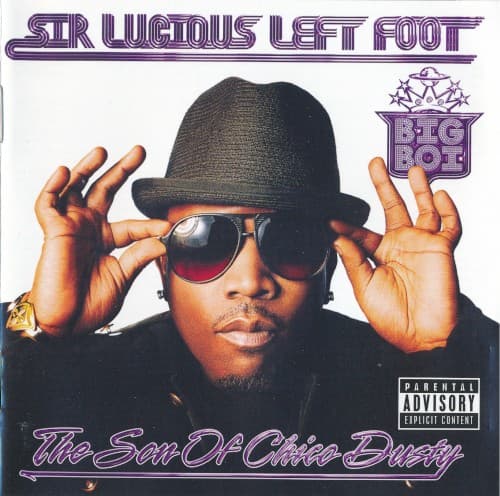
Big Boi Sir Lucious Left Foot — The Southern Funk Blueprint That Jive Refused to Release
Three years into making this album, Big Boi's label told him to record his version of Lil Wayne's "Lollipop". Jive wanted radio singles from an OutKast member. They got a 15-track funk extravaganza rooted in TR-808 bass, George Clinton cameos, and verses that rap in double-time over any tempo. When the label called it "a piece of art" they didn't know what to do with, Big Boi took the master tapes to Def Jam and LA Reid, the executive who had signed OutKast to LaFace in 1992. The result landed in July 2010 after disputes over André 3000 features nearly blocked the release entirely. Sir Lucious Left Foot proves Big Boi could carry the OutKast sound alone, applying their layered production logic to the club records and trunk-rattlers Jive thought were missing.
The thesis is audible by the third track: Big Boi never needed André to make OutKast records work, he needed producers who understood that Southern rap could be dense, strange and functional all at once. Where Speakerboxxx stacked funk and bass into songs that worked in strip clubs and on headphones, Sir Lucious Left Foot does the same with 2010's palette—dubstep glitches, Afrobeat guitars, psychedelic synthesizer vamps—without sacrificing the bounce or the wordplay. The album's commercial failure, 175,000 copies after a year in print, was the label conflict's doing, not the music's. This is the Southern funk blueprint that anticipated nothing that followed, because nobody else was trying to make it.
When the 808 Meets the Talkbox and Neither One Blinks
Big Boi's writing here operates the way it did across three OutKast albums: spiral internal rhyme schemes, pop culture non-sequiturs, and stop-and-go cadences that value style without neglecting substance. On "Tangerine" he works strip club boasts and references to the 1960s Batman theme into the same verse, delivered in a breathless blur that somehow never trips over itself. The fiscal responsibility advice on "Daddy Fat Sax" arrives with the same clever wordplay as the sex talk on "Turns Me On," and the battle raps scattered through the album rarely feel like filler because the punchlines land. The weaknesses come when Big Boi leans too hard into club themes without adding enough specificity—"Hustle Blood" and "Night Night" both work as bangers but neither says much beyond the boast—and the skits about tea-bagging and "the David Blaine" sex maneuver test patience even when delivered with comic timing.
The production justifies the three-year recording span at Stankonia. Organized Noize anchors five tracks with the same live-instrument funk they brought to ATLiens, but Scott Storch's work on "Shutterbugg" shows how far Big Boi pushed collaborators: Storch delivered a preliminary track, Big Boi brought in his band with guitars, keyboards and a talkbox, and the result is a robotic stutter with a falsetto refrain and female whispers that sounds like nothing else Storch produced that year. Salaam Remi gives "Follow Us" fractured Afrobeat guitar phrases and a sleazy synthesizer that should clash with Vonnegutt's pop refrain but doesn't. André 3000's lone production credit, "You Ain't No DJ," lets Yelawolf's 64-bar verse get edited down to 16 bars over a beat that refuses to stay in one genre. Lil Jon, usually a maximalist, dials back the crunk on "Hustle Blood" just enough to let Jamie Foxx's hook breathe.
The album's density comes from layering: "Tangerine" somehow fuses exotic Afro-polyrhythms, psychedelic effects, booming bass, tribal beats, synthesizer vamps and slow reverbing grunge guitar into a single track without any element canceling the others out. "Fo Yo Sorrows" blurs old-school Atlanta bass, glitch-hop and Funkadelic psychedelia into what sounds like three different records playing in the same room, held together only by George Clinton's hook and Big Boi's refusal to let the tempo sag. The weakness is that not every guest earns their spot: B.o.B. and Joi add solid hooks to "Night Night" but the track doesn't need two vocalists, and Gucci Mane's verse on "Shine Blockas" feels like label strategy rather than artistic choice.
Big Boi's flow, the same double-time cadence he used on Speakerboxxx, does most of the work holding this together. He raps fast over slow beats and faster over up-tempo ones, creating a secondary rhythm underneath the main beat that keeps even the draggiest moments from stalling out. The delivery is forceful and careful at once, never laid-back, and it makes the weaker tracks listenable even when the writing sags. T.I.'s guest verse on "Tangerine" matches that energy with a lascivious verse that fits the strip club theme, and Yelawolf's appearance on "You Ain't No DJ" shows he understood the assignment. Jamie Foxx mostly sings, Janelle Monáe disappears into "Be Still" with grace, and Too Short shows up on "Fo Yo Sorrows" because the track needed someone who remembered 1980s funk firsthand.
Fifteen Tracks of Funk and the Skits That Nearly Sink Them
The first stretch through the middle section justifies the album's length: four consecutive tracks that each approach funk from a different angle, moving from jittery electro to Afrobeat lurch, then militaristic stomp, then psychedelic strip-club sprawl. That sequence shows the album's logic: variety within a single sound, never sacrificing the bounce. The problem is the sag in the back half. Two tracks in the closing run both work as club records but neither adds much after earlier songs already covered that ground, and the skits—tea-bagging jokes on one interlude, the David Blaine sex maneuver at the end of another—were probably funny in the studio but become skips on repeat listens.
The sequencing does one thing well: Big Boi never lets two slow tracks sit next to each other, and he never lets the funk disappear for more than one song. The collaboration with Janelle Monáe could have been a momentum killer in the middle section, but Organized Noize keeps the bass moving and Big Boi keeps rapping in double-time, so the album doesn't stall. The final stretch feels like Big Boi clearing the vault rather than building to a conclusion, but the George Clinton collaboration and the Organized Noize closer both justify their inclusion. A 12-track version without the skits and the weaker guests would have been tighter, but Big Boi earned the sprawl by making sure the production never repeated itself.
The Solo OutKast Album That Proved Big Boi Could Do It Alone
Sir Lucious Left Foot ranks as the best argument that Big Boi never needed André 3000 to make OutKast's sound work. The South had moved on to trap minimalism by 2010, Gucci Mane and Waka Flocka Steez were stripping beats down to 808s and hi-hats, and here came Big Boi with 15 tracks of layered funk that sounded like nothing else that year. The album aged well because it refused to chase 2010 trends: the dubstep glitches and Afrobeat guitars that seemed novel in July 2010 now just sound like good production choices, and the funk foundation kept it from dating itself the way so many Southern rap records from that era did. This is not Big Boi's Speakerboxxx, because it lacks that album's focus and the sheer number of classic tracks, but it is the only solo record he has made that sounds like an OutKast album without André.
This is for listeners who wanted OutKast's production ambition applied to solo Big Boi verses, and for anyone who thought Southern rap in 2010 had gotten too minimal or too reliant on Auto-Tune. Skip it if you need hooks that stick after one listen or if 15 tracks of funk sounds exhausting; Big Boi does not make this easy, and the sex skits will annoy anyone looking for a lean, focused record. Start with "Shutterbugg," "Tangerine" and "Fo Yo Sorrows" to hear the album's range, then decide whether the deep cuts justify the length. For the next step, go back to OutKast's Speakerboxxx to hear where this sound came from, or try Organized Noize's work on Goodie Mob's Soul Food to understand the funk lineage Big Boi is continuing. Sir Lucious Left Foot is the solo debut that proved Big Boi could carry the OutKast legacy alone, even if the world wasn't ready to let him.
Track Listing
Feel Me (intro)
●Malay's production sets the tone with a sparse, ominous intro that clears space for Big Boi to announce his arrival. This is setup, not filler, and it works because it stays under two minutes and gets out before it becomes self-indulgent.
Daddy Fat Sax
▲Mr. DJ builds a trunk-rattling beat that lets Big Boi slip back into the Speakerboxxx flow without any rust, mixing self-aggrandizement with fiscal responsibility advice in the same verse. The writing is sharp, the bass is heavy, and the hook is functional without being memorable. This is Big Boi doing what Big Boi does, which is enough to justify the track but not enough to make it a standout.
Turns Me On
▲Organized Noize stacks 1950s-styled vocals, Sleepy Brown's synthesizers and Joi's backing vocals into a comical beat that somehow never collapses into novelty. Big Boi's verses work the same non-sequitur logic he used on "Rosa Parks," jumping from image to image without losing the thread, and the song's multiple vocal layers reward headphone listens. This is the kind of weird, dense funk that justified the three-year recording span.
Follow Us
▲Salaam Remi's fractured Afrobeat guitar phrases and sleazy synthesizer give Vonnegutt's pop refrain a foundation that should not work but does, and Big Boi's double-time flow over the lurching beat creates the secondary rhythm that defines the album. The track is strange in the best way, refusing to settle into any one genre, and Vonnegutt's hook is more memorable than most of the album's guest contributions.
Shutterbugg
▲Scott Storch presented a track, Big Boi brought in his band with guitars, keyboards and a talkbox, and the result is a robotic stutter with a falsetto refrain and female whispers that became the album's lead single for good reason. The production is layered enough to survive repeated listens, Cutty's hook works without overstaying its welcome, and Big Boi's verses show off the spiral internal rhyme schemes and stop-and-go cadences that make his writing work. The track samples Soul II Soul's "Back to Life" and The System's "You Are in My System" without letting either one dominate, and the jittery electro sound anticipated nothing else in 2010 Southern rap. This is the album's clearest argument that Big Boi could make OutKast-level production work on his own.
General Patton
●J Beatzz builds a militaristic stomp over a sample from an opera aria, Big Rube adds a spoken-word interlude, and Big Boi raps about war metaphors and strip club economics in the same verse. The track works until the skit at the end, where a character explains "the David Blaine" sex maneuver in detail that was probably funny in the studio but becomes a skip on repeat listens. Cut the skit and this is a solid deep cut; leave it in and the track tests patience.
Tangerine
▲This is the album's strangest achievement: a strip club anthem built on exotic Afro-polyrhythms, psychedelic instrumental effects, booming bass, tribal beats, synthesizer vamps and slow reverbing grunge guitar that somehow sounds like Funkadelic covering the 1960s Batman theme. T.I. delivers a lascivious guest verse that fits the strip club theme, Khujo Goodie adds grit, and Big Boi's breathless blur of druggy non-sequiturs and pop culture references—some of it frankly baffling—shows his writing at its most ambitious. Terrence Culbreath's production should collapse under its own weight but instead creates something that works in the club and on headphones, the kind of layered funk that justified Big Boi's three-year recording process. This is the album's peak, the track that proves Southern rap could be dense and functional at once.
You Ain’t No DJ
▲André 3000's lone production credit builds a beat that refuses to stay in one genre, and Yelawolf's guest verse—edited down from 64 bars to 16 and eight-bar parts—shows he understood the assignment. The track works as a showcase for both rappers' technical skill, with Yelawolf matching Big Boi's energy and André's production providing a foundation that keeps shifting under both of them. The song received some airplay on Atlanta radio and the music video featured Big Boi with a lightsaber, which tells you everything about the track's playful irreverence.
Hustle Blood
●Lil Jon dials back the crunk just enough to let Jamie Foxx's hook breathe, and Big Boi delivers verses about club themes and self-aggrandizement that work without adding much specificity. The production is solid, Foxx's vocal performance justifies his inclusion, and the track functions as a banger, but it says nothing beyond the boast. This is competent filler on an album that mostly avoids it.
Be Still
●Sharif Wilson's production gives Janelle Monáe space to deliver a hook that blends into the track's atmosphere rather than dominating it, and Big Boi keeps rapping in double-time to prevent the slower tempo from dragging. The skit at the beginning, where two characters make a tea-bagging reference, adds nothing and becomes a skip on repeat listens. Cut the skit and this is a solid deep cut that shows Big Boi could work with vocalists who understood restraint.
Fo Yo Sorrows
▲George Clinton performing the hook on a Big Boi track is the kind of collaboration that justified the album's ambition, and Organized Noize's production blurs old-school Atlanta bass, glitch-hop and Funkadelic psychedelia into a seamless whole that sounds like three different records playing in the same room. Too Short and Sam Chris add verses that fit the funk foundation, and Big Boi's writing shows the same clever wordplay and pop culture references that define the album. This is the track Big Boi played for LA Reid to get his Def Jam deal, and it is easy to hear why it worked: this is OutKast-level production applied to a solo record, proof that Big Boi understood the lineage he was continuing.
Night Night
●DJ Speedy's production gives B.o.B. and Joi hooks to work with, and both deliver solid vocal performances, but the track doesn't need two guest vocalists and it doesn't add much after "Hustle Blood" already covered club themes. This is competent but inessential, the kind of track that works in the club but disappears on an album this dense.
Shine Blockas
●DJ Cutmaster Swiff's production samples Harold Melvin and the Blue Notes' "I Miss You," and Gucci Mane's guest verse feels like label strategy rather than artistic choice. The track works as a banger, Big Boi's verses are solid, and the hook is functional, but this is another club record on an album that already has several. The remix version with Bun B and Project Pat, included on the deluxe edition, adds more guests without adding more substance.
The Train, Part 2 (Sir Lucious Left Foot Saves the Day)
▲Organized Noize builds a two-part closer that references OutKast's "The Train" from Aquemini, and Big Boi delivers verses that tie back to the album's title and his "Luke Skywalker becoming a Jedi" persona. Sam Chris adds a hook, and the production layers funk elements without overcomplicating the track. This works as a callback to OutKast's catalog and as a statement that Big Boi has mastered his craft, even if the execution doesn't quite match the ambition.
Back Up Plan
▲Organized Noize closes the album with a sparse, reflective beat that gives Big Boi space to deliver verses about relationships and contingency plans. The production is restrained compared to the album's maximalist tracks, and the song works as a conclusion that steps back from the club themes and sex skits to show Big Boi could write with nuance when he chose to. This is a quiet ending to a loud album, and it earns its place by refusing to go out with a banger.