Style & Context
Influences
Vaudeville posters, film noir compositions, political propaganda imagery
Location
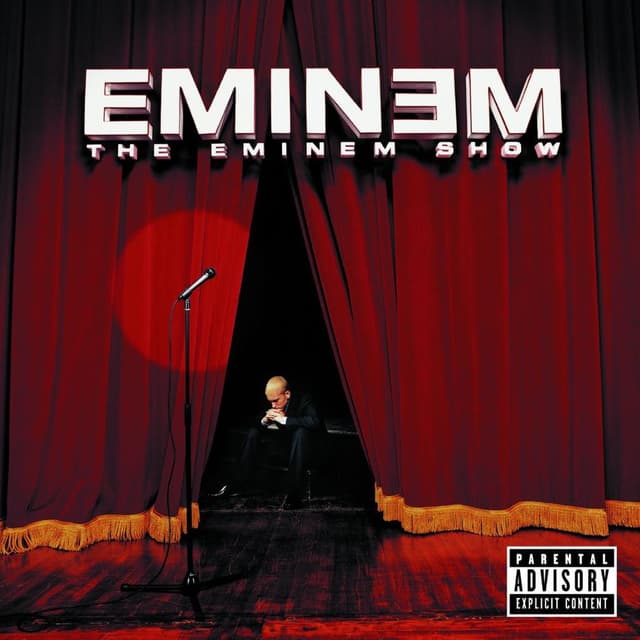
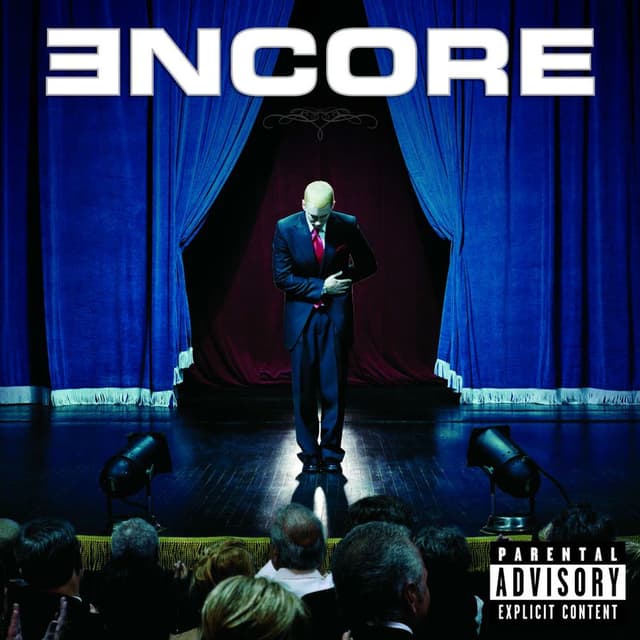
The suit and theater setting mark Eminem's distance from Detroit's streets and entry into mainstream establishment spaces.
Visual Language
The formal staging recalls mid-century entertainment while the harsh lighting creates documentary-style exposure of celebrity mechanics.
Symbols
Bowed head posture
Eminem's downward gaze signals exhaustion with fame rather than humble gratitude for applause.
Ornate theater curtains
The heavy drapes frame celebrity as an old-fashioned spectacle, trapped in outdated performance rituals.
Faceless audience heads
The crowd exists only as silhouettes, representing how fame reduces human connection to anonymous consumption.
Where Sound Meets Image
The stage metaphor directly mirrors Encore's themes of performance exhaustion and artistic self-doubt. Tracks like 'Yellow Brick Road' and 'Mockingbird' strip away the theatrical mask, while songs like 'Just Lose It' feel like forced encore performances. The album swings between introspective confessions and try-hard shock rap, matching the cover's tension between the spotlight's demand and the performer's fatigue. The solitary figure captures Eminem's isolation despite collaborative production from Dr. Dre and others.
This cover influenced how hip-hop artists visualized fame's psychological toll, moving beyond bling celebrations to explore celebrity's darker mechanics. The theatrical staging inspired later rap album covers that used performance metaphors—from J. Cole's arena imagery to Kendrick Lamar's crown symbolism. The faceless crowd concept reappeared across albums exploring parasocial relationships between artists and fans.