Style & Context
Influences
Film noir, crime photography, documentary realism, blaxploitation movie posters
Location
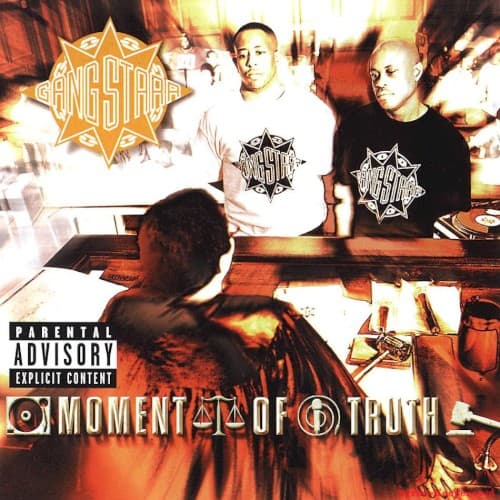
The institutional setting could be any Brooklyn precinct where countless young Black men faced interrogation, making the power reversal profound.
Visual Language
The photographer captured natural movement while keeping Guru and DJ Premier pin-sharp, creating a visual hierarchy that mirrors their roles as truth-tellers.
Symbols
Scales of justice logo
The balance represents weighing street credibility against commercial success, truth against lies, and integrity against compromise.
Interrogation room table
The wooden desk positions Gang Starr as both prosecutors and judges examining hip-hop's authenticity and moral direction.
Motion blur on background figures
The blurred faces suggest countless rappers lacking substance while Guru and Premier remain in sharp focus as constants.
Where Sound Meets Image
The confrontational staging mirrors tracks like 'You Know My Steez' and 'Royalty' where Guru delivers verdicts on fake rappers with prosecutorial precision. The scales of justice connect directly to the title track's examination of life's karmic balance and the consequences of choices made in the streets. The motion blur echoes Premier's signature scratching technique, creating rhythmic visual disruption just as his production disrupts conventional arrangements. The warm institutional lighting matches the album's jazzy soul samples filtered through hard drums, creating beauty within harsh environments.
This cover influenced a generation of underground hip-hop to embrace stripped-down, concept-driven photography over flashy studio portraits. The interrogation room aesthetic appeared in countless independent rap videos and mixtape covers throughout the 2000s, becoming visual shorthand for authenticity and accountability. The design proved album art could communicate lyrical depth and philosophical weight without a single word beyond the title, setting a template for conscious rap packaging that persists today.