Style & Context
Influences
The Wizard of Oz film, blaxploitation poster art, R&B album aesthetics, video game graphics
Location
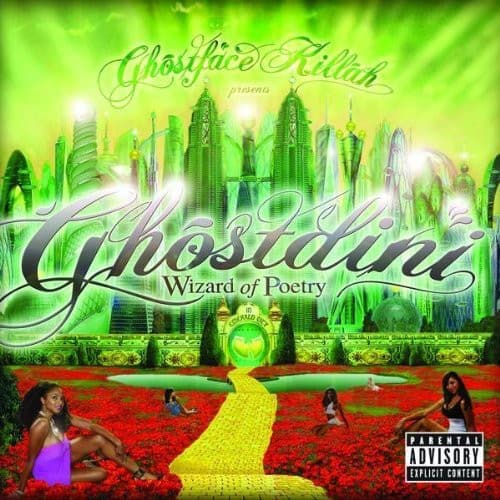
The fantasy setting deliberately erases Staten Island's Stapleton projects that defined Ghost's earlier Wu-Tang identity and mystique.
Visual Language
The heavy-handed digital manipulation creates a deliberately artificial world that mirrors the album's synthetic production style.
Symbols
Yellow brick road
The path references Oz mythology while suggesting Ghostface's journey toward mainstream R&B crossover success.
Green cityscape skyline
The emerald towers represent both the Emerald City and a transformed vision of Staten Island.
Wizard's yellow robe
Ghostface positions himself as mystical conductor of love songs rather than street narrator or battle rapper.
Where Sound Meets Image
The fantastical visual directly reflects the album's departure into smooth soul territory, with features from Ne-Yo, Estelle, and Lloyd replacing Ghost's typical street collaborators. The wizard persona matches his attempt at love song mastery rather than battle rhyme superiority. The artificial, dreamlike quality of the image mirrors the polished R&B production that replaced the dusty soul samples of his classic work, signaling this was Ghost's romantic fantasy album rather than another gritty crime narrative.
The cover remains a cautionary tale about veteran rappers chasing trends at the expense of their core identity. Its overproduced digital aesthetic dates it firmly to the late 2000s when green screen effects dominated budget-conscious album art. While the Oz concept showed ambition, the execution lacked the subtlety that makes classic hip-hop covers endure, serving instead as a visual marker of an experimental phase most fans prefer to forget.