Style & Context
Influences
Barbie doll packaging, ballet portraiture, fashion editorials, anime color theory
Location
Young Money's Cash Money empire in this period prioritized polished commercial appeal over regional authenticity, pushing artists toward global pop sounds.
Visual Language
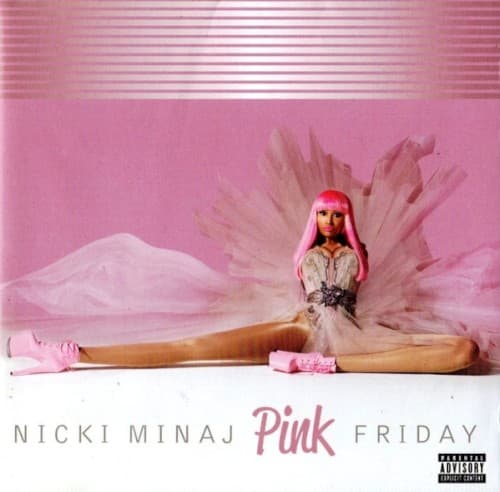
The composition uses deliberate artificiality to reject naturalism, creating a plastic fantastic universe where Minaj controls every saturated pixel.
Symbols
Full splits pose
The physically demanding position demonstrates flexibility as both literal athleticism and metaphorical versatility across musical genres.
Pink Timberland boots
The construction boots in candy colors bridge street credibility with pop aesthetics, claiming both worlds simultaneously.
Tulle ballet wings
The delicate fabric formations suggest transformation into something elevated, referencing her Roman Zolanski alter ego's theatrical grandiosity.
Where Sound Meets Image
The cover perfectly visualizes Pink Friday's ambitious genre-blending, where hardcore bars on 'Roman's Revenge' coexist with sing-song pop on 'Super Bass.' The ballet costume references the Roman Zolanski character who appears on multiple tracks, while the pink Timberlands ground the fantasy in hip-hop authenticity. The splits position suggests the album's literal split between rap purists and pop audiences, a tension Minaj addresses directly in her lyrics about proving herself to both camps. The candy-colored artificiality mirrors her vocal versatility, shifting between accents and personas track to track.
This cover established pink as Minaj's signature color in pop culture, spawning countless Barbie references and Halloween costumes that persist today. The bold monochromatic approach influenced how female rappers could use hyper-femininity as strength rather than weakness, paving the way for artists like Megan Thee Stallion and Ice Spice to embrace traditionally girly aesthetics while maintaining rap credibility. The character-based visual branding showed that alter egos could extend beyond music into comprehensive visual identities, a strategy later adopted across hip-hop.