The scorecard
6.8/10 · Good
- Writing25%
- 6.5
- Production25%
- 7.0
- Delivery15%
- 7.5
- Cohesion15%
- 5.5
- Originality10%
- 7.5
- Replay value10%
- 7.0
Verses on "I'm the Best" and "Did It On'em" showcase sharp boasting and wordplay, but too many tracks settle for generic R&B platitudes
Kane Beatz and Bangladesh deliver hard-hitting beats on the rap tracks, while the pop production from J.R. Rotem and will.i.am is competent but anonymous
Minaj's rapid-fire flow on "Roman's Revenge" and the vocal versatility across characters and singing sections prove her technical range
The album lurches between hardcore rap, pop-rap, and R&B ballads with no unifying thread beyond Minaj's presence, making the thirteen tracks feel like a showcase sampler
The character-driven rapping and theatrical persona work were fresh in 2010, offering a technical and performative approach that separated Minaj from her peers, though the pop formula tracks follow industry templates.
The rap highlights still hit with technical force and the character work holds up, though the ballads and mid-tempo crossover attempts have aged into period pieces.
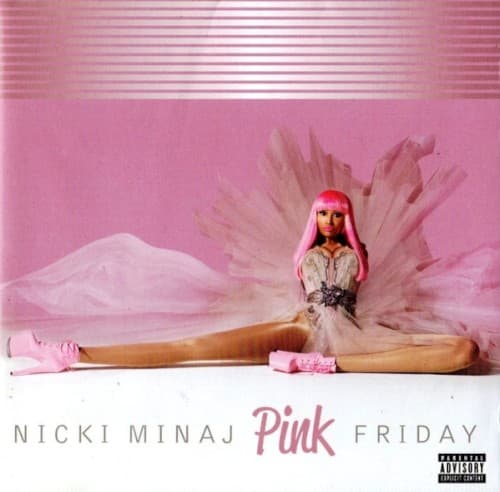
Nicki Minaj Pink Friday — The Crossover Blueprint That Couldn't Decide What to Cross
Pink Friday is a reveal album dressed as a debut, and the problem is not the versatility but the compromise. Nicki Minaj arrived in 2010 with a technical gift that separated her from every woman in rap and most of the men: punch-drunk wordplay, elastic flow switches, and a theatrical approach to character that turned verses into performances. The question the album needed to answer was whether she would use pop as a vehicle for that rapping or let pop smooth the edges off. Pink Friday does both, and the split makes it impossible to hear as one vision. The hardcore tracks prove she could out-spit her peers; the ballads and crossover singles prove Cash Money wanted a star who could sell singles to people who do not buy rap albums. The result is the second-highest-selling debut week for a female rapper behind Lauryn Hill, a number one album, and a triple-platinum certification, but also an album that never settles into what it wants to be.
The thesis that runs through the best moments here is that Minaj could occupy multiple lanes at once without dialing back her confrontational individuality, and on "I'm the Best," "Roman's Revenge," and "Did It On'em" that claim holds. Those three tracks are pure technical dominance: fast, confrontational, and built on the kind of internal rhyme schemes and ad-lib energy that made her mixtapes essential. The problem is that the album treats those tracks as one option among many rather than the foundation. For every minute of Minaj rapping circles around her competition, there are two minutes of her singing over anonymous pop production or delivering motivational-poster lyrics on ballads that could have been farmed out to any vocalist with a recording contract. The context matters: in 2010 the industry had spent a decade treating women in rap as niche acts, and Pink Friday was the test of whether a woman could be a crossover star without abandoning the rapping. The answer the album gives is yes, but only if you are willing to make half the album for people who showed up for the pop singles and have no interest in the rapping.
When She Raps, She Raps — When She Crosses Over, She Disappears
The writing on Pink Friday splits cleanly between the tracks where Minaj is competing and the tracks where she is performing a role the producers handed her. On "I'm the Best" and "Did It On'em," the bars are specific and the wordplay is dense: multi-syllabic rhyme runs, punch-drunk metaphors, and the kind of ad-lib punctuation that turns a verse into a conversation with herself. The boasting is not abstract; she names what she is doing and why the competition cannot do it. "Roman's Revenge" takes that energy and adds a character framework: Roman Zolanski, the unhinged alter ego who says the things Nicki cannot say in her own voice. The collaboration with Eminem works because both rappers are doing the same thing, trading bars over a spastic Swizz Beatz beat that sounds like it is trying to keep up with them. The verse construction on these tracks is traditional rap craft: setups, punchlines, internal rhymes, and the confidence that the rapping itself is the point.
The problem is that those tracks are the minority. The crossover material trades specificity for platitudes: "Moment 4 Life" is about wanting success to last, "Fly" is about overcoming obstacles, "Right Thru Me" is about a lover who sees through the façade. The lyrics on these tracks are not bad so much as interchangeable, the kind of sentiments that could appear on any pop-rap record from this era. Minaj can sing well enough to carry a hook, but the singing does not add anything that the rapping could not do better. The worst offender is "Save Me," a slow ballad with no rapping at all, where Minaj's voice is processed into a generic R&B performance that sounds like it was designed to be licensed for a television montage.
The production follows the same divide. Kane Beatz and Bangladesh deliver the hard-hitting beats that give Minaj room to work: "I'm the Best" is built on a simple, looped chant that emphasizes the rapping, and "Did It On'em" has the massive, ungainly post-dubstep thump that makes the aggression physical. Swizz Beatz gives "Roman's Revenge" the kind of off-kilter energy that matches the unhinged performances. The pop production is competent but anonymous: J.R. Rotem's work on "Fly" and "Girls Fall Like Dominoes" is professional but indistinct, and will.i.am's "Check It Out" is built entirely on the "Video Killed the Radio Star" sample with no original ideas beyond repeating the hook. Drew Money's tracks like "Right Thru Me" and "Blazin" split the difference, aiming for pop-rap that can work on multiple formats, but the result is music that does not commit to either side. The mix is clean and the beats are functional, but half the album sounds like it was produced by committee.
Minaj's delivery is the album's strongest asset and the reason the crossover material does not collapse entirely. Her flow on the rap tracks is technically flawless: she speeds up, slows down, rides the beat, and then cuts against it, all while keeping the wordplay tight. The character work adds texture: Roman is unhinged, Nicki is aspirational, Barbie is flirtatious, and she shifts between them within a single verse. The problem is that the singing does not demonstrate the same range.
Her voice is pleasant enough on the hooks, but the ballads ask her to perform emotion in a register that does not suit her strengths. The guest verses are a mixed bag: Eminem matches her energy on "Roman's Revenge," Drake delivers a solid verse on "Moment 4 Life" without adding much, and Rihanna phones in a hook on "Fly" that could have been recorded in one take. Kanye West's appearance on "Blazin" is forgettable, and Natasha Bedingfield on "Last Chance" is a relic of 2010 pop-rap collaboration logic that has not aged well.
An Album With No Arc, Just a Pile of Singles
Pink Friday has no sequencing logic beyond frontloading the rap tracks and scattering the pop singles throughout. The album opens with "I'm the Best," which is the correct choice: it establishes Minaj as a technical force and sets a standard the rest of the album does not try to meet. The first stretch creates a one-two punch of aggression, but then the album pivots between rap and pop-rap material, and from that point forward the pacing is arbitrary. There is no build, no progression, and no sense that the tracklist is doing anything other than alternating between the rap material and the crossover material to avoid alienating either audience.
The middle section sags under the weight of the ballads and novelty cuts that kill the flow. By the time the tracklist reaches the back half, the album has lost any sense of purpose. Placing "Your Love" near the end makes it feel like an afterthought rather than a centerpiece.
The closing run ends with a motivational duet that is pure formula. At thirteen tracks the album is not bloated, but it feels longer because the sequencing does not build toward anything. The lack of cohesion is a feature, not a bug: the album was designed to have something for everyone, and the cost is that it does not work as a single listen.
A Calculated Risk That Paid Off Commercially and Cost Her the Album
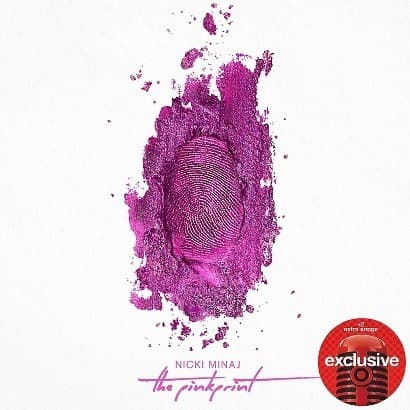
Pink Friday ranks third in Nicki Minaj's catalog behind The Pinkprint and ahead of Pink Friday 2, and the reason is simple: the rapping here is sharper than anything on the sequel, but the crossover compromises are more severe than on The Pinkprint, which found a better balance between pop ambition and rap craft. This album is for people who wanted to hear whether Minaj could be a crossover star, and the answer is yes, but the cost is half an album of music that does not need her specifically to perform it. The hardcore rap tracks are essential listening for anyone who wants to understand why Minaj became the standard for technical ability in women's rap in the 2010s, but the ballads and pop-rap material have aged into period pieces that sound like every other Cash Money crossover attempt from this era.
The album's legacy is complicated. It proved that a woman could sell pop singles and rap albums without choosing one, and it opened the door for the generation of women who followed. But the album itself is not the blueprint; the blueprint is the three or four tracks where Minaj is rapping at full strength and the rest is the compromise required to get those tracks onto the radio.
A decade later, the rap material still holds up, and "Super Bass" remains a cultural artifact, but the album as a whole is more important for what it proved than for what it is. If you are starting here, play the opening stretch first, then decide whether you want the pop singles or the deeper cuts. If you want to hear Minaj build on this foundation with more consistent songwriting, go to The Pinkprint. If you want to hear the mixtape version of Minaj with no crossover pressure, go backward to Beam Me Up Scotty. Pink Friday is the album that made Nicki Minaj a star, but it is not the album that makes the best case for why she deserved to be one.
Track by track
Track Listing
I’m the Best
StandoutThe album's strongest track and the only one that feels like a mission statement. Kane Beatz builds the beat around a looped chant that gives Minaj room to stack punchlines and internal rhymes without distraction, and she uses every second to establish her technical superiority. The verse construction is classic battle rap: setups, punchlines, ad-libs that punctuate the bars, and the kind of confidence that makes every claim feel earned. The hook is simple and effective, and the whole track is built to be played loud. This is the sound of someone who knows exactly what she does better than anyone else and does not need to prove it with guest verses or pop hooks. If the entire album sounded like this, it would be a different conversation.
Roman’s Revenge
StandoutThe character work here is what separates Minaj from her peers: Roman Zolanski is the unhinged alter ego who says the things Nicki cannot say, and Eminem is doing the same thing with Slim Shady, so the collaboration makes sense on a conceptual level. Swizz Beatz gives them a spastic, off-kilter beat that matches the energy, and both rappers sound like they are trying to out-crazy each other. The verses are technically impressive, full of rapid-fire internal rhymes and ad-libs that turn the track into a conversation between two people who are both talking to themselves. The problem is that the song is all aggression and no target: the anger is performed rather than directed, and by the end it feels like a technical exercise rather than a statement. Still, this is Minaj at her most technically dominant, and the feature is one of the few on the album that adds something.
Did It on’em
StandoutThe most confrontational track on the album and the one that makes the weakest claim sound convincing through sheer force of delivery. Bangladesh gives Minaj a massive post-dubstep beat that sounds like it is trying to crush the competition physically, and she rides it with the kind of boasting that only works if you believe it completely. The lyrics are pure battle rap: she won, they lost, and the metaphors for dominance are graphic and unsubtle. The hook is minimal, and the verses are dense with internal rhymes and ad-libs that keep the energy high. The track works because Minaj commits to the aggression without winking at the audience. It is not subtle, but subtlety is not the point.
Right Thru Me
SolidThe first of the crossover attempts, and the one that shows the formula the rest of the pop-rap tracks will follow. Drew Money builds an electronic beat with R&B influences, and Minaj shifts from rapping to singing on the hook, which is catchy but generic. The lyrics are about a lover who sees through her, which is a fine premise, but the execution is pure pop formula: verse, hook, verse, hook, bridge, hook. The rapping on the verses is competent but not sharp, and the singing is pleasant but forgettable. The track works as a single because it is designed to work on multiple formats, but it does not add anything to the album beyond proving that Minaj can sing well enough to carry a pop hook.
Fly
SolidA motivational ballad built on a J.R. Rotem beat that sounds like every other inspirational pop-rap track from this era. Rihanna delivers the hook, which is competent but could have been sung by anyone, and Minaj handles the verses with a mix of rapping and singing that does not commit to either. The lyrics are about overcoming obstacles and rising above adversity, which is the kind of sentiment that works in a vacuum but does not say anything specific to Minaj's story. The production is clean and the melody is pleasant, but the whole track feels like it was designed for a commercial or a movie trailer rather than an album. It was a successful single, but it is the kind of track that disappears once the promotional cycle ends.
Save Me
WeakThe album's weakest track and the one that makes the least use of Minaj's strengths. It is a slow R&B ballad with no rapping, just singing over a minimal beat from Pop Wansel and Oak Felder. Minaj's voice is processed into a generic R&B performance, and the lyrics are about needing rescue, which is a role that does not suit her. The track feels like a label decision, a ballad included to prove she can do R&B, but it does not prove anything except that she can sing adequately when the production does most of the work. It kills the album's momentum and adds nothing.
Moment 4 Life
SolidA competent pop-rap duet with Drake that works as a single but does not add much to the album. T-Minus builds a beat that is more restrained than the hardcore tracks, and both Minaj and Drake deliver verses about wanting success to last, which is a fine theme but not a specific one. The hook is catchy, and the production is polished, but the whole track feels safe. Drake's verse is solid but forgettable, and Minaj does not push back against the formula. The track was a hit, reaching number one on the R&B and rap charts, but it is the kind of success that does not translate to replay value once the single cycle ends.
Check It Out
SolidA novelty track built entirely on the "Video Killed the Radio Star" sample, with will.i.am handling production and sharing vocal duties. The beat is the Buggles hook on repeat with minimal additions, and the verses are lightweight and playful. The track works as a single because the sample is instantly recognizable and the energy is high, but it is pure formula: take a classic pop hook, add a rap verse, and release it as a crossover single. Minaj does not do much beyond ride the beat and deliver a few punchlines, and will.i.am's contributions are forgettable. The track charted, but it is filler on the album.
Blazin
WeakA mid-tempo collaboration with Kanye West that samples Simple Minds' "Don't You (Forget About Me)" and does nothing with it. Drew Money's production is competent but anonymous, and both Minaj and West deliver verses that feel like they were recorded in one take and never revisited. The lyrics are about success and haters, which is the default subject for both artists, and neither brings much energy. West's verse is one of his least memorable guest appearances, and Minaj sounds like she is going through the motions. The track is too long at five minutes, and it does not justify the length with any interesting ideas.
Here I Am
SolidA short, aggressive track with production from Swizz Beatz and John B that samples "Red Sky." The beat is electronic and hard-hitting, and Minaj delivers a rapid-fire verse that showcases her technical ability, but the track is under three minutes and feels unfinished. The hook is minimal, and the verses do not build to anything. It works as an interlude more than a full track, and the sequencing does not help: placing it after "Blazin" makes it feel like an afterthought rather than a statement.
Dear Old Nicki
SolidA reflective track where Minaj addresses her earlier self and the compromises required for success. Kane Beatz builds a beat that is more subdued than the hardcore tracks, and Minaj shifts between rapping and singing to deliver a verse that is more personal than most of the album. The lyrics are about missing the hunger and the freedom of the mixtape era, which is a real tension, but the execution is heavy-handed. The track works as a moment of self-awareness, but it does not add much beyond acknowledging the crossover compromises the rest of the album is making.
Your Love
StandoutThe lead single and the track that set the template for Minaj's crossover success. Pop Wansel and Oak Felder build a beat that samples Annie Lennox's "No More I Love You's," and Minaj delivers a mix of rapping and auto-tuned singing that is catchy and accessible. The lyrics are about a crush, and the tone is playful and romantic, which is a register Minaj does not often use. The track works because the sample is strong and the hook is memorable, and it proved that Minaj could carry a pop single without a guest vocalist. It peaked at number fourteen on the Hot 100 and topped the rap charts for eight weeks, and it is easy to hear why: it is the most radio-friendly track on the album without completely abandoning the rapping. It has aged better than most of the crossover material because the sample gives it a foundation.
Last Chance
WeakA motivational duet with Natasha Bedingfield that closes the album on a generic note. Drew Money's production is polished but forgettable, and both vocalists deliver verses about taking risks and seizing opportunities, which is the kind of sentiment that could appear on any pop-rap collaboration from this era. Minaj sings more than she raps, and Bedingfield's presence is a relic of 2010 crossover logic that has not aged well. The track feels like a label decision, included to end the album on an uplifting note, but it does not add anything and it does not leave a strong impression.