Style & Context
Influences
Egyptian art, neoclassical sculpture, luxury branding, Wu-Tang iconography
Location
The Wu-Tang aesthetic of blending street cipher knowledge with esoteric Eastern philosophy reaches its apex in this Egyptian reimagining.
Visual Language
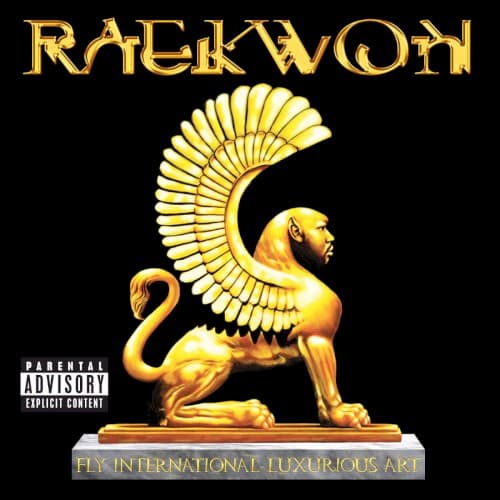
The cover employs product photography lighting techniques to create flawless surfaces that mirror high-end cognac and jewelry advertisements.
Symbols
Sphinx body
Raekwon assumes the guardian role of ancient knowledge, positioning hip-hop wisdom as civilization-level heritage worth protecting.
Wing crown radiating upward
The fan-shaped headdress suggests ascension and enlightenment, elevating street narratives to philosophical heights beyond mortal understanding.
Museum pedestal base
The raised platform literally positions the artist as exhibition-worthy art, validating rap culture's place in institutional recognition.
Where Sound Meets Image
The sphinx pose reflects the album's measured, patient flow delivery over cinematic production that favors timeless boom bap drums over trendy sounds. Just as sphinxes guard secrets, Raekwon's bars continue protecting Wu-Tang's coded street philosophy from dilution. The luxurious art concept extends to the music itself, where every bar is crafted with jeweler precision rather than mumbled ad-libs. The Egyptian theme connects to tracks exploring wisdom accumulated across decades in the game, presenting experience as the ultimate luxury commodity.
This cover helped normalize hip-hop's self-mythologizing tendency, where veterans recast themselves as deities rather than competing for radio relevance. The museum pedestal concept influenced how legacy acts position comeback projects—not as desperate chart grabs but as cultural contributions deserving archival respect. It represents the shift from hip-hop demanding mainstream acceptance to declaring itself already historically significant.