The scorecard
5.7/10 · Mixed
- Writing25%
- 6.5
- Production25%
- 5.5
- Delivery15%
- 7.0
- Cohesion15%
- 4.5
- Originality10%
- 4.0
- Replay value10%
- 5.5
The rapping remains sharp when Raekwon locks into mafioso detail, but half the album settles for generic luxury talk without the vivid specificity that made his best work essential.
The beats lurch between gritty East Coast boom-bap and overwrought crossover attempts with no sonic through-line; Jerry Wonda's gloss clashes badly with the Scram Jones street records.
Raekwon's flow is still technically excellent and the guests mostly show up prepared, but you can hear him working harder to fit beats that were not built for his voice.
An album that cannot decide whether it wants to be a Wu-Tang street record or a global pop crossover, resulting in jarring tonal shifts from track to track with no earned transitions.
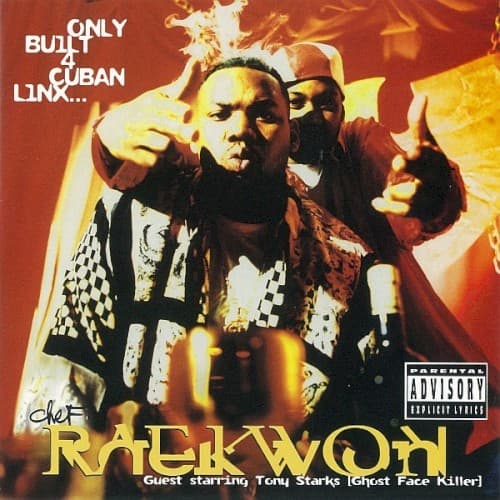
Twenty years after Cuban Linx, this adds nothing new to Raekwon's approach while chasing trends that were already tired by 2015; the only surprise is how little it sounds like a Raekwon album.
The three or four Wu-Tang street cuts hold up, but the crossover half grows more awkward on repeat and the sequencing makes it impossible to program around the weak material.
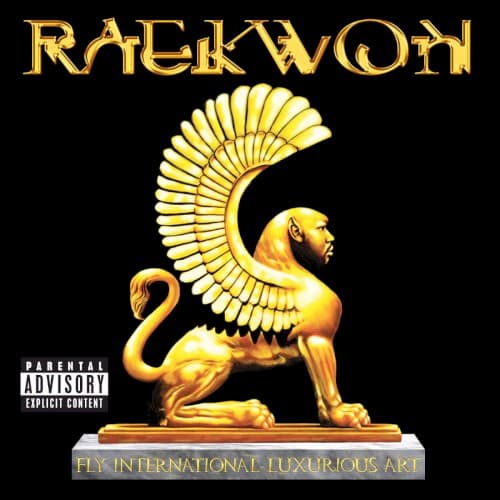
Raekwon Fly International Luxurious Art — The Crossover That Nobody Asked For
The problem with Fly International Luxurious Art is not that Raekwon aged poorly or lost his technical ability. The problem is that he spent two years in the studio trying to make an album for an audience that does not exist: Wu-Tang fans who wanted smoother pop hooks, and casual listeners who would suddenly care about a fifty-year-old mafioso rapper if he worked with Estelle and Akon. The result is an album that satisfies neither group, lurching between gritty East Coast street rap and awkward R&B crossover attempts with no transition or tonal logic. When Raekwon reunites with Ghostface Killah over Scram Jones production, you hear what still works. When Jerry Wonda produces him rapping over a beat that sounds engineered for a different artist entirely, you hear what twenty years of chasing relevance can do to a legacy.
Raekwon announced this album would be an ode to his stylish side, a bid for worldwide success through glamour and fashion. What that means in practice is that half the album sounds like someone convinced him that rapping about private jets and European vacations over polished mid-tempo R&B would move units in 2015. The other half sounds like he remembered halfway through that he is Raekwon and went back to what he knows. The mafioso detail and intricate wordplay that made Only Built 4 Cuban Linx essential appear in flashes, but they are surrounded by filler that could have been recorded by anyone with a feature budget. This is the sound of a great rapper stuck between two ideas of what his sixth album should be, and the compromise pleased no one.
When the Budget Goes to Guests Instead of Vision
The writing quality splits cleanly along the album's identity crisis. When Raekwon stays in his mafioso zone, the pen is still sharp: verses stack vivid criminal detail, knotty internal rhymes, and the kind of offhand luxury flexing that feels lived rather than listed. When he shifts into the broader commercial mode that Jerry Wonda and the pop producers demand, the writing flattens into generic talk about money, success and women with none of the specificity that made his reputation. The difference is night and day, and it happens multiple times across thirteen tracks. The worst moments sound like Raekwon writing to a formula designed for someone else's voice, trying to fit his dense style into hooks and structures that were never built for him.
The production fails even harder because it has no center. Scram Jones delivers classic New York boom-bap on the tracks that work, but those sit next to Jerry Wonda's overwrought R&B crossover beats with no sonic bridge. The sequencing makes it worse: a gritty street record will crash directly into a radio bid with sung hooks, killing any momentum the album builds. Some producers are credited in the fact sheet but the results sound anonymous, as if the beats were pulled from a folder marked "2015 rap radio" and Raekwon was handed whatever was left after bigger names passed. The few samples that land, like the Isaac Hayes flip on the Snoop Dogg collaboration, remind you what Raekwon sounds like when the production serves his voice instead of working against it.
Delivery is the one dimension where Raekwon still shows up fully. His flow remains technically excellent, weaving through complicated patterns without ever sounding like he is struggling. Ghostface Killah on two tracks proves that the chemistry still exists. The other guests are a mixed bag: A$AP Rocky and Rick Ross fit naturally, while the R&B features sound like contractual obligations that no one involved wanted to fulfill.
The issue is not effort but context. You can hear Raekwon working to make these crossover beats work for his style, and the strain is audible. He sounds most comfortable on the handful of tracks where he can just rap over a clean loop, and those are the moments where the album stops fighting itself long enough to breathe.
An Album That Never Finds Its Pace
The sequencing is a disaster. The album opens with a one-minute intro that goes nowhere, then delivers two strong street records before pivoting hard into crossover mode with no transition. Just when a run of Wu-Tang traditionalism builds energy, the album drops a pop single that kills the momentum entirely. The length is not the problem; at thirteen tracks this could have been tight. The problem is that the album plays like two separate projects shuffled together, and the result is whiplash.
The peak arrives early when Raekwon and Ghostface Killah reunite over Scram Jones production, sounding exactly like what fans waited two years to hear. That energy vanishes as soon as the album shifts into the global crossover mode that the promotional interviews promised. By the back half, the album has abandoned any pretense of cohesion and just cycles through leftover ideas: a Rick Ross feature that sounds expensive but empty, an Estelle collaboration that belongs on a different album entirely, a closing track that fades out with no sense of conclusion. Nothing about the running order feels considered. It feels like the tracks were sequenced in the order they were finished, with no one stopping to ask whether they belonged on the same album.
Where It Ranks and Who It Is For
Fly International Luxurious Art is Raekwon's weakest solo album by a significant margin, and it is not close. Only Built 4 Cuban Linx remains one of the greatest rap albums ever made; this sits far below everything else in his catalog because it never commits to being anything. The three or four tracks where Raekwon links with Wu-Tang family over New York street production prove he can still deliver when the context is right, but they are buried under commercial misfires that do not work for his voice or his style. This album is for completists only. If you are trying to understand Raekwon as an artist, start with Cuban Linx and stop there unless you need to hear the whole catalog.
For fans who waited through multiple delays expecting a worthy follow-up, this is a disappointment. The critical reception was polite but lukewarm, and the Metacritic score reflects an album that critics found acceptable but unnecessary. The global crossover Raekwon aimed for never materialized because the pop half is not strong enough to win new fans and the street half is too scattered to satisfy the base. Start with the Ghostface Killah collaborations and the Scram Jones production if you want to hear what still works.
Skip the Jerry Wonda tracks entirely. If you want to hear Raekwon at his best, go back to the mid-nineties and stay there. If you want to hear what happens when a legacy artist chases trends two years too late with no coherent vision, this is the case study.
Track by track
Track Listing
Intro
SolidA one-minute scene-setter with no rapping and no purpose beyond announcing the album title. Pure filler.
4 in the Morning
StandoutThe album's strongest moment by a wide margin. Scram Jones delivers a grimy, looped New York beat that sounds like 1995, and Raekwon and Ghostface Killah slip back into their Cuban Linx chemistry without missing a step. The writing is dense and vivid, stacking mafioso imagery and intricate rhyme patterns that remind you why this pairing mattered. Ghostface matches energy, and the two trade verses with the ease of partners who have done this a thousand times. This is the sound the entire album should have chased. Instead, it is an outlier that makes everything after it sound worse by comparison.
I Got Money
SolidA$AP Rocky fits the vibe and Raekwon sounds engaged, but the beat is flat and the writing never rises above standard wealth talk. Competent but forgettable.
Wall to Wall
WeakReleased as the third single, this is a pure radio bid with French Montana and Busta Rhymes that collapses under its own weight. The beat is overproduced and cluttered, and the five-minute runtime feels like ten. Busta delivers a solid verse but it cannot save a track that sounds focus-grouped into mediocrity. The Stacey Lattisaw sample is wasted on a song that has no idea what it wants to be.
Heated Nights
WeakA mid-tempo solo cut with no hook and no point. The beat is anonymous and Raekwon sounds like he is filling time. One of the album's weakest moments.
F.I.L.A. World
SolidThe title track pairs Raekwon with 2 Chainz over a Scram Jones and Jerry Wonda co-production that splits the difference between street and crossover. 2 Chainz delivers exactly what you expect, and Raekwon rises to meet him with sharper writing than most of the album's pop half. It works better than it should, but the tonal compromise keeps it from landing fully. A glimpse of what the album might have been if it committed to one direction.
1,2 1,2
SolidSnoop Dogg shows up for a laid-back West Coast collaboration that feels like a contractual obligation. Scoop DeVille flips Isaac Hayes and Biz Markie into a smooth, uninspired loop, and both rappers coast through verses with no urgency. Pleasant enough but instantly forgettable.
Live to Die
StandoutA solo track over an S1 production that samples Zulema into a melancholy, mid-tempo groove. Raekwon reflects on mortality and legacy with more introspection than the album's luxury tracks, and the writing sharpens accordingly. The beat is understated and the performance is focused. One of the few moments where the commercial production approach actually serves the rapping instead of smothering it.
Soundboy Kill It
WeakReleased as the second single, this Melanie Fiona and Assassin collaboration is a full-on crossover attempt that crashes hard. Jerry Wonda, Swizz Beatz and Altino produce a reggae-fusion beat that has nothing to do with Raekwon's sound, and the result is awkward on every level. Raekwon sounds out of place on his own song, struggling to fit his flow into a riddim structure that was not built for him. Melanie Fiona's hook is competent but wasted on a track that never coheres. This is the clearest example of the album's identity crisis, and it is painful to hear.
Revory (Wraith)
SolidRick Ross and Ghostface Killah reunite with Raekwon over a Marlena Shaw sample that Bluerocks flips into a lush, expensive-sounding beat. Ross delivers his usual luxury talk with polish, and Ghostface brings energy, but the track feels hollow. The production is gorgeous but it has no edge, and the writing never moves beyond surface-level wealth flexing. A missed opportunity for a marquee collaboration that should have been a highlight.
All About You
WeakThe first single, featuring Estelle over Jerry Wonda production, is a straightforward R&B crossover play that does not work. The beat is generic, the hook is lifeless, and Raekwon sounds uncomfortable trying to fit his dense style into a radio-friendly structure. Estelle does her job but the song has no reason to exist beyond label pressure. This is the sound of a great rapper chasing a pop audience that was never going to care, and it is one of the album's lowest points.
Nautilus
WeakA short solo track over a Scram Jones beat that sounds rushed and half-finished. No hook, no memorable verses, just Raekwon rapping over a decent loop for two and a half minutes before the song ends abruptly. Feels like an album cut that should have been left in the vault.
Worst Enemy
WeakThe closing track features Liz Rodrigues on the hook and production from Matthew Burnett and DZL. It is another pop crossover attempt that lands nowhere, with a sung chorus that feels grafted on and a beat that could have come from any mid-tier rap album in 2015. Raekwon delivers a solid verse about inner conflict and past struggles, but the production and structure work against him. The album ends with no sense of resolution, just fading out on a track that sounds like it belongs on someone else's album.