Style & Context
Influences
Gordon Parks, Jamel Shabazz, Chicago photojournalism tradition
Location
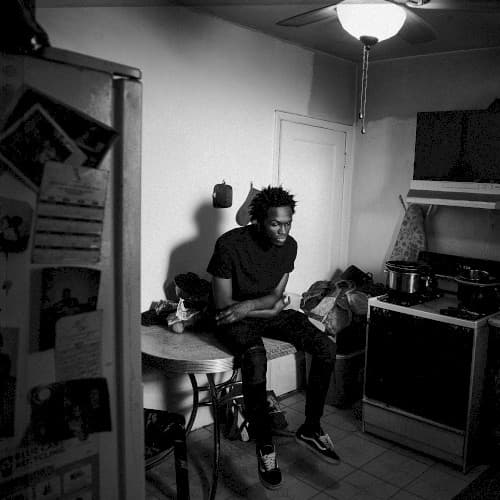
The modest Chicago apartment interior speaks to West Side authenticity without romanticizing or exploiting poverty for street credibility.
Visual Language
The composition uses available light and cramped framing to create claustrophobic intimacy typical of Chicago's documentary photography legacy.
Symbols
Kitchen table perch
Saba sits where people normally eat together, now alone, showing how grief disrupts basic rituals of community and nourishment.
Overhead pull-chain light
The single bare bulb represents harsh clarity and sleepless nights spent confronting memories in empty hours.
Refrigerator and stove
These appliances of daily survival frame the artist, suggesting life continues mechanically even when emotional capacity has shut down.
Where Sound Meets Image
The cover's documentary intimacy matches the album's unflinching examination of losing cousin and collaborator Walter Long Jr. to gun violence. The kitchen table becomes a stand-in for the album's recording process—Saba processing grief in isolated creative spaces, turning private pain into public art. The cluttered, lived-in environment mirrors the album's jazz-inflected production, which layers organic instrumentation over boom-bap foundations, creating beauty from fragments of everyday Chicago life.
This cover helped establish a visual language for the 'sad rap' era's more introspective artists, proving that vulnerability could be as powerful as bravado. Its influence appears in subsequent album photography that prioritizes emotional authenticity over aspirational imagery, particularly among Chicago artists navigating trauma. The stripped-down aesthetic anticipated a broader shift away from maximalist design toward raw documentary styles in independent hip-hop.