Style & Context
Influences
Ed Roth hot rod art, lowrider culture graphics, political cartoon satire
Location
Snoop purchased Death Row Records in 2022, making him owner of the label that birthed his career.
Visual Language
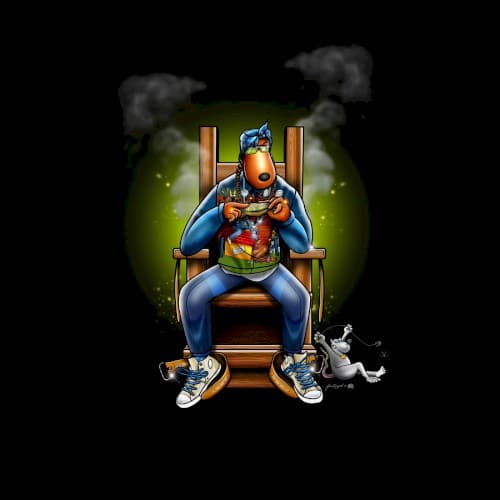
Cartoon exaggeration meets street art sensibility with smooth gradients recalling classic West Coast poster aesthetics.
Symbols
Electric chair throne
Death Row Records' literal interpretation mixed with Snoop's ownership resurrection from the label's ashes.
Cheeseburger and fries meal
California fast food culture meeting death row's last meal imagery with typical Snoop irreverence.
Rising smoke clouds
Both marijuana culture signifier and souls ascending, playing on death row execution imagery constantly.
Where Sound Meets Image
BODR represents Snoop's full-circle moment returning to Death Row as its owner, so the cover's throne imagery makes his victory lap explicit. The electric chair transforms from symbol of oppression into a seat of power, much like the album reclaims g-funk sounds that built his legacy. The casual meal-eating pose amid deadly imagery matches Snoop's relaxed flow over modernized West Coast production, never taking himself too seriously while asserting dominance. Smoke rising suggests both his cannabis empire and the ghosts of Death Row's turbulent history that he's now inherited and reshaped.
This cover updates Death Row's aggressive '90s aesthetic for the meme era, where hip-hop icons embrace absurdist humor without losing street credibility. The illustration style influences how veteran rappers can use cartoon imagery to stay visually relevant across generations. It demonstrates that legacy artists can reference their own mythology directly, turning potentially dark symbolism into celebration through confident ownership of their narrative.