The scorecard
6.5/10 · Good
- Writing25%
- 7.0
- Production25%
- 6.5
- Delivery15%
- 7.5
- Cohesion15%
- 5.5
- Originality10%
- 6.0
- Replay value10%
- 6.0
Ghostface and Raekwon deliver vivid street narratives on "Wolves" and "Windmill", but weaker verses on "Campfire" and "Starter" show uneven focus across the roster
RZA's orchestral palette—Morricone strings on "Rushing Elephants", Harrison and Frusciante guitars on "The Heart Gently Weeps"—is gorgeous and cohesive, but the stark minimalism leaves MCs stranded more often than it elevates them
Method Man sounds re-energized on "The Heart Gently Weeps" and Ghostface and Raekwon deliver strong turns on "Wolves", with the group overall showing real strengths despite occasionally sounding cautious against the lush arrangements
The cinematic sequencing flows like a film score, peaking with "Life Changes", but too many tracks like "Campfire" and "Starter" feel pretty and pointless, with strengths and weaknesses roughly canceling out
RZA abandons the boom-bap template for orchestral minimalism, a bold move in 2007's ringtone-rap era, though the film-score instincts suffocate the rapping more often than they serve it
The experimental production rewards close listens, but the album lacks the immediate hooks and raw energy that made Enter the Wu-Tang and The W returnables
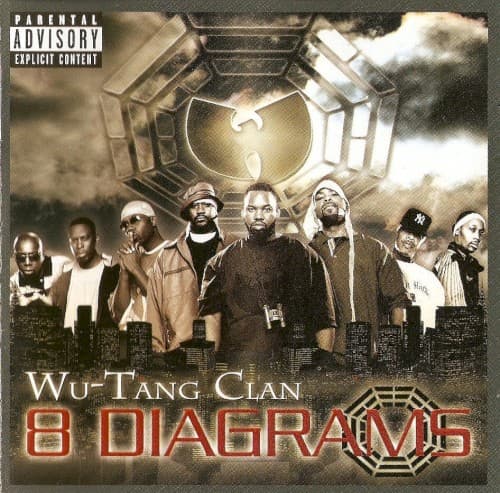
Wu-Tang Clan 8 Diagrams — When RZA Chose the Film Score Over the Street
RZA made 8 Diagrams as if the Wu-Tang Clan were a chamber ensemble, not a crew. The beats are spare and orchestral: Ennio Morricone strings, George Harrison's son on acoustic guitar, John Frusciante on lead. The album opens with "Campfire", a Persuasions soul sample and kung-fu dialogue over barely-there drums, and it never gets louder than that. This is gorgeous music, the most carefully arranged record RZA has ever produced, and it is also the least interested in what made the Clan dangerous. The thesis here is that RZA's widescreen ambitions, sharpened by his film-scoring work on Kill Bill and Ghost Dog, finally overtook his loyalty to the Wu-Tang sound, and the result is an album that works as mood music but only intermittently as rap.
The stakes were high: six years since Iron Flag, three years since Ol' Dirty Bastard's death, and a one-album deal with the relaunched Loud Records that RZA himself described as a chance to revive hip-hop's spirit. What he delivered instead was a funeral procession dressed as a comeback. Ghostface and Raekwon, the two MCs still in their prime, publicly rejected the album before it dropped, and they were right to be wary. 8 Diagrams is the sound of a producer who has outgrown the template he invented, dragging eight rappers along with him into territory they never asked to explore.
The Strings That Buried the Boom-Bap
RZA strips the production down to melody and空気, replacing the sample-layered grime of the first four albums with single-source loops and live instrumentation. "Rushing Elephants" is three minutes of Morricone's "Marcia in LA" over a distant snare, no bassline, no breakbeat. "The Heart Gently Weeps" interpolates the Beatles with Frusciante's bluesy lead and Harrison's rhythm guitar, threading Erykah Badu's vocals through verses from Raekwon, Ghostface and Method Man like a hymn. "Windmill" layers Nancy Sinatra, Lyn Collins and Sly Stone samples into a dirge-paced noir. The arrangements are immaculate—lush, deliberate, controlled—but they flatten the chaos that made Wu-Tang albums feel like nine voices fighting for the same mic.
The writing holds up better than the energy. Ghostface turns "Wolves" into a paranoid street tale with the specificity he still had in 2007, and Raekwon matches him line for line on the same track. Method Man sounds rejuvenated on "The Heart Gently Weeps", his cadence finally syncing with a beat after years of sleepwalking through guest verses. But too many tracks—"Campfire", "Starter", "Gun Will Go"—feel like the MCs are rapping at the production instead of with it, delivering workmanlike verses over beats that ask for meditation, not bars. The album includes Cappadonna as an official member for the first time, and his contributions are competent but not essential.
The real weakness is the disconnect between RZA's vision and the Clan's strengths. These are battle rappers and storytellers, not spoken-word poets, and the skeletal minimalism leaves them exposed. When the beat on "Take It Back" finally hits a pocket—Easy Mo Bee co-produced, using the Bob James "Nautilus" break—the group snaps to life, proof that the problem is not the roster but the canvas. RZA's film-score instincts, brilliant in context, suffocate the rapping more often than they elevate it.
A Procession That Peaks at the Grave
The album sequences like a film: the opening act (
Where It Ranks and Who It's For
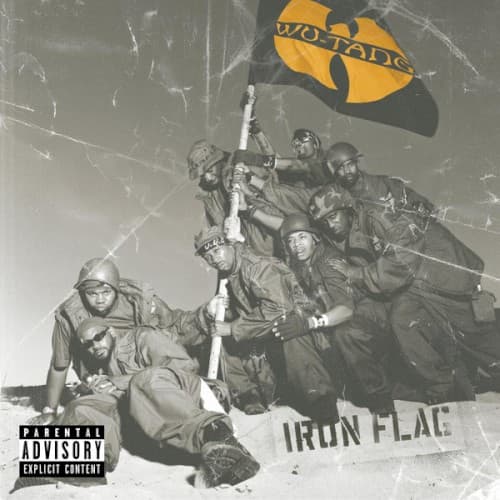
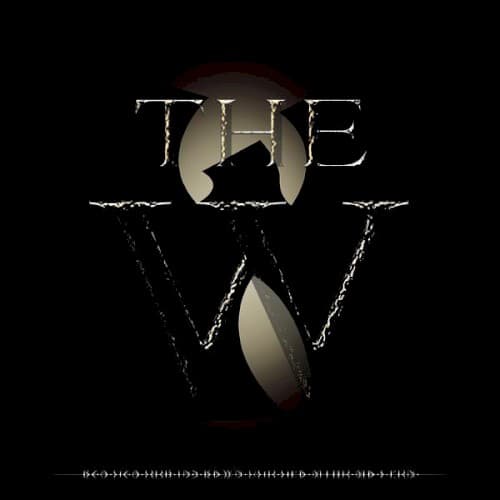
8 Diagrams is the third-best album in the Wu-Tang Clan catalog on this site, behind The W and ahead of Iron Flag, but that ranking hides a truth: it is the least essential. The W worked because RZA had not yet abandoned the Wu-Tang sound; 8 Diagrams works in spite of abandoning it. This is an album for listeners who want to hear what RZA can do when he stops trying to make Wu-Tang records, and the answer is that he can make something beautiful and cold. It has aged better than its 2007 reception suggested—the orchestral minimalism that felt out of step with mid-2000s rap now sounds like a humid cousin of Griselda's loops—but it is still the album where the Clan became a vehicle for one man's film-score ambitions instead of a crew.
Start with "The Heart Gently Weeps" and "Life Changes", the two tracks where the concept and the execution align. If those work, try "Wolves" and "Windmill" for the best rapping. Skip "Campfire" and "Starter", which are pretty but pointless. If you want the Wu-Tang Clan at full strength, go back to The W. If you want to hear RZA's most ambitious production, divorced from the group's legacy, 8 Diagrams is the place. It is a gorgeous album that two of the best MCs in the group disowned, and both things are true.
Track by track
Track Listing
Campfire
SolidThe Persuasions soul loop and kung-fu dialogue over faint drums set the album's tone: pretty, spare, and not interested in hitting hard. The verses are serviceable setup, nothing more.
Take It Back
StandoutEasy Mo Bee brings the Bob James "Nautilus" break, and suddenly the Clan sounds awake. This is the only track where the drums knock like a real Wu-Tang record, and the rapping responds with the energy the rest of the album lacks. Proof that the roster still worked when the production met them halfway.
Get Them Out Ya Way Pa
SolidInspectah Deck and U-God trade blunt threats over a minimal loop, competent but undercooked. The beat never builds, and the verses sound like they are waiting for a drop that never arrives.
Rushing Elephants
WeakThree minutes of Morricone strings and a distant snare, no bassline, no payoff. It is striking as atmosphere, useless as a rap song. The shortest track on the album feels twice as long.
Unpredictable
SolidDexter Wiggle's vocals and Shavo Odadjian's bass anchor a brooding, mid-tempo crawl. The rapping is solid but cautious, and the track never finds a reason to exist beyond its own mood.
The Heart Gently Weeps
StandoutThe centerpiece: Frusciante and Dhani Harrison play live guitars over an interpolation of the Beatles, Erykah Badu hums the bridge, and Method Man, Raekwon and Ghostface deliver their best verses on the album. Meth sounds rejuvenated, his cadence finally locked in, and Raekwon's storytelling is as vivid as anything he wrote in 2007. The track works because the concept is big enough to justify the ambition, and the rapping meets the grandeur instead of shrinking from it. The only single from the album, and the only track that feels like it could have been a hit.
Wolves
StandoutGhostface and Raekwon turn in paranoid street narratives over a tense, circular loop, and George Clinton's vocals add a layer of funk-noir. This is the best pure rapping on the album: vivid imagery, sharp wordplay, two MCs still in their prime pushing each other. The beat is skeletal but it works here, giving the verses room to breathe without leaving them stranded.
Gun Will Go
SolidSunny Valentine's sung vocals smooth out the edges, and the rapping is decent, but the track floats without purpose. It is too polished to feel dangerous, too slow to build momentum.
Sunlight
WeakRZA raps solo over a bright, stuttering loop, and the lack of drums makes it feel like a sketch. The shortest full track on the album, and it plays like an interlude that forgot to end.
Stick Me for My Riches
WeakMathematics co-produces, flipping a David Porter sample into a six-minute soul crawl with Gerald Alston on vocals. The length is unearned: the beat never evolves, and the verses coast on the same energy for twice as long as the idea can support.
Starter
WeakSunny Valentine and Tash Mahogany provide vocals, and the track aims for anthem but lands on filler. The rapping is fine, the hook is forgettable, and the beat is too thin to carry the runtime.
Windmill
StandoutFrusciante returns for lead guitar, and RZA layers Nancy Sinatra, Lyn Collins and Sly Stone samples into a noir crawl. Raekwon and Ghostface trade verses that feel like they belong on a better album, specific and urgent over a beat that asks them to slow down. The tension works: this is gorgeous production that the rapping almost overcomes.
Weak Spot
StandoutTom Scott's "Sneakin' in the Back" drives a rare uptempo moment, and the Clan sounds relieved to have a real groove. The writing is sharp, the sequencing smart—this is the last surge before the eulogy.
Life Changes
StandoutThe seven-minute elegy for Ol' Dirty Bastard, built on two Freda Payne samples and no drums until the final third. Each surviving member delivers a verse about loss, death, and the cost of the life, and the absence of ODB hangs over every bar. This is the album's emotional center, the track that justifies the funereal tone, and it works because the gravity is real. Raekwon, Method Man, and Masta Killa turn in their most vulnerable performances, and RZA's production—minimal, patient, unsentimental—finally matches the subject. The best writing on the album, and the only track where the orchestral sparseness feels necessary instead of imposed.
Frequently Asked Questions
Is Wu-Tang Clan's 8 Diagrams worth listening to?
Why did Ghostface Killah and Raekwon criticize 8 Diagrams?
What is the best song on 8 Diagrams?
How does 8 Diagrams compare to other Wu-Tang Clan albums?
Styles