The scorecard
6.0/10 · Mixed
- Writing25%
- 5.5
- Production25%
- 7.5
- Delivery15%
- 6.5
- Cohesion15%
- 4.5
- Originality10%
- 5.0
- Replay value10%
- 6.0
The lyrics recycle gangsta cliches across 22 tracks without the specificity that made the debut compelling, though hooks like "Candy Shop" show craft in making obvious ideas stick
Scott Storch's Middle Eastern melodies over hard drums on "Candy Shop" and "Just A Lil Bit" plus Buckwild's jazz rap on "I Don't Need 'Em" give the album varied textures that Get Rich lacked
The flow remains fluid and conversational with solid hooks, but 50 sounds more comfortable chasing radio-friendly cadences than hungry—compare the ease of "Disco Inferno" to the tension in his debut
At 78 minutes with no thematic center, the album sags badly in the middle stretch from "Ski Mask Way" through "Build You Up" where filler accumulates
The lyrical content recycles Get Rich ideas without the desperation that made them compelling, though the Scott Storch production style was new for 50 Cent in 2005
The singles hold up two decades later as pure pop craft, but the album cuts blend together and the 78-minute runtime means strengths and weaknesses roughly cancel out
50 Cent The Massacre — When the Crown Became a Burden
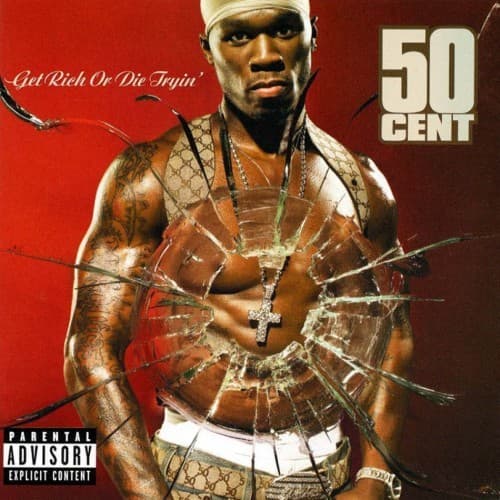
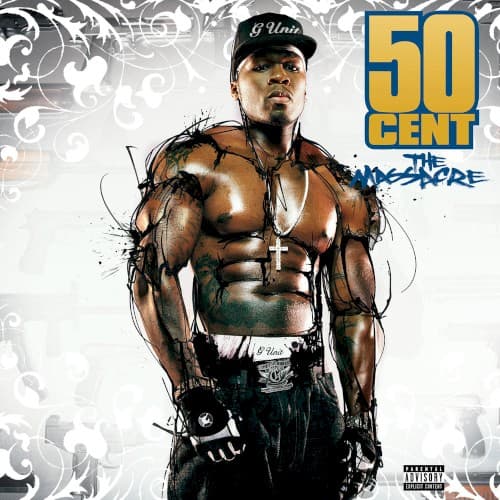
The problem with selling 1.14 million copies in four days is that the album has to deserve it. The Massacre arrived in March 2005 as the most anticipated rap sequel since The Marshall Mathers LP, and 50 Cent delivered exactly what the market demanded: radio singles that could move units, enough street content to maintain credibility, and a runtime bloated to justify the price tag. What he did not deliver was a reason to remember it past the chart week. Where Get Rich or Die Tryin' worked because hunger sharpened every decision, The Massacre sprawls across 22 tracks without a center, chasing competing audiences until the album loses sight of what made 50 compelling in the first place.
The stakes were higher than sales. By early 2005, 50 had kicked the Game out of G-Unit on live radio, survived a shooting outside Hot 97, and watched his own label drama threaten to overshadow the music. Interscope executives worried the negativity would tank the release. Instead it moved six million copies in the United States alone, making it the biggest sophomore rap album ever measured by first-week sales.
But commercial dominance and artistic success split here. The Massacre is the sound of an artist who already won, recorded by someone still pretending to fight. The singles prove 50 understood pop songcraft better than almost anyone in 2005. The album cuts prove he had nothing left to say.
When Scott Storch Met the Hook Machine
The production saves what the writing cannot. Dr. Dre's mixing gives the album the same sonic polish as Get Rich, but the palette expands in ways that both help and hurt. Scott Storch's Middle Eastern synth melodies dominate the front half, where hard drums meet snake-charmer riffs that were unavoidable on radio in 2005. The approach works because Storch builds these tracks for repetition: simple, obvious, engineered to lodge in your brain after one listen.
The music does not try to be subtle. It succeeds by being unavoidable.
Buckwild's jazz rap instrumental stands out as the album's most underrated production, pulling from early Nineties New York in a way that gives 50 room to rap without leaning on a pop hook. Eminem contributes harder, darker beats that replay familiar themes over drilling drums, with vocal samples that add menace the lyrics cannot muster on their own. Dr. Dre's hand is lighter here than on the debut—only a few tracks carry his direct stamp—but his mixing ensures nothing sounds cheap even when the ideas run thin.
The problem is that 50's writing has not kept pace with the production's range. The lyrics recycle the same gangsta cliches that worked on Get Rich because they felt lived-in and specific. Here they feel like branding.
He threatens rivals he does not name, brags about wealth he already flaunted on the last album, and coasts on charisma when the verses run out of things to say. The repetition becomes unavoidable across 78 minutes. The disses land as lightweight—petty disputes rather than genuine beef. Compare that to the desperation audible on the debut, where survival was the stakes. On The Massacre, 50 raps like someone defending a throne, not someone fighting for his life.
The hooks remain his greatest strength. Even when the verses coast, the choruses are designed to carry the song when the rapping cannot. The problem is structural: 22 tracks means the ratio of filler to substance tips badly. For every radio smash, there is a forgettable cut that adds nothing and makes the album feel like a playlist rather than a statement.
The Album That Forgets It Is an Album
The Massacre does not sequence like a body of work. It sequences like a label trying to cover every demographic: street tracks for the core audience, pop crossovers for radio, R&B features for the women, and enough bonus material to justify calling it an event. The front half moves with purpose—the opening stretch establishes a harder tone before the singles take over. Then the album pivots fully into commercial mode, chasing crossover success until the middle sags under its own length.
From the middle section through the back half, the pacing collapses. These tracks are not bad individually, but stacked together they blur into background music, none of them essential, few of them memorable. The album does not earn 78 minutes because 50 has not written enough material to fill the space. Drug metaphors that were tired even in 2005 sit alongside tracks that coast on adequate hooks without giving the listener a reason to return. By the time the closing run arrives, the album has long since stopped trying to build momentum.
The sequencing also kills the replay value. The singles are front-loaded and spaced too far apart to carry the album cuts between them. The climactic moment arrives too early, and instead of ending there, seven more songs follow, including remixes that do not improve the originals and remind the listener that some of 50's best moments from this era ended up on someone else's album. The Massacre needed an editor willing to cut it to 14 tracks. Instead it sprawls, and the best songs get buried under filler.
The Victory Lap That Ran Too Long
The Massacre is 50 Cent's second-best album, but the gap between it and Get Rich or Die Tryin' is wide enough to matter. It sold better, dominated radio harder, and proved 50 could craft pop hooks as well as anyone in rap. But it is not a better record. Where the debut worked because every song sounded necessary, The Massacre is half great singles and half padding, the work of an artist who won so completely that he no longer had anything to prove. The writing is weaker, the runtime is bloated, and the album never builds a case for why these 22 tracks belong together beyond moving units.
This is the album for casual fans who want the hits. "Candy Shop," "Just A Lil Bit," and "Disco Inferno" are as good as anything 50 recorded, pure pop craft that still sounds sharp twenty years later. If you only know 50 from the singles, The Massacre delivers. But if you came to hear the hunger and specificity that made Get Rich essential, this will disappoint. The album works best in pieces. Start with the Scott Storch productions—"Candy Shop" and "Just A Lil Bit"—then move to "Disco Inferno" and "Outta Control." Skip the middle entirely unless you need deep cuts for a playlist.
For 50's catalog, this sits firmly in the middle: better than the late-career collapse of Animal Ambition, nowhere near the focus of his debut. It is the sound of an artist chasing two audiences at once and satisfying neither completely. The pop fans got their singles. The street fans got enough posturing to maintain the image. But no one got an album that holds together front to back. The Massacre is a commercial triumph and an artistic compromise, the moment 50 Cent learned that winning does not always make for compelling music.
Track by track
Track Listing
Intro/ 50 Cent/ the Massacre
SolidSets the tone with gunfire and menace before sampling "What Up Gangsta" from the debut. The censored version cuts this to twenty seconds and removes the shooting sounds entirely, which tells you how thin the content is underneath the posturing.
In My Hood
StandoutA solid street opener that reestablishes 50's Queens roots without breaking new ground. The production is spare and hard, giving the track focus the rest of the album will struggle to maintain. The writing recycles familiar tough-guy images but the delivery keeps it from feeling lazy this early.
This Is 50
SolidBuilt on a Notorious B.I.G. sample from "Things Done Changed," the track tries to position 50 as Biggie's heir but the comparison only highlights how much sharper Biggie's writing was. The hook is pure branding, the verses adequate but not sharp enough to justify the runtime.
I’m Supposed to Die Tonight
StandoutEminem's production carries this track, pulling vocal samples and building a paranoid atmosphere that the lyrics cannot quite match. 50 raps about survival and enemies but the specificity is gone—these are generic threats, not the lived-in tension of "Many Men." Still, the beat is dark enough to make it one of the album's stronger non-singles.
Piggy Bank
WeakThe diss track aimed at Jadakiss, Fat Joe, and Nas that feels more petty than dangerous. The insults are surface-level and the stakes are unclear—50 won the commercial war so thoroughly that picking these fights feels like punching down. The production is fine but the writing is weak even by beef-track standards.
GATman and Robbin
SolidEminem's Batman theme interpolation is clever in concept but the execution is novelty-rap territory, with 50 and Eminem trading verses that never rise above the gimmick. The beat is hard enough to survive the joke but the track does not justify its place on an album this bloated.
Candy Shop
StandoutThe album's biggest hit and its most undeniable track. Scott Storch's Middle Eastern synth riff over trunk-rattling bass is pure 2005, and 50's sex-as-candy metaphor is obvious but executed with enough charm to become unavoidable. Olivia's sung hook adds the R&B crossover appeal without softening the track. The writing is not deep but the songcraft is flawless—this is 50 Cent at his best as a pop architect, building a track engineered to dominate radio and strip clubs simultaneously. Twenty years later it still sounds sharp.
Outta Control
StandoutDr. Dre's production interpolates Strafe's "Set It Off" into a club track that works entirely on momentum. The writing is minimal—50 barely says anything across three verses—but the beat and hook carry it. The Special Edition replaced this with a Mobb Deep remix that added weight the original did not need.
Get in My Car
WeakA forgettable attempt at a sex track that lacks the charm of "Candy Shop" and the edge of the street material. The production is fine but the concept is thin and 50's delivery sounds disengaged. Pure filler.
Ski Mask Way
SolidBuilt on O'Jays and Goodie Mob samples, the track aims for menace but lands as routine. The writing recycles robbery narratives without the detail that would make them vivid, and the hook is not strong enough to compensate. This is where the album's middle sag begins.
A Baltimore Love Thing
WeakThe drug-as-lover metaphor was already tired when Jay-Z used it, and 50 does not bring new angles. The Dells sample gives the production a smooth soul foundation but the concept feels like a creative-writing exercise, not something 50 needed to say.
Ryder Music
SolidA monotonous album cut with a decent hook but verses that blur into the surrounding tracks. Nothing here justifies the inclusion on an album already running too long.
Disco Inferno
StandoutThe track 50 leaked to force Interscope's hand, and it justified the gamble. The production is relentless, all hard drums and hypnotic loops, and 50's flow rides the beat with the same effortless pocket that made "In Da Club" unstoppable. The writing is minimal but the energy never flags. This should have closed the album—instead it sits at track 13 with seven more songs to go, which kills the momentum it builds.
Just A Lil Bit
StandoutScott Storch's second home run, another Middle Eastern melody over knocking drums that became inescapable in 2005. The hook is pure repetition—50 chants the title until it embeds itself in your memory—and the verses are light, but the track works entirely on feel. This is 50 Cent as a singles artist at his peak, crafting pop-rap that sounds effortless because the structure is so airtight.
Gunz Come Out
WeakA revenge fantasy with inconsistent censoring that tells you even the label knew this was filler. The beat is hard but the writing is one-dimensional and the track adds nothing the first ten songs did not already cover.
My Toy Soldier
SolidTony Yayo appears for a forgettable G-Unit posse cut that coasts on an adequate hook. The verses are serviceable but the track has no reason to exist beyond label obligations.
Position of Power
SolidAnother album cut that blends into the background. The production is fine, the rapping is fine, and nothing about it sticks once it ends.
Build You Up
WeakA half-hearted attempt at an uplifting track that rings hollow coming from an artist who built his career on cynicism. The concept does not fit 50's strengths and the execution is generic.
God Gave Me Style
SolidBuilt on an Eddie Kendricks sample, the track has a smooth Seventies soul foundation but 50's boasting feels rote this deep into the album. A decent hook cannot save verses that say nothing new.
So Amazing
StandoutOlivia returns for an R&B crossover that works better than most of the album's attempts at smoothness. The production is lush and 50 sounds more engaged than on the surrounding tracks, though the writing is still light. This is the kind of track that justifies having Olivia on the roster—her vocals add dimension 50 cannot provide alone.
I Don’t Need ’Em
StandoutBuckwild's jazz rap production is the album's most underrated moment, giving 50 a stripped-down beat that recalls early Nineties New York without feeling retro. The writing is sharper here than on most album cuts, and 50's flow locks into the pocket without chasing a pop hook. This needed to be higher in the sequence where it could break up the monotony.
Hate It or Love It (G-Unit remix)
SolidThe original appeared on the Game's The Documentary and became one of the best tracks of 2005. This G-Unit remix does not improve it—50 and Lloyd Banks add verses that cannot match the original's chemistry, and the inclusion feels like label politics rather than artistic choice. The Special Edition removed this track entirely once the Game beef cooled, which tells you how inessential it was.
Frequently Asked Questions
Is The Massacre better than Get Rich or Die Tryin'?
What are the best songs on The Massacre?
Why is The Massacre so long?
How did The Massacre perform commercially?
Styles