The scorecard
6.4/10 · Mixed
- Writing25%
- 6.5
- Production25%
- 7.0
- Delivery15%
- 7.5
- Cohesion15%
- 5.0
- Originality10%
- 5.5
- Replay value10%
- 6.0
Minaj delivers competent bars with occasional sharpness on tracks like "FTCU" and "Big Difference," but relies heavily on well-worn flex rhetoric and the grief material feels more gestural than earned.
ATL Jacob, Boi-1da and others build varied, polished beats that serve the rapping, though the overreliance on high-profile samples from Rick James, Cyndi Lauper and Blondie signals a lack of sonic identity.
Minaj navigates the album's stylistic range with technical ease, switching flows confidently on "Barbie Dangerous" and riding the island rhythms on "Needle," even when the material beneath her doesn't match the performance.
The album sprawls to 22 tracks without a guiding idea beyond career retrospective, lurching from trap to pop to R&B with cuts like "Cowgirl" and "Blessings" that serve no larger purpose.
The sequel framework and Gag City campaign show conceptual ambition, but the music itself recycles Minaj's established modes and leans on familiar samples rather than pushing her sound forward.
The standout singles and a few deeper cuts reward return visits, but the bloat and inconsistency make the full album a chore to revisit, with most listeners likely to cherry-pick rather than run it through.
Nicki Minaj Pink Friday 2 — The Sequel That Stretches a Legacy Too Thin
Pink Friday 2 arrives thirteen years after the debut that made Nicki Minaj a pop-rap fixture, and the gap shows in every direction the album tries to face at once. The thesis here is not musical but biographical: this is Minaj reminding the industry of her primacy while processing grief, motherhood and the passage of time, all wrapped in the pink branding that made her famous. The problem is that she never chooses between monument and confession, between the boastful street records and the moody R&B detours, and the album suffers for trying to be both a victory lap and a reckoning without committing to either.
The stakes are clear from the opening minutes. "Just the Memories" and "Are You Gone Already" attempt to ground the album in loss and reflection, with the latter built on a Billie Eilish sample and Minaj rapping about her father's death. But these moments sit beside "FTCU" and "Red Ruby da Sleeze," hard-nosed flex tracks that operate in a completely different emotional register, and the album never reconciles the distance. Minaj has the technical skill to pull off both modes, but Pink Friday 2 offers no reason why they should share the same record beyond the fact that she can do them. The result is a 22-track sprawl that plays like a playlist of Minaj's various impulses rather than a focused argument about where she is now or what the sequel framework might unlock. For an artist whose debut balanced pop hooks with rap credibility through sheer force of personality, Pink Friday 2 feels like that balance has calcified into a formula: a few hard tracks, a few introspective cuts, a handful of radio plays, and no center holding it together.
Borrowed Hooks and the Cost of Playing It Safe
The production across Pink Friday 2 is polished and varied, handled mostly by ATL Jacob, Boi-1da, and a roster of known hands who deliver clean, functional beats. ATL Jacob's work on "FTCU," "Fallin 4 U" and "Let Me Calm Down" provides the album's strongest sonic foundation, building trap frameworks that give Minaj room to flex without overwhelming her voice. Boi-1da contributes slick, melodic production on "Pink Birthday" and "Needle," the latter a Drake collaboration that glides on island-inflected rhythms. The beats work individually, but they rarely push Minaj toward anything she has not already done, and the album's reliance on high-profile samples undercuts whatever originality the production might claim.
"Super Freaky Girl" lifts Rick James wholesale, "Pink Friday Girls" borrows Cyndi Lauper's "Girls Just Want to Have Fun," and "My Life" interpolates Blondie's "Heart of Glass." These are not subtle nods or flipped loops; they are the songs themselves, resung with new verses, and the effect is to make half the album sound like it was built for instant familiarity rather than to establish a sonic identity. The samples are catchy, but they do the heavy lifting, and when Minaj steps away from them on tracks like "Barbie Dangerous" or "Forward from Trini," the absence of a clear through-line becomes obvious. The former uses a Notorious B.I.G. interpolation as a lyrical exercise, while the latter highlight her Trinidadian roots over a dancehall riddim, but neither track connects to the others in a way that suggests the album is steering toward a destination.
Minaj's writing is competent but rarely sharp enough to justify the length. On "Big Difference" and "Red Ruby da Sleeze," she delivers capable bars about her legacy and influence, but the imagery is broad and the arguments feel recycled from earlier records. "FTCU" has more bite, with Minaj rapping over a Waka Flocka Flame sample and landing a few pointed lines, but it sits next to tracks like "Cowgirl" and "Everybody," pop-leaning cuts that prioritize hooks over substance.
The grief material on "Are You Gone Already" is the album's most ambitious attempt at depth, but it reads more like a gesture than a fully explored idea, one track in a sequence that quickly pivots back to flexing. J. Cole's appearance on "Let Me Calm Down" brings a brief jolt of energy, with both rappers airing grievances about relationships and critics, but the track does not build into anything larger. Lil Wayne shows up on "RNB," Drake on "Needle," and Lil Uzi Vert on "Everybody," and all three features are fine without adding much the album could not have managed on its own. The guest verses function as checkboxes rather than collaborations that deepen the record.
The album's biggest weakness is that it never decides what it wants to be. Tracks like "Blessings," featuring gospel singer Tasha Cobbs Leonard, aim for spiritual uplift but feel disconnected from the harder material. "Bahm Bahm" and "Beep Beep" are brief, forgettable, and "Fallin 4 U" coasts on its chorus without building a memorable verse. The sequencing does little to help, with the album bouncing between modes without a clear arc or progression, and by the time "Just the Memories" closes the standard edition, it is hard to say what the album has argued beyond the fact that Minaj can still rap and sing over a variety of beats. That is not nothing, but it is not enough to carry a record this long.
A Playlist in Search of an Album
Pink Friday 2 does not have a sequencing problem so much as it has no sequence at all. The album opens with introspective material, pivots to hard street tracks, detours into pop, and circles back to grief without any sense that these moves are building toward a conclusion. The pacing is flat because the album has no stakes beyond variety itself, and the 22-track runtime ensures that every mode overstays its welcome. The opening and closing moments offer reflection, but the distance between them is filled with so much unrelated material that the framing device collapses.
The singles hold up better in isolation than they do as part of the whole. The album's biggest commercial success works because it does not pretend to be anything more than a catchy flip. But these peaks do not connect, and the valleys are deep. Several pop-leaning cuts are filler, slight tracks that could have been cut without loss, and the extended runtime ensures that even the stronger material gets buried.
The album sags in its middle stretch, where the pop detours and guest features pile up without distinction. The dancehall track is one of the few moments where Minaj sounds genuinely engaged, but it is surrounded by cuts that do not share its energy. The length is the problem: Pink Friday 2 includes two or three albums' worth of ideas and never earns the space it takes up. A tighter, more focused record would have served the stronger material better and given the introspective moments room to breathe.
Where It Lands and Who It's For
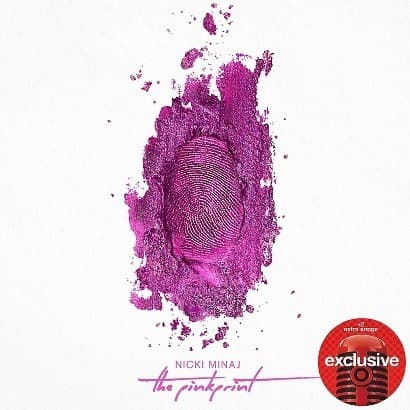
Pink Friday 2 ranks below The Pinkprint in Minaj's catalog, not because the rapping is worse but because the album never coheres into an argument. The Pinkprint had focus and a willingness to take risks; this record plays it safe by trying to be everything at once, and the result is a sprawl that satisfies in moments but exhausts over its full runtime. Minaj's technical skill is not in question, and her ability to navigate different styles remains impressive, but skill without direction does not make for a compelling album. This is a record for fans who want a broad survey of what Minaj can do, not for listeners who want to hear her push toward something new.
The commercial success is real: Pink Friday 2 debuted at number one, went platinum, and produced multiple charting singles. But numbers do not solve the album's fundamental problem, which is that it has no reason to exist as a sequel beyond the branding opportunity. The callbacks to Pink Friday are cosmetic, and the music itself does not build on or complicate the debut in any meaningful way. What this album does is restate Minaj's range and remind the industry of her presence, and for some listeners that will be enough. For others, it will sound like a victory lap that forgot to define the race.
If you are new to Minaj, start with The Pinkprint or the original Pink Friday, both of which make stronger cases for her artistry. If you are a fan, the singles are worth hearing: "Super Freaky Girl," "FTCU," and "Last Time I Saw You" capture the album's highs without the bloat. Skip "Cowgirl," "Beep Beep," and "Pink Birthday," which are pure filler. For a more focused take on Minaj balancing pop and rap, The Pinkprint remains the stronger record. For a sequel that actually rethinks its predecessor, look elsewhere. Pink Friday 2 is a competent but overlong reminder of what Nicki Minaj has already proven she can do, and it makes no argument for why she needed to prove it again.
Track by track
Track Listing
Just the Memories
SolidThe album closer on the standard edition attempts an ethereal retrospective, with Minaj reflecting on her childhood struggles and career trajectory over a Beenie Man sample. The production floats, and Minaj's delivery is measured, but the track feels more like an outro than a fully realized statement. It works as a bookend to the opening tracks' grief themes, but the distance between them is too great for the framing to hold weight.
Big Difference
SolidMinaj flexes over FnZ and Keanu Beats production, boasting about her influence and legacy in the industry. The bars are competent, the flow is confident, but the content is overfamiliar. This is Minaj reminding listeners of her stature without offering new evidence or a fresh angle. It hits its marks without landing anything memorable.
Red Ruby da Sleeze
StandoutOriginally a promotional single, this street record samples Lumidee and finds Minaj in aggressive mode, delivering hard bars about her dominance. The production from Go Grizzly and Cheeze Beatz is sharp, and Minaj's delivery matches the energy. It is one of the album's more focused moments, a track that knows what it wants to be and executes without overthinking. The music video shot in Trinidad reinforced its Caribbean edge.
My Life
SolidBuilt on a Blondie "Heart of Glass" sample, this track aims for introspection but feels underdeveloped. Minaj raps about self-reflection and personal struggles, but the verses do not dig deep enough to justify the moody production. The sample does most of the work, and the track coasts on its familiarity rather than building something new from the interpolation.
RNB
SolidMinaj reunites with Lil Wayne and teams with singer Tate Kobang for this R&B-influenced cut. The song is competent, with a smooth chorus and verses that do not overstay their welcome. Wayne's appearance is fine but not essential, and the track fits the album's variety without standing out as a highlight. It functions as a palette cleanser between harder material, nothing more.
Fallin 4 U
SolidATL Jacob and DB! build a melodic trap beat, and Minaj delivers a catchy chorus about romantic attraction. The track is pleasant but slight, with verses that do not add much beyond the hook. It is the kind of cut that works in the background but does not demand attention, and the album's length ensures it gets lost in the middle stretch.
Last Time I Saw You
StandoutOne of the album's stronger singles, this guitar-driven track finds Minaj in reflective mode, rapping about a past relationship with more specificity than most of the record's introspective material. The production is clean, the melody sticks, and Minaj's performance has enough personality to carry the song. It earned its single status and remains one of the more replayable cuts on the album.
Everybody
SolidFeaturing Lil Uzi Vert and sampling Junior Senior's "Move Your Feet," this pop-leaning track aims for a party vibe. The beat is bright, the hook is catchy, and Uzi's verse is serviceable. But the song feels obligatory, a checkbox on the list of album modes Minaj needed to cover. It works as a single but does not add anything the album required, and the sample does the heavy lifting.
Super Freaky Girl
StandoutThe album's biggest commercial hit, this Rick James flip became Minaj's first solo number-one on the Hot 100. The production from Dr. Luke and team is as polished as expected, and the song works precisely because it does not overcomplicate the sample. Minaj delivers a fun, confident performance, and the track succeeds as pure pop-rap without pretending to be more. It is the album's most replayable moment, even if it required zero originality to get there.
Bahm Bahm
WeakA brief, forgettable track that comes and goes without making an impression. Tate Kobang and Jess Carp provide adequate production, but Minaj's verses do not land anything worth remembering. Pure filler.
Frequently Asked Questions
Is Pink Friday 2 better than the original Pink Friday?
What are the best songs on Pink Friday 2?
Why is Pink Friday 2 so long?
How does Pink Friday 2 compare to The Pinkprint?
Styles