Scorecard: 8.1/10 · Great
How we score- Writing(25%)
- 8.5
Moves between vivid street vignettes and interior reflection with ease, from the specificity of Germany 86's memory to oHio's paranoia, never wasting a bar.
- Production(25%)
- 8.5
TaeBeast, Cardo and The Alchemist build a sound that pulls from G-funk, Detroit grit and Philly soul without copying any of them, though the range occasionally tests the album's cohesion.
- Delivery(15%)
- 8.0
Q shifts cadence and tone across moods—loose and conversational on Blueslides, tense and clipped on Cooties—without losing the thread of his voice.
- Cohesion(15%)
- 7.5
Eighteen tracks with real range in tempo and subject, held together by tone and sequencing until the back half sags slightly under its own length.
- Originality(10%)
- 7.5
Synthesizes West Coast tradition with modern textures in a way that sounds like Q's own lane, not a revival or a trend play.
- Replay value(10%)
- 8.0
The hooks and the beats reward repeat listens; projected to age well as the production choices settle in and the writing reveals more layers.
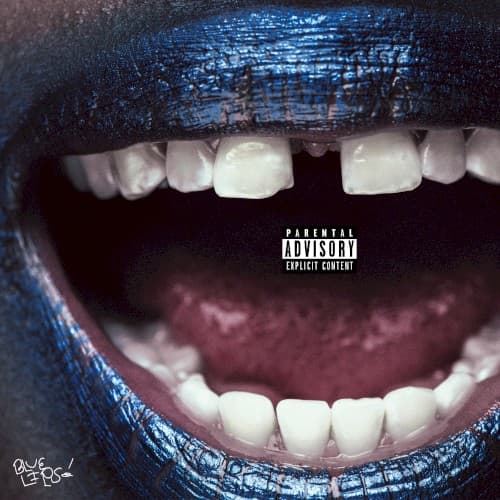
ScHoolboy Q Blue Lips — Five Years to Say What Mattered
Blue Lips opens with Funny Guy, Q rapping over a skeletal beat about the distance between who he is and who people think he is, and the thesis arrives in that gap. After five years away from albums, he came back with eighteen tracks that do not sound like an artist trying to catch up to the moment or reclaim a lane. They sound like someone who used the time to figure out what he still had to say and how to say it without chasing anyone. The stakes are personal: whether Q, at this point in his career, can make an album that matters as music and not as a comeback event.
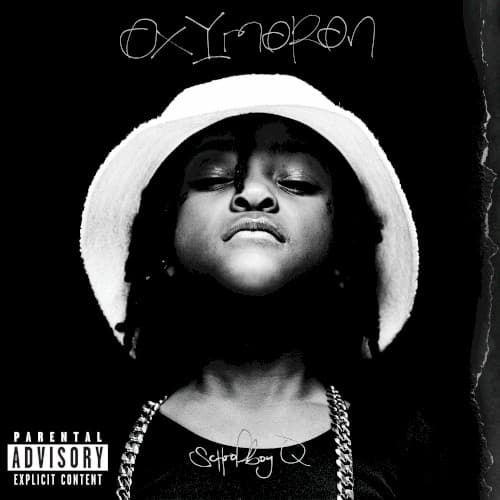
The answer is that Blue Lips is his best album, the one where the writing, the production and the sequencing all pull in the same direction. It is not a refinement of Oxymoron's gangsta theatrics or a rejection of Crash Talk's commercial reach. It is something else: a record about survival and distance, built on West Coast sounds that feel both classic and current, with enough mood and enough ideas to justify its length almost all the way through. The album debuted at number thirteen on the Billboard 200, well below his previous peaks, but the commercial cooling freed him to make the record he wanted instead of the one the market expected. Critics called it his return to form; more accurately, it is the first time the form fit what he was trying to do.
The Beats Q Earned
The production is why the album works. TaeBeast appears on twelve of eighteen tracks, Mario Luciano and Wool on six each, and together they build a sound that pulls from G-funk's melodic basslines, Detroit's percussive clatter and Philly soul's warmth without imitating any of them directly. Blueslides rides a trumpet loop and a low-end thump that nods to the West Coast without sounding retro; Lost Times, produced by The Alchemist with Fu and Julian Santos, strips the beat down to a distant piano and a muted thump that lets Jozzy's hook breathe. The range is wide—Cooties is twitchy and claustrophobic, oHio (with Cardo and Johnny Juliano) stretches out over nearly five minutes of layered keys and live bass—but the album never sounds scattered because the sequencing groups the moods together and the mixing, handled primarily by Vic Luevanos and Julian Santos, keeps the low end consistent.
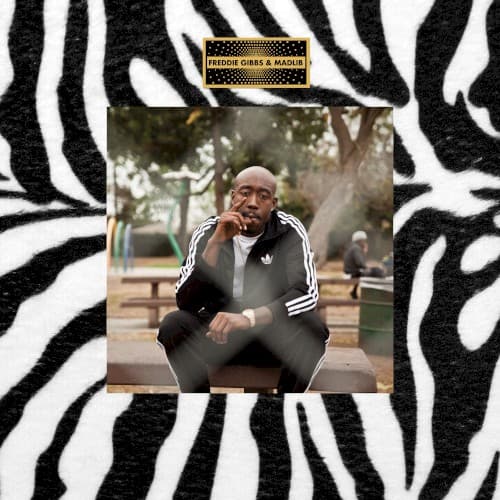
Q's writing has sharpened. He has always been a good rapper; here he is a deliberate one, choosing what to say and how much to say it. Germany 86' samples Pat Johnson's "Love Brought You Here" and uses it to frame a memory of his father, specific enough to land without overexplaining. oHio, with Freddie Gibbs, is about paranoia and success happening at the same time, the verses full of concrete images rather than general statements. THank god 4 me, produced by Kal Banx, J.LBS and Fu, is Q reflecting on survival with the kind of clarity that only comes from actual distance. The writing is not flashy; it is tight and purposeful, built for the beats rather than against them.
Delivery-wise, Q moves between tones and cadences without losing his voice. On Pop, with Rico Nasty, he is loose and conversational; on Cooties he is clipped and tense, every syllable landing on the beat's pockets. The guest verses are chosen well: Ab-Soul on Foux matches the energy, Freddie Gibbs on oHio brings weight, AzChike on Movie fits the harder edge of the first half. Devin Malik appears on Love Birds and Back n Love, both of which lean into melody more than Q typically does, and the choice works because Q does not try to sing his way through them. He stays in his range and lets the hooks do the lifting.
The weakness is that eighteen tracks is too many. The back half, from Nunu through Smile, has strong individual moments—Lost Times is one of the best songs on the album, Time killers has real atmosphere—but the pacing sags. Pig feet, with Childish Major, feels like a good idea that needed another pass. Smile is a minute-long outro that does not quite earn its place. If the album had ended at Lost Times or cut three tracks from the second half, it would have been tighter. As it stands, the length works against the focus the first twelve tracks establish.
The Sequence That Holds
The album's real achievement is the sequencing. Blue Lips is not front-loaded; it builds. The first stretch moves from introspection to energy, establishing opposing poles before showing the range between them. The opening run leads into a harder-hitting middle section, and the longest and most layered song arrives at the midpoint as a shift in scale that resets the pace.
The second half starts strong with two tracks over four minutes, both doing real work with structure and melody. Then the pacing wobbles. The next few songs range from short and sharp to atmospheric to gorgeous, but the stretch leading to the closer feels less certain about what it is building toward. The album peaks around the midpoint and again in the back half; the songs in between and after are solid but not essential. If Q had been more ruthless about what stayed and what got cut, the album would have landed harder. As it is, the sequence works well enough that the sag is noticeable but not fatal.
The Album He Had to Make
Blue Lips is ScHoolboy Q's best album because it is the first one where he sounds like he made exactly the record he meant to make, without compromise or drift. It ranks above Oxymoron, which was a great debut but still figuring out its identity, and well above Crash Talk, which chased commercial sounds that did not fit. The writing is sharper, the production is more cohesive, and the sequencing does real work holding the moods together. It is not perfect—the back half could lose three or four tracks without losing anything important—but the highs are higher and the lows are less distracting than on any of his previous albums.
This is for fans who stayed through the quiet years and for listeners who wrote him off after Crash Talk. It is also for anyone interested in how West Coast production has evolved in the 2020s, because TaeBeast and his collaborators are building something that sounds like its own lane rather than a throwback or a trend. If you are new to Q, start with Blueslides, oHio and Lost Times. If those three work, the rest of the album will make sense.
From here, go back to Oxymoron to hear where he started, or forward to whatever comes next, because Blue Lips sounds like the beginning of something rather than a return to form. The album ends on Smile, a fragment that does not quite resolve, and that feels right. Q earned the space to leave things open.
Track Listing
Funny Guy
▲Q opens the album rapping about the gap between perception and reality, his voice relaxed over a minimal beat from J. Mo, J.LBS and TaeBeast. The production is skeletal—drums, bass, almost nothing else—and Q uses the space to set the tone: introspective, unbothered, not trying to prove anything. It is a strong opener because it signals that this will not be Oxymoron part two.
Pop
▲The beat, handled by six producers including Beat Butcha and Kal Banx, is layered and twitchy, all high-end percussion and stuttering hi-hats. Rico Nasty's appearance fits the energy; her delivery is aggressive and playful at once, and Q matches her without trying to outshout her. The song is about excess and success, and the production's chaos mirrors the subject. It works as a statement of intent: Q is not playing it safe.
THank god 4 me
▲Kal Banx, J.LBS and Fu build a beat with a rolling bassline and layered keys, and Q reflects on survival with the kind of clarity that only comes from real distance. The hook is simple and effective, the verses specific without overexplaining. It is one of the sharpest songs on the album, no wasted bars.
Blueslides
▲The trumpet loop, courtesy of Marcus Paul, gives the beat a West Coast warmth, and Q's delivery is loose and conversational. The song is about comfort and routine, the small pleasures of making it through, and the production serves the mood without overselling it. Lauren Santi's additional vocals add texture in the background. It is a highlight, the kind of song that rewards repeated listens because the writing is specific and the beat is simple enough to let the details land.
Yeern 101
▲The album's lead single, produced by Cardo and Johnny Juliano among others, is the hardest-hitting song in the first half. The beat is percussive and relentless, and Q's flow is clipped and precise, every syllable landing on the beat's pockets. It is the most traditional banger on the album, and it works because Q does not try to do too much with it. Short, sharp, effective.
Love Birds
▲Devin Malik and Lance Skiiiwalker handle the vocals, and the song leans into melody more than most of Q's catalog. The production, from Devin Malik and Yoel among others, is warm and layered, with live instrumentation giving it a soul-rap feel. Q does not try to sing his way through it; he stays in his range and lets the guests handle the hooks. It is a detour that works because it does not overstay its welcome.
Movie
●AzChike's appearance fits the energy, and the beat from LowTheGreat and TaeBeast is stripped-down and aggressive. The song is under two minutes, all tension and no release, and that brevity is the point. It hits hard and gets out before it can wear out its welcome.
Cooties
▲The beat, from Uzimaki and TaeBeast among others, is claustrophobic and twitchy, all staccato drums and muted bass. Q's delivery is tense, every line clipped short, and the song is about paranoia and mistrust without spelling it out. The production choices—live bass from Jordan Brooks, tight mixing from Julian Santos—serve the mood. It is one of the best songs on the album, the kind of track that makes you pay attention.
oHio
▲The longest song on the album, nearly five minutes, with Freddie Gibbs bringing weight to the second verse. The beat, built by TaeBeast, Cardo and others, is layered and patient, with live instrumentation from Jordan Brooks and enough space for both rappers to work. Q's verse is about success and paranoia happening at the same time, full of specific images rather than general statements. Gibbs matches the tone and adds his own edge. The song is the album's centerpiece, the moment where the scale expands and the stakes feel real. Childish Major's additional vocals add texture without crowding the verses.
Foux
▲Ab-Soul's appearance is the best guest verse on the album, matching Q's energy and adding his own density to the writing. The beat from TaeBeast, Mario Luciano and Wool is smooth and mid-tempo, giving both rappers room to work. The song is over four minutes, longer than most tracks in the first half, and it earns the length with verses that do real work. It is a strong start to the back half, signaling that the album is not done making moves.
First
▲Produced by Cardo, Johnny Juliano and others, the song builds on a melodic loop and a patient tempo. Q reflects on firsts—first money, first loss, first realization that success does not solve everything—and the writing is specific enough to avoid cliché. The production serves the introspection without overwhelming it. It is a solid entry in the back half, one of the tracks that justifies the album's length.
Nunu
●Childish Major, DJ Khalil and Devin Malik handle production, and the beat is stripped-down and percussive. The song is short, under three minutes, and Q uses it to reflect on family and loss without overexplaining. It works because it does not try to be more than it is.
Back n Love
▲Devin Malik returns, and the song leans into atmosphere over aggression. The production from TaeBeast and WillGell is warm and layered, with enough space for Q to work at a slower pace. The writing is about reconnection—with a person, with a place, with a version of himself he thought he lost—and the mood lands. It is one of the stronger tracks in the back half.
Lost Times
▲The Alchemist's production, with Fu and Julian Santos, is the sparsest on the album: a distant piano, muted drums, almost nothing else. Jozzy's vocals anchor the hook, and Q's verse is about regret and survival, the kind of reflection that only works when the beat gets out of the way. It is one of the best songs on Blue Lips, the moment where everything—writing, production, performance—lines up. The song could have closed the album and it would have been a stronger ending.
Germany 86’
▲The song samples Pat Johnson's "Love Brought You Here" and uses it to frame a memory of Q's father, specific without overdoing the sentiment. The production from TaeBeast, Sam Barsh and others keeps the sample at the center and builds around it. It is short, just over two minutes, and that brevity keeps it from tipping into melodrama.
Time killers
●Produced by J.LBS and Julian Santos, the song is atmospheric and patient, with a guitar loop from Jairus Mozee giving it a melancholy edge. Q reflects on time and how it gets spent, and the writing is solid if not as sharp as the album's best moments. It works as a mood piece.
Pig feet
▼Childish Major returns for the second verse, and the production from TaeBeast, Kal Banx and others is busy—layered percussion, multiple producers, a lot happening at once. The song feels like a good idea that needed another pass. The energy is there but the execution is uneven, and it stands out as one of the weaker tracks in the back half.
Smile
●A minute-long outro with production from Devin Malik and Frollen Music Library. Q reflects briefly on survival and moving forward, but the song feels like a fragment rather than a resolution. It does not quite earn its place as the closer.