The scorecard
6.4/10 · Mixed
- Writing25%
- 6.5
- Production25%
- 6.5
- Delivery15%
- 7.0
- Cohesion15%
- 6.0
- Originality10%
- 5.5
- Replay value10%
- 6.5
The sharpest writing aims at the record business on Record Company Pimpin', but the hustle and club songs repeat stock boasts and the biggest single leans on old-school name-checks.
Dr. Dre's opener, Battlecat's 24 Mo' Hours and One Eye's club tracks sound like Los Angeles, while the Chucky Thompson and Puffy Combs tracks borrow a New York sheen that doesn't fit Cube.
Cube's clipped, heavy cadence is intact throughout and Krayzie Bone offers a useful melodic contrast, though the posse cut and some cameos add little.
Five inserts, a tacked-on instrumental and a mid-album plateau of glossy tracks push a twelve-song record to nearly an hour.
Against his own early records and Dre-era peers it breaks no ground, recycling Bad Boy-style sample flips and a party-and-profit mood.
The West Coast tracks and the late-album sample pair hold up on repeat; the glossy middle and the skits do not.
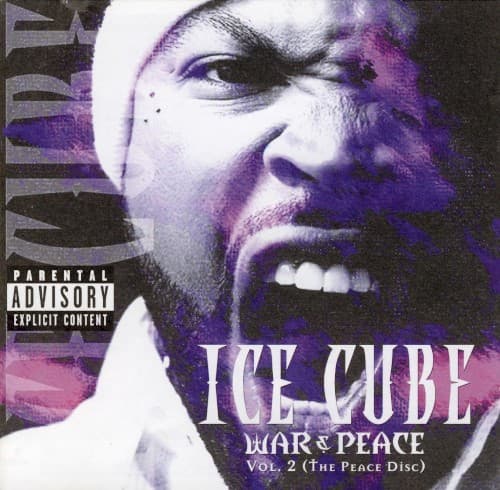
Ice Cube War & Peace, Vol. 2: The Peace Disc — A West Coast Voice in a New York Suit
The Peace Disc is Ice Cube trying to sell calm to an audience that came for the shouting, and the best thing about it is how often the voice survives the sales pitch. Cube's delivery here is still among the sturdiest in West Coast rap: a clipped, barrel-chested bark that makes a budget lecture or a club chant sound like an accusation. The problem is what surrounds it. Roughly half the production comes from East Coast hands, so a Los Angeles rapper spends much of the album working over a polished, New York-flavored gloss that never quite fits him.
That is the thesis: this is a Cube record that earns its personality and borrows its sound. The Los Angeles credentials are real where they appear. [Dr. Dre](/artists/dr-dre) produces the opener and appears on it alongside MC Ren, Battlecat and One Eye supply the low-end grooves, and Mack 10 turns up as familiar company. But the Chucky Thompson tracks and the Puffy Combs track reach for a smooth, sample-driven shine that was the commercial currency of the moment, and Cube has nothing to push against on them. Where [AmeriKKKa's Most Wanted](/albums/ice-cube/amerikkkas-most-wanted/review) ran on tension and grievance, this record runs on a mood of getting paid, and a mood is thinner than a grievance.
The commercial result was solid: a number three debut with 185,000 first-week copies, a gold plaque, and a UK number two for You Can Do It. It was also his last album for Priority until 2006, and it plays like a man closing out a contract with a record the label could market. It is a good rap album and a minor [Ice Cube](/artists/ice-cube) album, a notch above the War Disc that preceded it and well below the run that made his name.
A Hustler's Ledger, Two Regional Accents
Cube's writing on The Peace Disc is about money, and it is at its best when the money is attached to an adversary. The sharpest material points at the record business: a hustler's-eye view of contracts, middlemen and the people who skim, delivered in the flat, bookkeeping tone Cube uses when he is angriest. That is a narrower target than the police and the street that fueled his early work, and the writing is correspondingly smaller.
The street-hustle songs repeat a familiar ledger of bragging and survival without adding a new image, and the club material leans on call-and-response rather than craft. The old-school name-checking on the biggest single works as a party device, but it is nostalgia assembled from other people's records, not writing.
The production splits the album into two accents.
The West Coast pieces are the strongest.
The Dr. Dre-produced opener reworks a Dre song of his own, Battlecat gives 24 Mo' Hours a rolling, low-slung groove in the late G-funk manner, and One Eye, who produced the biggest single and several others, favors a stripped, clubby thump that suits Cube's voice and leaves room for Mack 10. Those tracks sound like Los Angeles in 2000, when the bounce had hardened and the synth whine of the early 1990s was long gone.
Against them, the Chucky Thompson, Rich Nice and Loren Hill tracks, plus the Puffy Combs and Mario Winans production, reach for the glossy, soul-sampled sheen of New York radio rap of the period. A Glenn Jones sample on one, Cameo and the Notorious B.I.G. on another: the choices are professional and borrowed. Cube sounds capable on them but never threatened, and they could be anyone's album.
Delivery is the album's constant. Cube's voice has lost none of its weight; his phrasing is short, his stresses land on the beat like a gavel, and he can make a plain verse feel argued.
The guests are uneven. Krayzie Bone brings a melodic flow that contrasts well with Cube's bark, MC Ren is comfortable company, and Chris Rock adds a comic cameo, but the posse cut with Jayo Felony, Gangsta and Squeak Ru leans on the number of voices rather than a distinct idea.
The concrete weaknesses are the stretches where the album forgets its title. It is billed as the peace disc, but the peace is mostly party and profit rather than an idea, and the five short inserts and a tacked-on instrumental add minutes without adding content.
The result is a record with a strong voice, a few excellent beats, and not enough to say.
Strong Opening, Long Plateau, Better Finish
The sequencing front-loads its best idea. Hello opens with Dre, MC Ren and the kind of weight that tells a listener this is a West Coast record, and for a stretch it is true. Then the album slides into a run built by the New York-leaning producers, with a skit between songs and another after, and the energy settles into mid-tempo professionalism. Nothing in that stretch is bad. It is a long, even plateau where the hooks are smooth and the verses are competent and almost no moment demands a replay.
The album recovers early in its second half when Battlecat and One Eye bring the bounce back, and Mack 10 and Ms. Toi join Cube for the club single that made the record a radio presence. Grouping the party songs keeps the energy up, but the next full track, a Puffy-produced one, resets the mood to glossy, and the whiplash between regional sounds is the album's main pacing problem. The five inserts are short, which is the best that can be said of them; they break momentum more than they add color, and the sketches about pimping and the CEO are broad enough that a second listen will not reward the patience they ask for.
The finish is better than the middle. The late-album run returns to samples from Public Enemy and EPMD, which gives Cube something to push against, and Waitin' ta Hate has the tightest sense of purpose on the record. The last two slots are weaker: a closer that leans on its provocative title more than its content, and a bare instrumental of the hit that belonged on a single, not an album. At eighteen listed tracks and almost exactly an hour of material, the record is longer than its ideas justify. Remove the inserts and the instrumental and a crisp twelve-song album is hiding inside it.
A Minor Cube Record With a Major Voice
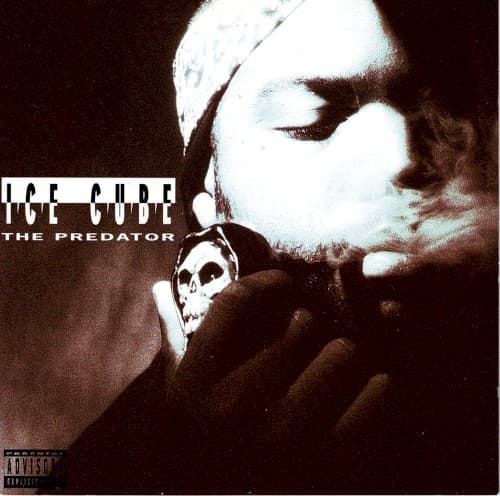
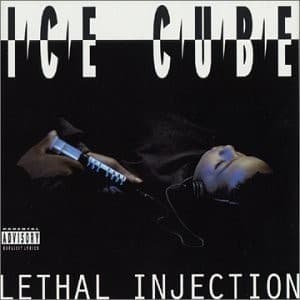
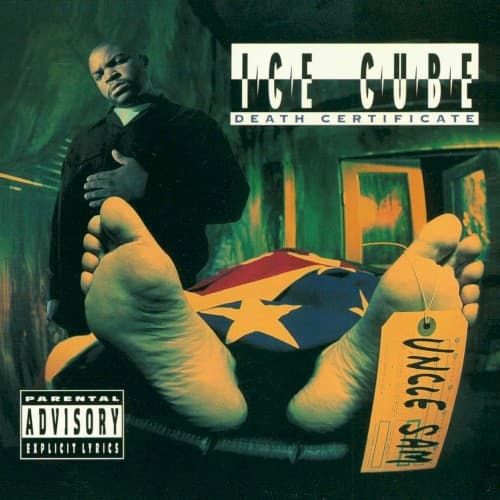
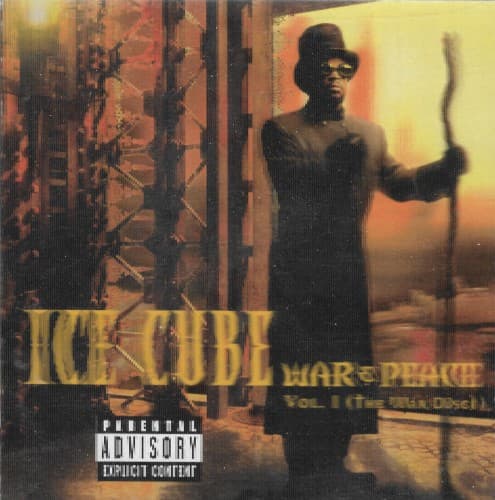
The Peace Disc sits in the middle of Cube's catalog. It ranks well below the three early records, [AmeriKKKa's Most Wanted](/albums/ice-cube/amerikkkas-most-wanted/review), [Death Certificate](/albums/ice-cube/death-certificate/review) and [The Predator](/albums/ice-cube/the-predator/review), because those albums had an argument and a sound built to carry it, while this one has a voice and a budget. It lands a little ahead of [War & Peace, Vol. 1: The War Disc](/albums/ice-cube/war-peace-vol-1-the-war-disc/review) and Lethal Injection, both at 6.3, because the voice is more at ease, the Los Angeles tracks are better and the dead stretches are shorter. The earlier volume promised aggression and ran out of ideas; this one promises relaxation and mostly delivers it.
Who should start here: listeners who like Cube's late-1990s and early-2000s mode, the hustler-and-businessman Cube, and want a party-leaning, radio-ready record with a handful of strong West Coast beats. Anyone who comes for the fury of his early work should skip it, and anyone wanting a full G-funk record in the Dre mold will find only slices.
It has aged unevenly. The Los Angeles tracks still sound like their moment and have outlasted the glossy ones, which now read as a period style in a mismatched accent. The main single survives mostly through party mood and its old-school references.
Start with Hello for Dre and MC Ren, 24 Mo' Hours for Battlecat's groove and Cube's voice at full weight, and Waitin' ta Hate for its sample-driven sense of purpose. Then go to The Predator, which shows how Cube sounds when the West Coast sound is the whole record, and Death Certificate, which shows what his anger looks like when it has a plan. The best thing here is Cube's voice landing on a Battlecat beat; the rest is a pleasant, professional record from a rapper who had already made his best ones.
Track by track
Track Listing
Hello
StandoutDr. Dre produces and appears with MC Ren, and the track reworks a Dre song of his own, so the album opens with its strongest West Coast credential. Cube sounds commanding, the beat is spare and menacing, and the guest slots feel like a reunion more than a favor. It sets a standard the Chucky Thompson and Puffy Combs tracks never meet, and it makes the album's regional split audible from the first minutes. It is the best argument for Cube working with Los Angeles producers throughout.
Pimp Homeo (Insert)
WeakA thirty-five-second skit that sets up the hustler theme and does little else. Filler.
You Ain't Gotta Lie (Ta Kick It)
SolidChris Rock joins Cube over a Chucky Thompson, Rich Nice and Loren Hill production that is smooth and radio-friendly. It is likeable and light, but the comic cameo is the main point of difference and the beat could belong to any East Coast artist of the period.
The Gutter Shit
SolidA posse cut with Jayo Felony, Gangsta and Squeak Ru, co-produced by T-Bone and Cube himself. It is the grittiest track in the first third and keeps Cube in his comfort zone, but it leans on volume of voices and the guests blur together.
Supreme Hustle
SolidThe Chucky Thompson trio returns with a polished backdrop for a hustle manifesto. Cube delivers it with conviction, but it repeats ground the album has already covered and adds no new image.
Mental Warfare (Insert)
WeakA one-minute interlude that interrupts the momentum without adding color. Skippable.
24 Mo' Hours
StandoutBattlecat supplies a rolling, low-slung groove in the late G-funk tradition, and it is the cleanest example of Cube's voice meeting a West Coast beat built for it. His stresses land hard and the track keeps things short at 3:27, so nothing overstays. There is no guest and no gimmick, and the song benefits from the restraint. Of the tracks without featured artists, it is the one that most resembles how the best of Cube's early records worked: voice first, beat in service.
Until We Rich
StandoutKrayzie Bone brings a melodic flow that contrasts nicely with Cube's bark, over a soul sample from Glenn Jones. It is a pleasant, aspirational track and a good example of the New York-leaning gloss working better than usual, though it still sounds like a guest's song as much as Cube's.
You Can Do It
StandoutOne Eye builds the album's biggest single, with Mack 10 and Ms. Toi joining Cube and a pile of old-school references in the sample list, from Sugarhill Gang and Kurtis Blow to Afrika Bambaataa and Luke. As a club record it works, with a stripped, bouncing beat and a chant-ready hook, and it was a UK number two. As writing it is thin: the old-school name-checks are borrowed warmth, not new ideas. It is the album's most effective moment of pure function and the one that most clearly shows it wants to be a party record.
Mackin' & Driving (Insert)
SolidA short skit built on a sample of Cube's own Pushin' Weight. A quick wink, not a song.
Gotta Be Insanity
SolidPuffy Combs and Mario Winans produce it with samples from Cameo and the Notorious B.I.G., and it is the clearest case of borrowed sound on the record. The beat is clean and radio-ready, Cube is competent on it, but the track reads as a New York formula applied to a Los Angeles voice. It never builds a distinct identity and sits as the least necessary of the major songs.
Roll All Day
StandoutOne Eye returns with a groove-oriented track whose title points to cruising and easy riding. It is a modest, steady song that keeps the bounce going and gives the back half some West Coast continuity.
Can You Bounce?
SolidProduced by Richard Younglord Frierson, this is a club-minded track that does what its title asks. It is functional and brief on ideas, and it is easy to forget once it ends.
Dinner With the CEO (Insert)
SolidA forty-nine-second sketch that sets up the record-business theme of the next song. Broad and disposable.
Record Company Pimpin'
StandoutBud'da produces the song with a Faze-O sample and an EPMD reference, and it gives Cube his best target: the record business. His bookkeeping tone is perfectly suited to a complaint about middlemen and contracts, and the writing is more specific than anywhere else on the album. At 4:46 it is the longest track, and it earns the space because the grievance is clear and the beat gives him room. This is the song that shows what the album could have been if it had stayed angry.
Waitin' ta Hate
StandoutOne Eye and DJ Joe Rodriguez build it from Public Enemy and EPMD samples, which gives Cube something to push against after a long glossy stretch. The beat is harder, the delivery is tighter, and the track has the strongest sense of purpose in the late-album run. It brings back some of the pressure that the first half lacks and is the best argument for the album's second half.
Nigga of the Century
SolidCharly 'Suga Bear' Charles produces a late-album song whose provocative title promises more argument than the track delivers. It is competent and fits the mood, but it leans on its title for weight and does not rank among the album's real highlights.
You Can Do It (instrumental)
WeakA bare instrumental of the hit, closing the album at 4:20. It is filler, useful for DJs and nothing else, and it leaves the record on an anticlimax.