The scorecard
6.0/10 · Mixed
- Writing25%
- 5.5
- Production25%
- 7.5
- Delivery15%
- 5.5
- Cohesion15%
- 6.0
- Originality10%
- 4.5
- Replay value10%
- 5.5
Most tracks settle for vague emotional gestures stretched thin across eighteen songs, though "King" and "Preacher Man" land sharp observations about betrayal and legacy.
The Legendary Traxster, 88-Keys and Sheffmade build a cohesive industrial-soul hybrid with live bass contributions from John Scott, clearly above the genre's good records despite borrowed prestige in the Cortex flip on "Circles" and Mad Lads chop on "Beauty and the Beast."
West mostly sings instead of rapping, re-recording AI vocals with his own voice for the final release, but the performance often sounds exhausted rather than vulnerable, with Travis Scott's verse on "Father" showing more clarity and energy.
Eighteen tracks in forty-two minutes means most songs end at the two-minute mark, but the soul-based production techniques in the first stretch and a few strong individual moments provide enough connective tissue to avoid complete fragmentation.
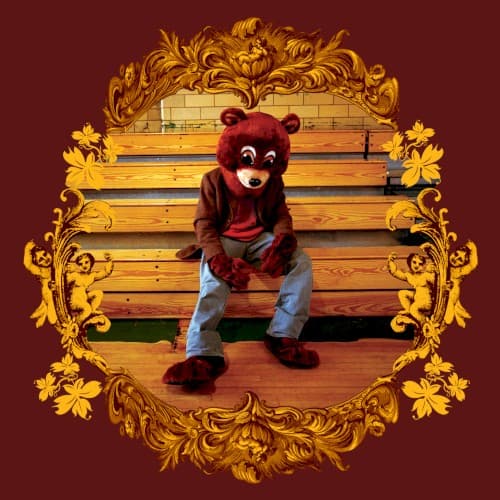
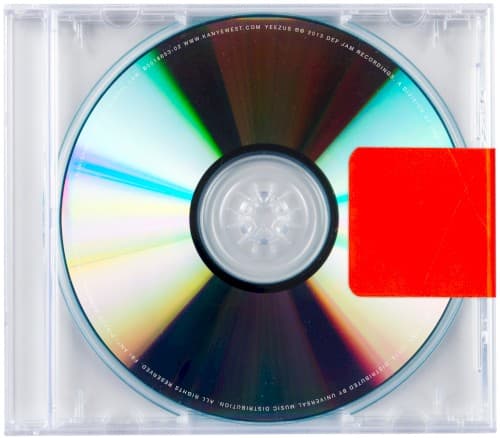
The chipmunk soul and industrial drums directly recall The College Dropout and Yeezus without adding new ideas, making this a return to old sounds rather than a new statement with more misses than hits.
The short song lengths and lack of development mean most tracks function better as moments than as compositions, though "Father," "All the Love" and "Mama's Favorite" justify repeated listens.
Kanye West Bully — The Retreat That Sounds Like Nostalgia
Bully arrives after a chaotic production cycle that included AI-generated vocals West later regretted, multiple delays, antisemitic remarks, and an abandoned album with Dave Blunts as its songwriter. The final version, released through YZY and Gamma in March 2026, strips out most of the deepfakes and delivers eighteen tracks in forty-two minutes, with production mainly handled by West, André Troutman, the Legendary Traxster, Nkenge 1x, and 88-Keys. The album leans on chipmunk soul samples and industrial drums that recall The College Dropout and Yeezus, with West mostly singing instead of rapping. The question is whether this retreat into old formulas yields new insight or just familiar textures.
Bully is a competently built album that uses Kanye West's 2004 and 2013 production signatures to frame lyrics about grief, isolation and public fallout, but the songwriting rarely earns the runtime and the whole project feels like a sketch of ideas rather than a finished argument. The production is the draw here, particularly the live instrumentation from Yojiro Noda's session musicians on five tracks and the synth-and-sample construction from the Legendary Traxster and 88-Keys. The writing, however, is uneven.
Some tracks deliver specific observations about betrayal and public perception, but most settle for vague emotional gestures that don't develop across their two-minute lengths. The sequencing offers no arc, just a pile of short songs that start and stop without building momentum. For listeners who want the old Kanye sound, Bully provides it. For those who want the old Kanye ambition, it falls short.
The Samples Do the Heavy Lifting
The production on Bully is its clearest success. West, the Legendary Traxster, 88-Keys, and Sheffmade build a sound that pulls from two distinct eras: the sped-up soul of The College Dropout and the abrasive industrial drums of Yeezus. "Punch Drunk" uses a chipmunk soul beat that could have appeared on West's 2004 debut, while "Sisters and Brothers" employs fuzzy distortion and stripped-down drums that recall the metallic clang of "New Slaves." The blend works because the producers commit to it fully, with Troutman's talk box on "All the Love" and CeeLo Green's wailing chorus on "Bully" adding texture without clutter. The live instrumentation from Japanese session musicians on "Beauty and the Beast," "Bully," "Circles," "Highs and Lows," and "White Lines" gives the beats an organic warmth that distinguishes them from the sample-only tracks.
But the production also reveals the album's central problem: it is nostalgic by design. "Circles" samples Cortex's "Huit Octobre 1971," a loop already used by MF DOOM and Tyler, the Creator. "Beauty and the Beast" chops the Mad Lads' "Don't Have to Shop Around" in a way that sounds like a College Dropout B-side. "Preacher Man" flips the Moments' "To You With Love" with minimalist restraint, but the approach is familiar rather than inventive.
These are well-executed loops, mixed cleanly and sequenced thoughtfully, but they function as callbacks rather than new ideas. The Legendary Traxster and 88-Keys deserve credit for building a cohesive sonic palette across eighteen tracks, and John Scott's additional bass guitar on three songs adds depth. The problem is that the palette itself is borrowed from West's earlier work, making Bully sound like a return to form in technique but not in vision.
West's vocal performance is another issue. He mostly sings instead of rapping, re-recording the AI-generated vocals from the initial Bully V1 release with his own voice for the final version. The result is a performance that often sounds exhausted rather than vulnerable. On "Mama's Favorite," where he pays tribute to his late mother Donda, the sung delivery lacks the emotional weight of "Hey Mama" or "Family Business."
On "Father," Travis Scott's second verse brings clarity and energy that West's own melodic approach does not match. The AutoTune wobble throughout the album recalls 808s & Heartbreak, but without the stark emotional honesty that made that record compelling. West sounds tired, which may be the point, but it also means the vocal performances rarely elevate the production.
The writing is inconsistent. The opener reflects on how controversies have "changed his legacy," acknowledging that friends became "lost ones" who treated him like an orphan. The specificity works. One later track delivers a sneering, defiant tone as West criticizes those he perceives to have betrayed or extorted him.
But most tracks settle for vague gestures: one features synths, tribal drums, and a wailing melody with West performing melodically, but the lyrics offer no concrete images. Another blends a Supremes sample with a melancholic soundscape but never develops beyond mood. One track includes a reference to West's Wall Street apology, but the ten-bar verse does not expand on the idea. The result is an album where the production carries more weight than the words, and where most songs function as sketches rather than finished compositions.
Forty-Two Minutes of Starts and Stops
The sequencing on Bully is its weakest element. Eighteen tracks in forty-two minutes means most songs end around the two-minute mark, giving the album the jittery pacing of a playlist rather than a thought-through arc. The opener establishes a reflective tone, but the second track immediately shifts to rage-based production with Nine Vicious ad-libs, breaking the mood. The third song builds momentum with Travis Scott's verse, but the fourth slows things down again with gospel-inflected synths and tribal drums. There is no flow between these songs, just a series of individual moments placed next to each other.
The first stretch offers some cohesion with soul-based production techniques that recall West's early work, providing a brief emotional peak before things turn darker with fuzzy distortion. But even here, the short song lengths mean none of these tracks develop their ideas. One moment includes a snippet of dialogue between West and his mother from the documentary Jeen-Yuhs, but it arrives and ends before it can land. Another raises the question of money as "the root of all evil" and references public perception, but the track fades out before the thought completes.
The back half of the album sags. Two strong individual moments land but are surrounded by filler. One track is described in the fact sheet as a "focused, soulful composition that feels nostalgic and revitalized," but it does not justify its presence beyond filling the tracklist. Another highlights West's reflection on solitude with Troutman on background vocals, but the two-minute runtime means the idea never develops.
The penultimate track blends Spanish and English lyrics with salsa loops and a Peso Pluma interpolation, introducing a new sound this late without any setup. The closer is described as a "healing album finisher," but it sounds more like an outro than a conclusion. The sequencing makes Bully feel longer than it is because every song stops just as it starts to build.
A Retreat Into the Past Without New Ground
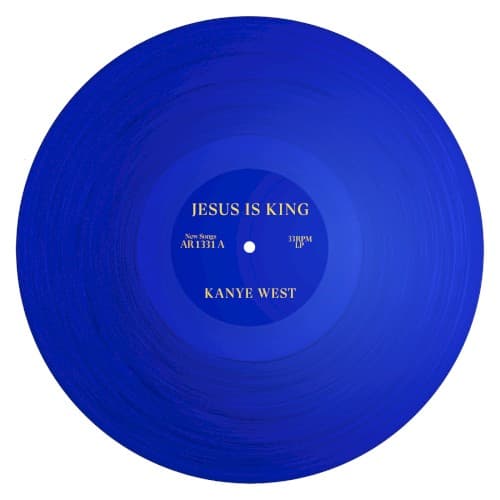
Bully ranks in the lower half of West's catalog, above the unfinished messes of Jesus Is King and Donda 2 but below the focused vision of Yeezus or the ambition of My Beautiful Dark Twisted Fantasy. The production is strong enough to justify a listen, particularly for fans of West's early soul-sampling era or the industrial drums of 2013. The Legendary Traxster, 88-Keys, Sheffmade, and the live session musicians build a cohesive sound across eighteen tracks, with standout moments on "Father," "All the Love," "Mama's Favorite," and "Preacher Man." But the songwriting does not match the production quality, and the sequencing offers no arc. Most tracks end at the two-minute mark, giving the album a sketch-like quality that never coalesces into a finished statement.
This album is for listeners who want to hear West return to the chipmunk soul and industrial production of his earlier work, and who are willing to forgive weak writing and a lack of cohesion for the sake of familiar textures. Skip it if you need West to say something specific or if you want songs that develop their ideas beyond two minutes. The AI vocal controversy is largely irrelevant to the final product, as West re-recorded most of the deepfakes with his own voice, though the vocal performance remains a weak point. Start with "Father," "Mama's Favorite," and "Preacher Man" to get the album's best moments without committing to the full forty-two minutes.
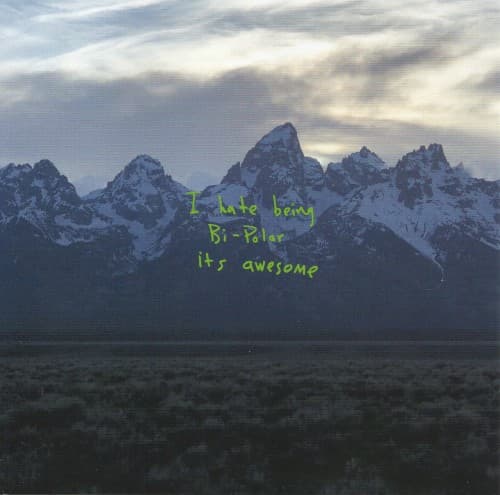
For context, listen to The College Dropout to hear the chipmunk soul done with sharper writing, or Yeezus to hear the industrial production with more focused aggression. Bully borrows from both without adding new ideas. It sits alongside ye and Donda as albums where West's production skill is evident but his songwriting and vision are not. The album has aged poorly in the months since its release, as the controversy around its creation has overshadowed the music itself, and the retreat into nostalgia feels less like a creative choice and more like a hedge. Bully is a competently built album that does not justify its own existence.
Track by track
Track Listing
KING
StandoutThe album opens with a Duke Edwards sample proclaiming West as "king," a declaration undercut by the verses that follow. West reflects on how his controversies have "changed his legacy," acknowledging that friends became "lost ones" who treated him like an orphan. The self-awareness is specific and sharp, with West trying to "face reality" while recognizing that outside hatred only gave him "more love." The production from West, the Legendary Traxster, 2 Vicious, Sheffmade, and Troutman is clean and restrained, letting the sample and the verses sit without clutter. This is one of the album's strongest opening tracks in West's catalog, setting up a reflective tone that the rest of the album does not sustain. The two-minute length is appropriate here, as the idea is stated and resolved.
THIS A MUST
SolidA rage-based track with Nine Vicious ad-libs that recalls West's Graduation era ambitions. The production from West and Sheffmade is abrasive and energetic, but the song breaks the reflective mood established by "King" without offering much substance in return. Fans noted its similarity to the unreleased "Unlock" from the Vultures 1 sessions, which suggests this is a reworked idea rather than a new one. The shift in tone is jarring and the track itself is filler.
FATHER
StandoutThe album's first standout. Church organs and a Johnnie Frierson gospel sample open the track, which blends gospel influence with hard-hitting synth bass and industrial drums. West raps about humility and leaving his old self behind, delivering one of his clearer vocal performances on the album. Travis Scott's second verse is the track's highlight, bringing a faster flow and sharper vocal tone than West manages elsewhere. Scott's shoutout to Nike and his recounting of moving from rough neighborhoods to Malibu riches adds specificity the rest of the album lacks. The production from West, Scott, Sweet, 2 Vicious, Troutman, and Sheffmade is layered without being cluttered, and the track earns its two-minute-forty-nine-second runtime.
ALL THE LOVE
SolidA gospel-inflected track with synths, tribal drums, and a wailing melody built around a stretched vocal sample of Fairuz's "Fayek Alaya." André Troutman sings through a talk box, adding texture, while West performs melodically. The production from West, Sheffmade, Quadwoofer, RaMu, Troutman, and 2 Vicious is lush and layered, with the eight-minute freestyle origins still audible in the loose structure. But the lyrics offer no concrete images, making this a mood piece that does not develop its ideas. The track was recorded as "Gas Chambers" during the abandoned Cuck sessions, and the reworking shows.
PUNCH DRUNK
SolidA chipmunk soul beat from West, Sheffmade, and Audio Jacc that could have appeared on The College Dropout. The production is clean and the sample choice is solid, but the track offers nothing beyond nostalgia. At one minute forty-eight seconds, it functions as an interlude rather than a song.
WHATEVER WORKS
SolidAnother soul-based track, this time with a chopped Cissy Houston sample. West references his Wall Street apology in a ten-bar verse, but the idea is not developed. The production from West, Sheffmade, Jambo, and Nkenge 1x is competent, but the two-minute runtime means the track arrives and leaves without making an impression. This is filler.
MAMA’S FAVORITE
StandoutA tribute to West's late mother Donda, similar in intent to "Family Business" and "Hey Mama" but weaker in execution. The track samples dialogue between West and Donda from the documentary Jeen-Yuhs, which should provide emotional weight, but the moment is brief and the sung delivery from West lacks the rawness of his earlier tributes. Nine Vicious provides additional vocals, and the production from West, McEvoy, RaMu, Nkenge 1x, 2 Vicious, and Troutman is warm and layered. This is one of the album's more affecting tracks, but it does not reach the emotional peak it aims for.
SISTERS AND BROTHERS
SolidFuzzy distortion and stripped-down drums emphasize a gloomy tone. West raps about the public thinking he is "blacking out like Akon" and forgetting his status in hip-hop, while also considering money to be "the root of all evil." The production from West, Sheffmade, Gregory, Nkenge 1x, 88-Keys, 2 Vicious, Troutman, and Durkin is dense and industrial, recalling Yeezus. The track raises interesting ideas about perception and wealth but does not develop them across its two-minute-forty-six-second runtime.
BULLY
SolidThe title track features CeeLo Green howling over a dramatic, string-packed chorus. West addresses his public controversies and personal flaws in a reflective tone, with production from West, the Legendary Traxster, 88-Keys, and Green that blends industrial drums with orchestral elements. The track samples The Simpsons character Nelson Muntz's "Ha-ha!" catchphrase, which is either a self-aware joke or a misjudgment. The production is strong, but the writing does not land with the weight the title suggests. This is a solid track that falls short of being a centerpiece.
HIGHS AND LOWS
SolidWest expresses emotional dedication to loved ones who stood by him during his controversies. The production from West, the Legendary Traxster, Nkenge 1x, RaMu, Troutman, and TK the Legend includes live instrumentation from Yojiro Noda's session musicians, giving the beat an organic warmth. But the track is one minute fifty-one seconds long and offers only vague sentiments. It functions as a moment rather than a song.
I CAN’T WAIT
SolidA Supremes sample blended with a melancholic soundscape. The production from West, RaMu, Troutman, and the Wrldfms Tony Williams is described as a "focused, soulful composition that feels nostalgic and revitalized," but the track does not develop beyond mood. The two-minute runtime means the idea never expands, making this another sketch. The deluxe edition adds Ms. Lauryn Hill, but the standard version is filler.
WHITE LINES
SolidWest reflects on the peacefulness of solitude with André Troutman on background vocals. The production, handled solely by West, is minimalist and restrained. The track includes live instrumentation from Yojiro Noda's session musicians, which adds texture. At two minutes ten seconds, the song is brief and does not justify its place in the tracklist beyond adding to the runtime.
CIRCLES
SolidA loop of Cortex's "Huit Octobre 1971," a sample already used by MF DOOM and Tyler, the Creator. The production from West, 88-Keys, and Nkenge 1x is clean, and the live instrumentation from Yojiro Noda's session musicians adds depth. The track initially featured Don Toliver vocals before West replaced them with his own several days after release. The problem is that the sample is borrowed prestige, and the track does not add anything new to the loop. At one minute thirty-one seconds, it is the album's shortest song and functions as an interlude.
PREACHER MAN
StandoutOne of the album's strongest tracks. Minimalist production from West and 88-Keys with an edited sample of the Moments' "To You With Love." West criticizes those who oppose him in a sneering, defiant tone, naming people he perceives to have betrayed or extorted him. The specificity of the grievances and the clarity of the vocal delivery make this one of the few tracks where West's writing matches his production. The three-minute runtime is earned, and the track functions as a late-album peak. This song was originally offered to Drake, who declined, and it is easy to hear why: the lyrics are too personal to West's narrative to work for another artist.
BEAUTY AND THE BEAST
SolidA downtempo track with a prominent sample of the Mad Lads' "Don't Have to Shop Around." West reflects on his status and career through the line "Fresh new tires, I'm still running / It's a few things I'm overcoming," acknowledging his fans' expectations. The production from West and 88-Keys includes live instrumentation from Yojiro Noda's session musicians, and the beat was developed during the Donda sessions according to Mike Dean. The track is well-built but does not develop its ideas across one minute forty-five seconds. It sounds like a College Dropout B-side, which is both a strength and a weakness.
DAMN
SolidStripped-down production as West sings about "enjoying the ride in front of you, while not worrying about the possibility of crashing," referencing his 2002 car accident. The production from West, Khaffaf, RaMu, Troutman, and TK the Legend is minimalist and restrained. The two-minute runtime is appropriate for the idea, but the track does not add much to the album. It is a decent moment that does not justify repeated listens.
LAST BREATH
SolidSpanish and English lyrics blended with salsa loops and a Peso Pluma interpolation of Poncho Sánchez's "Bésame Mamá." The production from West, Sheffmade, and Ty Dolla Sign introduces a new sound this late in the album without any setup, making it feel disconnected from the rest of the tracklist. The exploration of heartbreak themes popular in Mexican music is interesting in concept but underdeveloped in execution. The three-minute runtime is the album's second-longest, but the track does not earn it. This feels like a leftover from a different project.
THIS ONE HERE
SolidThe closer, initially conceived with James Blake during War sessions in 2022. West sings "I know dawn is upon us" in a way that recalls his mother's voice, then withholds his ego. The production from West, RaMu, TK the Legend, Moore, Troutman, Miller, and Toliver is warm and layered, and the track is described as a "healing album finisher." But it sounds more like an outro than a conclusion, offering no resolution to the themes raised earlier. The three-minute runtime is appropriate, but the track does not provide the sense of closure the album needs. It fades out rather than ends.