The scorecard
4.5/10 · Weak
- Writing25%
- 4.0
- Production25%
- 5.5
- Delivery15%
- 5.0
- Cohesion15%
- 3.5
- Originality10%
- 4.5
- Replay value10%
- 4.0
Lines lean on vague motivational slogans and stale pick-up hooks across multiple tracks with little specificity or wordplay that would have marked his prime.
Trackmasters deliver workable but dated beats that feel stuck between radio rock and club flash, never cohering into a signature sound.
Flow gets buried under guest vocals and glossy hooks across most of the album, with only brief flashes of the old conviction on 'Whaddup' and 'Bath Salt.'
A twelve-track album that veers from Eddie Van Halen guitar solos to Seal duets to Snoop party cuts with no throughline or earned sequencing.
The genre-crossing sounds ambitious on paper but executes as standard crossover bids for formats LL already explored better on past records.
Few tracks justify a second listen once the novelty of the guest list wears off and the thin hooks repeat.
LL Cool J Authentic — The Cost of Starting Over at Fifty
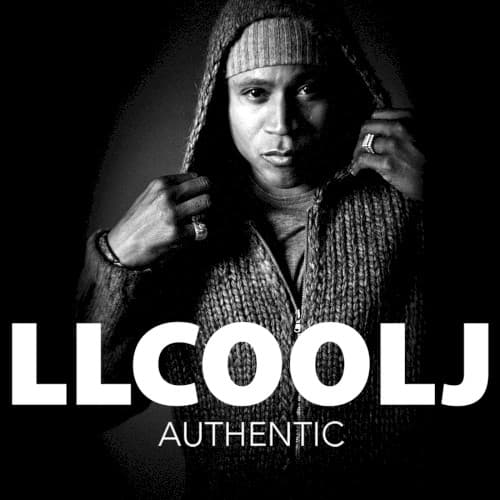
Twenty-nine years into his career, LL Cool J left Def Jam and released Authentic, an album that sounds like a man auditioning for a second act he has not yet figured out. The thesis statement arrives in the title: after decades of label politics and commercial compromise, here is the real LL, unbossed and self-directed. The problem is that the record underneath the manifesto plays like a boardroom presentation of what could work in 2013, a scattershot bid for crossover relevance that pairs him with Eddie Van Halen on guitar rock, Brad Paisley on country rap, and Seal on adult contemporary balladry. The result is not authenticity but its opposite: twelve tracks of committee thinking dressed up as creative freedom.
The album debuted at twenty-three on the Billboard 200 and sold fourteen thousand copies in its first week, a commercial failure that confirmed what the music suggests. LL sounds uncertain throughout, toggling between nostalgic boom-bap on 'Whaddup', radio rock on 'We're the Greatest', and R&B slow jams that could have been leftovers from any prior album. The guest list reads like a networking exercise, the production never settles on a lane, and the writing rarely rises above motivational cliches. What could have been a statement of independence plays instead as the work of an artist who no longer knows what he has to say or who he is saying it to.
A Showcase Looking for a Show
The production splits between two modes that never reconcile. Trackmasters handle most of the board work, delivering competent but dated boom-bap grooves on 'Bath Salt' and 'Bartender Please' that would have sounded current in 2003. The drums hit hard enough, the loops are clean, but nothing here advances the sound they built together in the late nineties. Jaylien co-produces the pop crossovers, smoothing out the beats into radio-friendly backdrops for the guest vocalists, and the contrast between the two approaches makes the album feel like two separate projects stitched together. The mix never decides whether LL is a rapper or a pop star, so it tries to split the difference and ends up sounding indecisive.
The writing is where the record collapses. LL has always been a charismatic presence more than a technically precise lyricist, but here the charm is missing and the technique does not compensate. Lines about staying hungry and defying doubters pile up across multiple tracks without ever getting specific enough to register as more than slogans. The pick-up lines on the R&B cuts sound recycled from a dozen prior slow jams, and the party raps lean on energy rather than actual wordplay. There are moments where the old LL flashes through: the verse on 'Whaddup' finds a locked-in flow over the 'Welcome to the Terrordome' sample, and 'Bath Salt' opens with enough growl to suggest he still has the instrument. But those moments are exceptions, buried under guest vocals and hooks that do the heavy lifting while LL delivers serviceable but uninspired support.
The features overwhelm the album rather than elevate it. Eddie Van Halen's guitar solos on 'Not Leaving You Tonight' and 'We're the Greatest' sound technically impressive but musically purposeless, tacked onto tracks that do not need or benefit from rock bombast. The R&B collaborations with Seal and Charlie Wilson are polished and professional but indistinguishable from the adult contemporary radio LL has chased before. Snoop Dogg phones in a verse on 'We Came to Party' that could have been written in five minutes. The only feature that adds value is Chuck D on 'Whaddup', who brings the intensity the track needs and sounds like he actually cares about the song. Elsewhere the guests feel like insurance policies, names on the tracklist that might attract audiences LL cannot reach on his own.
Twelve Tracks Without a Map
The sequencing reveals no plan beyond front-loading the singles and hoping the listener stays interested. The opening stretch suggests some promise before immediately pivoting to Eddie Van Halen guitar work and a chorus sung by Fitz and the Tantrums, a gear shift so abrupt it plays like a prank. The album never recovers from that confusion, bouncing from Charlie Wilson soul to Snoop party rap to Seal balladry with no thematic or sonic connective tissue. By the time a country crossover arrives in the middle section, the album has abandoned any pretense of cohesion.
The back half sags under the weight of forgettable R&B filler. Multiple tracks aim for romantic slow jam territory but land as generic makeout music, the kind that could soundtrack a dozen other albums from the same era. The closer tries to manufacture a triumphant statement with Eddie Van Halen guitar heroics and Travis Barker drums, but the song feels like a Hail Mary rather than an earned conclusion, a last attempt to make something stick after eleven tracks of misfires. At forty-eight minutes the album is not overly long, but it feels bloated because so few of the songs justify their existence beyond filling a slot.
Who This Record Is For and Why It Fails Them
Authentic lands as one of the weakest albums in LL Cool J's catalog, a commercial and creative misfire that mistakes genre-hopping for vision. The low sales and mixed reviews were deserved: this is an album with no center, no argument, and no memorable songs. It ranks below his classic run and below the flawed but focused comeback attempts he made in the 2000s. Where records like Mama Said Knock You Out or Mr. Smith knew exactly what they were selling, Authentic sounds like a pitch meeting that never became a finished idea.
The album is for no one in particular, which is its fatal flaw. Hip-hop heads will skip past the R&B filler and the rock crossovers to find maybe three usable tracks. Pop radio never picked up the singles. Rock fans have no reason to care about Eddie Van Halen appearing on a rapper's album twenty years after that move stopped being novel. Even LL's core audience, the fans who followed him through weaker late-period albums, were not interested enough to buy it. If forced to recommend starting points, 'Whaddup' has energy and 'Bath Salt' has some of the old bite, but neither track is essential and both sound better in theory than in execution.
Skip this entirely unless cataloging the full arc of a legend in decline. For the actual LL Cool J experience, go back to Radio or Mama Said Knock You Out and remember what made him matter. For late-period LL attempting something interesting, even Exit 13 had sharper moments. Authentic is the sound of an artist who left his label to gain creative freedom and discovered he had nothing new to say with it.
Track by track
Track Listing
Bath Salt
StandoutThe opener delivers the hardest beat on the album, a Trackmasters loop with enough knock to remind listeners that LL can still command a track when he wants to. The verse flows with some of the old authority, and the hook has enough grit to feel like actual hip-hop rather than crossover bait. It is the only moment on the record that sounds like it could have belonged on an earlier, better LL album, which makes the sharp left turn that follows even more frustrating. The track works as an intro but promises a consistency the rest of the album never delivers.
Not Leaving You Tonight
WeakEddie Van Halen's guitar solo is technically impressive and musically pointless, a shred showcase stapled onto a mid-tempo rock-rap hybrid sung mostly by Fitz and the Tantrums. LL raps maybe a minute of the runtime, and his verses sound like filler between the real attraction. The song plays like a concept someone greenlit in a meeting without anyone asking whether it needed to exist. It is not offensively bad but it is baffling, a track that serves neither LL's strengths nor the guest's talents.
New Love
SolidCharlie Wilson handles the hook and most of the melody on a smooth R&B cut that could have been recorded by a dozen other artists in 2013. LL delivers pick-up lines about fresh starts and second chances, none of them specific enough to register as more than stock romance. The production is clean and radio-ready but dated, the kind of slick adult contemporary that was already past its commercial peak when the album dropped. Functional background music, nothing more.
We Came to Party
WeakSnoop Dogg and Fatman Scoop show up for a club track that aims for turn-up energy and lands as paint-by-numbers party rap. The beat is loud and serviceable, the hook is repetitive enough to stick, and none of the verses say anything beyond the title. Snoop sounds checked out, LL sounds like he is going through the motions, and Fatman Scoop yells over the chorus. It was released as a single and went nowhere, which tells you everything about how little it had to offer.
Give Me Love
WeakSeal dominates another R&B crossover, his voice smooth and professional over a Jaylien production that could soundtrack a luxury car commercial. LL's verses are perfunctory, a few bars about romance that serve as setup for the real star. The song is competent in the way that adult contemporary radio demands, but it has no personality and no reason to exist on a hip-hop album. Skip it unless you are a Seal completist, in which case you probably already own better Seal songs.
Something About You (Love the World)
WeakEarth, Wind & Fire, Charlie Wilson, and Melody Thornton pile onto a feel-good anthem that tries to manufacture uplift through sheer guest power. The result is cluttered and toothless, a song about love and positivity that never gets specific enough to mean anything. LL co-produced and sounds like he is trying to will the track into importance through enthusiasm alone, but the writing is not there and the groove never locks in. It is the kind of song that plays over end credits and gets forgotten immediately.
Bartender Please
SolidSnoop returns for a second party cut, this time with Bootsy Collins on bass and Travis Barker on drums, and the track still feels like it is trying too hard. The beat has more character than 'We Came to Party' thanks to the live instrumentation, but the rapping is lazy and the hook is a one-liner stretched past its breaking point. Snoop and LL sound like they recorded their verses in separate rooms and never bothered to build chemistry. Barker's drums are wasted on a song this thin.
Whaddup
StandoutThe 'Welcome to the Terrordome' sample gives the track immediate energy, and Chuck D brings the intensity that the rest of the album lacks. Tom Morello adds guitar noise, Travis Barker hammers the drums, and Z-Trip co-produces a chaotic but focused boom-bap throwback. LL sounds the most locked-in here, his flow punching through the mix with some of the old conviction. It is the best track on the album by a wide margin, the only song that feels like it has something to prove. The performance at the Grammys gave it a moment, but the song never caught on commercially and the album could not sustain the momentum.
Between the Sheetz
WeakA slow jam with Mickey Shiloh on the hook, produced by Tricky Stewart and SoundZ in a style that sounds like it was aimed at 2010 radio. The beat is slick and forgettable, the writing is generic bedroom talk, and LL delivers his verses with no particular urgency or charm. It is the kind of track that exists to pad out an album rather than to say anything or make anyone feel anything. Pure filler.
Closer
SolidMonica sings the hook over a Trackmasters beat that samples Guy's 'I Like', and the result is another competent but uninspired R&B crossover. LL's verses aim for seduction and land as routine, recycled lines about physical attraction that could have appeared on any of his prior albums. The production is clean, the performances are professional, and none of it matters because the song has no personality and no stakes. Background music for a playlist you will forget as soon as it is over.
Live for You
WeakBrad Paisley plays guitar and sings on a country-rap crossover that was likely pitched as a bold creative move and executed as a transparent radio play. The song aims for heartfelt sincerity, LL rapping about devotion over a soft-rock beat, but the writing never gets specific enough to feel real. Paisley's hook is fine, LL's verses are fine, and the whole thing feels calculated rather than authentic, which is a problem when the album is called Authentic. The single went nowhere, and the track plays like a failed experiment rather than a genuine artistic statement.
We’re the Greatest
WeakEddie Van Halen returns for another guitar showcase, this time on a closing track that tries to manufacture triumph through volume and famous names. Travis Barker pounds the drums, Van Halen shreds, and LL delivers motivational slogans about greatness and legacy. The track is loud and busy but hollow, a song that declares its importance rather than earning it. It sounds like a last-ditch attempt to end the album on a high note after eleven tracks that mostly failed to connect. The result is bombast without substance, a closer that underlines the album's central problem: trying too hard to be everything and ending up as nothing in particular.