The scorecard
5.5/10 · Mixed
- Writing25%
- 5.0
- Production25%
- 6.0
- Delivery15%
- 5.5
- Cohesion15%
- 4.5
- Originality10%
- 6.5
- Replay value10%
- 5.5
Master P paints the hustle in plain, repetitive strokes, and outside the title song and a few street-diary cuts the verses lean on slogans instead of scenes.
The bass-heavy, synth-and-drum-machine sound has a clear regional identity and plenty of low-end bounce, but the beats repeat their patterns and the mix is rough from track to track.
His dragging, conversational drawl is instantly recognizable and the ad-libs sell the persona, while Silkk the Shocker and Mia X add welcome contrast on the posse songs.
Twenty tracks and more than eighty minutes of the same tempo and the same topics, with skits and filler stretching a good EP into a long haul.
The label-as-family model and the New Orleans voice were distinct in 1996, even though the individual songs follow familiar gangsta rap patterns.
A handful of songs hold up as period pieces, but the album's length and sameness make it a record to sample instead of replay.
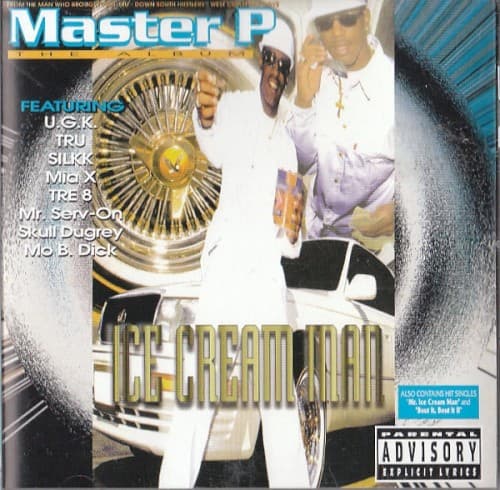
Master P Ice Cream Man: A Business Plan Wrapped in Slow Bass
Ice Cream Man sounds like a record made by someone who understood that the album was the least important part of the product. Master P recorded it, by his own account, in one week, and you can hear the speed: the beats loop, the verses circle, and the running time swells to twenty tracks because volume was the strategy. But the haste is also the point. This is the record where the New Orleans independent hustle stopped sounding like a regional curiosity and started sounding like a template.
That is the thesis, and it is a double-edged one. Ice Cream Man is more important as an object than as a listening experience. It is a catalog of a label's talent and a statement that a Southern rapper could build a company from a trunk of albums rather than a single hit. The record introduces a roster, a sound and a slogan culture in one package, and the package works. The listening experience is another matter. Across more than eighty minutes the tempo barely changes, the subjects barely change, and the loop of bass, drum machine and half-sung hook starts to feel like one very long song with different guests.
The lineage is clear. Master P learned from the Houston and Port Arthur tradition that UGK represented, and the presence of UGK on this record is a signal of respect as much as a feature. He learned from the West Coast's funk-heavy gangsta rap, whose slow-rolling bounce he slowed down further. And he learned from the independent models of the early nineties that proved a rapper could own his masters. What he added was the idea that a regional sound could be scaled by repetition: the same voices, the same ad-libs, the same hooks, over and over, until the repetition became a brand.
What came after is the proof. The label's later run of hits would sound more polished and more ambitious, and that is why this record is best heard as a starting line. Ice Cream Man is rough, sometimes dull, and occasionally compelling, and it is the sound of a movement before it learned to sound expensive.
Heavy Low End, Thin Verses, and the Drawl That Sold a Brand
The sound of Ice Cream Man is built on bass. The kick drums are thick, the synthesizer lines are simple and the drum machines lock into a mid-tempo bounce that is clearly built for car stereos. It is the opposite of the dense, sample-heavy style then dominant on the East Coast. Here the space between the beats is part of the sound, and the low end does most of the work. When it clicks, it has a heavy, rolling groove that makes the slow tempo feel like confidence rather than laziness.
The problem is that the groove rarely changes. Song after song uses the same palette: the same tempo range, the same kind of looped melody, the same chorus structure. There is little variation in arrangement, so the album's twenty tracks run together. The mixing is also uneven. Some songs have strong low-end presence and clear vocals, while others sound muffled or thin, which suggests the speed of the recording sessions. The fact sheet notes the album was recorded in a week, and that is audible in the repetition and the rough edges.
Master P's delivery is the thing that holds the record together. He raps in a slow, dragging, conversational drawl that sounds like a man talking to a friend on a porch. He does not rely on elaborate wordplay or complicated rhyme schemes. Instead he builds the persona through repetition, ad-libs and the sheer weight of his presence. It is a style that is easy to underrate and hard to imitate, and it explains why the record sold a brand as much as a sound. Silkk the Shocker adds a more aggressive, higher-pitched counterpoint, and Mia X brings a harder edge on her appearances.
The writing is where the record is weakest. The themes are standard for the era: street survival, loyalty, money, loss and the pressure of the neighborhood. A few songs, particularly the more reflective ones, turn those themes into real storytelling and give the album emotional weight. But too many verses depend on slogans and stock phrases, and the pace of the writing is slower than the pace of the beats. Specific scenes, a character, a street, a decision, are rare. Where they appear, the record improves immediately.
The guest list is a mixed blessing. The posse-cut approach gives the record variety of voice, and the contributions from the label's roster show the strength of the team. But the hooks, often handled by the same singer, begin to feel repetitive across the album, and several songs sound like variations on one template.
In short, the album is rough and repetitive but not empty. It has a sound, a voice and a point of view. What it lacks is the editing and variety to make that point of view last for eighty minutes.
Twenty Tracks, One Tempo, and a Long Ride Down the Boulevard
As a sequence, Ice Cream Man is a long haul. The album opens with an intro and a title song that sets the tone, and the first third has the clearest energy: the hooks are sharper, the guests are used well and the songs sound like they were written for something. After that, the record settles into a groove and stays there. The tempo does not shift, the subjects do not shift, and the transitions between songs feel more like a playlist than a story.
The pacing problem is structural. With twenty tracks and more than eighty minutes, the album demands patience that the material does not repay. There are skits and interludes that break up the sequence, but they are short and do not change the mood. The result is an album that feels longer than it is. A tighter version with ten or twelve songs would have kept the best material and lost the repetition, and the shorter version would almost certainly be better remembered.
The peaks are in the first half and in a few scattered songs later on. Mr. Ice Cream Man, the title track, is the clearest peak, with the album's most distinct hook and most confident delivery. In the back half the energy dips, and the record leans on the same formulas it used earlier. Things improve near the end, where the closing songs turn more reflective and give the album a human note that it has been missing, but by then the listener has already traveled a long way.
The length is not earned. The album's real strengths, the voice, the bass and the sense of a movement, are all visible in the first half hour. The rest of the record repeats them without developing them. For fans of the label and the era, the repetition is part of the appeal, a sort of immersive sound world. For a general listener it is a long drive with very little scenery.
The Rough Draft of a Southern Empire
In Master P's catalog, Ice Cream Man is a foundation piece. It is the record where his sound, his roster and his business model came together, and it is more rough and less ambitious than the albums that followed. The Billboard 200 peak at number 26 and the top-ten placement on the R&B albums chart show that it reached a real audience, and the label's later success shows how well the model worked. As a piece of music, it is a mixed record: good in places, repetitive in others, and not strong enough to stand next to the best of its era.
Who should start here? Fans of the label and the period, anyone interested in how the New Orleans independent model developed, and listeners who like slow, bass-heavy gangsta rap built for cars. It has aged as a historical document better than as a set of songs. Who should skip it? Anyone looking for dense lyricism, varied production or a tight running time. The album offers none of those, and it makes no attempt to.
The fact that it was recorded in a single week explains much about its strengths and weaknesses. There is a spontaneity and a rawness that more polished records lack, and the best songs benefit from it. But the same speed produced the repetition and the filler. A longer recording process and a more ruthless edit might have given Master P a classic. As it stands, he has a document of a hustle in progress.
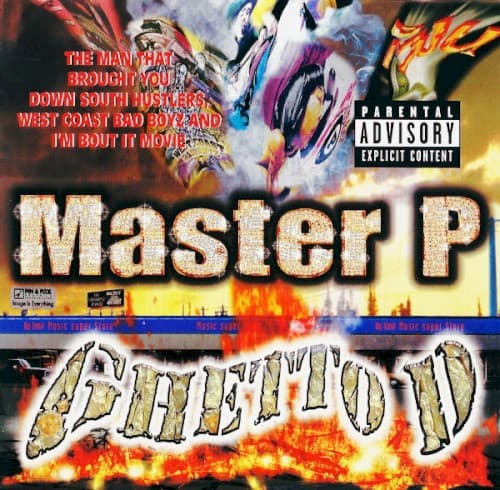
For three songs to start with, play Mr. Ice Cream Man, Break 'Em Off Somethin' and Bout It, Bout It II. They show the album's strongest hooks, its best use of guests and its most confident sound. For what to hear next, move to Ghetto D to hear the same approach with more polish and ambition, and then to the UGK catalog to hear the Texas tradition he drew from at its sharpest.
Ice Cream Man is a very long advertisement that turns out to contain a few very good songs.
Track by track
Track Listing
Intro
SolidA just-under-three-minute opener that sets the scene and introduces the label's world. It works as a mood piece but runs longer than it needs to.
Mr. Ice Cream Man
StandoutThe title song is the album's clearest highlight. Silkk the Shocker, Mia X and Mo B. Dick join Master P on a five-minute track that mixes the drawl, the hook and the bass-heavy bounce into a single, confident statement of the brand. The ice cream metaphor frames the neighborhood hustle in a way that is playful on the surface and serious underneath, and the chorus is among the most memorable on the record. The posse approach shows how the label sold itself as a family, and the contrast between Master P's slow delivery and Silkk's sharper voice gives the song texture. It is the best place to start.
Time for a 187
SolidA violent, menacing track about retaliation, with a steady beat and a tense delivery. The song is one of the harder moments on the record and fits the album's street themes, though the writing relies on familiar threats. Solid, if a bit one-note.
1/2 on a Bag of Dank
SolidA short, laid-back song about smoking, with a smooth beat and a relaxed delivery. It captures the album's mellow side, but it is slight and does not add much beyond mood.
Break 'Em Off Somethin'
StandoutUGK appears on a song that feels like a handshake between two Southern traditions. The beat is rolling and slow, and the guests bring a different texture, with the Texas drawl complementing Master P's New Orleans voice. It is one of the album's best examples of how a regional alliance can sound, and one of the few songs where the verses sound as strong as the groove. The collaboration is brief but effective. A strong deep cut and a good starting point.
How G's Ride
StandoutBig Ed and Silkk the Shocker join Master P for a car-culture anthem built around the bass. The groove is the main attraction, and the verses add atmosphere rather than ideas. It is a good example of the album's low-end sound, and a solid mid-album track.
No More Tears
SolidMo B. Dick sings the hook on a more reflective song about grief and loss. The sentiment is genuine and the pace slows to suit it, but the writing stays general. A decent change of mood that sounds like others on the record.
The Ghetto Won't Change
StandoutA downcast neighborhood portrait with a Mo B. Dick hook and one of the album's more thoughtful verses. It was left off the 2005 re-issue, which is a shame, since it is one of the better examples of the album's more serious side. A solid, human moment.
Commercial
SolidA one-minute promotional interlude that fits the record's brand-first approach. Filler, but short.
Playa From Around the Way
SolidMo B. Dick and Silkk the Shocker join for a nearly five-minute song about the neighborhood's characters. The groove is smooth but long, and the track drags in the second half. Decent, but it overstays.
Sellin' Ice Cream
SolidA companion to the title song that returns to the ice cream metaphor, with Mo B. Dick on the hook. It extends the concept without adding much, but the groove is good and the theme is on-brand. A solid follow-up.
Time to Check My Crackhouse
StandoutA grim, slow song about the drug trade and its routines, with a heavy beat and a flat, matter-of-fact delivery. The tone suits the subject and the writing is more concrete than on many songs here, though the structure is familiar. One of the more effective street portraits on the album.
Bout It, Bout It II
StandoutThe sequel to a hit that Master P turned into a catchphrase, with Mia X adding a harder voice. The hook is built for repetition, and the chant-like chorus is among the album's most recognizable moments. The verses are simple, but the song works as a statement of attitude and as a piece of branding. Over five minutes it runs long, but the hook carries it, and it is a strong example of how the label turned slogans into songs.
Back Up Off Me
WeakA five-minute song of defiance with a steady beat and a repeated hook. It sounds like many others here and its length is hard to justify. Filler.
Never Ending Game
SolidA slow, reflective track about the endless cycle of the streets. The mood is convincing and the delivery is relaxed, but the song runs close to five minutes without developing its idea. Decent, but long.
Watch Dees Hoes
WeakA crowded posse cut with Mr. Serv-On, Silkk the Shocker, Mo B. Dick and Tre-8, built around a bouncy beat and a crude, party-minded tone. It is energetic and shows the roster's range of voices, but the subject matter is thin and the track is not among the album's best.
Bout That Drama
SolidSilkk the Shocker joins for a tense, mid-tempo song about trouble in the neighborhood. The beat is steady and the two voices play off each other well. A decent, if ordinary, entry in the back half.
Killer P
WeakA short, aggressive track that leans on the persona more than on content. The beat is hard and the delivery is menacing, but it does not distinguish itself from others on the record. Filler.
Things Ain't What They Used to Be
StandoutMo B. Dick adds a soulful hook to a reflective song about change in the neighborhood and the past. It is one of the more emotional moments on the album, and the slower tempo suits the subject. A good late-album highlight with a human touch.
My Ghetto Heroes
StandoutSkull Duggery joins for a closing tribute to the people who shaped the neighborhood. The tone is warm and the song gives the album a more personal ending than its mostly hard-edged run. It is a fitting close and one of the better songs on the second half, though at nearly five minutes it moves slowly.
Frequently Asked Questions
Is Master P's Ice Cream Man good?
How fast was Ice Cream Man recorded?
How did Ice Cream Man chart?
Styles