Master P and the No Limit Blueprint: A Rapper Who Built a Brand First
Master P is better understood as a founder who rapped than a rapper who happened to run a label. Born Percy Miller in the Third Ward of Uptown New Orleans, he grew up in the Calliope Projects, played basketball well enough to earn a scholarship to the University of Houston, and left months into his freshman year. He moved to Oakland, studied business, and used an inheritance of $10,000 to open a record shop in Richmond, California, called No Limit Records and Tapes. That store became the foundation of No Limit Records, which he founded in 1991.
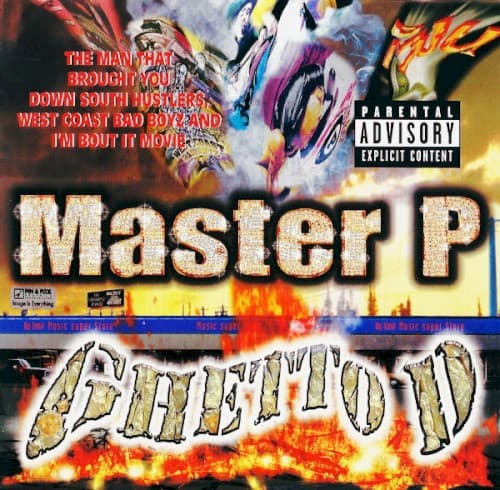
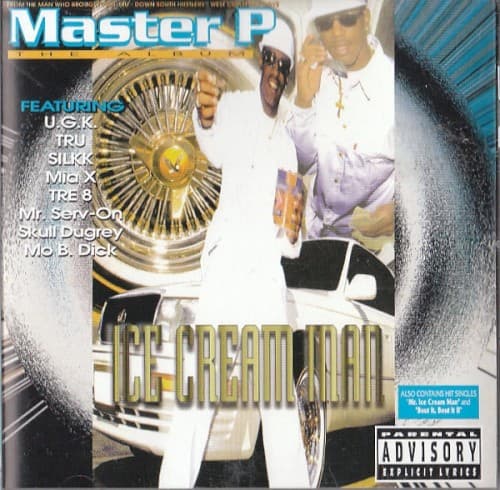
The music came with the business. Master P released Get Away Clean in 1991 and then kept going: Mama's Bad Boy, The Ghettos Tryin to Kill Me!, 99 Ways to Die. In 1995 he moved the whole operation back to New Orleans, signed a new roster, and brought in in-house producers Beats By the Pound. A year later Ice Cream Man made his name, and 1997's Ghetto D, with "Make 'Em Say Uhh!", made him a star.
If you are searching for a Master P profile, this is the key idea: his innovation was the model. He sold tapes out of the trunk of his car, built a recognizable brand across every release, and kept ownership of his masters. The albums were often uneven, and our ratings say so, but the template mattered for how Southern rap sold records.
He also showed that a rapper's career could branch outward. By the late 1990s his empire extended into film, clothing, sports management, and real estate.
Mass-Produced Menace and the Beats By the Pound Sound
Master P's rapping is rarely about technique. He leans on repetition, chant-like hooks, and ad-libs, and "Uhh!" became the sound of the late-1990s South. The delivery is blunt and plain, built to be heard in a car rather than studied in a notebook. That works for singles. It makes full albums harder going.
The sonic signature came from Beats By the Pound, the in-house production team behind the New Orleans No Limit run, giving the label a house sound distinct from the era's East Coast records. Group acts were part of the machine too: TRU, which by 1997 was Master P with his brothers C-Murder and Silkk the Shocker, and later the 504 Boyz.
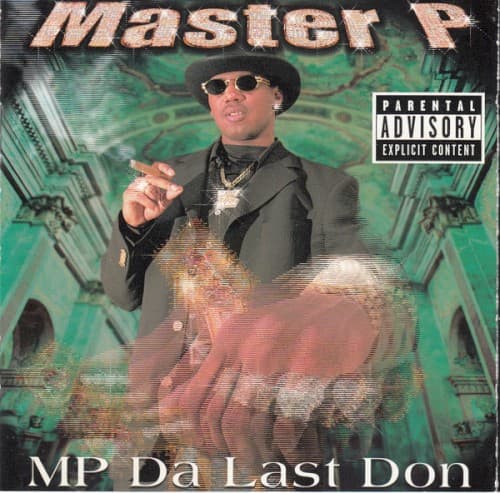
The other half of the sound is the packaging. He gave listeners up to 20 songs per album when most rappers delivered 15 or fewer, cross-promoted artists inside the covers, and used pen-and-pixel Photoshop graphics with mafia-style themes to make the albums look like part of one universe. The consequence was an enormous output and uneven quality. Our reviews reflect that: Ghetto D rated 5.7, Ice Cream Man 5.5, and MP da Last Don 5.1. These are important records that sound better in historical context than in headphones.
From Calliope Projects to No Limit's Platinum Run
The early catalog was built the hard way. Master P released the cassette Mind of a Psychopath in February 1990, followed by Get Away Clean in 1991 and Mama's Bad Boy in 1992, both through In-A-Minute Records. With TRU he released Understanding the Criminal Mind in 1992 and Who's da Killer? in 1993. He opened for Tupac Shakur in the early 1990s and said the people introducing him often called him a country singer.
The real turn came after the 1995 move home. Ice Cream Man arrived on April 16, 1996, with the single "Mr. Ice Cream Man." That same year he signed the distribution deal with Priority Records that changed his standing: No Limit kept 100 percent ownership of its masters, took 85 percent of record sales, and paid Priority 15 percent for pressing and distribution. Over time that arrangement made him hundreds of millions of dollars, and it remains a reference point in conversations about artist ownership.
Ghetto D, released on September 2, 1997, sold more than 760,000 copies in its first week and eventually went triple platinum. "Make 'Em Say Uhh!" was his highest-charting single and earned an MTV Video Music Award nomination for Best Rap Video. We rated Ghetto D 5.7 out of 10: it is the clearest document of the moment, if not the strongest set of songs.
MP da Last Don followed on June 2, 1998 and debuted at number one on the Billboard 200 with more than 400,000 first-week copies, selling over four million in total. A film of the same name came out earlier that year. Only God Can Judge Me in 1999 went gold, and Ghetto Postage followed in 2000. Meanwhile the 504 Boyz and TRU kept the label pipeline full.
The decline arrived in the early 2000s. The New No Limit launched in 2001 in partnership with Universal Records, but record sales, roster changes, and lawsuits led it to file for bankruptcy in December 2003. Master P regrouped with Koch for Good Side, Bad Side in 2004, then with his son Romeo Miller formed Guttar Music in 2005. A later wave of mixtapes and Money Mafia and No Limit Boys projects kept him active, followed by the 2020 BET docuseries No Limit Chronicles. In July 2025 he announced his retirement from music to take a basketball coaching job at the University of New Orleans.
Master P's Legacy: How No Limit Rewrote the Rules of Rap Business
Master P's lasting influence is commercial before it is musical. He proved a Southern independent label could reach multi-platinum numbers without handing control to a major, and other rappers have pointed to it as a model. When 2 Chainz met him in 2013, he said Master P had influenced the whole South and credited his constant release schedule and grind. The honors back it up: the American Music Awards named him Favorite Rap/Hip-Hop Artist in 1999, and in 2013 he became the first hip-hop artist inducted into the Louisiana Music Hall of Fame.
Still, honest assessment matters. The very strategies that made No Limit a phenomenon, quantity over polish and brand over artist, left a catalog that is hard to recommend front to back. Many tracks were never meant to be studied as individual songs. They were meant to move units and carry a label name.
For a new listener, start with "Make 'Em Say Uhh!" and Ghetto D, then try Ice Cream Man to hear the New Orleans move that preceded the big breakthrough. Treat MP da Last Don as a document of excess. Listening to Master P now feels like walking into a 1998 record store where every shelf carries the same logo.