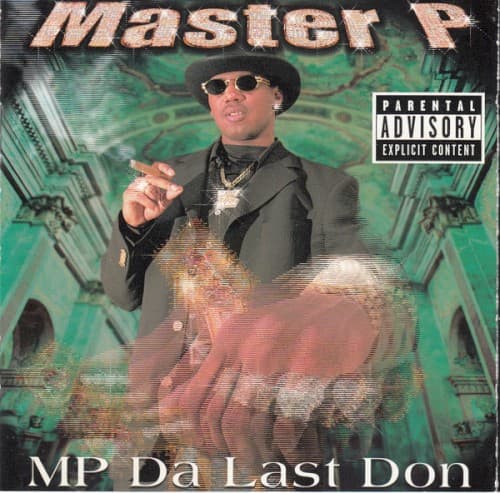
The scorecard
5.1/10 · Weak
- Writing25%
- 4.5
- Production25%
- 5.5
- Delivery15%
- 5.5
- Cohesion15%
- 4.5
- Originality10%
- 5.5
- Replay value10%
- 5.0
Street-life bulletins, family loyalty and mourning for fallen friends recur across two discs, with sincere feeling but few specific images and little variation in angle.
Soul, funk and pop samples, from Average White Band to Timex Social Club, give the beats warmth and bounce, though many tracks run longer than their ideas.
Master P's flat, shouted drawl and signature ad-libs anchor the record, but the best performances come from guests such as Mystikal, E-40 and Snoop Dogg.
Twenty-nine tracks on two discs, including three skits under a minute, make an album that plays like a label roll call and sags badly in the middle.
The No Limit roll-call formula was already well known, but the sheer scale of the guest list and the glossy soul sampling give it a recognizable identity.
A handful of singles and group cuts still work, while most of the long tracklist feels more like a document of its moment than a record to revisit.
Master P MP da Last Don: A Retirement Party Where the Guests Steal the Show
The loudest voice on MP da Last Don is not the man on the cover. It is the machine behind him. Across two discs and twenty-nine tracks, Master P hosts a roll call of No Limit soldiers, West Coast visitors and Southern allies, and the moments that stay in the ear belong to the people he invited. That is not a small criticism, because the album sold more than any other record in his catalog, and it did so by sounding like a family reunion with the budget of a major label.
The thesis is that this is a victory lap sold as a farewell. It was marketed as his final studio album, which gives it a ceremonial weight, and the sprawl is part of the ceremony: everyone gets a verse, every theme gets a track, and every sample gets a turn. As a result it plays less like an album and more like a display of the label's strength. The sound is warm, bouncy and unmistakably Southern in its swagger, and the best songs have the loose, chanting energy of a block party. But the structure is bloated, and Master P is the least interesting performer on his own record.
From the South, the appeal is clear. This was the moment when New Orleans-based hip-hop could fill a major-label double album, and the cast of guests, from Bone Thugs-n-Harmony to UGK, E-40 and Snoop Dogg, shows how widely the label's reach extended. What is earned here is scale and momentum. What is borrowed is the formula of the star-heavy double disc, and the album follows that template more faithfully than it breaks it.
Reviews at the time were mixed. The sales were not: it went to number one on the Billboard 200 after an odd start, and it was eventually certified quadruple platinum.
Soul Samples, Shouted Hooks and a Host Outshone by His Guests
The writing is built from a short list of subjects: hustling, loyalty, loss, the ghetto as a trap and a home, and the pride of getting out on your own terms. Master P delivers them with conviction, and the sincerity is real, particularly on the tracks that mourn friends or address the weight of the street. But the writing is blunt rather than specific. Images are broad, the rhymes lean on repetition, and a verse on one disc often sounds like a verse on the other. The album's emotional register is consistent, which is a strength, and its range is narrow, which is the problem.
Delivery tells the same story. Master P's voice is a flat, shouted drawl, and his ad-libs, including the famous grunt that gives one of the later tracks its title, work as brand marks more than as performance. They are effective as hooks and limited as rapping. The guests understand this and step into the gaps: Mystikal brings a raspy, rhythmic urgency, E-40 offers a Bay Area slang-heavy bounce, Snoop Dogg brings a relaxed West Coast drawl, and UGK delivers the kind of Southern authority that no one else on the record can match. The album works best when Master P plays host and lets the others carry the verses.
The production is the record's most dependable quality. The credits in the sample list lean toward soul, funk and pop, and the beats lift pieces from Average White Band, Michael Jackson, Diana Ross, Jaco Pastorius, Timex Social Club and Run-DMC, among others. The effect is glossy and warm, and it is the one element that stays steady while everything else fluctuates, a thick, bass-forward sound with hooks borrowed from records the audience already loved. This is a strength when the sample is chosen well and a weakness when it is used as a crutch: some beats feel like a loop with a drum break and not a composition, and the mixes can be muddy when the vocals stack.
The concrete weakness is length. Many songs run past four minutes without developing an idea, the skits and tiny interludes break momentum, and the second disc sags badly in its middle stretch. The mix also buries some verses when several voices stack, so the guest-heavy cuts lose the clarity that would let each cameo land. A tight single-disc version, with the group cuts, the singles and the strongest solo tracks, would have been a better record than the one that sold four and a half million copies.
Twenty-Nine Tracks, Two Discs and a Long Middle That Needed an Editor
As a sequence, the album starts strong. The first disc opens with a theatrical, declarative title track and moves into a run of guest-heavy cuts that give the record momentum. The star power is front-loaded, and the first half of the first disc has the variety and swagger the project promises: group songs, solo statements and a few moments of genuine grit.
The pacing breaks down as the album accumulates. The second half of disc one loses focus, and the second disc begins with the same energy and then spends most of its time repeating it. Long tracks arrive back to back with nothing to separate them, and the three skits that are meant to break the flow last under a minute each, which is too short to reset the ear. There is no clear arc, no moment when the record changes direction, and no sense that the sequence is building toward a finish.
The length is not earned. Twenty-nine tracks across two discs is a lot for a record whose ideas could fit on one, and the guest list, while impressive, makes the sequence feel like a series of cameos and not a single piece of work. The late singles, including the one about saying goodbye to friends, are the clearest moments of purpose and arrive in the second half just when the album needs them. After them, the closing run returns to the same mood and the same tempo. The record ends because it has run out of time, not because it has finished saying something.
Quadruple Platinum, Half a Great Album
No other Master P albums are rated on the site yet, so the ranking cannot be set here, but the context is clear. This is the best-selling album of his career and of his label, and it earned the number by being the loudest, biggest and most generous record in the No Limit catalog. It is not the best-written or the most focused, and the scores reflect that gap.
The album is for listeners who want to hear the No Limit sound at full scale, with the guests, the samples and the sprawl, and for anyone studying how a regional label turned itself into a national force. It is also for fans of the guests: the contributions from Mystikal, E-40, Snoop Dogg and UGK are worth the trip on their own. It is not for listeners who want tight writing or a clear narrative, and it is not a good place to meet Master P as a rapper, because the format keeps him in the background.
The record has aged as a document of a moment, and in that role it still works. The samples, the shouted hooks and the sense of a crew celebrating together are time-stamped, but they still carry energy. As a front-to-back listen it is less convincing, and most listeners will do better with a playlist of the best dozen songs.
Start with Goodbye to My Homies, Hot Boys and Girls and Make 'Em Say Uhh #2, which are the three songs that best capture the label's mood and reach. If the sound appeals, move on to Only God Can Judge Me, the follow-up he released a year later after the retirement plan was quietly dropped, which sold four million copies and shows the same approach at a smaller scale.
The record is a party that went on too long, and the most accurate way to remember it is as the one the hosts could not stop.
Track by track
Track Listing
Da Last Don
StandoutThe title track opens the record with a sample of Michael Jackson's Smooth Criminal, and it sets the tone: a theatrical, self-mythologizing statement with a boastful swagger. Master P talks about his status and his crew with a flat authority that works better as a mission statement than as a verse, and the sampled backing gives it a sense of occasion. It runs 3:36 and does not wear out its welcome, which is more than can be said for the rest of the first disc.
Till We Dead and Gone
StandoutBone Thugs-n-Harmony join for the longest cut on the first disc at 5:18. Their rapid, melodic vocals give the track a very different texture from the rest of the record, and the contrast is its strength. The length is a stretch, but the guests justify it, and it is one of the better uses of a feature on the album.
Thinkin’ Bout U
SolidMia X and Mo B. Dick are on the credits, and the song borrows from Timex Social Club's Thinkin' About Ya. It is a smooth, romantic detour built on a familiar melody, easy on the ear and not much more.
Soldiers, Riders, and G’s
StandoutSilkk the Shocker, Mystikal and Snoop Dogg all appear, and the song is one of the clearest examples of the album's roll-call approach. Mystikal's urgent, clipped delivery contrasts with Snoop's relaxed drawl, and the shifts between voices keep the track lively across 4:34. Master P is the host rather than the star, which is the right call. A strong group cut.
The Ghetto’s Got Me Trapped
SolidA shorter track at 2:35 with Silkk the Shocker and Sons of Funk. The theme is stark and the delivery is earnest, and the brevity keeps it from drifting.
Get Your Paper
StandoutE-40 adds a Bay Area accent to a Southern record, and the exchange is one of the more interesting meetings of regional styles on the project. His quick, slang-heavy flow contrasts with Master P's blunt shouting, and the track benefits from the difference. It runs a long 4:44, and the hustle theme is among the most familiar on the album, but the guest turns it into a highlight.
Ride
SolidA solo track at 4:06 with no guests to share the load. The mood is steady and the theme is predictable, and without a second voice the length is noticeable. Competent filler.
Thug Girl
StandoutSilkk the Shocker and Snoop Dogg return, and the song uses a Run-DMC sample. It is a brisk, playful cut at 3:13, with Snoop's laid-back tone providing a lift.
These Streets Keep Me Rollin’
SolidFiend joins for a standard street-life track at 3:07. It is serviceable and a little generic, with a mood that matches the surrounding material and little that sets it apart.
Black and White
SolidFiend and Silkk the Shocker appear on a track built around a sample of Average White Band's A Love of Your Own. The smooth sampled loop gives it a more soulful feel than most of the disc, and at 4:45 it is one of the longer cuts. The groove is the main appeal and the writing does not add much.
War Wounds
WeakFour guests, including Mystikal and Snoop Dogg, on a 4:22 track that is crowded rather than powerful. Too many voices compete for space, and the song lacks the shape of the better group cuts.
Dear Mr. President
SolidMac joins on a political, protest-minded track. The ambition is welcome, since it is one of the few cuts that looks outside the label's own world, and the tone is serious. The execution is blunt, but it adds some needed variety.
Mama Raised Me
StandoutSnoop Dogg and Soulja Slim are the guests on a tribute to family and upbringing. It is among the warmer songs on the album, and the sincerity is clear, even if the writing is straightforward.
Let My 9 Get ’Em
WeakThe first disc closes with a solo track at 3:20 about street conflict. It is a flat, gruff ending that does not add anything the disc had not already said.
More 2 Life
SolidC-Murder opens the second disc with a long, solemn cut at 3:43. The mood is serious and sets a reflective tone, though the track is not distinct enough to anchor a new disc.
Ghetto Life
StandoutUGK appear alongside O'Dell and Mo B. Dick, and their presence gives the track a weight the surrounding songs lack. The Texas duo's measured, authoritative delivery is a different register from the shouting that dominates the record, and at 4:54 the track has the space to develop it. One of the highlights of the second disc.
Gangsta Bitch
SolidSteady Mobb'n join for a track built on a Diana Ross sample. The soft, smooth beat is a good fit and the track is easy to listen to, but the writing is routine.
So Many Souls Deceased
SolidGhetto Commission appear on a mournful track at 4:23. The tone is sincere and the subject suits the record's undercurrent of grief, though the length and sameness blunt its effect.
Rock‐a‐Bye Haters
SolidA 23-second interlude built around a nursery-rhyme sample. It is a skit and nothing more.
Snitches
StandoutSnoop Dogg appears on a track that samples Bernard Wright's Haboglabotribin'. The loop gives the song a bouncy, funk-driven feel, and Snoop's laid-back voice works well against Master P's shouting. At 4:08 it keeps its focus on a single subject and avoids drifting, which makes it one of the tighter cuts on the second disc.
Family Business
SolidA 28-second skit. Filler.
Let’s Get ’Em
SolidC-Murder and Magic join for a standard group track at 4:14. It is energetic and forgettable, a typical piece of the No Limit assembly line.
Goodbye to My Homies
StandoutOne of the album's two singles, with Silkk the Shocker, Sons of Funk and Mo B. Dick. It is the record's most focused statement of grief and loyalty, a memorial song that gives the sprawl a human center. The mood is sincere and the writing is as direct as the subject demands, and at 4:12 the song does not drag. It is the track that most clearly justifies the album's farewell framing.
Welcome to My City
SolidMac and O'Dell appear on a regional anthem at 3:25. It is proud and bouncy, a fair representation of the label's local identity, though it lacks the hook to make it a standout.
Ghetto Love
StandoutMia X and Mo B. Dick join on a track that samples Jaco Pastorius. The sampled melody gives it a soft, jazzy mood unlike the harder material around it, and it is a welcome change of pace at 3:35.
Make ’Em Say Uhh #2
StandoutA sequel to the earlier hit, with Fiend, Silkk the Shocker, Mia X and Snoop Dogg. The title announces the ad-lib that defined Master P's sound, and the posse structure turns it into a chanted, cheerful party song. At 4:28 it is long for what it is, and it does not match the original's impact, but the energy is real and the chorus is easy to join.
Hot Boys and Girls
StandoutThe second single, with Mystikal, Silkk the Shocker, Mia X and Kane and Abel. At 5:24 it is the longest track on the album and the most explicitly celebratory, a roll call that brings the full label cast together. The groove is a little loose and the length is generous, but it captures the mood the record is selling better than any other track, and Mystikal's contribution gives it bite.
Reverse the Game
SolidA 31-second skit. Filler.
Eternity
SolidC-Murder and Mr. Serv-On close the record with a solemn, reflective track at 4:11. It matches the farewell framing and gives the album a quiet ending, though it adds little that earlier songs had not already said.
Frequently Asked Questions
Is Master P's MP da Last Don a good album?
How well did MP da Last Don sell?
Who is featured on MP da Last Don?
Was MP da Last Don really Master P's final album?
Styles