Scorecard: 7.9/10 · Great
How we score- Writing(25%)
- 8.5
The conspiracy theory framework and personal confessions create a genuine conceptual arc, with verses dense enough to reward close reading.
- Production(25%)
- 8.0
The sampling choices (Aretha, King Crimson, Ahmad Jamal) are ambitious and the TaeBeast beats hold together, creating a textured sound that supports the sermon even if some tracks feel same-paced.
- Delivery(15%)
- 7.5
Soul's bookish flow and monotone cadence fit the cerebral content and the deliberate flattening works as a lecturing choice, though the hooks rarely stick on first listen.
- Cohesion(15%)
- 7.0
The album sustains its conspiracy-to-grief arc across seventeen tracks, though the middle stretch plateaus sonically and the thesis feels repeated rather than developed before the final emotional peak.
- Originality(10%)
- 8.0
In 2012, few rap albums were weaving Illuminati theories and personal trauma into a coherent statement rather than using them as punchline material.
- Replay value(10%)
- 7.5
The density of references and the emotional weight of the final third create reasons to return, though the monotone delivery can make longer sessions feel same-paced.
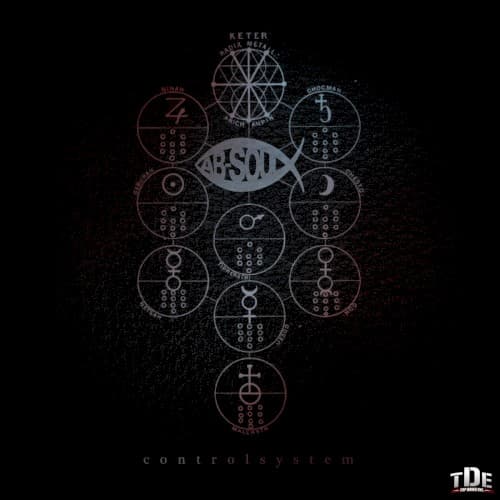
Ab-Soul Control System — When the Illuminati Rap Album Became a Grief Record
Control System argues that the conspiracy is real and then spends its second half proving that grief is more inescapable than any shadow government. Ab-Soul arrived in 2012 as the TDE member least interested in commercial hooks or gangsta narratives, and this album is the purest expression of that position: seventeen tracks of occult name-drops, SOPA references, and gnostic wordplay that somehow cohere into a conceptual statement rather than a collection of weed-session theories. The thesis is that control systems operate at every level—government, media, the music industry, the self—and that naming them is a form of resistance. For eleven tracks that thesis holds. Then Alori Joh's suicide reshapes the album into something else.
The stakes are whether Ab-Soul can sustain the conspiracy framework as more than a gimmick, and whether the personal material can deepen the record rather than contradict it. He succeeds on both counts. The first half builds a paranoid, sample-heavy world where every institution is suspect and every reference is a breadcrumb. The opening invokes the California retreat where elites allegedly gather; the next stretch flips a Bastion video game sample into a hook about state violence; the SOPA track turns internet legislation into a metaphor for broader suppression.
The writing is dense, the tone is didactic, and the conviction is total. Then the final third reveals that the conspiracy talk was also a way of processing a loss he could not control. The album does not abandon its framework; it shows that the personal and the political collapse into the same paranoia when someone you love decides to leave.
How the Samples Carry the Argument
The writing on Control System assumes the listener will keep up. Soul's verses are reference-heavy, often prioritizing information density over melody: Bohemian Grove lists secret societies by name, Pineal Gland describes the third eye in literal anatomical terms, and Illuminate interpolates Kendrick's ADHD to make a point about distraction as a weapon. The rhyme schemes are competent but rarely showy; the imagery is more conceptual than raw. What makes the writing work is that the conspiracy lens is applied consistently. Even the sex track (Lust Demons) frames desire as demonic possession, and even the love song (Empathy) ties devotion to cosmic forces. The conceptual coherence is the album's main lyrical achievement, though it comes at the cost of hooks that stick on first listen.
The production, handled largely by TaeBeast, Sounwave, and Dave Free, builds a dusty, sample-based sound that supports the sermon without overwhelming it. The Aretha Franklin chop on Bohemian Grove gives the conspiracy talk a gospel foundation; the King Crimson sample on Double Standards adds prog-rock eeriness to the hypocrisy indictment; the Ahmad Jamal loops on Showin' Love and The Book of Soul anchor the album in jazz tradition. The beats are more about texture than drums, which keeps the focus on the voice but also means the album can feel same-paced across long stretches. Danny Brown's manic verse on Terrorist Threats is the clearest proof that Soul's monotone delivery is a choice, not a limitation—Brown's energy exposes how deliberately Soul flattens his cadence to sound like a lecturer rather than a performer.
The guest verses are uneven. Kendrick on Illuminate matches Soul's conceptual ambition and raises the technical bar; Schoolboy Q on SOPA delivers a solid but unmemorable sixteen; Jay Rock on Lust Demons adds grit without deepening the idea. Jhené Aiko appears twice, her hooks providing melodic contrast but also making those tracks feel more like concessions to listenability than organic choices. The posse cut closer, Black Lip Bastard, is a bonus track that shifts the album into cypher mode and loses the conceptual thread entirely, though the Donny Hathaway sample is gorgeous.
The Arc From Paranoia to Personal Loss
The sequencing is deliberate: the album opens with the most accessible material, escalates the conspiracy rhetoric through the middle, and then shifts into introspection in the final third. The pacing works because the transition is gradual. The middle stretch begins to personalize the anger; the following track features Alori Joh's vocals and starts to reveal what is at stake beneath the theories. By the time the final emotional turns arrive, the album has earned them.
The weaknesses in pacing are in the stretch where the tracks blur together sonically and the thesis starts to feel repeated rather than developed. One brief track feels like a sketch rather than a full idea. The length—seventeen tracks, over an hour—is justified by the conceptual arc, but a tighter tracklist would have sharpened the impact. The album does not sag so much as it plateaus in the middle, which makes the final emotional peak feel slightly delayed.
The Album That Made Conspiracy Rap Personal
Control System ranks as the definitive Ab-Soul statement because it is the only album in his catalog where the conspiracy obsession and the personal confession are inseparable. Later projects would lean harder into either the shock-value theories or the accessible hooks, but this one keeps both impulses in tension. It is essential listening for anyone interested in how conscious rap evolved in the early 2010s, and it is the best entry point into TDE's non-commercial wing. The album has aged well in the sense that its paranoia about government overreach and media control feels more resonant now than it did in 2012, though some of the Illuminati specifics read as period pieces.
Who should start here: fans of early Kendrick who want more conceptual weight and less melodic payoff, listeners interested in the intersection of conspiracy culture and hip-hop, and anyone curious about how grief reshapes an album that was mostly finished before the loss occurred. Who should skip it: anyone looking for bangers, anyone allergic to didacticism, and anyone who needs dynamic vocal performance to stay engaged. Start with Terrorist Threats for the Danny Brown feature and the best beat, then The Book of Soul for the emotional core, then Bohemian Grove for the thesis in full flower. If you want more conspiracy-minded rap with better hooks, try Lupe Fiasco's The Cool; if you want TDE with more accessible sequencing, try Schoolboy Q's Habits & Contradictions from the same year. Control System is the album where Ab-Soul proved he could build a world and then let that world crack open.
Track Listing
Soulo Ho3
▲The opener sets the conceptual stakes with a Jhené Aiko hook that frames enlightenment as sexual attraction, which is both clever and slightly too cute. Soul's verse describes waking up to hidden truths—government manipulation, media lies—without naming specific conspiracies yet, so the track functions as a thesis statement in broad terms. The Sounwave and Dave Free production is warm and accessible, which makes this the most radio-adjacent moment on the album. It works as an entry point but does not prepare the listener for how didactic the rest of the project will get.
Track Two
▲The Electric Light Orchestra sample gives the track a prog-rock shimmer that makes the conspiracy talk feel more cosmic than earthbound. Soul's flow here is faster and more rhythmically varied than it will be later, which helps the track feel like momentum rather than sermon. The writing touches on predictive programming and social engineering without getting bogged down in specifics. It is one of the album's better-paced songs, though it lacks a memorable hook or a standout quotable that would make it a highlight.
Bohemian Grove
▲This is where the album's thesis becomes explicit: Soul names the California retreat, references Skull and Bones, and describes secret societies as literal puppet masters. The Aretha Franklin and Weather Report samples create a haunted-soul backdrop that gives the paranoia a gospel weight. The verse is dense with proper nouns and historical references, which makes it rewarding for close listeners but also means the track will not reveal much on a casual pass. The beat switch in the final third adds tension, and the whole thing feels like Soul is building a case rather than writing a song. It is the purest expression of the album's conspiracy lens and one of its most musically ambitious moments.
Terrorist Threats
▲The Bastion video game sample is an inspired choice—turning a fantasy RPG score into a meditation on state violence—and Danny Brown's verse is the album's most electrifying sixteen bars, his voice cracking and careening where Soul's stays monotone. Jhené Aiko's hook is the most conventional moment on the record, which makes the track feel like a single even though the subject matter is anything but. Soul's verse about surveillance and police aggression is more focused than his usual info-dumps, and the Jay-Z interpolation in the hook is playful without undercutting the seriousness. This is the track to play for someone who thinks Ab-Soul is all theory and no technique.
Pineal Gland
●The Bo Hansson sample creates a mystic, almost medieval atmosphere for Soul's most explicitly gnostic writing: he describes the pineal gland as the seat of spiritual vision and frames fluoride in the water supply as a deliberate calcification. The verse is instructional, almost pedagogical, and the lack of a hook or guest vocal makes it feel like a lecture. It works within the album's conceptual arc but it is also the moment where the didacticism tips into self-seriousness. Listeners who are already skeptical of the conspiracy framework will check out here; believers will treat it as scripture.
Double Standards
▲The King Crimson sample is the album's most adventurous production choice, all prog-rock dissonance and polyrhythmic unease, and it underscores Soul's critique of hypocrisy—moral, political, sexual. Anna Wise's vocals add a melodic counterpoint that keeps the track from feeling too cerebral. The writing is sharper here than on the previous few songs, with specific images of relationship dysfunction standing in for broader institutional contradictions. It is one of the album's better integrations of the personal and the conceptual, though it does not hit as hard as the grief-focused tracks later.
Mixed Emotions
●This is the first moment where the conspiracy talk recedes and the album begins to turn inward. The King Blue production is looser and more soulful than the TaeBeast beats, and Soul's verse touches on self-doubt and emotional confusion without the usual rhetorical armor. It is a transitional track, not a highlight, but it signals that the second half will be less about institutions and more about the self. The pacing here is slightly too slow and the hook is too minimal to carry the track, so it functions more as an interlude than a full song.
Sopa
●The title references the Stop Online Piracy Act, and the Nez & Rio production flips the legislative acronym into a broader metaphor for control and censorship. Schoolboy Q's verse is solid but forgettable, delivering the kind of tough talk that does not deepen the concept. Soul's writing here is more polemical than poetic, and the track feels like a think piece set to drums. It works as a thesis statement about internet freedom, but it does not add much to the album's emotional or musical arc. The beat is crisp and the sequencing makes sense, but this is one of the few tracks that could have been cut without weakening the whole.
Lust Demons
●The Isaac Hayes sample gives the track a cinematic soul-funk foundation, and the concept—desire as demonic possession—is the kind of paranoid metaphor that the album does best. Jay Rock's verse adds street credibility without much thematic depth, and BJ the Chicago Kid's hook is smooth enough to make the track feel more accessible than it is. Soul's writing frames sex as a distraction engineered to keep people from enlightenment, which is both on-brand and slightly exhausting. It is a solid mid-album track, not essential but not filler either.
Illuminate
▲The Madonna sample interpolated with Kendrick's ADHD is a sharp conceptual move, framing distraction as a weapon and enlightenment as the antidote. Kendrick's verse is technically superior to anything else on the album, his multisyllabic rhyme schemes and internal rhythms making Soul's flow sound more pedestrian by comparison. The chemistry between the two is real—they are clearly pushing each other conceptually even if Kendrick is the better technician—and the track is one of the album's few moments where the conspiracy talk feels genuinely collaborative rather than solo sermon. It is a highlight both for the production and for the rare instance of Soul sounding energized rather than resigned.
A Rebellion
▲Alori Joh's vocals give the track an intimacy that the rest of the album has avoided, and the Midnight Star and Paul Simon samples create a warmer, more nostalgic backdrop. Soul's verse is about love as resistance and partnership as rebellion against a system designed to isolate, which retroactively becomes unbearably sad given Joh's death. The writing here is less dense, more plainspoken, and the emotional stakes are clearer than on any previous track. It is the first moment where the album stops arguing and starts confessing, and it sets up the emotional devastation of the final three songs.
Showin’ Love
▲The Ahmad Jamal loop is the album's jazziest moment, and Soul's verse is a straightforward expression of gratitude to his crew, his city, and his late partner. There is no conspiracy talk here, just a catalog of relationships and influences. It works as a breather after the intensity of the previous tracks, and it humanizes Soul in a way the didactic material does not. The writing is simpler, almost conversational, and the track feels like an exhale. It is not a highlight but it is necessary pacing, and the Willie B production is warm enough to carry the sentiment.
Empathy
▲This is the first track recorded after Alori Joh's death, and it is devastating in its plainness. Joh's vocals are present, JaVonté adds a mournful hook, and Soul's verse is a direct address to her, asking why she left and confessing that he does not know how to process the loss. The Skhye Hutch production is spare, almost skeletal, and the whole track feels like a wound that has not yet scarred. It is the emotional climax of the album, the moment where all the conspiracy talk is revealed as a way of imposing order on a world that has become unbearable. The writing here is the least clever and the most honest Soul has been on the record, and it is more powerful for it.
Nothing’s Something
●At two and a half minutes, this feels like a sketch rather than a fully realized song. The Kanye West interpolation nods to Addiction, and Soul's verse touches on substance use and emotional numbness, but the track does not develop either idea enough to stand on its own. It works as a transitional moment between the raw grief of Empathy and the controlled devastation of the tracks that follow, but it is the one moment on the album that feels undercooked.
Beautiful Death
●The OutKast sample sets a morbid, reflective tone, and the guest verses from Punch and Ashtrobot add voices without disrupting the mood. Soul's verse frames death as transformation, not ending, which is both a philosophical claim and a way of processing Joh's suicide. The writing is less direct than on Empathy, more metaphorical, and the track functions as a way of stepping back from the raw emotion to consider what the loss means. It is not as powerful as the tracks immediately before and after it, but it serves the album's arc by giving the grief a conceptual framework.
The Book of Soul
▲The closing track is the album's most complete statement: a verse that moves from childhood trauma to failed relationships to Alori Joh's pregnancy and suicide, all over a Tommy Black beat that loops Ahmad Jamal and Bobby McFerrin into something that sounds like a jazz funeral. Soul's writing here is the most narrative and the most vulnerable on the record, describing Joh's death in specific, unbearable detail and confessing that he does not know how to move forward. The verse ends with the revelation that she was pregnant when she died, which reframes the entire album as a tribute to two lives lost. It is one of the most emotionally direct closing tracks in rap, and it justifies every conspiracy digression that came before it by showing that the paranoia was also a way of avoiding this pain. The track does not offer resolution, just the fact of the loss and the commitment to keep going.
Black Lip Bastard (remix)
●The bonus track is a Black Hippy posse cut that breaks the album's emotional arc and feels tacked on. The Donny Hathaway sample is beautiful, and the verses from Jay Rock, Kendrick, and Schoolboy Q are all solid cypher material, but the track has nothing to do with the conceptual or emotional journey that preceded it. It works as a reminder that Ab-Soul is part of a crew, but sequenced after The Book of Soul it feels like an afterthought rather than a statement. Still, the rapping is strong enough that the track justifies its inclusion as a bonus, even if it weakens the album's sense of closure.