RZA: The Architect Behind Wu-Tang's Dusty, Dangerous Sound
RZA solo albums matter less than the thing he built for others: the sound of Wu-Tang Clan itself. Robert Diggs was born in Brownsville, Brooklyn, in 1969, and he was rapping in battles by age eleven. He first tried the solo route in 1989 as Prince Rakeem on Tommy Boy Records, but the single underperformed and the label dropped him.
The restart came in 1992, when he formed Wu-Tang Clan with his cousins and other childhood friends, taking the name RZA. The group's first single, "Protect Ya Neck", came out that December, and Enter the Wu-Tang (36 Chambers) followed in November 1993. RZA acted as de facto leader, producing the songs and deciding who got placed on which tracks.
From 1994 to 1996 he produced nearly everything the group's members released, a run that defined East Coast hardcore hip-hop through sparse drums, chopped soul samples and kung fu film atmosphere. The Source and Vibe both ranked him among the greatest hip-hop producers of all time.
His solo albums, released under the Bobby Digital alter ego, are a different matter. They tend to be more sprawling and less focused than the Wu-Tang records, and our ratings, 5.5 to 6.6 out of 10, reflect that. The real interest in his catalog lies in how far he reached beyond the rap group: film scores, directing, acting and orchestral work.
Chopped Soul, Sparse Drums and the Bobby Digital Persona
RZA's production signature is the way he chops, speeds up or slows down soul samples to fit his beats. The drums are sparse, the loops are dusty and the whole thing feels cinematic, as if a kung fu film had been mixed in a basement. That approach influenced Kanye West and Just Blaze, and West's own version briefly flooded the market with what became known as "chipmunk soul". West has acknowledged the debt himself.
The Bobby Digital albums introduced tweaked-out new age elements to his sound. Bobby Digital is one of several aliases that also include Prince Rakeem, The Abbot and, in the horrorcore group Gravediggaz, the RZArector, each tied to a different lyrical personality.
His style changed with experience. RZA has said he once produced more like a DJ, without music theory, and now makes music that can be played by a band. That shift began with his film work: scoring Ghost Dog with traditional musicians made him want to learn to read and write music, and it shows in the more arranged, instrument-driven textures of his later work. The weakness of his solo records is that he is a better architect than frontman: his rapping is distinctive, but it tends to be most potent when it serves a group sound rather than carrying an album on its own.
From Prince Rakeem to Wu-Tang's Producer-in-Chief and Beyond
Before Wu-Tang, RZA was a hungry underdog. In the early 1980s he formed a rap group with his cousins that eventually became All in Together Now, and around that time he also put together the DMD Posse, whose members included Raekwon, Ghostface Killah, U-God, Inspectah Deck and Method Man. The Tommy Boy deal as Prince Rakeem collapsed, but it set up everything that came next.
After Enter the Wu-Tang, he directed the clan's solo projects as well, producing nearly every release in the 1994 to 1996 window. He also formed Gravediggaz with Prince Paul, Poetic and Frukwan. On 1997's Wu-Tang Forever, he began delegating beats to protégés Mathematics, True Master and 4th Disciple, known as the Wu-Elements, along with Inspectah Deck.
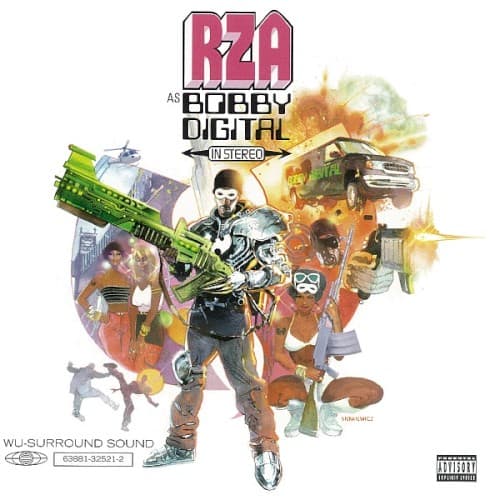
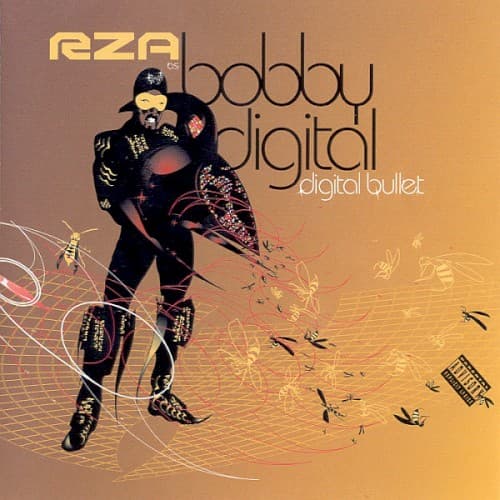
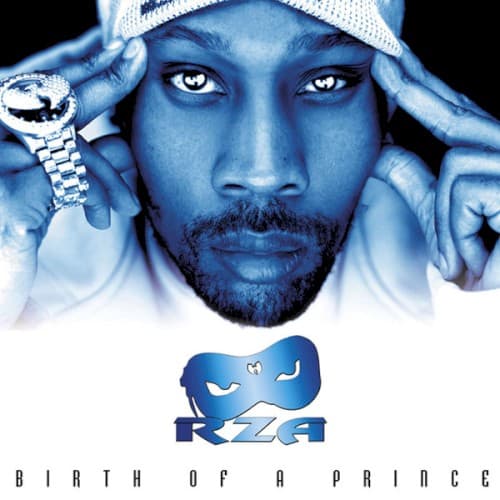
His own solo debut, Bobby Digital in Stereo, appeared in 1998 and is the album we rate highest of his solo work, at 6.6 out of 10. Digital Bullet followed in 2001 and earned a 5.5, and Birth of a Prince in 2003 earned 5.7. Later solo albums include Digi Snacks in 2008 and Bobby Digital and the Pit of Snakes in 2022.
The more surprising chapter is film. His first score, Jim Jarmusch's Ghost Dog: The Way of the Samurai, came in 1999 and earned praise, and he went on to score Kill Bill: Volume 1 and Volume 2. He made his directorial debut with The Man with the Iron Fists in 2012 and later directed Love Beats Rhymes. As an executive producer of Wu-Tang: An American Saga, he received a Primetime Emmy nomination for its main title theme.
In music he kept collaborating widely. He worked with Raekwon on Only Built 4 Cuban Linx II, contributed to Kanye West's My Beautiful Dark Twisted Fantasy and Watch the Throne, and recorded Anything But Words as half of Banks & Steelz in 2016. In 2024 he released A Ballet Through Mud, an orchestral ballet score first performed by the Colorado Symphony in 2023.
There is a commercial side too. His mid-1990s single "Wu-Wear: The Garment Renaissance" promoted the clan's clothing brand and reached number 60 on the Hot 100. He scored the anime Afro Samurai in 2007, co-scored Blade: Trinity in 2004 with Ramin Djawadi, and in 2012 founded Soul Temple Records. In 2020 he even composed a new ice cream truck jingle for Good Humor.
RZA's Imprint on Hip-Hop Production and Beyond
RZA's most lasting contribution is a production aesthetic: raw soul samples, spare drums, and an atmosphere that felt more like a film than a record. Both The Source and Vibe ranked him among the greatest hip-hop producers of all time, and NME put him on its list of the 50 Greatest Producers Ever across all genres. The sound he shaped for Enter the Wu-Tang changed what East Coast rap could sound like.
His influence is easy to trace. Kanye West has said openly that his sampling style owes a debt to RZA, and Just Blaze is another producer whose approach has been compared to his. After hearing West's The Blueprint-era work, RZA described it as a passing of the torch.
The honest caveat is that his solo albums rarely match that legacy. If you are new, start with Enter the Wu-Tang (36 Chambers) and Raekwon's Only Built 4 Cuban Linx, then come to Bobby Digital in Stereo as a document of how he sounded stepping to the front. Fans of GZA, Ghostface Killah and Method Man will feel at home, but the real RZA is the producer behind them. In 2011 he cleared out unused beats, giving ten each to Nas, Busta Rhymes and Talib Kweli and twenty to Kanye West, a gesture that shows how widely his catalog circulates.