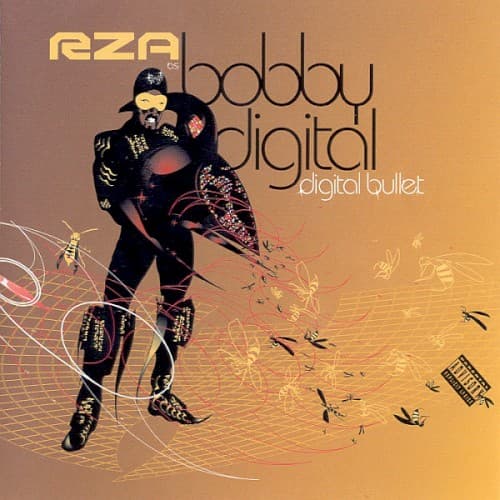
The scorecard
5.5/10 · Mixed
- Writing25%
- 5.0
- Production25%
- 6.5
- Delivery15%
- 5.5
- Cohesion15%
- 5.0
- Originality10%
- 5.5
- Replay value10%
- 5.0
The Bobby Digital arc from indulgence toward disillusion gives the record a spine, but too many verses stay on stock boasts and street shorthand that never sharpen into scenes.
RZA's own beats carry most of the tracklist with a gritty, hand-built feel, though the three outside-produced cuts expose how narrow his palette gets across eighteen songs.
The lead voice is low-key and uneven, and the record leans on Method Man, GZA, Killa Sin and ODB to supply the energy a long album needs.
Eighteen tracks with a turn toward sermonizing late in the sequence means the second half runs long and the story arc blurs.
It extends the Bobby Digital persona from the 1998 album without changing its terms, so the surprises come from guests rather than from the concept.
A handful of beats and guest verses reward return visits, but the album plays better as a playlist of eight or nine songs than as a full sit.
RZA Digital Bullet: A Producer's Alter Ego Runs Out of Room
Digital Bullet works best when RZA stops performing Bobby Digital and starts building for other people. The character is the stated reason for the album, a sequel to Bobby Digital in Stereo that follows a loose arc in which the persona grows more enlightened and, at the same time, more tired of hedonism. The idea is sound. The execution is where the record loses its grip, because the lead rapper is the least compelling voice on his own project, and the best moments arrive when a guest takes the microphone and RZA's beat does the rest.
That is the thesis of this review: Digital Bullet is a good producer's record and a mixed rapper's record, and the gap between the two is wider here than on most albums by a producer-MC. Listened to as a built object, the drum programming, the thick low end and the slightly crooked arrangements give the best tracks a character that few 2001 rap albums matched. Listened to as a solo statement, it is a long playlist with a concept laid over it.
The context matters only because it explains the format. RZA released this under the Bobby Digital name, and the album carries the character's hedonism as a theme and then tries to argue its way out of it. That tension is a good engine for an album. It needs sharper writing than the record delivers, and it needs a sequence that makes the turn feel earned rather than announced.
What the album does have is a deep bench. Method Man, Masta Killa, GZA, Killa Sin, ODB and several lesser-known voices all pass through, and a few of them outshine the host. That is not a fatal problem for a Wu-Tang-adjacent record, since the collective was always built on crowded cyphers, but it changes what the album is for. It is less a statement than a highlight for a sound, and the sound is strong enough that the verdict is closer to good than to disappointing. Just not close to essential.
Hand-Built Beats, Thin Hooks, and a Voice That Sits Too Far Back
The production is the reason to care. RZA produces most of the album himself, and the beats share a handmade quality: drums that feel slightly loose against the grid, bass that sits heavy in the mix, and keyboard and sample figures that loop just long enough to become hypnotic before the arrangement shifts underneath them. The sound is dense without being polished, which suits the Bobby Digital character, who is supposed to be a little overstuffed and a little dangerous. When it works, as on a track like Show U Love, the vocal sits inside the beat rather than on top of it, and the space around the voice does as much work as the voice.
Three tracks come from other hands. Mathematics produces Must Be Bobby, Tony Touch produces Domestic Violence, Part 2, and True Master produces La Rhumba. Hearing them in sequence is instructive, because they each break the album's texture in a useful way and also show how consistent the in-house sound is. They are not weaker beats. They are simply different, and the contrast is a reminder that eighteen tracks of one producer's palette is a lot to ask a listener to absorb.
The writing is where the album shows its limits. The Bobby Digital persona leans on boasts, sex and street shorthand, and the verses rarely turn those into specific images the way the best Wu-Tang writing does. Phrases land and fade without building a scene, and the choruses are often little more than a repeated tagline. The concept of a character who becomes disillusioned is more interesting on paper than in the verses, because the disillusion arrives as statement rather than as detail. The album tells you the character is changing and does not show it.
Delivery follows the same pattern. RZA's voice is a low, conversational growl, and in a short guest spot it is an asset. Across a full album it flattens. The tempo of his flow changes less than the beats do, so the beat reads as the more dynamic element and the rapper as the steady one. The guests solve this in the moment, which is the album's strength, and highlight the problem, which is its weakness.
The mix deserves credit. Nothing is buried, the low end does not smear, and the vocals have enough room that dense verses stay legible. But the mix also exposes how many hooks are underwritten, and the singers who appear on a few tracks sound like decoration rather than structure. The album's most solid songs are the ones where the beat itself is the hook and the verses simply ride it. That is a fine way to make rap. It is also a narrower ambition than the concept promised.
Eighteen Tracks, One Turn, and a Back Half That Stalls
The sequence opens strongly. The first third of the album moves quickly, trading short tracks with long ones so that the pace never settles, and the shortest cut in that stretch, Can't Loose, lasts under two minutes and does what a good interlude-style track should: it makes a point and leaves. By the time the features begin to stack up in the middle, the album has built real momentum, and the combination of Method Man, Masta Killa, Killa Sin and ODB across a few consecutive songs is the stretch where the record feels like a coherent event rather than a playlist.
The problem is the turn. The concept promises that the character becomes enlightened and disillusioned as the album proceeds, and the sequencing responds by shifting its tone in the last third toward more serious material, longer songs and a more sermonizing voice. Several of those tracks run past five minutes, and the verses are not strong enough to justify the length. The change in mood is audible, but it feels like a decision announced in the tracklist rather than a development earned in the music. A shorter album could have kept the arc and dropped the sag.
Length is the central sequencing issue. Eighteen tracks is a lot for a record whose best ideas fit comfortably into nine or ten. The weaker tracks are not bad, but they repeat moves the stronger tracks already made, and the beats start to blur once the album passes the midpoint. The last stretch includes a long closer that tries to carry the arc's resolution and does not have the writing to do it.
There are peaks along the way, and the guest stretch is the clearest. When a verse arrives from someone other than the host, the energy changes within a few bars and the beat seems to lean forward. That is the album at its most alive. It is also a sign that the structure depends on the guests more than on the concept, and that the best way to hear it is to skip around.
The overall impression is of an album with a good first half and a back half that tries to say something and runs out of material. It is not a collapse. It is a slow loss of altitude over the last six or seven songs, and by the end the character has been disillusioned and the listener has been too.
A Strong Sound in Search of a Stronger Statement
Digital Bullet is a good record with a ceiling. It is the second Bobby Digital album, and the catalog context on this site does not yet list another RZA album, so the ranking here is a judgment of the record on its own terms: strong production, adequate writing, uneven delivery, a sequence that runs about six tracks too long. The scores reflect that, with the production the clear high point and the cohesion the clear low point.
Who is it for? Anyone who likes the Wu-Tang sound after the early 1990s peak, and anyone who wants to hear RZA's production in a looser, more indulgent setting than the group albums. Fans of the guests will find enough to justify a listen, particularly the verses by Method Man, Killa Sin and ODB. Listeners who want a tight, narrative solo album from a rapper should skip it, because the story is thinner than the concept implies and the lead voice does not carry it alone.
How does it age? Better than the concept does. The beats still sound hand-built in a way that most later digital productions do not, and the guest verses have not dated. The character, with its talk of hedonism and enlightenment, is the part that reads as a period piece, and the lyrics around it are the weakest element of the record.
Start with Show U Love, Glocko Pop and Black Widow, Part 2. The first sets the production approach, the second shows the guest-driven format at its best, and the third is short and sharp, with a feature verse that justifies the tracklist on its own. Skip the long closing stretch unless the earlier songs have hooked you.
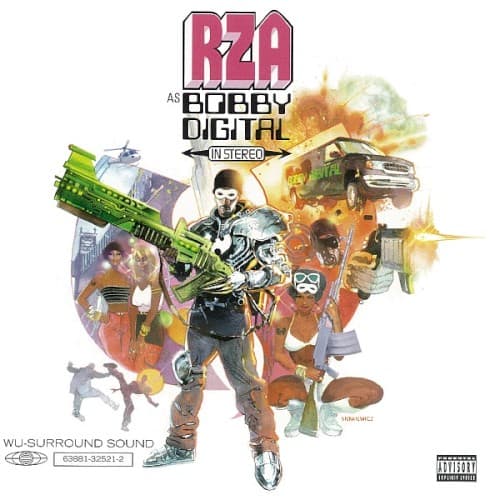
For what to hear next, start with RZA's earlier Bobby Digital in Stereo to see where the persona began and how this record extends it, and then go to Wu-Tang Clan's Enter the Wu-Tang (36 Chambers) for a version of this sound where the writing matches the beats. The last sentence of this review is simple: Digital Bullet proves that RZA can build a sound people want to hear, and that the sound is better when someone else is talking over it.
Track by track
Track Listing
Show U Love
StandoutThe opener sets the album's terms. The beat is dense and slightly off-grid, the bass sits heavy, and RZA's voice stays inside the arrangement instead of fronting it. The hook is simple but sticks, and the song establishes the Bobby Digital persona without overexplaining it. It is one of the better ways to get a first impression of how the record sounds, even if the verses stay on familiar ground.
Can't Loose
StandoutA short cut that makes its point in under two minutes and leaves. The brevity is the strength: nothing outstays its welcome, and the beat gets room to breathe.
Glocko Pop
StandoutA cypher-style track with Method Man, Masta Killa, Streetlife and a singer. This is where the guest-driven format pays off, because each voice changes the energy and the beat has enough room for everyone. The hook is catchy without being clever, and the track runs long enough to build momentum. It is the clearest argument that the album's strongest instinct is to share the microphone. Weakness: the verses are more about presence than detail, so the song lingers in memory more for its sound than for any line.
Must Be Bobby
SolidProduced by Mathematics, so the texture shifts slightly from the rest of the album. It is a character statement and works as a statement, but the verses repeat the persona's established moves rather than developing them. Solid, not essential.
Brooklyn Babies
StandoutA Masta Killa feature and uncredited singing from Force MDs give this track a warmer, more melodic tone than its neighbors. The change of color helps the sequence, and the vocal hook adds a human element that the album's more mechanical songs lack. The writing remains functional, but the arrangement carries it. A useful change of pace in the middle of the first half.
Domestic Violence, Part 2
SolidTony Touch's production and a Big Gipp verse make this one of the album's outside-in moments. The beat is solid and the feature adds a different cadence. The subject matter is heavy and the treatment stays on the surface, which limits the song's impact. Competent rather than memorable.
Do U
StandoutWith GZA and Prodical, this is a more writerly track than much of the album. GZA's verse lifts the lyrical level, and the beat leaves room for his cadence. It shows what the record could be if the host's writing matched his guests. The hook is plain, but the verses carry the song.
Fools
SolidKilla Sin and uncredited Solomon Childs add grit. The beat is tense and the song is brisk, which keeps it from sagging. Solid, with a few good bars from the guests and little from the host that sticks.
La Rhumba
StandoutTrue Master's production, with Method Man, Killa Sin and Berretta 9, makes this a strong guest showcase. The beat has a distinct feel from the in-house sound, which gives the sequence a lift at the right moment, and the three verses trade energy well. It is among the album's more fully realized songs, even if the writing is more about attitude than craft. The arrangement is clean and the vocals sit in a good place in the mix.
Black Widow, Part 2
StandoutShort, sharp and led by ODB, whose unpredictable delivery is exactly the energy the album needs. The beat is lean and gives him space to wander. At under three minutes, it is one of the best uses of a guest on the record and a sign of how much the project depends on that kind of spark.
Shady
SolidIntrigue and uncredited Berretta 9 appear on a track that keeps the middle-section momentum going. The beat is workable and the verses are workmanlike. It does not stand out, but it does not slow the album down either.
Break Bread
SolidA Jamie Sommers hook anchors a track about money and appetite, themes the album handles without much fresh detail. Smooth enough as a mid-album breather, but the writing is generic. Filler with a nice vocal.
Bong Bong
SolidBerretta 9 and Mad Cez join on a track that tries to sustain the tone of the guest stretch and mostly does. The beat is solid and the verses are competent. It is not a highlight, but it is a reminder of how reliable the in-house sound can be when the arrangement stays simple.
Throw Your Flag Up
WeakA five-minute track with the Black Knights that begins the shift toward the album's more serious back half. The length is not justified by the material, and the hook does not carry the extra time. The mood is a change, but the track is a symptom of the sequencing problem rather than a solution to it.
Be a Man
SolidA brief, direct track that gives the sermonizing voice a short lane. Shorter than its neighbors, it works better for it, though the advice-giving tone is more earnest than the writing can support.
Righteous Way
WeakAnother track over five minutes, with a Jr. Reid feature, that tries to deliver the album's spiritual turn. The beat is steady and the mood is sober, but the verses lack the images that would justify the runtime. This is where the album's concept becomes most visible and its writing least convincing. The track is not bad, but it asks for patience that the earlier songs did not.
Build Strong
SolidA Tekitha hook adds melody to a track about resilience. The vocal is pleasant and the beat is competent, but the song feels like a third version of a point the album has already made. Fine on its own, redundant in sequence.
Sickness
SolidThe closer runs nearly five minutes and carries the weight of the album's resolution. It has a heavier mood and a decent beat, but the writing does not resolve the story in a way that feels earned. A fitting end to a record that has more ideas about structure than about content, and one of its longer songs.
Frequently Asked Questions
Is RZA's Digital Bullet a good album?
How does Digital Bullet connect to Bobby Digital in Stereo?
Who produced Digital Bullet?
Which Digital Bullet songs should I hear first?
Styles