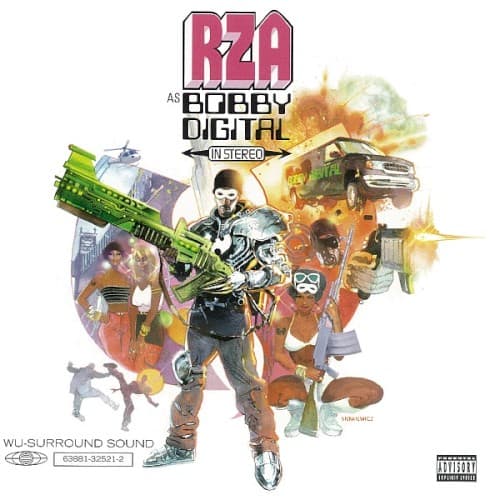
The scorecard
6.6/10 · Good
- Writing25%
- 6.0
- Production25%
- 7.5
- Delivery15%
- 6.0
- Cohesion15%
- 6.0
- Originality10%
- 7.5
- Replay value10%
- 6.5
The hedonistic alter ego gives the verses a clear point of view, but the rhymes about women, weed and violence are blunter and more repetitive than the arrangements deserve.
A keyboard-driven digital orchestra built from many different synthesizers replaces the usual sample-chop approach and gives the album an eerie, layered identity, though stiff drums and repeated palettes on the slower, longer tracks keep it from being flawless.
RZA's gruff, deadpan voice fits the character and rarely strains, but he trades the spotlight to guests such as Method Man and Ghostface Killah on the strongest cuts.
The shared keyboard palette holds sixteen tracks together, though the long middle and an eleven-minute freestyle bonus track weaken the pacing.
Replacing samples with composed keyboard orchestration was an unusual choice for a late-1990s rap record from a Wu-Tang producer and still sounds distinctive, though the persona-driven writing is less fresh than the sound.
The textures reward headphones and repeat plays, even if the weaker verses and the sprawl of the back half make a few tracks skippable.
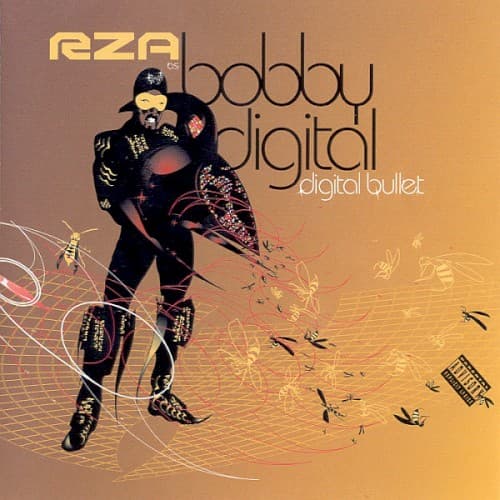
RZA Bobby Digital in Stereo: A Producer Trades Samples for a Digital Orchestra
The most interesting thing about Bobby Digital in Stereo is what is missing from it: the dusty, chopped soul sample that made RZA's name. In its place is a wall of synthesizers, strings and organ patches, played by hand and layered into something that sounds like a small orchestra built from plastic and wire. RZA himself described it as a digital orchestra, and said he gathered sixteen or seventeen different keyboards to make it. The result is one of the strangest and most distinctive hip-hop productions of its decade.
That is the thesis. Bobby Digital in Stereo is a producer's album in the fullest sense, a record in which the arrangement is the main character and the rapper is a guest in his own house. The Bobby Digital alias, a hedonistic, comic-book version of the man, supplies a story, but the real story is in the sound: the way the keyboard lines drift behind the beat, the way the strings are tuned slightly out of focus, and the way the low end stays warm while the top end gets cold. It is a risk, and it mostly pays off.
The record has weaknesses that are as clear as its strengths. The writing leans on the persona, which is crude and repetitive, and the sixteen-track length stretches the concept past the point where the idea can sustain it. An eleven-minute freestyle appears as a bonus track on this tracklist, and it is a good example of an album that sometimes confuses length with scope.
Reception at the time was positive with reservations, and the project was certified Gold in early 1999. Through a production-first lens, the reservations seem fair and the praise is better earned than the sales suggest. This is a record to listen to with good headphones and a tolerance for the character.
Sixteen Keyboards, One Alter Ego and the Space Behind the Vocal
Production is the reason the record exists. The sound is keyboard-driven rather than sample-driven, with samples used sparingly and placed as accents instead of foundations: Love Jones lifts from the Mighty Ryeders, and Kiss of a Black Widow takes its core from a Portishead record. Everything else is composed, played and layered. The effect is a world with its own rules: string pads that wobble, organ lines that hang in the air without resolving, drum programming that is cleaner and more mechanical than the warm, dirty breaks of the Wu-Tang records. The mix leaves a lot of space around the vocal, and the keyboards occupy it like fog, so the voice is always slightly in front of an environment rather than inside a loop.
The drum programming deserves its own credit. Without a sampled breakbeat to lean on, the drums are built from scratch, and they tend to be spare, snare-forward and slightly stiff, which suits the cold, digital atmosphere. This makes the rhythm section less swinging than a classic boom-bap record and more tense, closer to the sound of a machine thinking than a band playing. It is a deliberate choice, and it gives the album its unsettling quality, though it also makes some of the slower tracks feel rhythmically flat.
The writing and delivery are where the record is less convincing. The Bobby Digital character lets RZA rhyme about women, drugs and violence from the safe distance of a comic-book persona, and the framing sometimes excuses crude and repetitive lines. His voice is a gruff, even deadpan, and it suits the beats, but it does not change much from verse to verse. The guests solve the problem when they appear: Method Man, Ghostface Killah, Masta Killa and the Killarmy members each bring a different cadence, and their verses give the album a lift that the host cannot supply alone.
The concrete weakness is the sprawl. Several tracks run past five minutes without adding a second idea, and the album's back half contains a run of cuts that repeat the keyboard palette without developing it. The eleven-minute bonus track on the tracklist is the clearest example. A production this distinctive needs editing to stay effective, and the lack of editing makes the record feel longer than its concept. It is a major piece of arrangement work in a minor frame, and the best moments come when the beat is allowed to stop and the voice is left alone with the synthesizers for a few bars. Those pauses are rare, and the album would be stronger with more of them.
Cold Strings in the Front, a Long Fade in the Back
As a sequence, the album begins with its best idea. The opening track runs nearly six minutes and lays out the whole palette: layered strings, slow drums, a vocal that arrives late. That is a bold way to open a record, and it works, because the listener is given the sound before being given the story. The first half of the album follows with a sequence of guest-heavy cuts that vary in tempo and mood while staying inside the same sonic world.
The pacing holds up through the middle, helped by a short interlude-sized track from a different producer that breaks the keyboard palette with a more conventional beat. This is the point where the album would benefit from more variation, and where it begins to rely on repeated textures. A few of the later tracks share the same structure of slow build, deadpan verse and fading synth line, and the differences between them become subtle.
The ending is where the sequence is weakest. The final run contains the longest tracks on the record, including an eleven-minute freestyle bonus track and a closing track that returns to the character's darker side, and the added length does not add information. The eleven-minute track in particular feels like an artifact of the format and not a choice, and it dilutes the strong sense of control that the opening established. A version that closed on the shorter, tighter material would have kept the tension. The length is not fully earned, but the opening hour is strong enough that the sprawl feels forgivable, and the album's structure, though uneven, is shaped by a clear idea of sound.
The Strangest, Most Original Thing RZA Built
No other RZA albums are rated on the site yet, so the ranking cannot be set here, but the picture is clear. Bobby Digital in Stereo is the debut studio album that proved RZA could build a record around his own arrangements as well as around the Wu-Tang Clan's voices. It sits in the good range because the production and originality are strong enough to carry the weaker writing, and because its strongest tracks are among the most distinctive of their time.
The record is for listeners who care about production as an art: how the drums are programmed, how the keyboards are layered and how a producer builds a world without relying on samples. It is essential for anyone who wants to understand what RZA did beyond the Wu-Tang Clan's first records, and it is a good record for headphones. It is not for listeners who want tight lyrics, a clear narrative or the rawer sound of the group's early work, and the crude persona may be off-putting to some.
The album has aged well in sound and less well in content. The keyboard textures still feel unusual, and few records from the period sound like this, while the lyrical focus on the persona's excesses feels more dated. It has also gained value in hindsight, since its approach to composed, synthetic orchestration points toward later work in rap production.
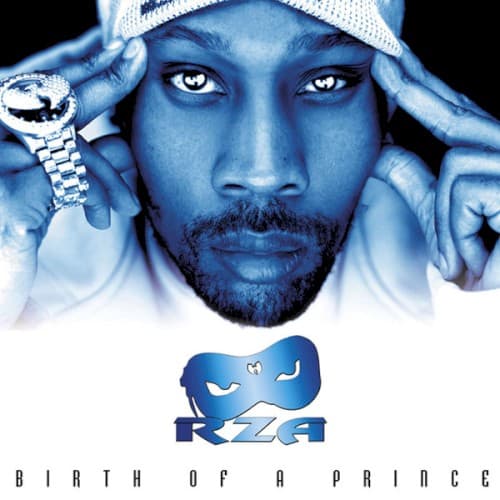
Start with B.O.B.B.Y. for the full palette, then Mantis for the Masta Killa guest spot and N.Y.C. Everything for the Method Man feature. If the approach interests you, the next record to hear is Birth of a Prince, the later solo album, which shows how the formula changed when RZA handed more of the beats to other producers.
The record's most useful description is that it is the album where RZA built the sound first and wrote the character second, and the sound is the part that lasts.
Track by track
Track Listing
B.O.B.B.Y.
StandoutThe opener runs 5:50 and works as a thesis: layered keyboard strings, slow, spare drums and a vocal that enters after the arrangement has already built a world. RZA produced it, and it is the clearest demonstration of the digital orchestra idea. The mix leaves air around the voice, and the synthesizer lines move like a score rather than a loop. The writing introduces the persona without much detail, but the sound does the work. It is the best argument that the record is a composer's project, and the best place to start.
Unspoken Word
SolidA 4:46 track in the same palette, with keyboard textures that drift more than they drive. It extends the opener's mood without adding much to it, and the vocal is steady rather than striking.
Airwaves
SolidKing Tech produced this short cut at 1:51, and it is the one place where a different producer breaks the keyboard palette. The more conventional beat works as a palate cleanser between two longer tracks and keeps the early run from sounding uniform.
Love Jones
StandoutRZA produced this with a sample of Star Children by the Mighty Ryeders, with Angel Cake on the credits. The sampled soul element is warmer than the synthesizer tracks around it, and the combination of a human sample and a digital arrangement gives the song a slightly romantic, slightly sinister feel. At 4:35 it is among the smoother tracks on the record.
N.Y.C. Everything
StandoutMethod Man joins on a 4:23 track that benefits from a guest with real charisma. The beat is steady and the keyboards stay in the background, which lets his voice carry the song. It is one of the more accessible cuts on the album, and it shows what the sound does when it supports a performance rather than replacing one.
Mantis
StandoutMasta Killa and Tekitha appear on this 3:38 track. The arrangement is eerie and cold, with the guest's calm precision contrasting with the host's gruffness, and Tekitha's vocal adds a texture that the record uses sparingly. One of the strongest examples of how the keyboard palette creates atmosphere.
Holocaust (Silkworm)
StandoutGhostface Killah, Holocaust, Dr. Doom and Ms. Roxy appear on this long cut at 5:16. The crowded cast gives the track variety, and the keyboard bed is dark and slow enough to let each voice settle. The length is a stretch, but the guest list keeps it moving, and Ghostface Killah's quick, vivid delivery stands out.
Terrorist
SolidKillarmy and Black Knights join on a 4:10 track with a harder, more aggressive mood. The beat is stiff and the verses are uneven, and the extra length does not add a new idea.
Bobby Did It (Spanish Fly)
SolidGhostface Killah, Islord, Royal Fam, Jamie Sommers and Ndira share this 4:24 track, which leans into the character's romantic exploits. The crowd of voices gives it a loose, party-like energy that is a break from the colder cuts, though the writing is thin.
Kiss of a Black Widow
StandoutInspectah Deck produced this 2:50 track around a Portishead sample, with Ol' Dirty Bastard on the credits. The borrowed melody gives it a more moody, trip-hop feel than any other song on the record, and the brevity keeps it focused. It is a standout for its concision and its clear sense of atmosphere.
Do You Hear the Bells (9 Minute Free Style)
WeakAn 11:26 bonus track on this edition, and the clearest case of the album's tendency to overstay. The extended freestyle format gives RZA room to rhyme at length, but without a structure or a hook to anchor it, the track is more an endurance test than a highlight.
Project Talk
SolidA short track at 1:47 with Baretta Nine, quick and clipped. It works as a breather between longer cuts, but it is slight.
Lab Drunk
SolidA 4:18 solo track whose title suggests a late-night session in the studio. The mood is loose and slightly woozy, and it is one of the more personal moments on the record, though the writing stays surface-level.
Fuck What You Think
Solid9th Prince and Islord of Killarmy join on a defiant 3:13 track. The beat is brisk and the delivery is confident, and it is a short, clear statement of attitude. The writing is simple and the production is functional.
Daily Routine
WeakBaretta Nine of Killarmy appears on this 4:23 track about the character's habits. It is steady and plain in the way of a track that repeats the album's palette without developing it, which is a typical weakness of the later stretch.
Domestic Violence
SolidThe last track runs 5:19 with U-God, Jamie Sommers, Ms. Roxy and Tiffany. The title points to the persona's darker side, and the slow, heavy keyboard bed gives it a sense of dread. It is among the most atmospheric tracks, though the subject matter is uncomfortable and the length is more than the idea needs.
Frequently Asked Questions
Is RZA's Bobby Digital in Stereo a good album?
What is the digital orchestra on Bobby Digital in Stereo?
Who is featured on Bobby Digital in Stereo?
How well did Bobby Digital in Stereo sell?
Styles