From Gary's Streets to Critical Acclaim: Freddie Gibbs' Independent Rise
Freddie Gibbs emerged from Gary, Indiana — a Midwest city with one of the highest crime rates in America — carrying the weight of that environment in every bar he's written. Born in 1982, he entered hip-hop during an era when the industry's attention had largely shifted away from regions like his, forcing him to build credibility the hard way: through relentless output, uncompromising lyricism, and a refusal to soften his perspective for commercial appeal. What separates Gibbs from countless other street rappers is his technical precision. He raps with the clarity and pocket awareness of a seasoned session musician, delivering dense narratives over boom-bap, soul samples, and trap production with equal command.
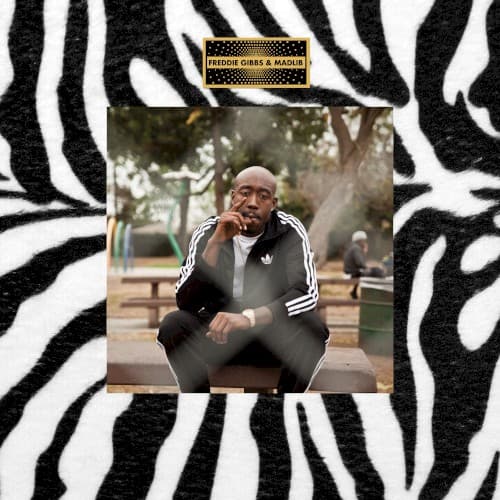
His career trajectory defied conventional wisdom. After failed major label stints with Interscope in the mid-2000s, Gibbs rebuilt his reputation independently, releasing a prolific series of mixtapes that showcased his versatility and hunger. By the time he partnered with producer Madlib for 2014's Piñata, he had already spent nearly a decade honing his craft in relative obscurity. That album became the turning point — a critical darling that proved gangsta rap could exist at the intersection of street authenticity and artistic ambition. Gibbs never chased trends or reinvented himself for mass appeal, yet he found his audience anyway.
Today, Freddie Gibbs occupies a unique position in hip-hop: a rapper's rapper who earned respect from both underground purists and mainstream listeners, someone who can headline festivals while maintaining complete creative independence. His discography reads like a masterclass in consistency, with nearly every project since 2010 offering sharp writing, impeccable flow control, and production that ranges from dusty soul loops to modern trap minimalism. He represents what happens when raw talent meets stubborn resilience.
Technical Mastery Over Divergent Production: Freddie Gibbs' Sonic Versatility
Gibbs operates with a level of technical skill that places him in rare company. His flow exists somewhere between the conversational ease of early Snoop Dogg and the internal rhyme complexity of prime Raekwon — smooth enough to sound effortless, intricate enough to reward repeated listens. He doesn't rely on vocal theatrics or shifts in pitch; instead, his delivery stays controlled, measured, and locked into the pocket of whatever beat he's riding. That consistency becomes his signature. Whether he's rapping over Madlib's psychedelic soul collages or working with trap producers like Kenny Beats, the voice remains unmistakable.
What makes Gibbs especially dangerous is his adaptability. On Piñata, he navigated Madlib's sample-heavy, jazz-inflected production with the same confidence he brought to harder, drum-heavy beats on projects like ESGN. He doesn't force the production to bend to him; he finds the spaces within it, adjusting his cadence and phrasing to complement the track's energy. This shapeshifting ability allowed him to work with producers across generations and styles — The Alchemist, Kaytranada, DJ Paul, Harry Fraud — without ever sounding out of place. His voice becomes the constant while the sonic palette shifts around him.
Lyrically, Gibbs writes from the perspective of someone who lived the life he's describing but refuses to glorify it without context. His street tales are vivid and specific, filled with brand names, block references, and the kind of detail that only comes from firsthand experience. Yet there's also introspection threaded throughout — reflections on fatherhood, survivor's guilt, and the psychological toll of moving between worlds. He doesn't moralize or offer redemption arcs; he simply presents the contradictions and lets listeners sit with the discomfort.
The Long Game: How Freddie Gibbs Built a Career on His Own Terms
Gibbs' early career was defined by frustration and false starts. After signing with Interscope in 2006, he found himself in label limbo — recording music that never saw official release, watching as the industry machine stalled his momentum. He was eventually dropped, a setback that would have ended many careers. Instead, it became the catalyst for his independence. Between 2009 and 2012, he flooded the internet with mixtapes: myriad full-length projects that showcased his work ethic and range. These weren't throwaway loosies; they were fully realized statements that built his reputation as one of the most consistent voices in underground rap.
The turning point arrived in 2014 with Piñata, a collaboration with producer Madlib that took years to complete. The album paired Gibbs' street narratives with Madlib's abstract, sample-based production — an unlikely pairing that resulted in one of the decade's most critically acclaimed hip-hop records. It didn't chart high or produce radio singles, but it shifted the conversation around Gibbs. He was no longer just a talented regional artist; he was a legitimate force capable of creating art that satisfied both purists and critics. The album's success was organic, built on word-of-mouth and genuine respect for the craft.
Gibbs followed that breakthrough with a steady stream of quality projects: Shadow of a Doubt in 2015, You Only Live 2wice in 2017, and Fredo in 2018. Each release refined his approach without repeating the same formula. He worked with different producers, explored slightly different sonic textures, but maintained the same uncompromising lyrical standard. By the time Bandana — the sequel to Piñata — arrived in 2019, expectations were sky-high. The album delivered, reaffirming the creative chemistry between Gibbs and Madlib while proving the first collaboration wasn't a fluke.
In 2020, Gibbs released Alfredo, a collaboration with The Alchemist that earned him his first Grammy nomination. The project was leaner and more focused than his previous work — nine tracks of pure, uncut street rap over Alchemist's dusty, soul-drenched production. It was both a return to classic East Coast aesthetics and a showcase for Gibbs' evolution as a writer. The Grammy recognition felt overdue but significant, validating an artist who had spent 15 years grinding without industry co-signs or major label support.
Throughout the 2020s, Gibbs has continued releasing music at a relentless pace, including $oul $old $eparately in 2022, which saw him branching out with more contemporary trap and R&B-influenced production. He's proven he can thrive in any sonic environment, whether working with legends like Madlib and Alchemist or younger producers pushing hip-hop in new directions. His career is a testament to the power of persistence — proof that you don't need radio play or viral moments to build a lasting legacy, just exceptional music and the refusal to compromise.
Redefining Independent Success: Freddie Gibbs' Influence on Modern Hip-Hop
Freddie Gibbs represents a new model for hip-hop success, one that exists outside traditional industry structures. He's built a devoted fanbase without major label backing, charted albums without radio singles, and earned critical acclaim without chasing trends. For younger artists navigating an industry that often demands compromise, Gibbs offers an alternative blueprint: stay independent, trust your instincts, and let the music speak for itself. His influence isn't about spawning imitators; it's about proving that artistic integrity and commercial viability aren't mutually exclusive.
His collaborations with producers like Madlib and The Alchemist helped revive interest in the album-as-collaborative-statement format, where rapper and producer function as equal creative partners rather than contractor and client. These projects demonstrated that street rap could be sonically adventurous without losing its edge, that gangsta narratives could coexist with avant-garde production choices. In an era dominated by playlist culture and disposable singles, Gibbs continued making cohesive albums that demanded front-to-back listening.
Beyond the music, Gibbs carved out space for artists who don't fit neatly into regional or stylistic categories. He's a Midwest rapper who sounds equally comfortable over New York boom-bap, West Coast funk, and Southern trap. He's a street rapper who earns respect from backpack purists. He's an independent artist who collaborates with legacy producers and contemporary stars alike. That refusal to be boxed in has opened doors for others who operate outside traditional lanes, proving that authenticity and versatility aren't contradictions. His legacy will be measured not in platinum plaques or Billboard peaks, but in the careers he made possible by showing there's more than one path to relevance.