Chicago's Intellectual Voice: Lupe Fiasco's Place in Conscious Hip-Hop
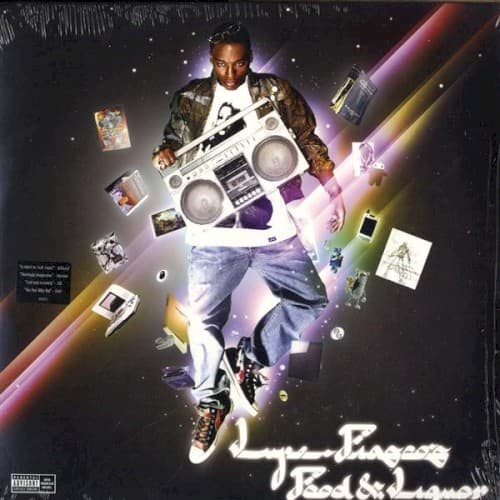
Lupe Fiasco emerged from Chicago's West Side in the mid-2000s as hip-hop's unlikely intellectual—a skateboarder who quoted Cornel West, a Muslim who rejected gangsta clichés, a street-smart thinker who built entire verses around literary references and political theory. Born Wasalu Muhammad Jaco in 1982, he entered the game at a moment when conscious rap had receded from the mainstream, yet carved out space for himself by refusing to compromise his vision. His 2006 debut, Lupe Fiasco's Food & Liquor, announced an artist capable of balancing accessibility with depth, delivering radio-ready hooks alongside dense narrative storytelling that rewarded repeated listens.
What made Lupe distinct wasn't just his willingness to tackle serious subjects—plenty of rappers had done that—but the ways he embedded complex ideas within compelling musical frameworks. He didn't lecture; he constructed worlds. His characters felt real even when allegorical, his political critiques sharp without being didactic. He represented a particular strand of millennial hip-hop that grew up on both Wu-Tang and anime, Nas and Nietzsche, street corner ciphers and message boards. That hybridity became both his signature and his challenge, as he navigated an industry that wanted his hooks without always understanding his intentions.
Across two decades, Lupe has occupied a complicated position in hip-hop's ecosystem: critically acclaimed yet commercially inconsistent, fiercely independent yet signed to major labels, beloved by devoted fans yet underappreciated in broader conversations about the genre's elite. His career trajectory reflects the tensions facing conscious rappers in the streaming era, where artistic ambition and commercial viability don't always align.
Lyrical Density Meets Genre Fluidity: Lupe Fiasco's Musical Approach
Lupe's technical skill reveals itself in layers. On the surface, his flow appears conversational, almost casual—then you catch the internal rhyme schemes, the conceptual through-lines threading across entire albums, the way he'll embed three meanings in a single bar. He writes like someone who studied the greats (particularly Nas and Jay-Z) but developed his own methodology, favoring narrative complexity and thematic cohesion over punchline-driven verses. His best work functions like short fiction, with recurring imagery, unreliable narrators, and structural sophistication that invites analysis.
Sonically, Lupe has always resisted easy categorization. Early collaborations with Soundtrakk and prolific producer-of-the-moment guests yielded music that drew from soul samples and live instrumentation, creating warmth that balanced his sometimes cerebral content. He gravitates toward melodic beats that leave room for his voice to maneuver, though his production choices have varied widely across projects—from the polished accessibility of Food & Liquor to more experimental later work. Unlike peers who locked into a signature sound, Lupe has treated each album as an opportunity to reconstruct his approach, sometimes to his commercial detriment.
What remains constant is his commitment to saying something substantive. Whether addressing American foreign policy, urban poverty, or personal struggle, he constructs arguments through storytelling rather than sloganeering. Songs like "Kick, Push" used skateboarding as both literal subject and metaphor for perseverance; "The Cool" built an entire mythology around personified vices. This tendency toward conceptual ambition sets him apart in an era of playlist-optimized singles, though it's also meant his work requires investment from listeners used to more immediate gratification.
From Jay-Z Protégé to Independent Voice: Lupe Fiasco's Career Arc
Lupe's path to prominence began with savvy networking and undeniable talent. After gaining attention through mixtapes and guest features, he caught Jay-Z's ear during the Roc-A-Fella executive's Atlantic Records partnership phase. That co-sign carried weight, positioning the unknown Chicago rapper alongside established names and setting expectations for his debut. Food & Liquor arrived in September 2006 to critical praise, with its blend of introspective tracks and accessible singles like "Daydreamin'" (featuring Jill Scott) establishing Lupe as a thinking person's rapper who could still make radio-friendly music. The album earned Grammy nominations and gold certification, creating momentum that suggested mainstream conscious rap might be commercially viable again.
His 2007 follow-up, The Cool, expanded on the conceptual universe hinted at on the debut, with Lupe leaning further into narrative storytelling and thematic albums. Tracks like "Superstar" featuring Matthew Santos achieved significant commercial success, while deeper cuts satisfied fans hungry for lyrical substance. The album went gold and solidified his position, but also revealed the tensions that would define his career: label pressure to replicate hit formulas, fan expectations for uncompromising artistry, and his own ambitious vision that didn't always align with either constituency.
The 2010s brought both creative triumphs and professional frustrations. Lasers (2011) arrived after prolonged label disputes, with Atlantic pushing for more pop-oriented production that Lupe publicly resented. The resulting album featured genuine hits like "The Show Goes On" but felt compromised to many longtime supporters. Food & Liquor II: The Great American Rap Album Pt. 1 (2012) saw him attempting to reclaim artistic control, though reception was mixed. Tetsuo & Youth (2015) marked a creative resurgence, with many considering it among his strongest work—a densely constructed concept album that demonstrated his skills remained sharp even as industry attention had shifted elsewhere.
Later projects like Drogas Wave (2018) continued his pattern of ambitious, thoughtful albums that earned critical respect without achieving major commercial breakthrints. The 140-minute double album told an elaborate narrative about enslaved Africans who survived the Middle Passage by living underwater, exactly the kind of high-concept work that defines Lupe's uncompromising artistic identity. His willingness to pursue such projects, regardless of commercial considerations, has made him a respected figure among hip-hop's intelligentsia while limiting his mainstream reach.
Throughout his career, Lupe has been as known for his outspoken political views as his music. His criticisms of American foreign policy, particularly regarding conflicts in the Middle East, and his commentary on the music industry itself have sometimes overshadowed album releases. He's embraced the role of hip-hop's gadfly intellectual, willing to challenge orthodoxies within both mainstream culture and hip-hop itself. This positioning has earned him devoted followers who see him as one of rap's most uncompromising truth-tellers, though it's also meant navigating controversies that more cautious artists avoid.
The Conscious Rapper's Dilemma: Lupe Fiasco's Influence and Cultural Impact
Lupe's legacy rests in proving that intellectual ambition and technical excellence could coexist in post-2000s hip-hop, even when the commercial returns didn't match the artistic investment. For a generation of listeners who discovered him through Food & Liquor, he represented possibility—proof that mainstream rap could accommodate complexity, that you didn't have to dumb down to reach audiences, that skateboarding nerds from Chicago had as much claim to hip-hop authenticity as anyone else. His influence appears most clearly in artists who prioritize conceptual cohesion and lyrical depth over viral moments, particularly within the conscious and alternative hip-hop lanes.
The parallels and contrasts with contemporaries illuminate his position. Where Kendrick Lamar eventually achieved both critical acclaim and massive commercial success with similarly ambitious concept albums, Lupe's career suggests the narrow margin between those outcomes. Both share commitment to narrative complexity and social commentary, but Kendrick's West Coast origins and Dr. Dre co-sign provided institutional support Lupe never quite secured after his early Atlantic years. Similarly, J. Cole built a career on conscious rap and technical skill that achieved greater commercial consistency, though few would argue Cole matches Lupe's peak lyrical density.
His impact extends beyond direct musical influence into hip-hop's intellectual culture. Lupe helped normalize rappers as public intellectuals, willing to engage in debates about philosophy, politics, and culture beyond typical celebrity activism. His presence on social media and in interviews demonstrated that hip-hop artists could be complex thinkers whose work rewarded serious analysis. For younger conscious rappers navigating the tension between artistry and commerce, his career serves as both inspiration and cautionary tale—a reminder that integrity and talent don't guarantee industry cooperation, but they do build lasting respect. Two decades after his emergence, Lupe Fiasco remains what he's always been: uncompromising, challenging, and essential to anyone seeking hip-hop that engages both the mind and the soul.